Garlic Shot Upgrade

Mom is the home remedy queen. Something I take for granted until my general health dips. Years ago when she visited me for a week, she battled a ragweed allergy. She didn’t load up on cough drops like I normally do. Instead, she kept making herself garlic shots.

She peels a garlic clove. Minces it in a press. The contents of which goes into a spoon. Then she sweetens it with a little juice and takes it like a spoonful of medicine, which in a way it is.

I no longer drink juice on a regular basis.

As a matter of fact, when I bought two bulbs of garlic, I didn’t even think about how I’d sweeten it.

I had the proper apparatus, which is funny since I hardly ever bother with it.

These days, I either handchop raw garlic or put it in my blender.

Unlike manufactured medicines, I don’t take a full tablespoon of raw garlic.

Three little doses are so much better than one heaping, soul-burning tablespoon of raw garlic.

In the morning, I fill my spoon with water, but for the afternoon and evening doses, I’ve found yet another practical use for boxed wine.

That spout is a controlled way to dispense a medicinal amount into a spoon.

As much as I like red wine, I prefer it without the garlic, but garlic slides down nicely with it.

Although I have cough drops on my grocery shopping list for next week, I won’t need to gobble them down like I’ve done. Raw garlic shots thrice a day should do the trick. I’m limiting it to three small shots because Mom went overboard during the beginning of the plague when no one could be vaccinated. She gave herself garlic-induced dry eyes, which she had to counterbalance with eyedrops.

I’m not trying to give myself something else to remedy. There are already too many fires to take care of.

Jalapeño Sausage and Cheese Buttermilk Biscuits

I’ve been on a months’ long culinary journey, which took me through a baking tour of quiches, muffins, breakfast casseroles and finally biscuits.

Mom sent me my first biscuit recipe, which I of course modified. These babies are as big as my hand and are a complete breakfast unto themselves.

Since I have a strict, time-sensitive weekday morning routine, being able to warm up hearty food in the oven while taking a shower after a 35-minute virtual HIIT (high-intensity interval training) class, allows me to devour a hot delicious breakfast before logging on to work by 8 AM.

One of the best things about these gluten-filled biscuits, I’m not starving an hour before lunch. Of course, I’ll have to explore other types of flour down the line, but for right now, I’m going to continue with the regular flour/buttermilk combination. Never before have I cooked with buttermilk this much.

I’m reminded of my maternal grandmother’s refrigerator. I learned the hard way as a child that not all milks are the same. In an effort to impress one of my cousins, I made both of us a homemade vanilla shake, not realizing that Mama Bea had two types of milk. Given a 50-50 chance, of course I chose the wrong one–an unlucky streak that has followed me into middle-agehood.

We had such great restraint, not taking a sip as I hand stirred all the ingredients into the plastic tumblers. When I was done, as if to say “bottoms up,” we both took a sip at the same time. Surprisingly, we didn’t spit that sour shake sip out. Never again did I blindly reached into anyone’s refrigerator ever again.

Buttermilk is for biscuits, not milkshakes. And yet, even as I typed that, I’m tempted to look up a recipe for Buttermilk Milkshakes.

OK, so I gave into curiosity and every flavor of buttermilk shake shared the same adjective: bitter. Yup. That’s what I remember and it’ll be a hard pass. I’ll save my buttermilk for savory foods.

No More Kisses

Aging is a physical adventure. Simply waking up in pain without having done anything too strenuous or different the day before reminds me I’m middle aged.

My newest pain indicator started occurring about 30 minutes after lunch. My usual routine was an hourlong noontime yoga class followed by lunch with a glass of red wine and a piece of chocolate. In this case, a Hersheys Kiss, either the classic silver-foiled kisses or the fancy gold-foiled kisses that enclosed an almond. I’d mixed both types in a bag, which I kept in the refrigerator. I’d just reach into the bag and let mathematical probability choose which kiss I had to accompany my last sips of wine.

Seemingly overnight, one of my favorite desserts, chocolate and wine, rallied knee pain. As soon as I made the association, I looked it up and confirmed that sugar could trigger inflammation.

Now, I’ve hit another age milestone: no excessive sugar. Fortunately, that doesn’t mean I can’t indulge my sweet tooth, just not overly sweet things. After all, there’s always dark chocolate!

But not all dietary changes have been for the worse. In my mid 30s, I discovered I loved eating steamed or baked broccoli, which no longer had to be smothered in cheese. And don’t get me started with baked Brussel sprouts. I can only say that maturity caused that vegetable to taste delicious.

On the other hand, there are many nonfood related things I’ve stopped doing. Take rollercoasters for example. No, seriously take all the rollercoasters. I’ve got no use for them anymore. At first, on the advice of one of my older sisters, I first stopped riding rollercoasters with wooden tracks because they shook too much. Eventually, even metal-tracked rollercoasters were out as well.

Around the time I made the association between too much sugar and knee pain, I received an invitation to a wine and dessert happy hour. I packed up my gold- and silver-foiled kisses to share. En route to the party, I was stopped at a traffic light when a man approached my car, asking for money. Even prior to the pandemic, I didn’t believe in giving money to panhandlers, preferring to give them food or water. Yet, since the pandemic, I’ve not taken out cash. These days, businesses emphasize contactless payment.

I reached into my bag of chocolates, grabbed a handful of kisses and handed them to him. As I drove away, I wasn’t sure how much of a treat he considered my donation, but he thanked me for it nonetheless.

As soon as reached my destination, I hugged everyone, bypassing those outstretched hands, which were meant for a handshake. I didn’t care whether I’d previously met them or not. We were in a safe space and not merely in terms of COVID. I poured the kisses into a container where all the other desserts were.

We had a very entertaining and productive networking happy hour. Upon reflection, that was was the first time I’d ever brought both hugs and kisses to an event.

Oh, Ovo-lacto Pescatarian!

I’ve pretty much been a lifelong omnivore with about three years of eating no mammals. (I used to love telling people that and they’re reaction would be, “But you’re eating chicken!”) Since then, I’ve rarely cooked pork or beef, substituting in ground turkey, turkey bacon or turkey sausage. Now, I see the writing on the wall, written in meat.

The COVID-19 pandemic continues to expose the fragility of our infrastructure, namely the lack of healthcare for employees whose jobs weren’t previously thought of as important enough to provide such a benefit. The general population acknowledges, perhaps for the first time, that healthcare is a human right. Corporations, which haven’t offered much outside of an underemployed hourly wage, have started to do the bare minimum by offering paid sick leave. That would at least encourage employees to stay home if they’re sick.

Yet coronavirus treatment costs thousands of dollars. So, even if someone has paid sick leave, that wouldn’t begin to cover that medical bill without health insurance.

One of the inevitable consequences has finally reached the shores of the meat packing plants. If they’re anything like what I’ve read in The Jungle, then I’m surprised we hadn’t reached this point back when there was still a TP crisis.

Although I still consider myself an omnivore, I’m no longer buying any meat, outside of eggs, while this shit is still going on. Even if I eventually must become a vegan because of this situation, it seems better to wean myself off meat rather than go cold turkey.

I’m sure the next reports will be about how the coronavirus affects chicken farms. Even if the stories haven’t reached me yet, egg and poultry prices haven’t noticeably increased–yet. Not like avocado prices. The best way to lose my taste for a certain food is for the price to soar out of my beyond my budget.

I’m probably being optimistic, thinking I can be an ovo-lacto pescatarian. None of those jobs involved in the food supply chain offer health insurance. Perhaps grocery store supervisors would be the first across the board to already have had that in place before this crisis–along with employees at upscale grocery chains where I can’t afford to shop.

Then again, I don’t completely understand the food supply chain. As I continue to order takeout once a week from some local restaurant, I’ve discovered that they’re prices for meat dishes haven’t increased. That’s at least an omnivore’s silver lining. So, it’s now become more affordable to buy already cooked meat than to buy it at a grocery store and cook it at home.

As if I needed another sign of the devil at the grocery store!

I’d been hunkering for trail mix. Recently, some of the bulk foods have returned. The bulk items in which customers use a scoop are still off limits, but the bulk foods that come fully enclosed a dispensing container are back. I had so much trouble with this mix pouring out that employee had to take the container down and shake it several times to fill half the bag.

At one point, I told her that I felt so bad that she had to go to so much trouble to assist me, despite her cheerfulness. As soon as I saw the sign-of-the-beast price, I burst out laughing and showed it to her. She said she’d share that experience with others.

The drama continues…

Dietary Adventurer

En route to my mother’s surprise birthday party, which happened a full two months after her real birthday, one of my cousins, who carpooled with us, was reading “The Plant Paradox.” Essentially, the premise of this diet is to eliminate, or at least seriously restrict, the amount of lectins in one’s food.

Lectins are proteins, the most famous of which is gluten. Since plants evolved lectins to deter predators from eating them, insects learn to avoid plants that make them sick. If humans were the size of insects, then we’d be more aware of these naturally-occurring poisons when we ate certain plants.

Yet there are a slew of autoimmune diseases, cancers, inflammation, weight gain and such caused by eating lectins. When I saw that Crohn’s disease was one of them, I texted one of my nieces to see if she’d heard about the connection between lectins and Crohn’s. She very wisely asked me which foods contain them. So, I took a picture of the list, which easily has over 100 things. She texted back: oh nvm lol I’ll stay on medicine.

Typical.

Yet, I love a good challenge. I already choose about two recipes a week to make; so this wouldn’t be too much of a stretch to shift the ingredients. As a matter of fact, unlike the “success story” people in the book, I had no immediate health issues. So, I could ease my way into a new diet.

Nonetheless, I wanted to make a good attempt, which means getting rid of foods that aren’t on the “yes” list. The biggest three culprits are wheat products, corn products and potatoes. But that’s not all! Ripe fruit, which I usually buy a huge amount of every week for smoothies, signal the human body that winter’s around the corner and it should start storing fat.

I mulled it over and decided that I’d bag up everything that wasn’t in the diet and give it out to the ubiquitous panhandlers around Austin. After all, the food was still good quality even if this particular diet told me to avoid such things as wheat and corn flour, oatmeal, peanut butter, sunflower seeds, refined sugars, canola oil, sugar snap peas, cornstarch, baking powder, ramen noodles and other things that filled 5 banned single-use (but now they may make a comeback) plastic bags.

The only two things I kept were brown and wild rice and two packets of microwave grits. I wasn’t sure if grits contained lectins, but I had both of them for breakfast the next day. As far as the rice was concerned, I coupled it with one of the lectin-free recipes. (I know, already starting out sacrilegious.)

So the first time after I bagged all the contraband food up, I’d left to go to my screenwriting class. In addition to my backpack, I took a bag of groceries in each hand. I didn’t pass a single panhandler en route to class nor back. I chalked it up to the recent cold front.

So those bags of food stayed in the car since it was all nonperishable plus the weather made it seem as if they were refrigerated. Besides, I figured I’d pass them out en route to yoga.

Of all things! The panhandlers I thought would be out weren’t–except in the intersections that had green lights. As much as I wanted to give the bags away, I wasn’t about to cause a traffic jam or accident to do a good deed. So, I thought I’d hand them out on the way home. Wrong again. This time, they were at another part of the intersection than where my car was at a red light.

In the meantime, I made my first two lectin-free dishes: salmon with sautéed spinach and red onions with avocado oil and lemon juice; and seaweed wrapped chicken strips with spinach, avocado and cilantro sauce.

So for the first dish, I cheated a bit and used the rest of my brown and wild rice. You see, contrary to popular belief, the best rice is white. All that brown rice that’s supposed to be healthy really isn’t because the brown hulls contain the lectins. Even something like gluten free foods have a lectin worse than gluten, wheat germ agglutinin or WGA for short.

Proving once again that the third time is indeed the charm, on the third day, returning from exercise class, I gave away both bags to the same panhandler–a black man who thanked me profusely for the groceries. As I drove away, I felt lighter than the absence of two bags of groceries.

The next day, at the same intersection, this time coming from yoga class, I gave away two more bags to a younger guy who looked Latino. He took both bags, saying he’d share with the other guy, but as far as I could watch where he went, I couldn’t see who “the other guy” turned out to be.

Then, later in the evening, I helped run the Women in Film & TV (WIFT) booth on 6th St as part of the SXSW’s celebration of International Women’s Day. This was the first time I’d met some of the other board members. Throughout the event, servers circulated around and passed out free food samples. At that point, I made up my mind that in observation of this diet, I’d eliminate my consumption of lectins at home, but since I didn’t have any dire health issues, I wouldn’t be absolutely miserable about it. I enjoyed every free wheat flour treat that came my way.

On the way back from that event, I gave out the last bag. Thus, accomplishing a major task in pursuit of healthier eating.

Chips na Mayai

I cannot believe that it’s taken me this long to come up with this crowd-pleasing dish. The “crowd” being only myself at this point.

I’d first had chips na mayai (fries and eggs) in Tanzania as a Peace Corps Volunteer. In that case, the thick-cut potatoes were fried in a deep skillet of grease and when they were just about done, whipped eggs were poured on top, then one topped it off with a condiment or two. Nothing too fancy or elaborate.

Many years later, I got into the habit of buying frozen precut fries, baking them in the oven and either putting them on top of a salad or, covering them with some “loaded” toppings.

Then, out of nowhere, I got the bright idea to line a pie tin with parchment paper, bake the fries until they were golden brown, top with chopped spinach, parsley, tomatoes, cheddar cheese and red onions, then pour an egg batter on top of that, return it to the oven and bake until the egg was cooked. Once I took the dish out of the oven, I easily slid it onto a plate, and topped it with my favorite hot sauce, followed by avocado slices.

Talk about a culinary delight delight! I love how I took the same ingredients, changed the cooking method, and achieved a much better dish. Reminds me of the dark times when I didn’t know how to cook in my 20s when I’d buy fresh food and “cook” it, resulting in edible poison.

Broccoli-Encrusted Cheese & Basil Pizza

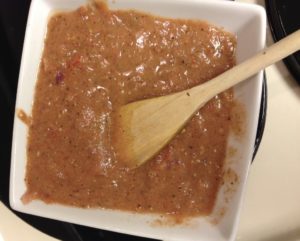
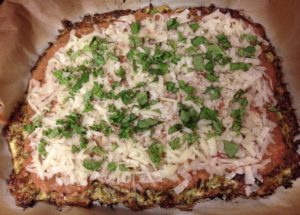
I’ve not bought a pizza since I left my latest dead-end job, which used to feed us every college student’s favorite meal, despite the amount of money we collectively brought in. Yet, this recipe, using broccoli, cheese and spices as the crust was intriguing enough to prepare. I made a marinara sauce, using my blender, but I skipped boiling down the water since I figured it was thick enough for my purposes.

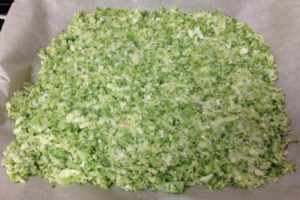
Next, I pulsed the broccoli in the blender and skipped the step of squeezing out the excess water with a towel.  The broccoli didn’t seem overly moist and, truth be known, I wasn’t in the mood to deal with cleaning broccoli off one of my dish towels.  I mixed the broccoli with some Italian spices, cheese and an egg. Then, I spread the mixture onto parchment paper to bake.

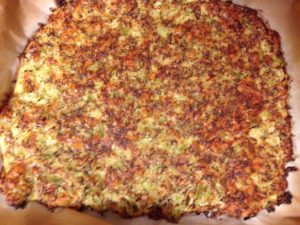
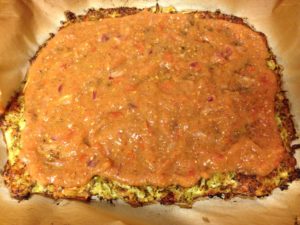
I could’ve happily eaten the baked broccoli and cheese crust!  Instead, I spread the sauce on top.

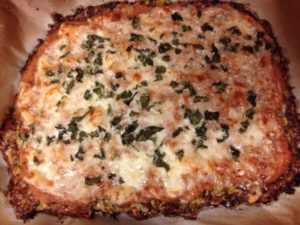
Then, topped it off with parmesan, mozzarella, and fresh basil.

I returned it to the oven long enough to melt the cheese.  This was one of the best flourless pizzas I’ve ever eaten.  Plus, the crust wasn’t too much of a pain in the ass to make. Often times, the thing that discourages me from making gluten-free or vegan meals is the time-consuming preparation. I know, the grander scheme of things, there should be a nobler cause that dictates my diet.

Yet truth be told: I’m an omnivore who restricts her meat consumption. Overall, it seems that the people who live the longest, are nonsmokers, eat lots of fresh produce, very little meat or dairy, has the occasional drink, exercises regularly and socializes.

I’d like to add another to that: controls her own schedule.  I’m a much happier person and have even started cooking more often since I’ve had control over my own schedule, so it’s not this rushed chore I cannot wait to complete just to have sustenance. I like having leftovers, but now, I have a variety of meals and combinations throughout the week.

Frybread

A few writers who have participated in my monthly spoken word and storytelling show, The Austin Writers Roulette, have written about frybread. Many different cultures around the world have their staple breads, but I’ve never tried any Native American bread before.

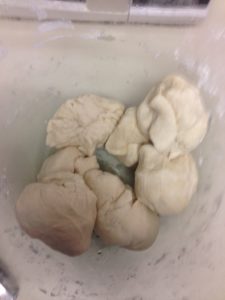
Now that I’ve cooked up ethnic dishes for the past couple of weeks, I’ve finally gotten around to frybread. I mixed all-purpose flour, water, salt, and baking powder; kneaded it into a ball; and let it set for about 30 minutes. Although the instructions stated that the longer it set, the fluffier the end product would be.

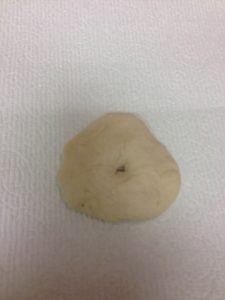
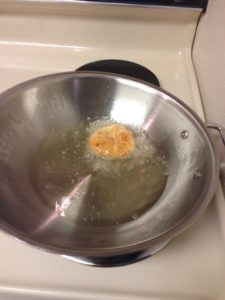
I cleaned my apartment in the meantime and once I finished, I heated up the oil in my wok and rolled the dough into balls. I flattened the dough out with the palm of my hands and put a small hole in the center.

Using tongs, I slid the dough into the wok. If it sank to the bottom, then the oil wasn’t hot enough. Since I’d used just enough oil to get the job done, I wasn’t about to get any closer to boiling hot grease to see if the dough touched the bottom or floated.

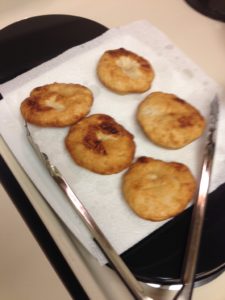
I had a pretty good process going. As soon as I’d prepared one to slide into the wok, the one already frying was ready to be removed.

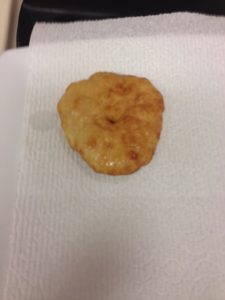
When I bit into the tester piece of bread, my first thought was, “Dough brick.” Fortunately, it wasn’t quite as hard and heavy as my first impression. But not as light and airy as I’d hoped either. I made quick work of the whole batch.

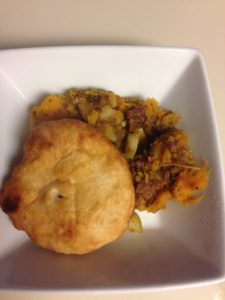
Even so, a thin smoky haze floated throughout my apartment. To prevent the activation of my smoke alarms,  I turned on the stove air vent and took the wok off the burner. Just the night before, the culinary challenge was to bake butternut squash, mix it with beef sausage, chopped pecans, brown sugar, butter and sage. All that deliciousness was bound to be a hit. Only thing that stops me from making butternut squash more frequently is cutting that damn thing open in the first place.

As with every new recipe, I realize it’s not the “authentic” experience, but I definitely enjoy mixing  some familiar flavors in novel ways.

The following day, I attended my first ever Native American powwow. One of my fellow rouletters invited me, especially so I could try frybread. She was volunteering at the ticket booth and was supposed to get off around 11:30, but had to work nearly an hour later since her replacement volunteer ran late.

I walked around the market and looked in on the start of the traditional dance parade in the arena while I waited. Once she was finally free of her volunteer duties, we waited in line at one of the vendors where she knew the owners.

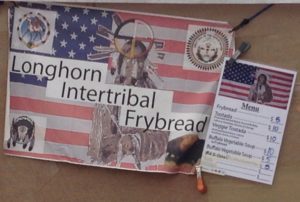
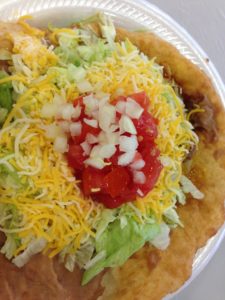
We both got a regular tostada, which used frybread instead of a tortilla. I made a mental note that when I attempted to make another batch of frybread again, to make the dough in the morning to fry it up for dinner. Perhaps  then it will be closer to the consistency of that delicious frybread.

Afterwards, we watched some of the competition.

The announcer called out the various categories of competition, which consisted of several individuals performing at the same time. One of the things they were being judged on was how well they kept up with the live music being drummed and chanted. There were two drum circles and unlike African musicians who collaborate with the dancers, these musicians challenged the skills of the dancers to keep in time with their drumming, which could change tempo without notice.

As usual with such an experience, I wanted to learn more about meaning behind powwows since I’m sure I only glimpsed a small part of the significance since I only could truly see the things which I readily understood.

Liberian Rice Bread

As I read Madame President about Ellen Johnson Sirleaf becoming both Liberia’s and Africa’s first female president, I felt humbled, angry and intrigued. Humbled by all the creature comforts I’ve been born into and yet have the nerve to complain about the challenges I’ve faced, which pale in comparison to what Liberian woman have had to face. Angry over the violence, greed and machoism of the men who plunged their country into such an abyss all the while hoarding wealth. And lastly intrigued by the fact that women, who were assaulted at such a frequency that hardly anyone batted an eye, still had the resiliency to take care of their families by forging into the woods to find something to sell.

Throughout the biography, I looked up pictures of various people who were mentioned. I listened to popular political songs during the time. As if hearing music from that region hadn’t transported me to my times as a Peace Corps Volunteer in Tanzania, the mentioning of food truly landed. Although Tanzanians have their own take on similar ingredients, Liberians have their own flair on such staples as bananas, spices, rice, beef, chicken and something I’d never even heard of before, potato greens.

Since I usually prepare one big meal a week to store in plastic containers and warm up during the hustle and bustle of my work week, I dedicated this week’s cooking to Liberian recipes, starting with rice bread. My general attitude about recipes is that they are guides, which I readily adapt to the ingredients I have, my Vitamix to grind up fresh spices and make sauces, and my usual quest to use the smallest amount of cookware to have fewer things to clean up afterwards.

I chose two recipes: Jollof rice and rice bread. The most interesting one was the latter. I never made a vegan style bread, but I recommended this recipe to both my mother, who’s tasked with Thanksgiving dinner with vegans, and my sister who’s a pescatarian with vegetarian and vegan kids.

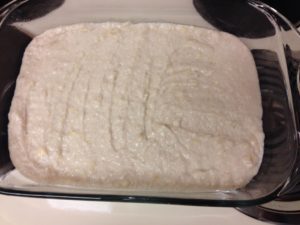
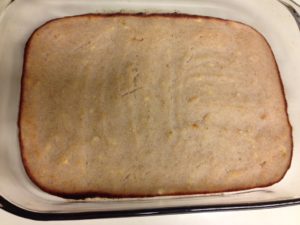
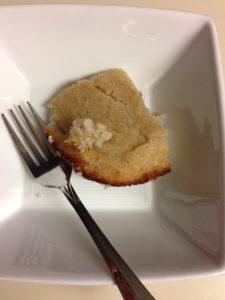
I’d never heard of cream of rice before this recipe, but logically enough, it was right beside the cream of wheat. I mixed the small box of cream of rice with three mashed bananas, freshly grated nutmeg, some sugar, oil and baking powder, which was supposed to be baking soda except I didn’t have any. One thing I underestimated was the amount of oil to grease the baking dish. I discovered that after the fact. I even warned my mother. After I got the goods from the baking dish, I sat back and enjoyed it’s deliciousness: crispy on the top, slightly sweet and moist on the inside.

One day, I’m going to taste something more authentic, but in the meantime, I’m very happy with the Teresa version.

It’s All about the Butter

“Life teaches you how to live it if you live long enough.” –Tony Bennett

I’ve lived and traveled around the world as an international math and science teacher for 11 years, starting as a Peace Corps Volunteer in Tanzania straight out of college since I didn’t want to get a real job, then as an ESL teacher in South Korea after not readjusting well in the States, then again for the 8 years during Dubya’s presidency. So, I taught in five different countries and visited about 20 more. Despite the wide variety of experiences, I ate my way through every one of them.

I’ve never been accused of being a picky eater, but living in developing countries challenged that. Everyone should try it. I don’t mean “visiting” a developing country for a few days or a couple of weeks. I’m talking about living there for at least a year or longer, on a reduced budget, where you have to re-strategize your how you obtain nourishment.

If you have enough money to maintain your normal feeding habits, then it doesn’t really count, especially when you can afford to pay ten times as much for authentic bottle of American ketchup.  There’re bottles of red condiment to be found in practically every country, but it’s not the same. In Tanzania, they had Peptang. I credit Peptang for breaking my taste for ketchup.  Not that I found it delicious. Just the opposite. I’d much rather eat my food without any condiment besides a little salt, than to use a ketchup imposter. To this day, you’ll find several varieties of hot sauce in my refrigerator and no ketchup.

When I saved up my money and wanted a gastronomic splurge, I bought a very waxy chocolate or cheese. Perhaps it was a mild cheddar, but it was just called “cheese.” I’d never learned the Swahili word for “cheese” since the people who sold it all spoke English.  And there were two choices: having cheese or not.

Next stop: Seoul, South Korea. The smell of rice hung in the air. I ate rice at least once a day even though I had the money to eat at American chain restaurants. I’d mostly broken my American eating habit, but the one food I paid premium price for was Quaker Oats. How lovely were the mornings I woke up and made a bowl of hot, steamy oatmeal with sugar, cinnamon and a nice pat of Korean butter. I don’t recall Korean butter tasting much different than American butter. But I assure you, a little butter makes everything better.

The only fats my grandmother ever cooked with were butter, lard, fatback, and vegetable oil. I never saw a bottle of those fancy oils in her kitchen such as olive, sesame, grapeseed, or sunflower. My grandmother never even made rice for a savory dish, preparing it solely for rice pudding.

Once I got to Alexandria, Egypt, I should have outgrown food cravings. After all, I’d lived and traveled around the world for years, but every country offered a different twist. In Egypt, I could only get alcohol at major hotels and other places that catered to tourists, but could smoke all the flavored tobacco to my lungs’ content. Foraging for alcohol became one of my new hobbies. When I visited the States during the summer break, I bought a flask; so I could always have a mixed drink no matter which restaurant I visited.

Yet, there was something about Egyptian butter. I couldn’t quite wrap my taste buds around it until one day I found myself reaching for the salt. I hardly ever salt my food, but when I butter a biscuit, my mouth has the expectations of salted butter. I cannot say that I craved salted butter, but I began mixing salt into my butter before using it.

By the time I moved to Mexico, I hadn’t eaten pork in six years. I’d given up red meat before moving to Egypt, but started eating beef again. Pork wasn’t available there or if it was, it was harder to find that alcohol.

As soon as I moved to Monterrey, I noticed premade sandwiches labelled “cheese sandwich,” which clearly had a slice of ham, as if the concept of a “sandwich” implied ham along with two slices of bread. I avoided pork when it was obvious, so my first pork poisoning came in form of a frozen burrito labelled “res.” In my basic understanding of Spanish, “res” meant “beef.”

People tried to convince me that I must have food poisoned, but after living in Tanzania and Egypt, I knew what food poisoning felt like.  This wasn’t that. This was stomach cramps without fever or diarrhea. My poor small intestines, which hadn’t made enzymes to digest pork in nearly six years, scrambled to breakdown that swine.

The second pork poisoning came a few months later, when silly me thought it was a good idea to eat a gyro, not realizing that the meat spinning on the vertical spit wasn’t lamb nor goat.  It was so delicious, I should’ve known it was pork.

I grew up in the South where every cooked green vegetable was flavored with bacon grease, lard or actual strips of bacon. Real bacon bits on salads. Somehow, Mexicans had out porked even my family. My grandmother had mixed pork brains in scrambled eggs, fried chitlins, and prepared something I’ve never tried since it never appealed to me, pigs’ feet. Nonetheless, Mexicans would’ve made my grandmother proud in all their inventive ways of incorporating pork.

Finally, I reworked pork back into my diet just so I wouldn’t have to suffer pork-poisoning stomach cramps again. I didn’t have to actually prepare it at home—just order practically any savory food and I’d just about be guaranteed to consume something that had pork.

With the continued evolution of my palate, I surprised myself after moving to Honduras. All I could think about was grits. I’d mentioned grits so much that one of my American colleagues brought me a canister when she visited home. I was a little embarrassed that I’d talked about grits that much, but of course, I readily took my comfort food and prepared it the way I loved it the best: a pat of butter and sugar and with a side homemade salmon cakes. (Salmon cake side bar: last time I took my homemade salmon cakes to a dinner party, a woman wanted to eat the partially eaten cakes off my plate rather than get up and serve herself seconds! Now you know that’s serious.)

Sometimes I went to as many as three different grocery stores to get all the ingredients I needed to recreate a dish I was craving. I explored the world of baking quiches, made Indian and Caribbean curries and above and beyond everything else, I’d fill half my shopping basket with fresh produce. At last, I’d arrived at a place where not only was the food fresh, but inexpensive, especially if I steered clear of prepackaged American foods and condiments.

Since relocating to Austin, I no longer have food cravings, which were probably more related to homesickness than anything else. My diet still mostly consists of produce, freshly ground spices, seafood, and poultry. And every now and again, with my childhood favorites, just a little pat of butter.