Perhaps that blaring church music from last night affected me more than I realized. Thursday was actually the 17th!

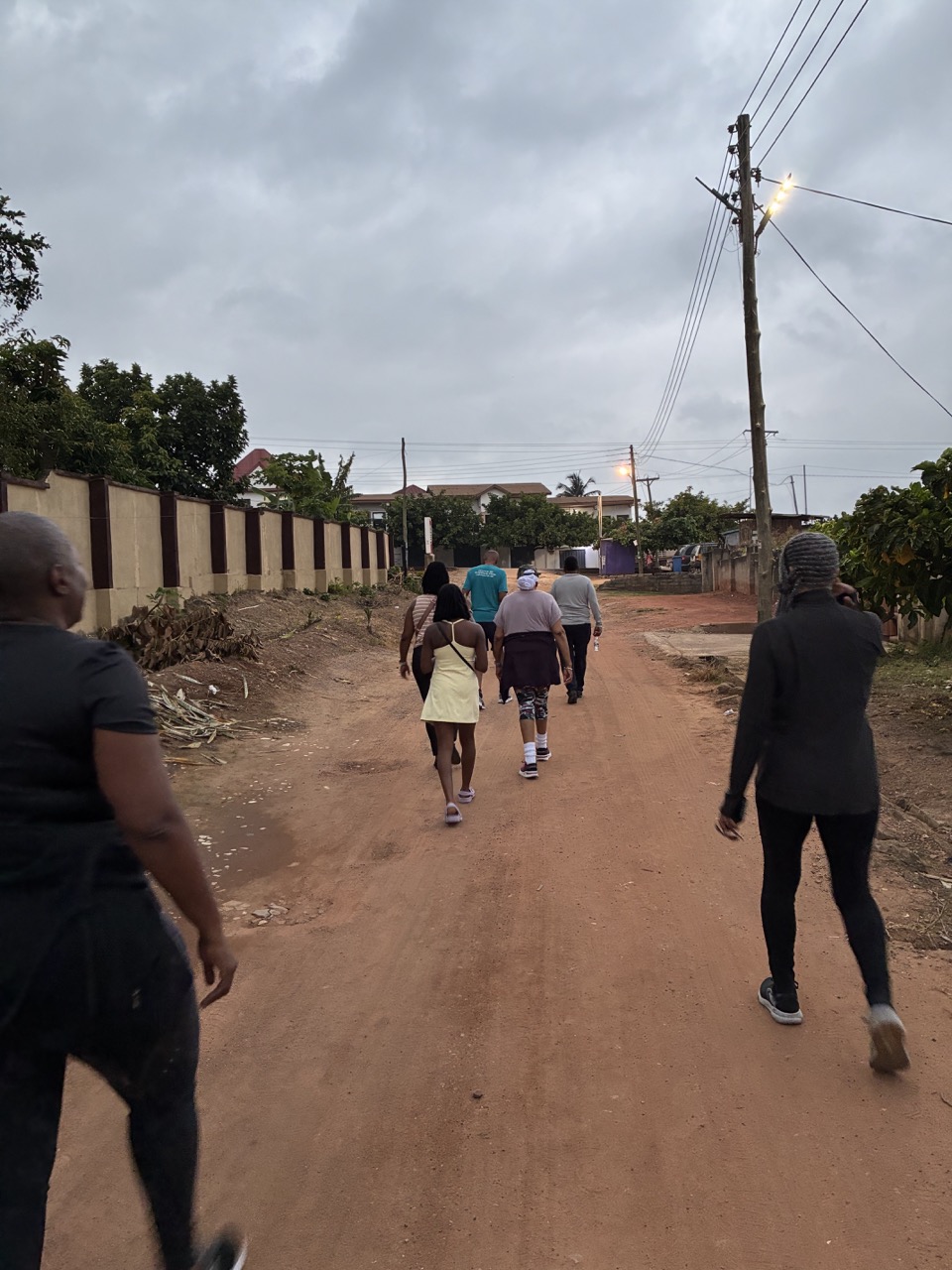
As I figured, our rural morning walk was wonderful. Less traffic, less noise and no air pollution.
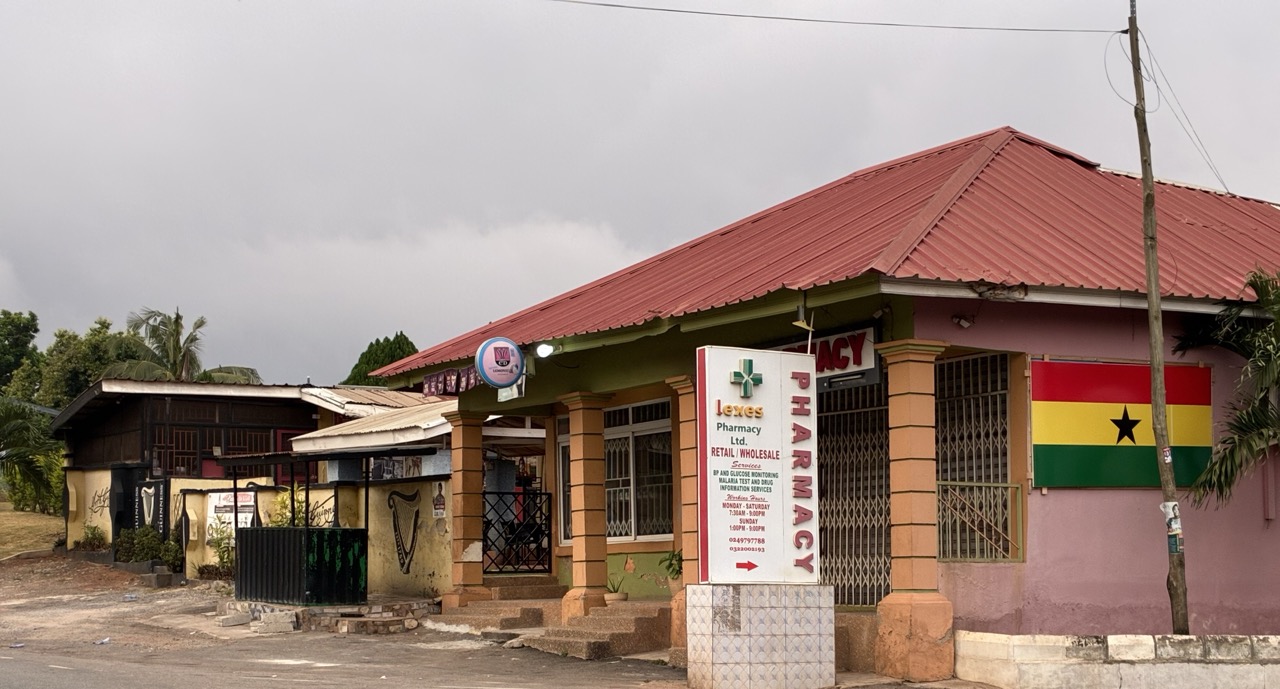
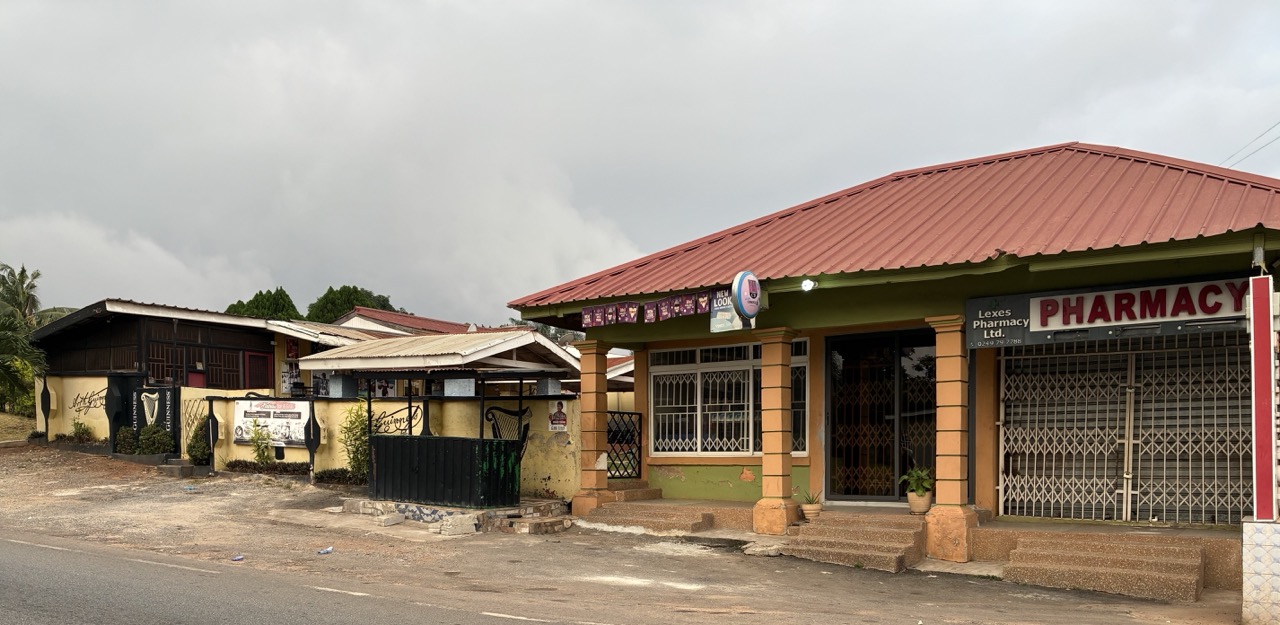
I saw a bar adjacent to a pharmacy and asked aloud, “Which one has the cure?”
(Please click on individual pictures to see the full view, then click on the browser back arrow to return to blog view.)
During our walk, I learned that the upstart short woman touring with us had been a nurse for 41 years. I surprised her by guessing that she’d been a cheerleader in high school. She never answered my question about which type of nurse she’d been: Florence Nightingale or Nurse Ratchet. Beloved or feared.
We saw fewer roosters on the rural walk than on the urban one. Perhaps the country setting provided far more places for roosters to strut around than their urban counterparts.
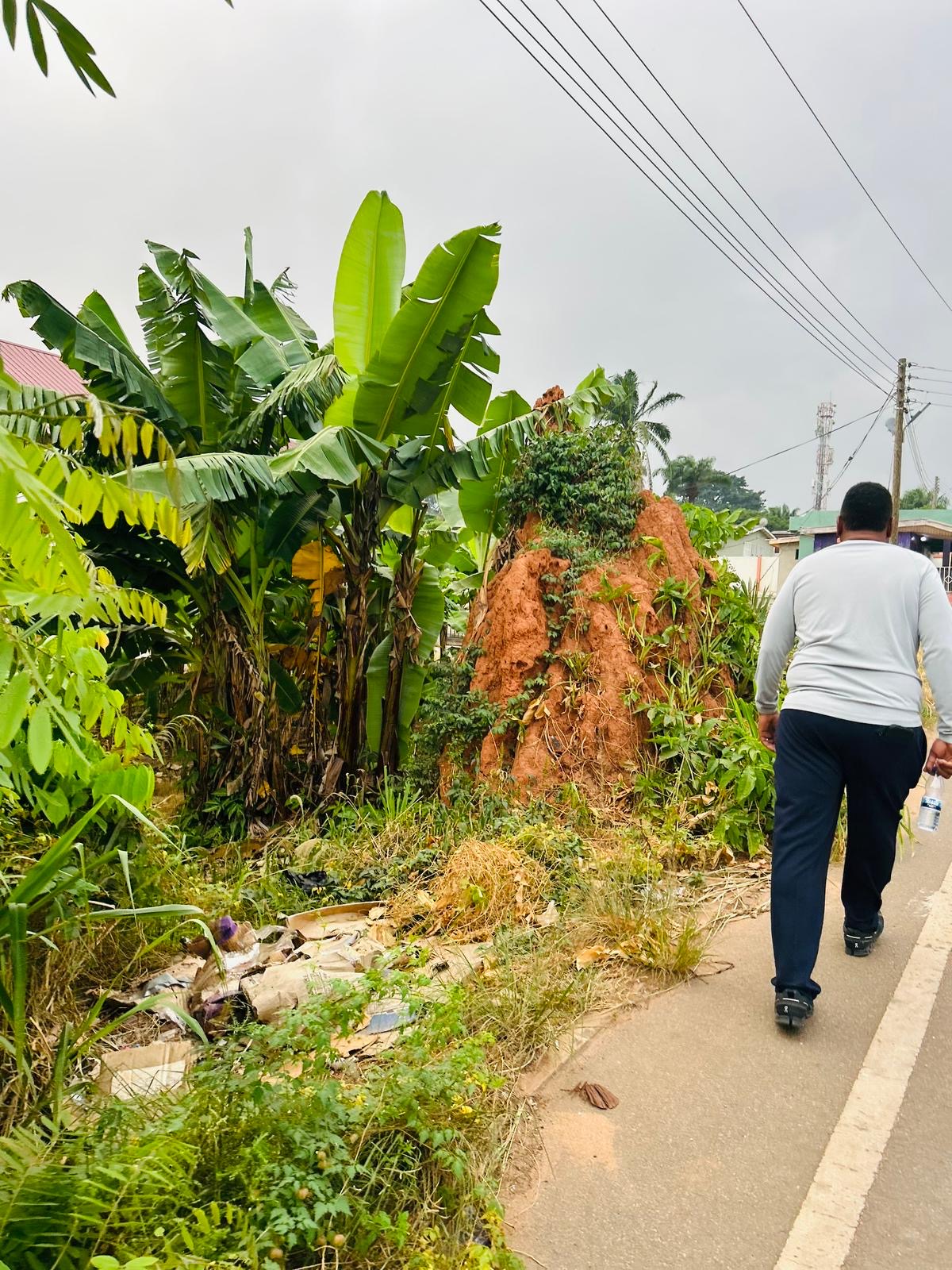
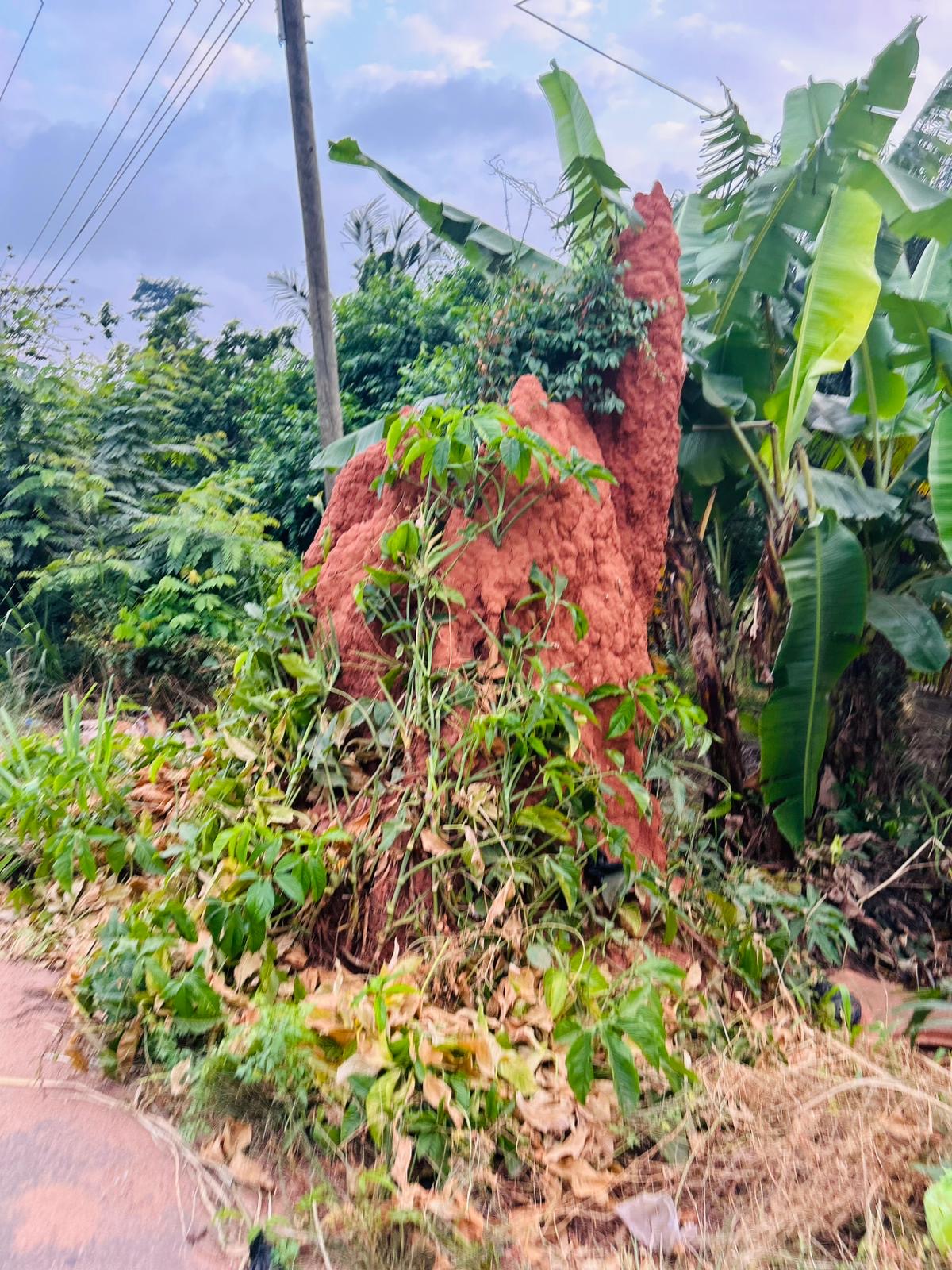
Initially, I thought those towering red mud structures were termite hills, like I’d seen in Tanzania. Someone said they were ant hills. Either way, I didn’t get close enough to inspect the structure to see which insect had constructed it. Once I returned to the States, I researched that Ghana’s capital city, Accra, was the Akan word for “ant.” I also read that Ghana has both ant and termite hills.
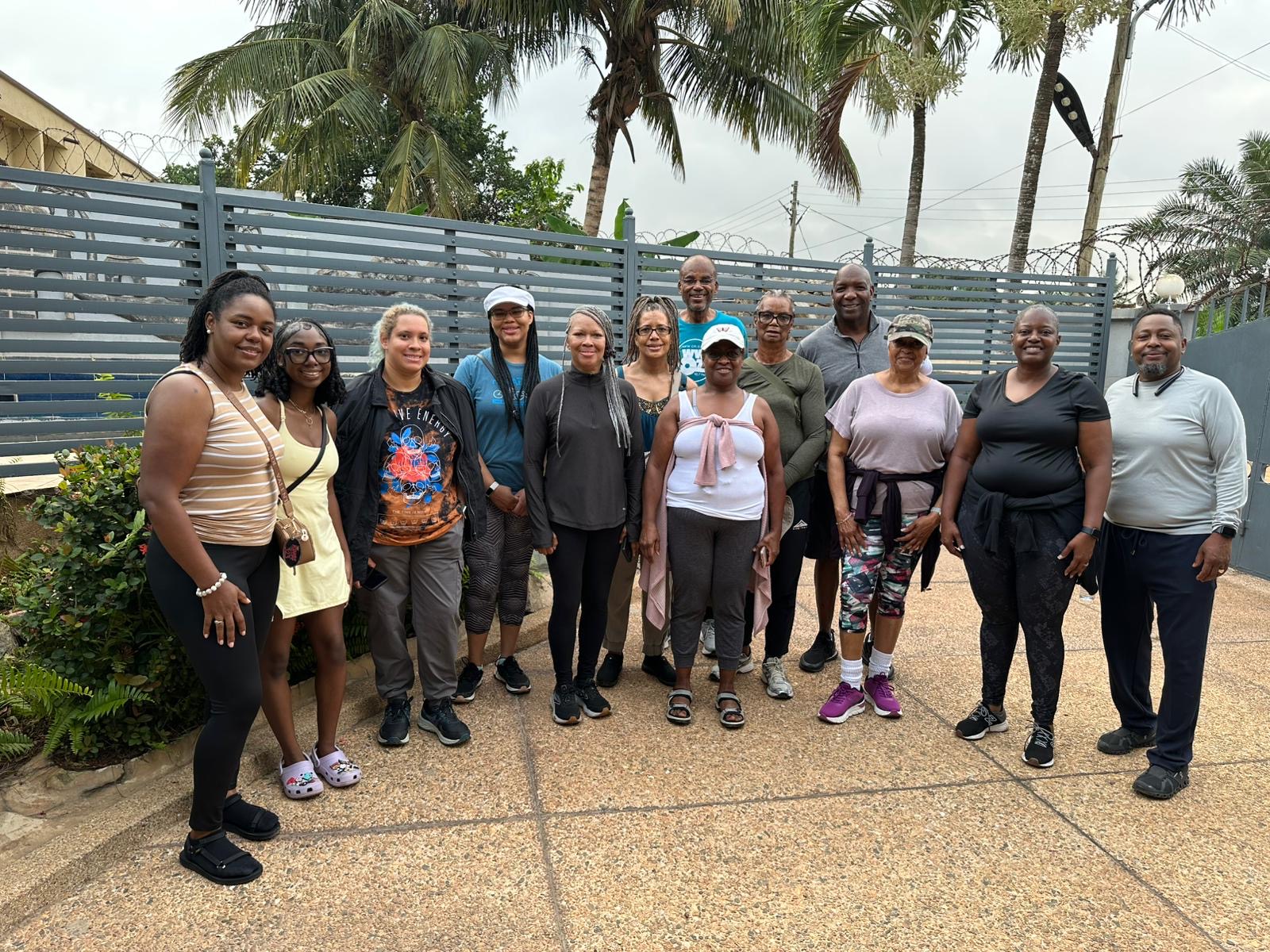
During breakfast, we had an amusing conversation about those beads that women drape around their waist. I’d always heard that women wore them to appear more alluring for seduction. However, some women in the tour group had been told at the market that they were for weight management. One could tell they were gaining weight when those beads fit tightly. I thought that was a clever marketing pitch for overweight tourists such as the average American.
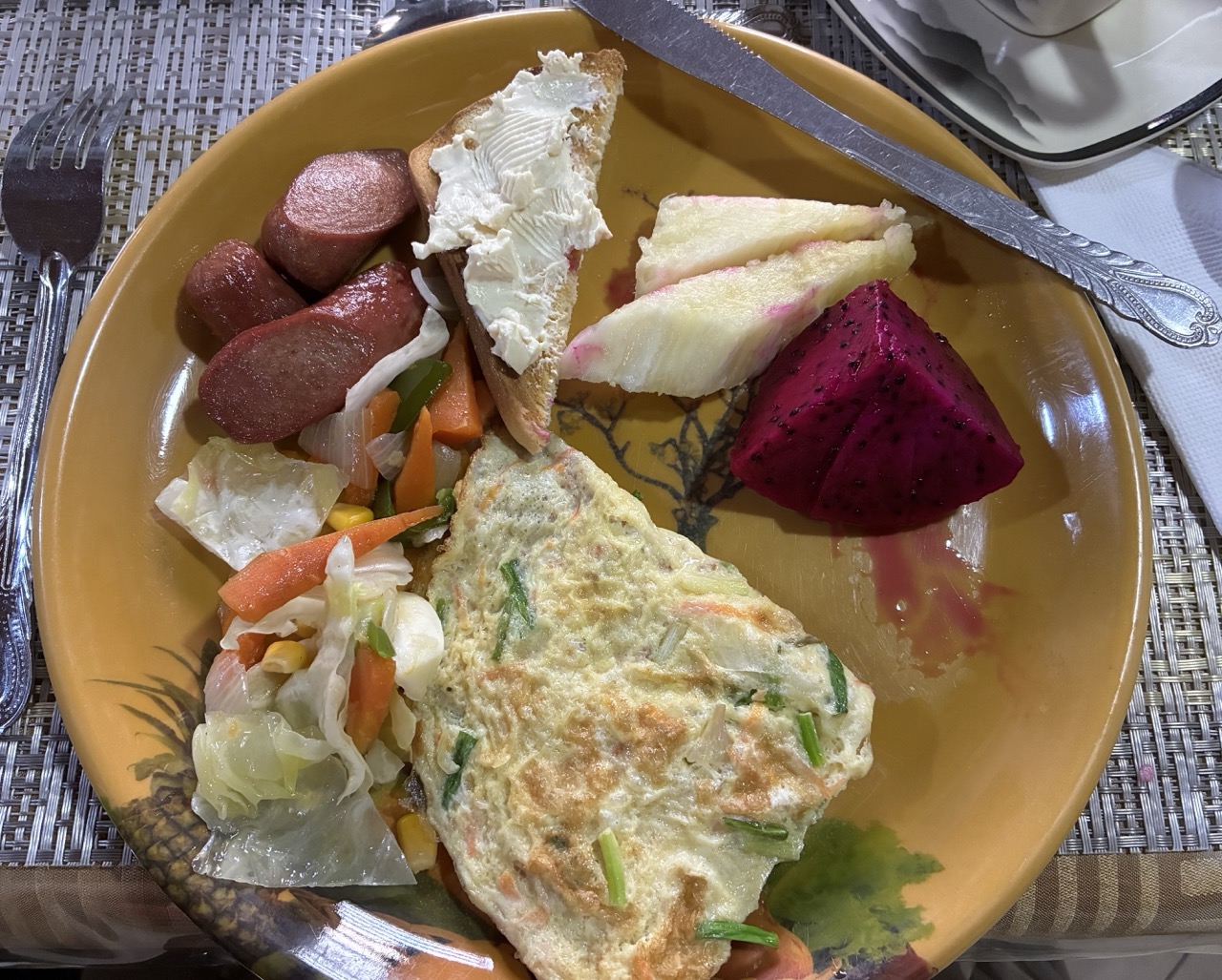
For a country swinging in spicy food, there was no hot sauce for my omelette. However, I enjoyed the side dish of cooked cabbage, mixed with carrots. That was the first time I’d ever eaten purple dragon fruit.
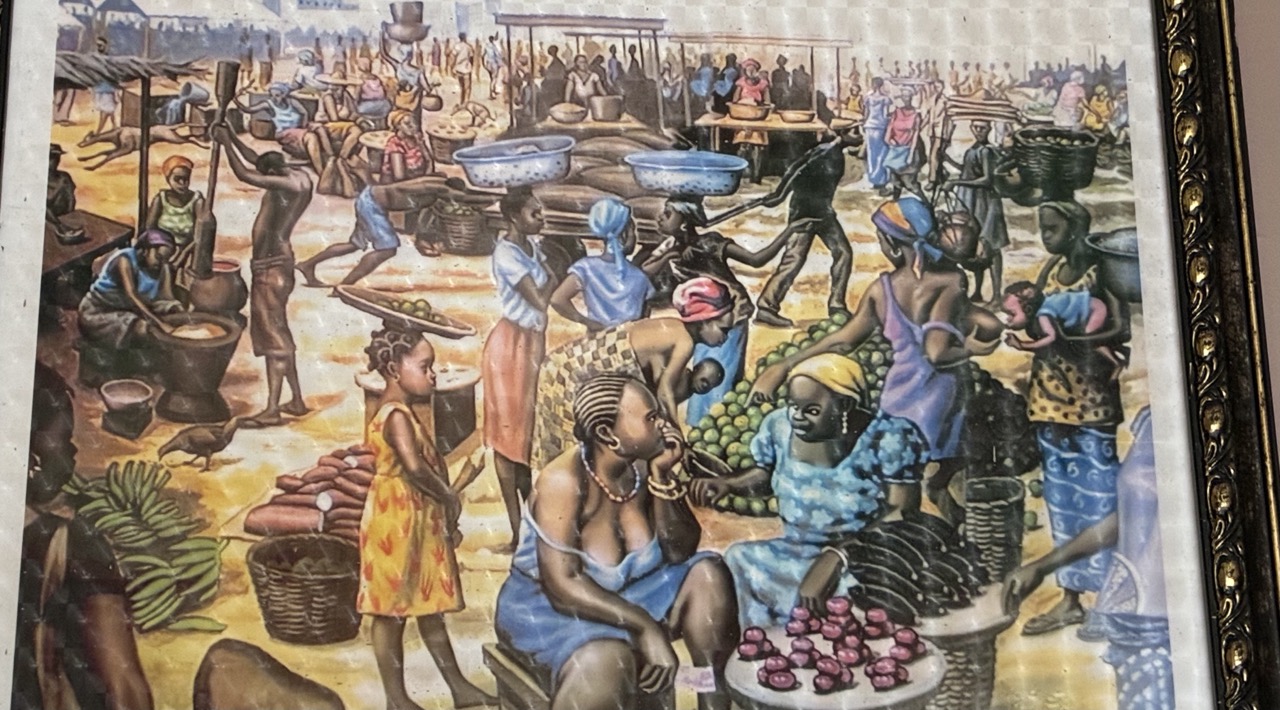
While eating, I kept looking at a framed painting of a market. I wondered how dated such a scene was. After living and traveling around developing countries for years, I knew that there were usually pockets of modernization along with pockets of anachronism.
We rode through the Knust area, which had good roads since regular traffic was not allowed.
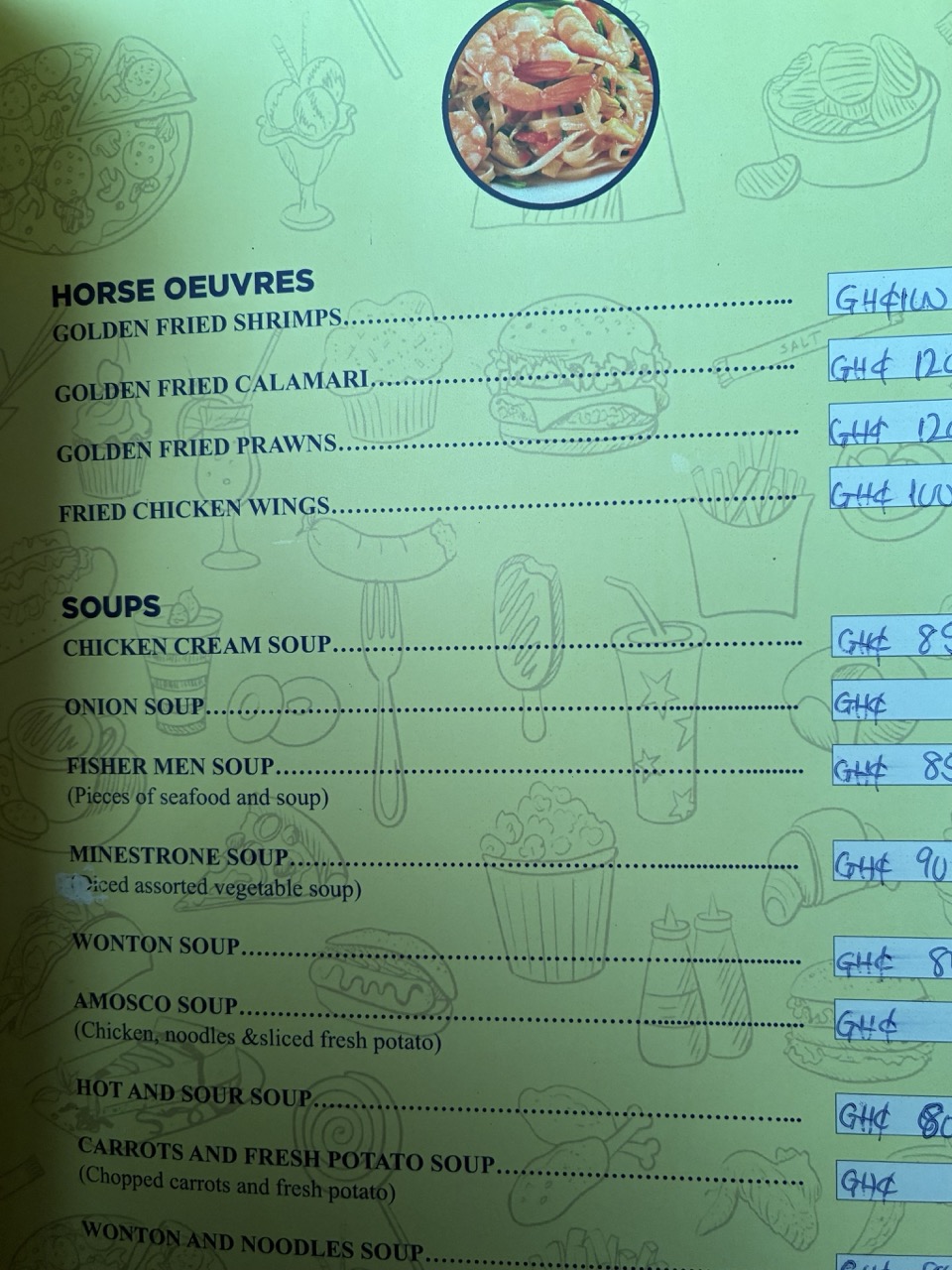
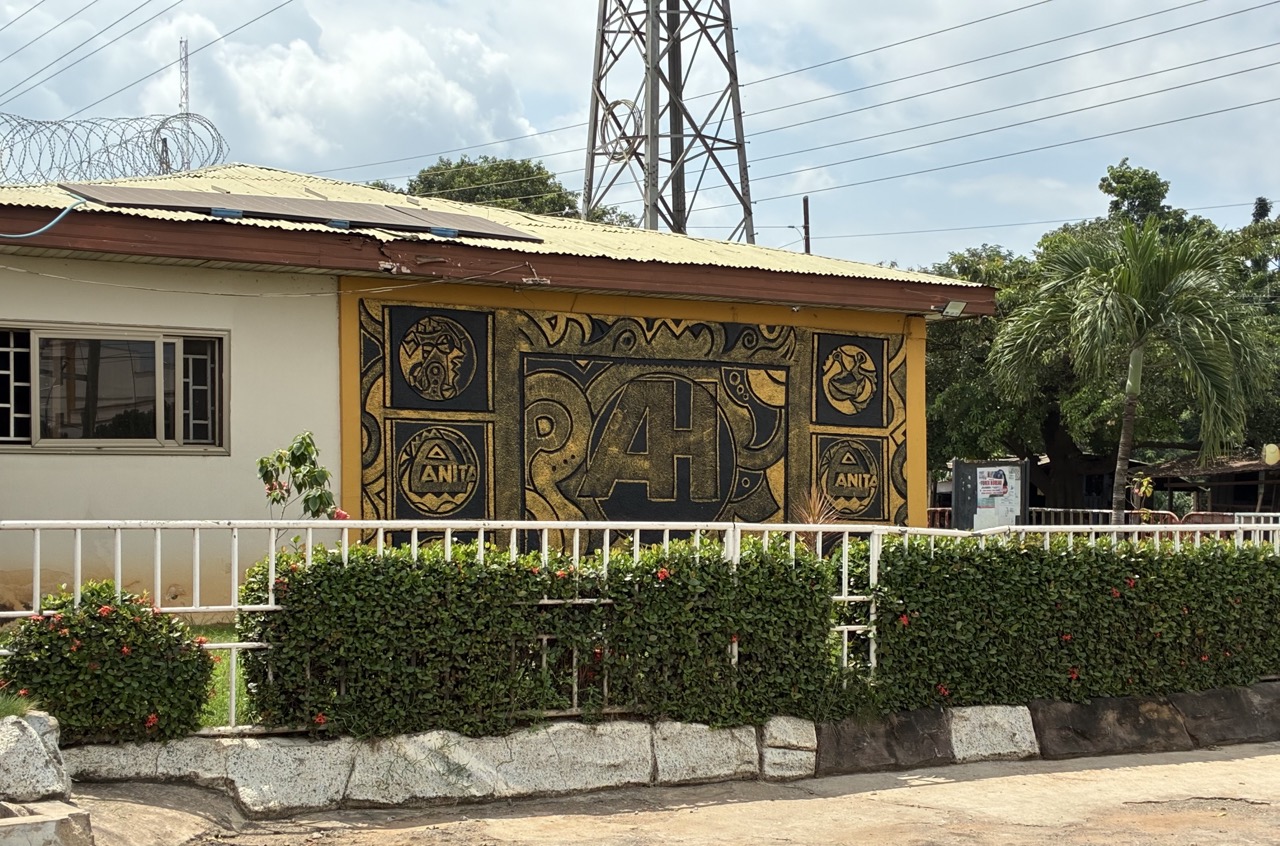
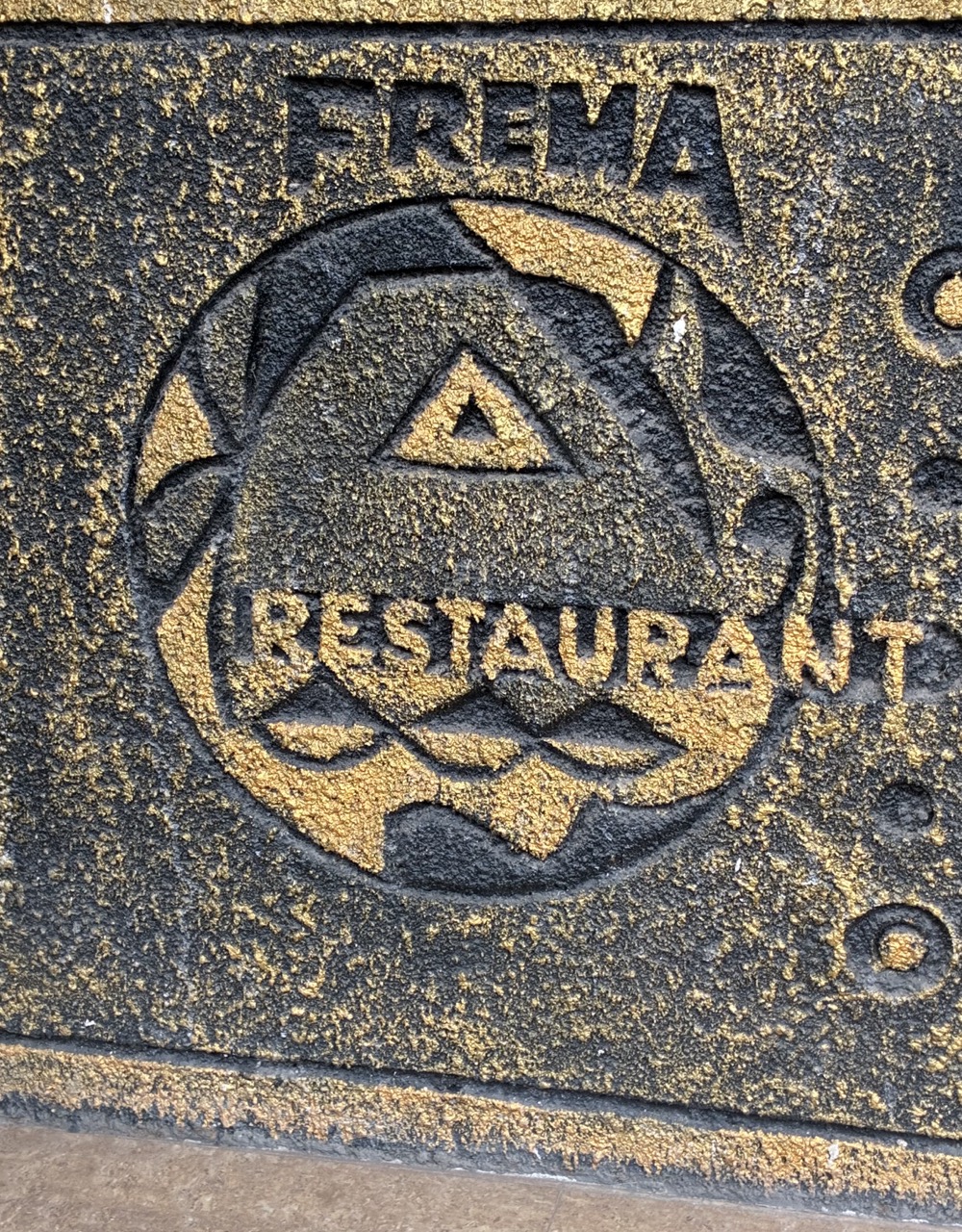
Employees from the Frema Restaurant came aboard to take lunch preorders, but only had two menus, so the process still took a while to complete. I immediately focused on the “horse oeuvres” choices, but was disappointed that fried calamari wasn’t available.
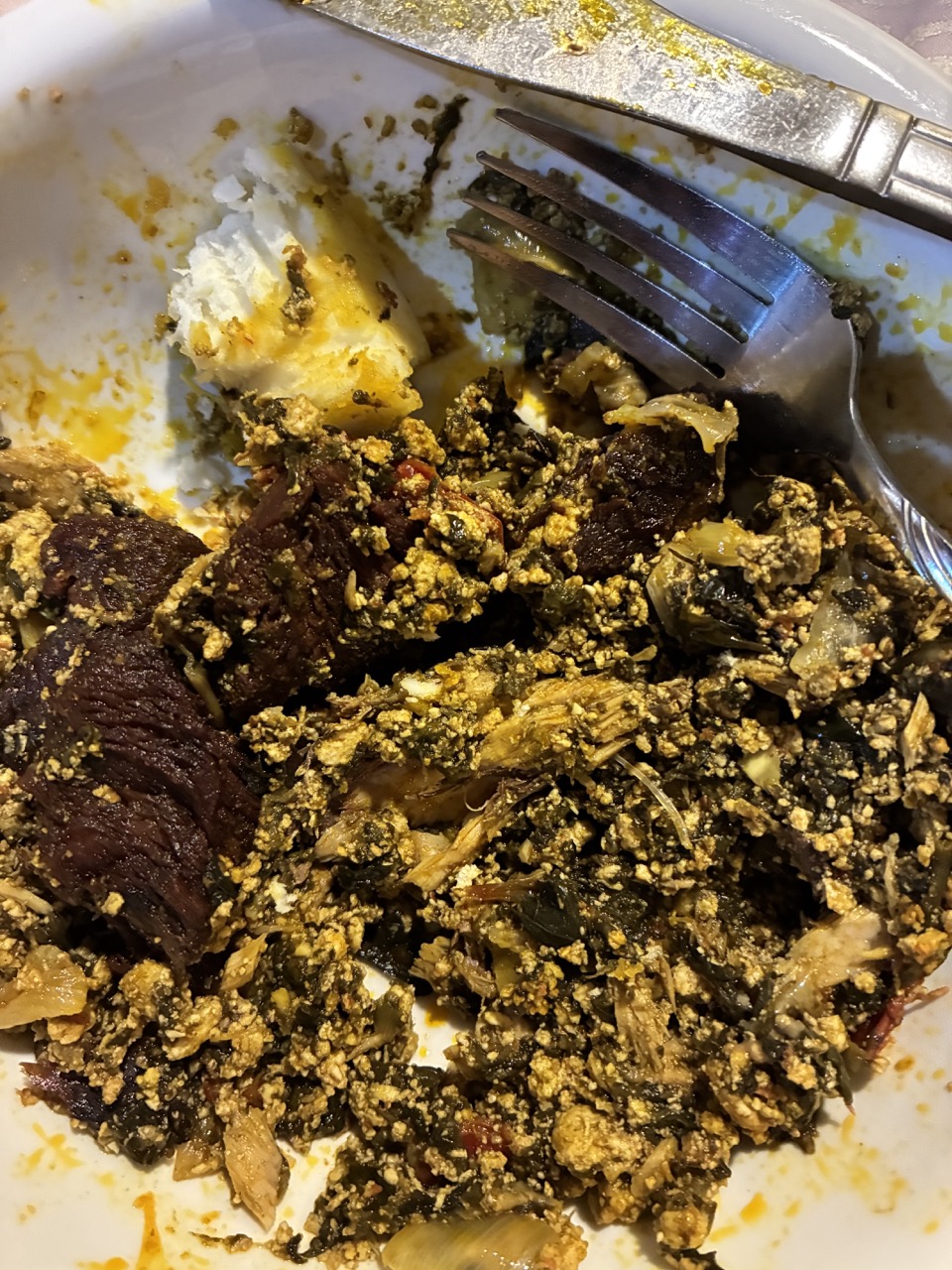
Instead, I ordered a Black Star with beef. When asked if I wanted it steamed or fried, I chose steamed. The employee stated that Ghanaians normally ate it fried. I smiled, thinking I’d just had a “yes, we have no bananas” moment. I got the dish fried.
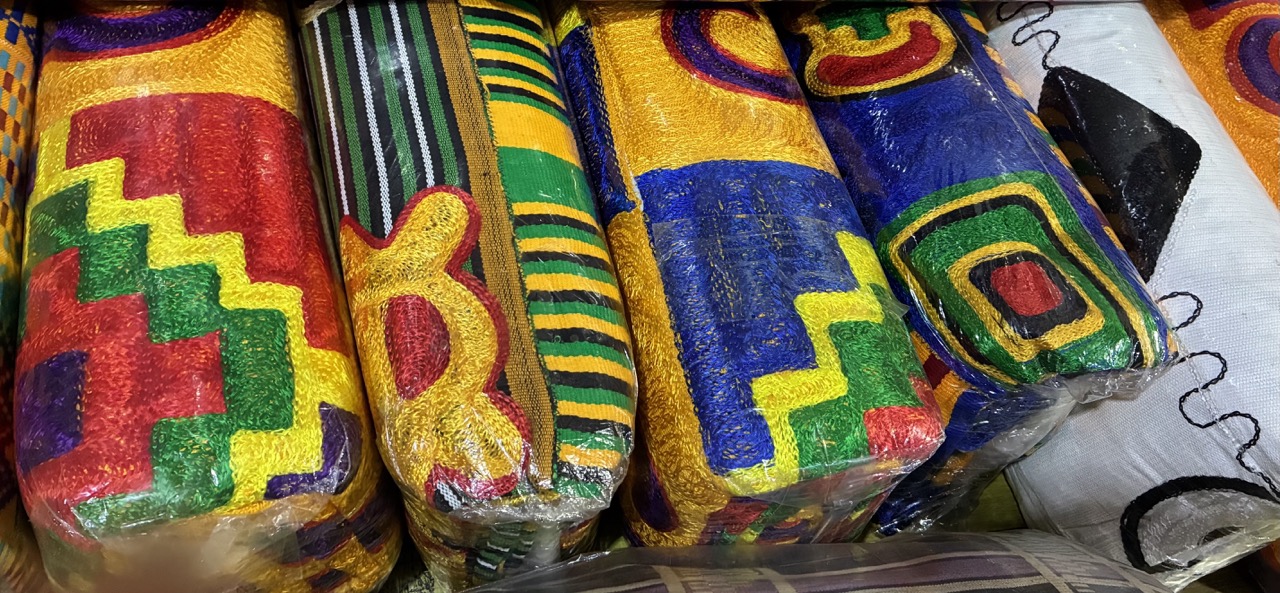
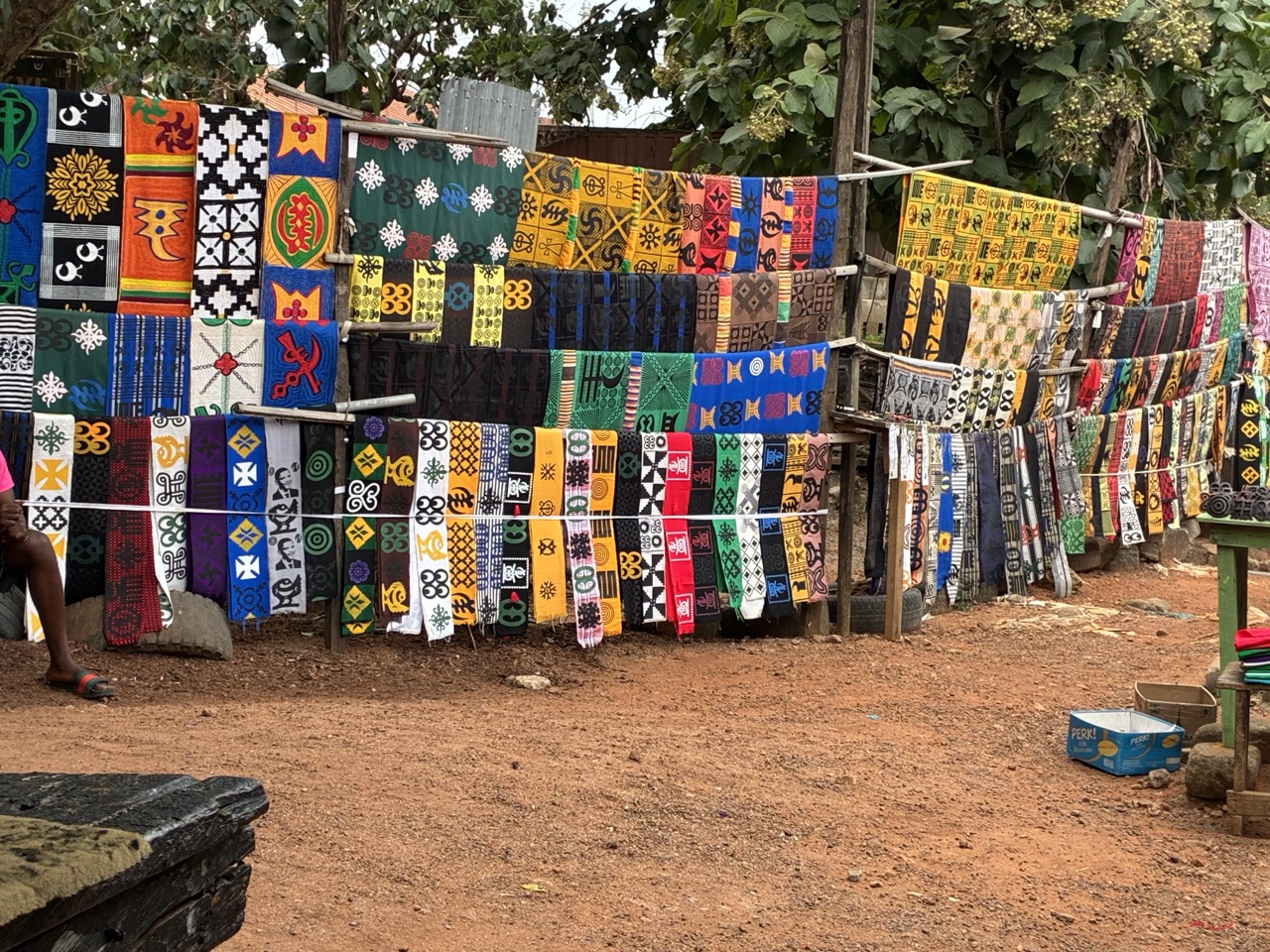
Even though we visited the kente cloth capital of the world, I bought NOTHING because I already had so much cloth packed away at home. Instead, I helped my sister negotiate her purchases.
A few cloth designs were called “Obama.” I never got the explanation behind why more than one design was attributed to the first Black POTUS, but knowing human nature, I hypothesized that more than one weaver wanted to honor him.
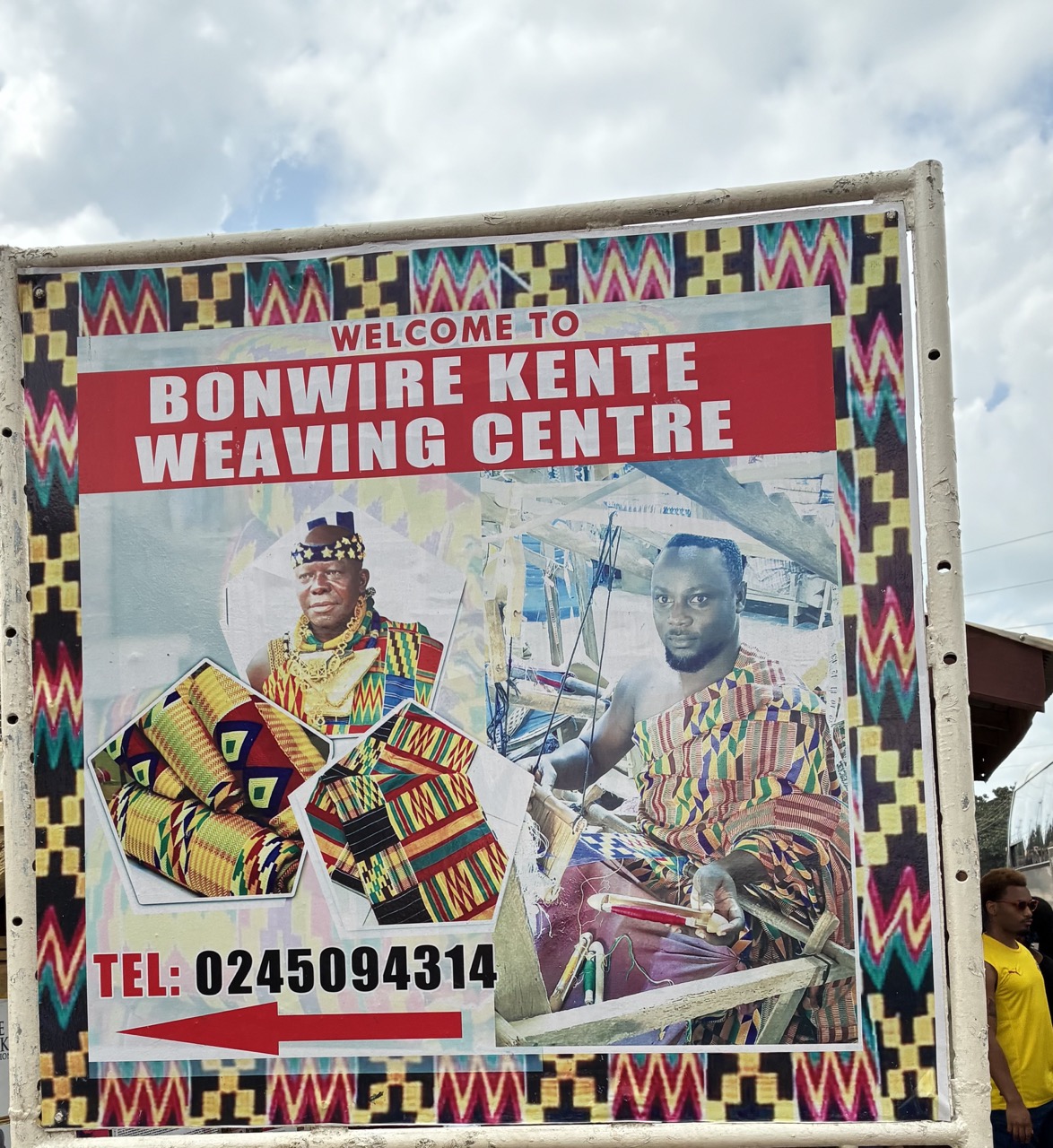
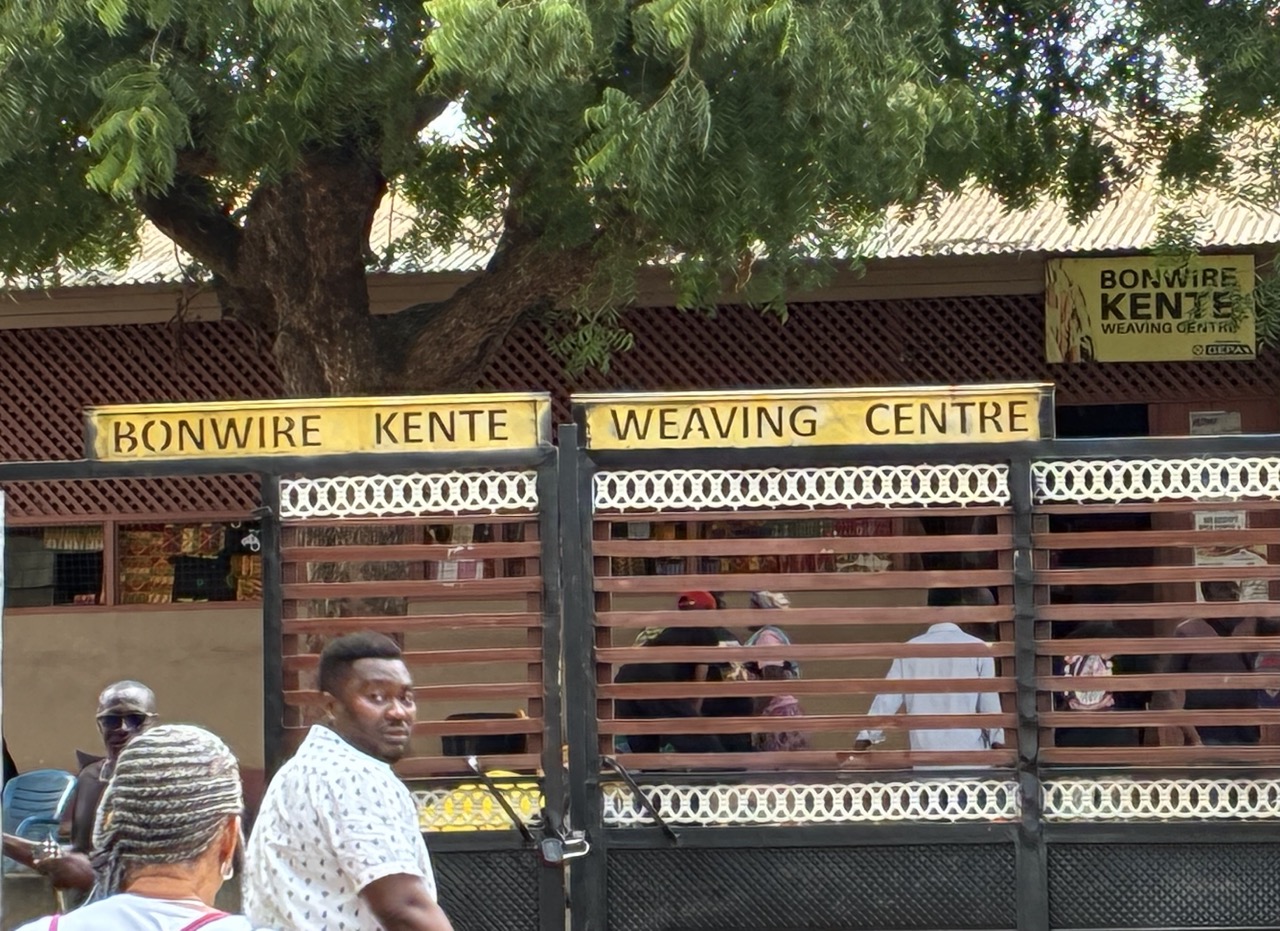
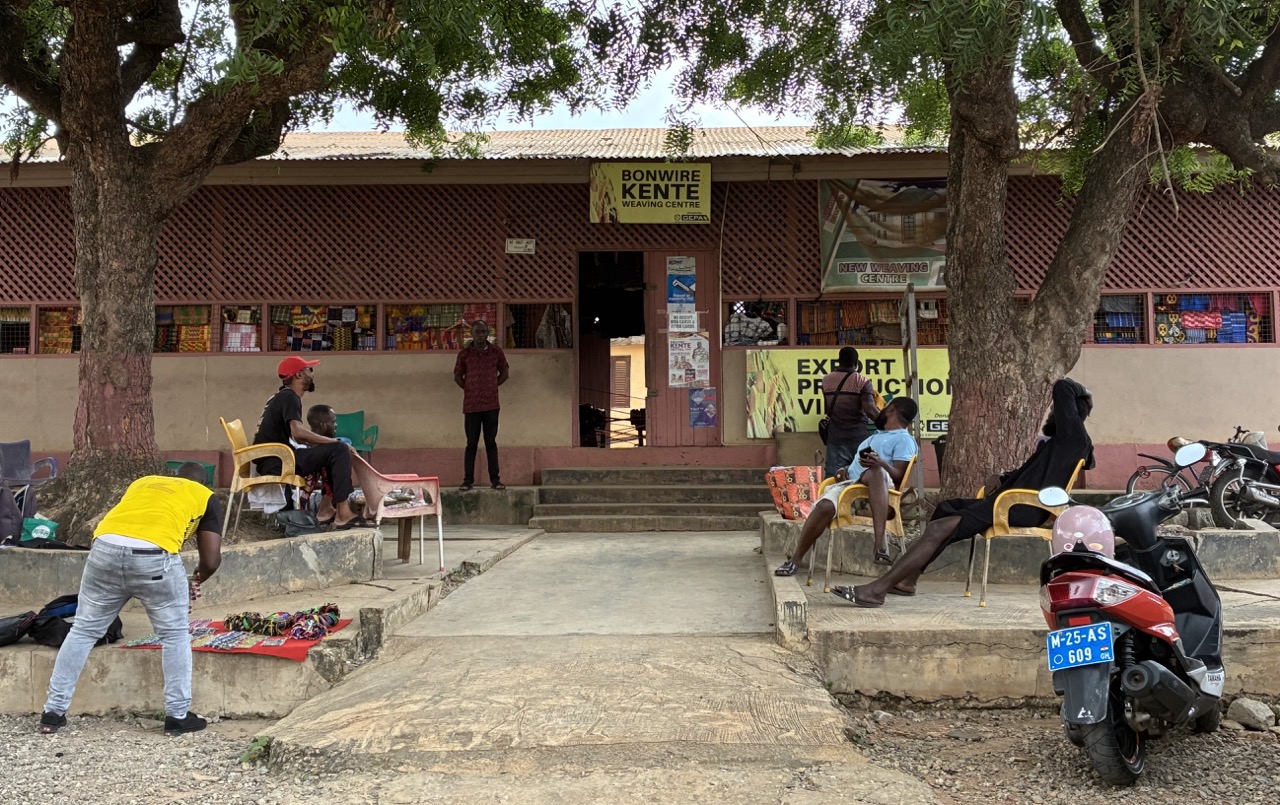
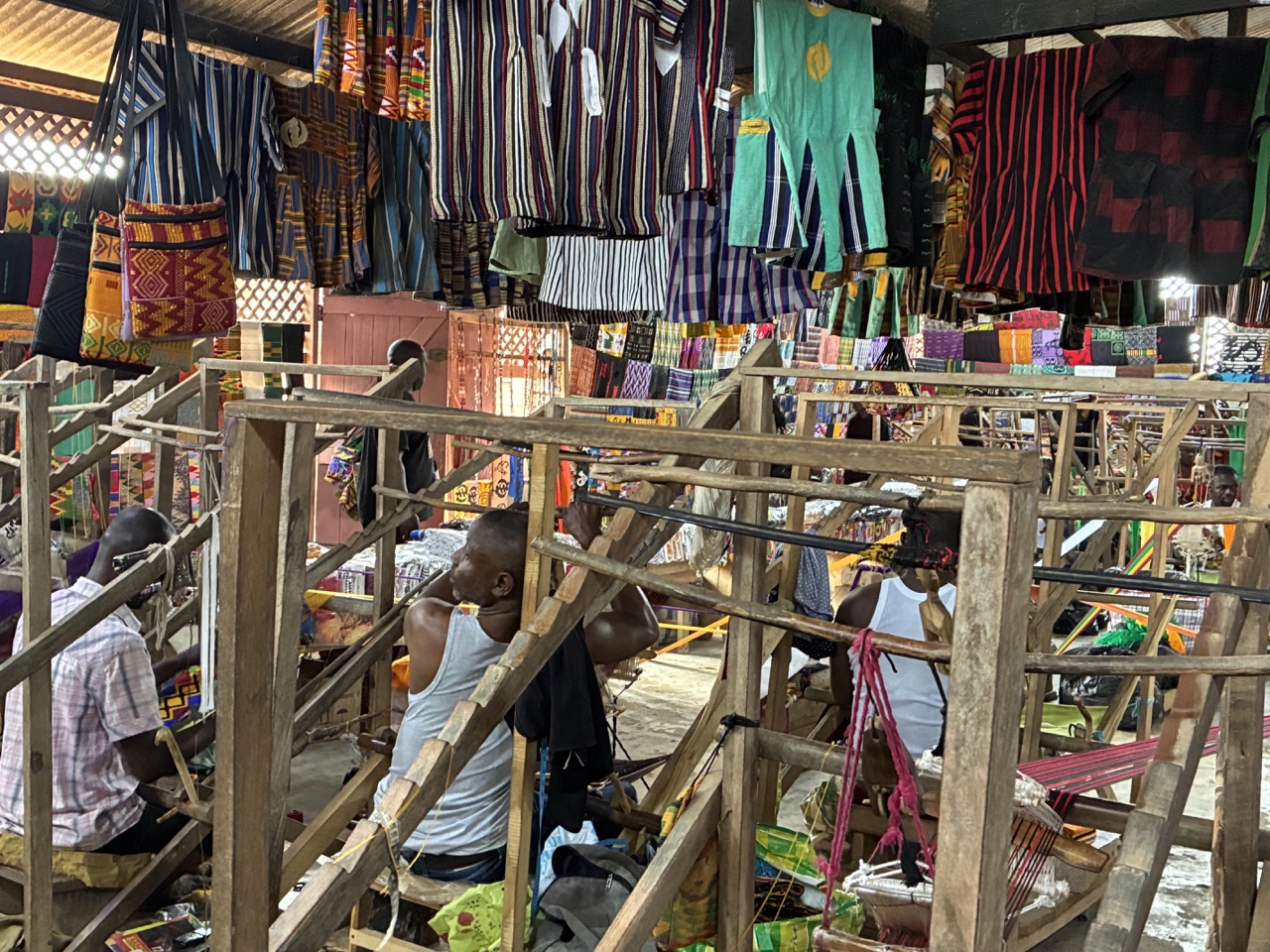
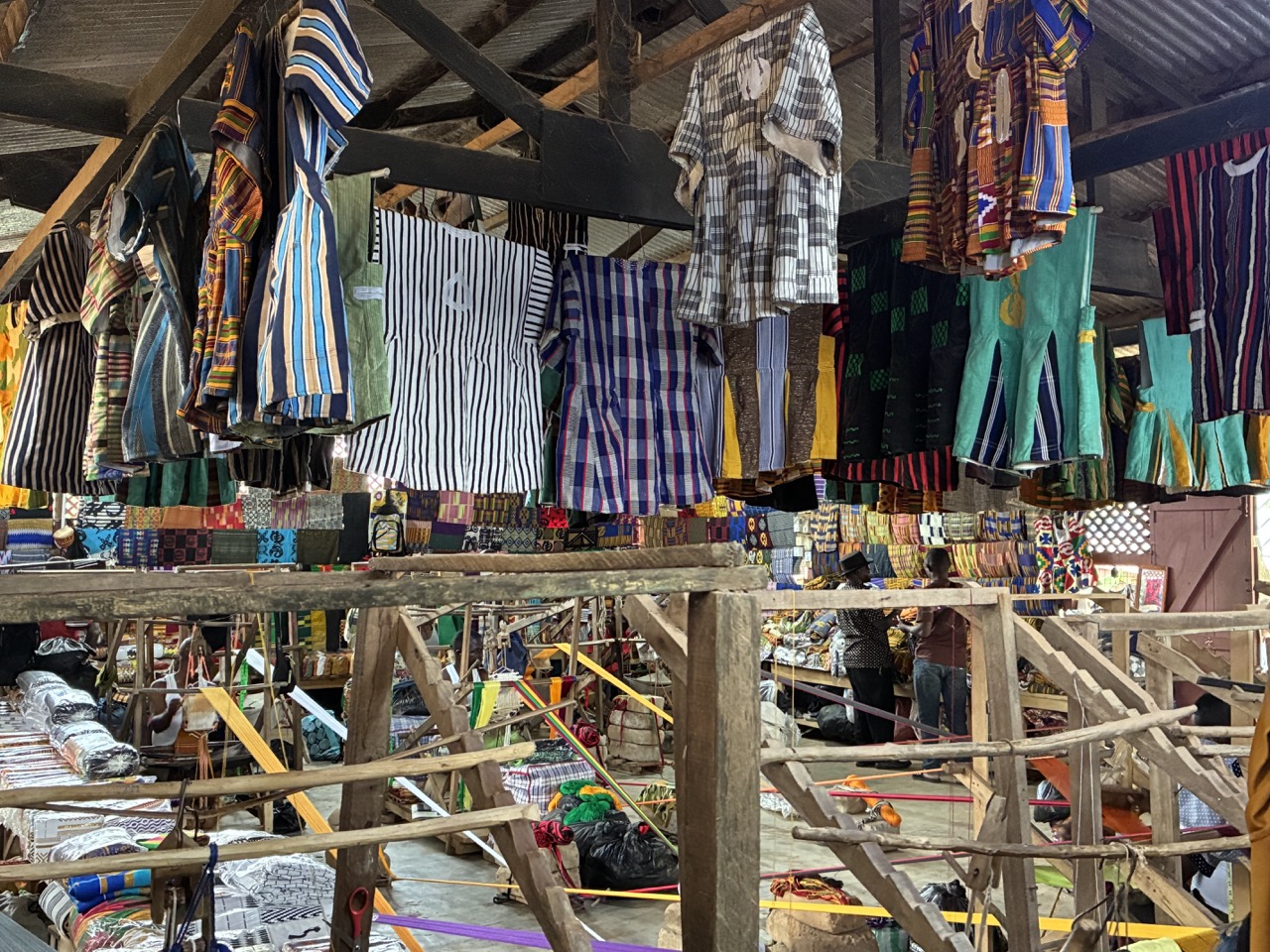
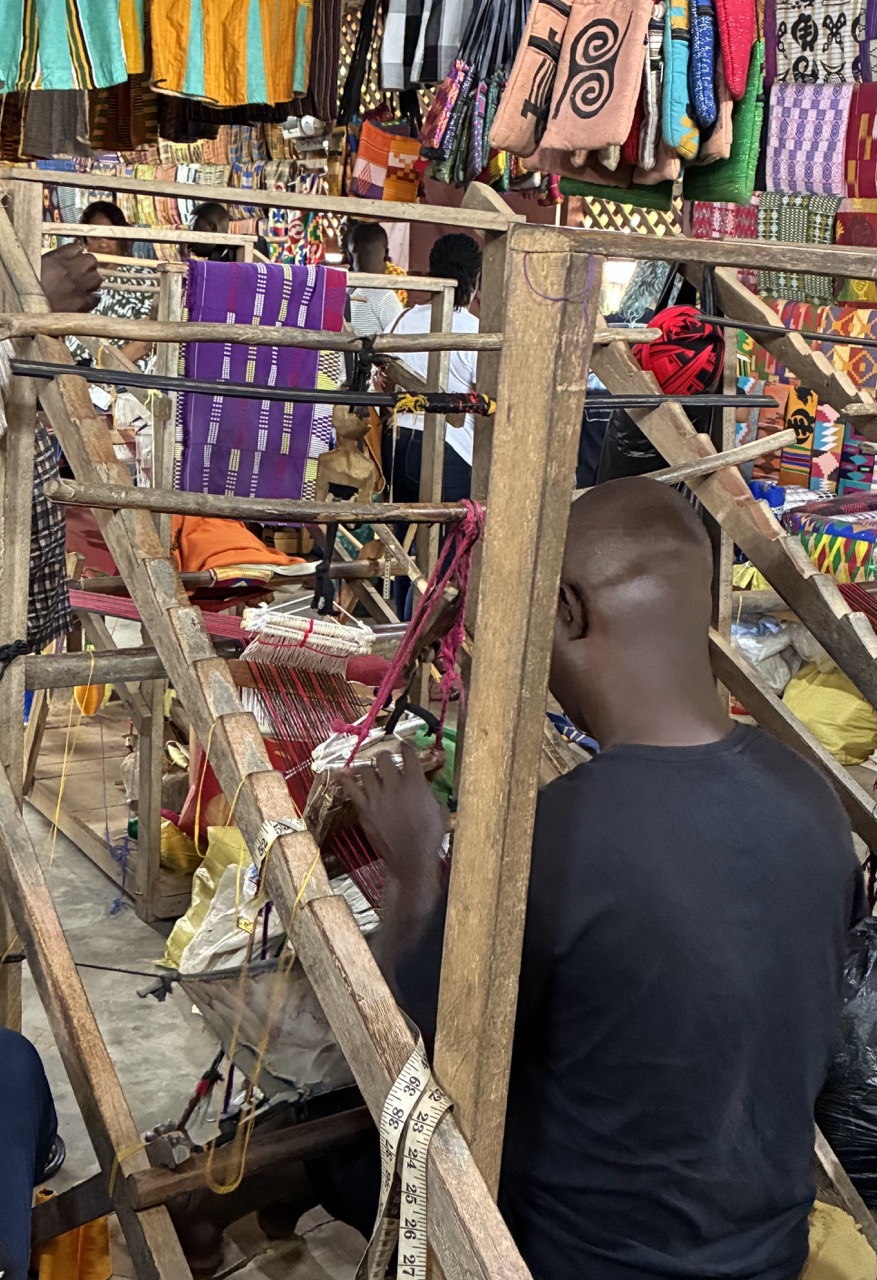
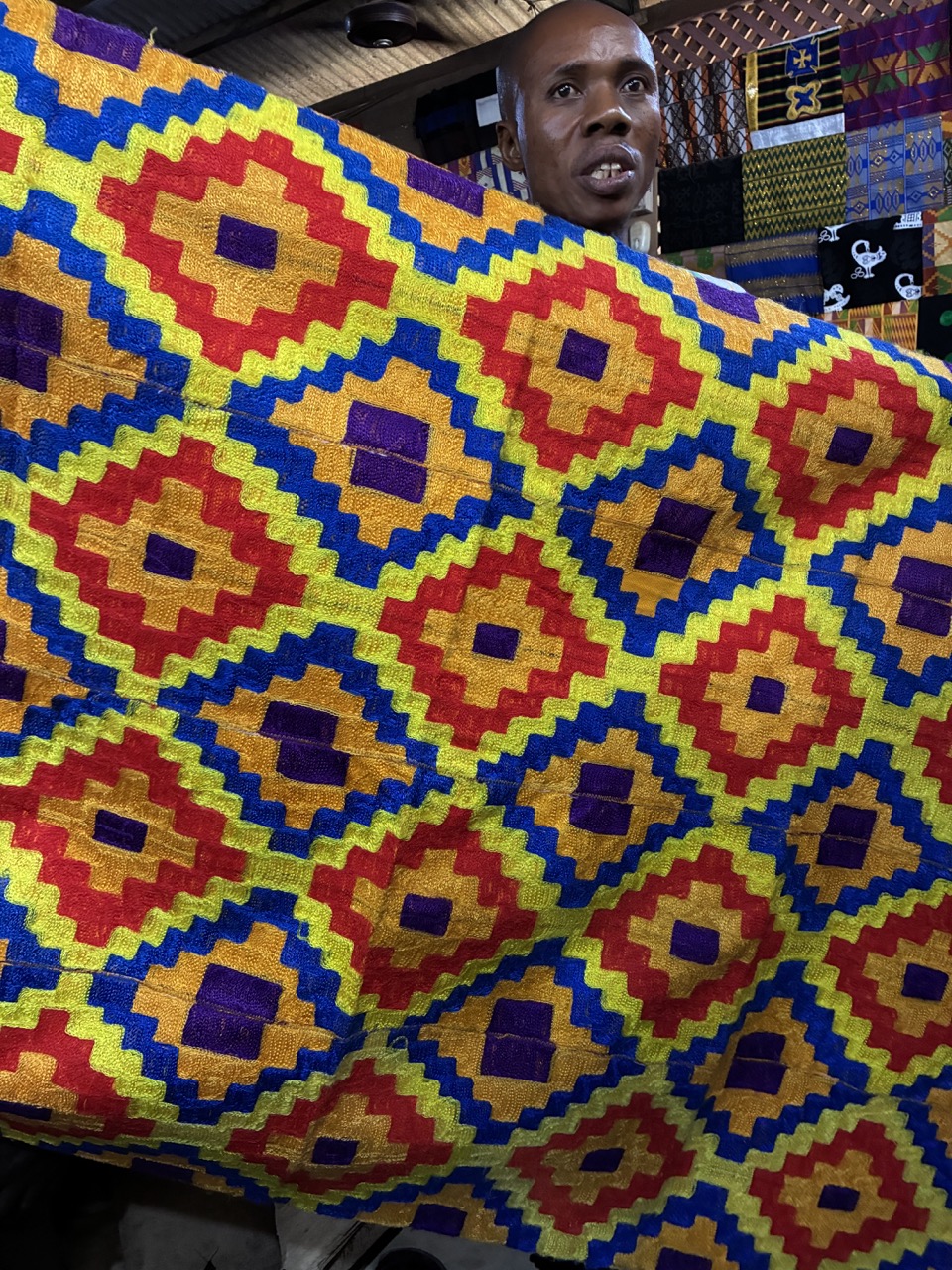
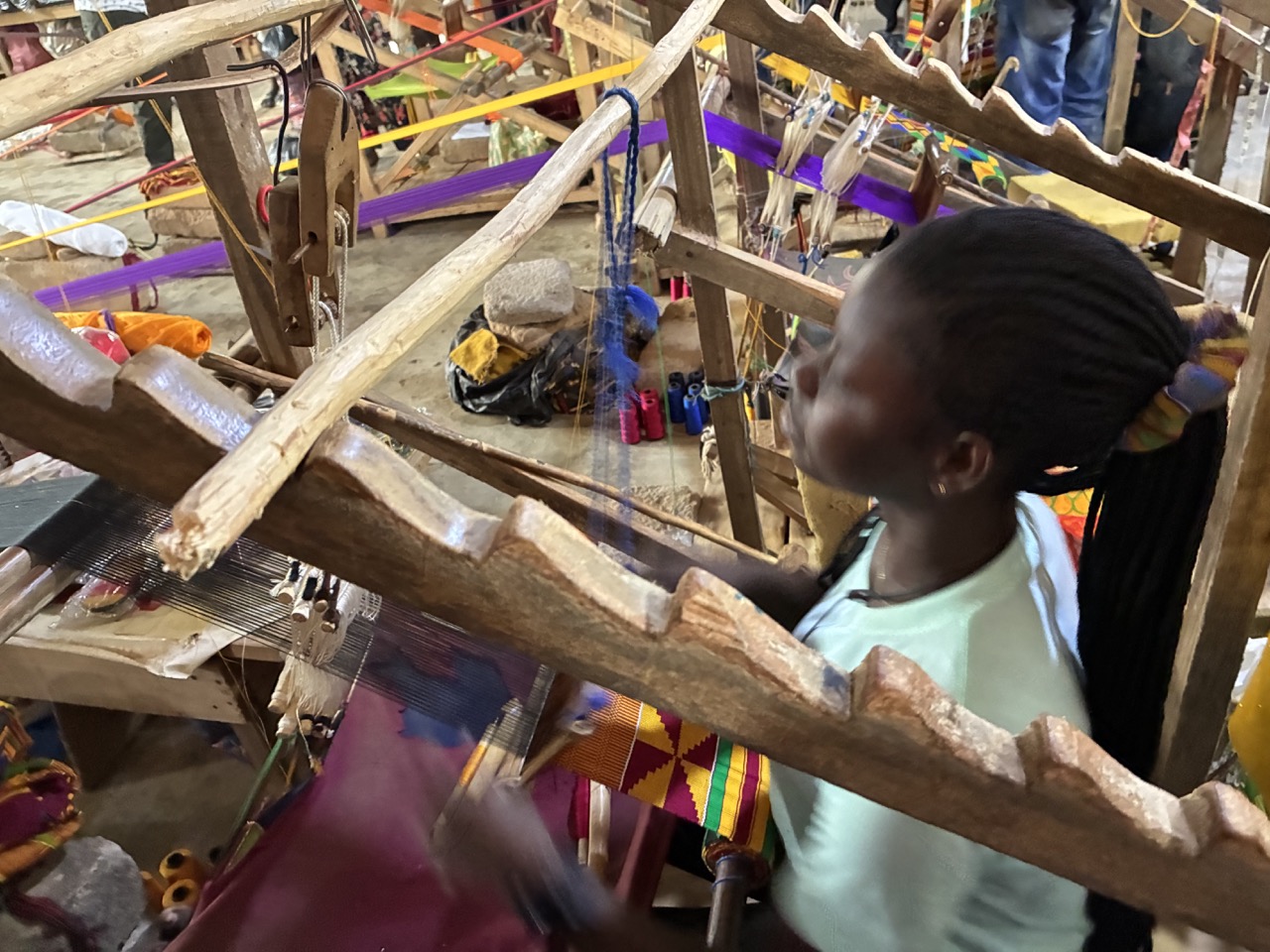
Speaking of weavers, seeing them in action brought another level of respect for their craft and skills. Using a combination of pictures and video, I attempted to capture the complexity of the process. Watching them work the loom with their bare feet in conjunction with their hands, I wondered what was more challenging to learn: double clutch driving or working a loom.
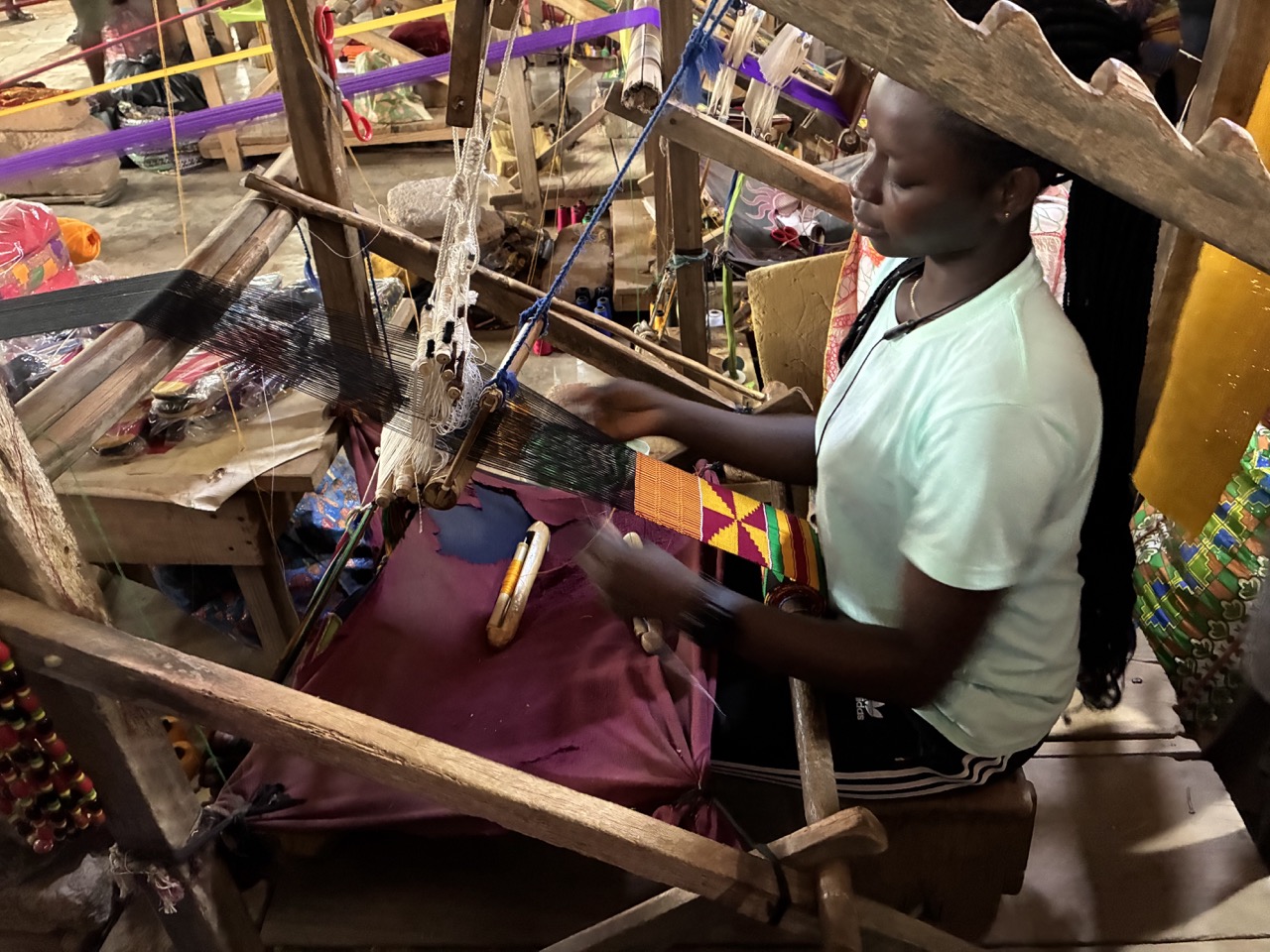
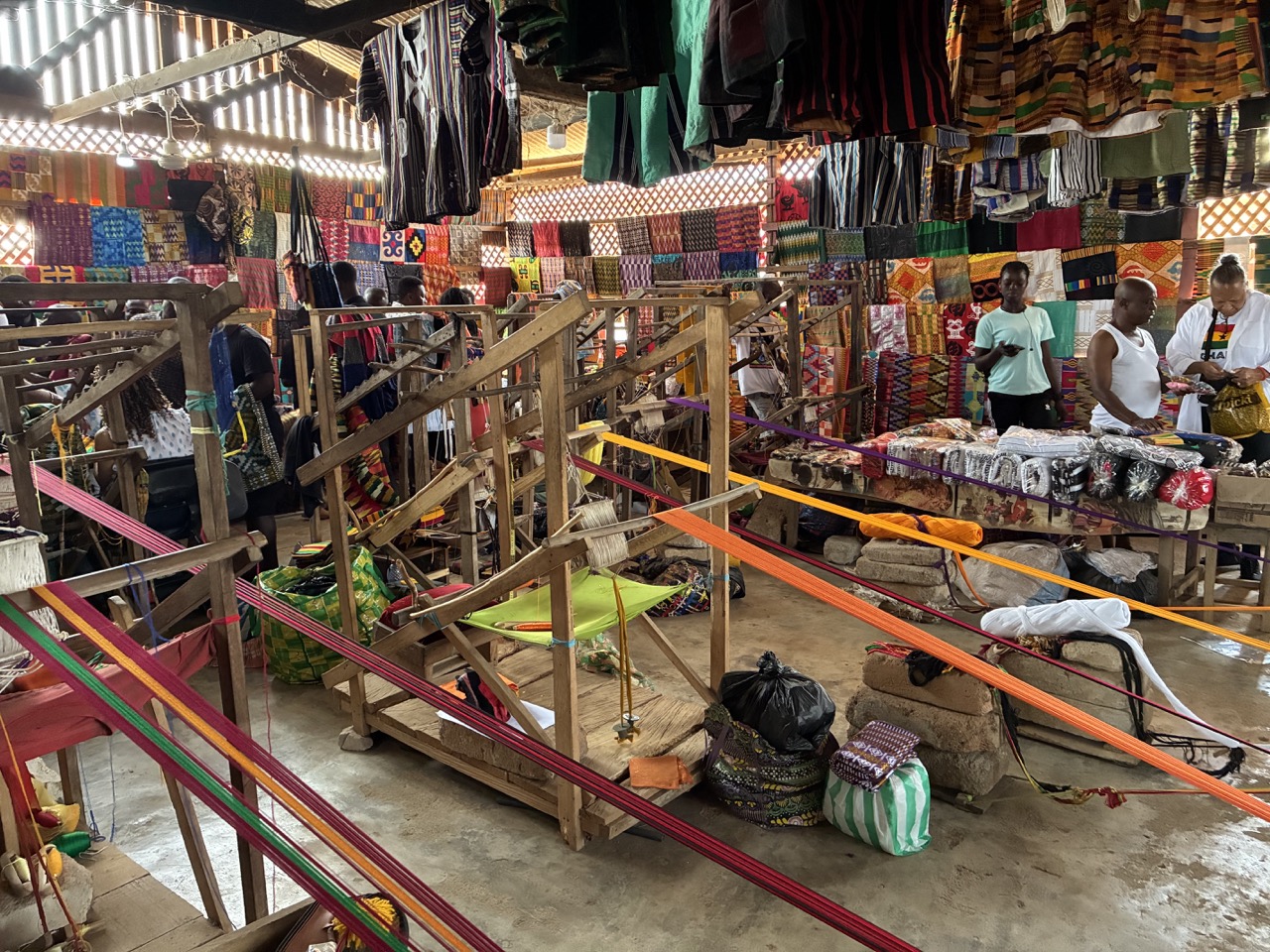
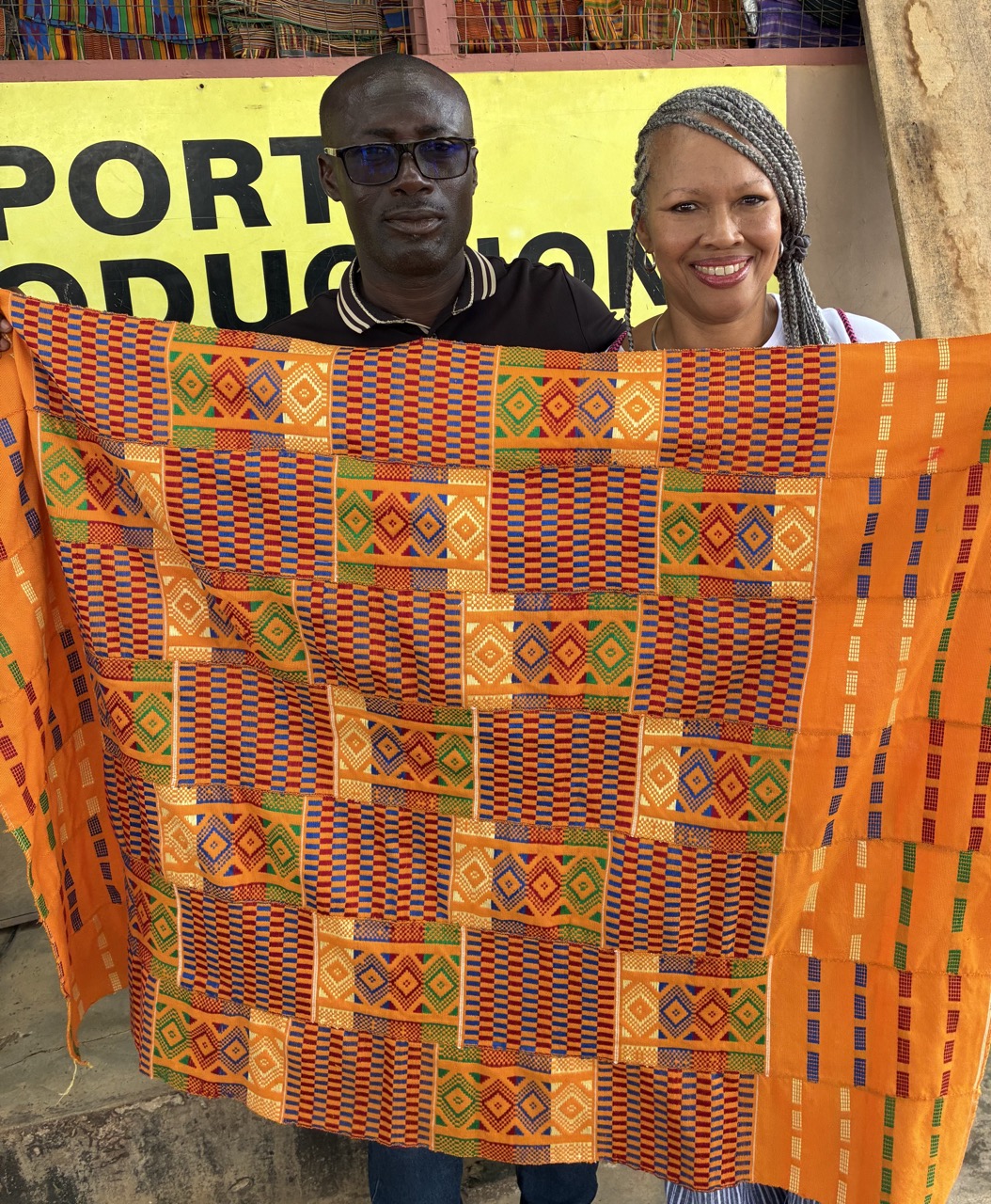
As usual, I finished touring around the kente workshop much sooner than the shopaholics. My sister and brother-in-law led the group for who could buy the most stuff while on vacation. So, I was taken aback when we stopped at yet another shop to look at cloth.
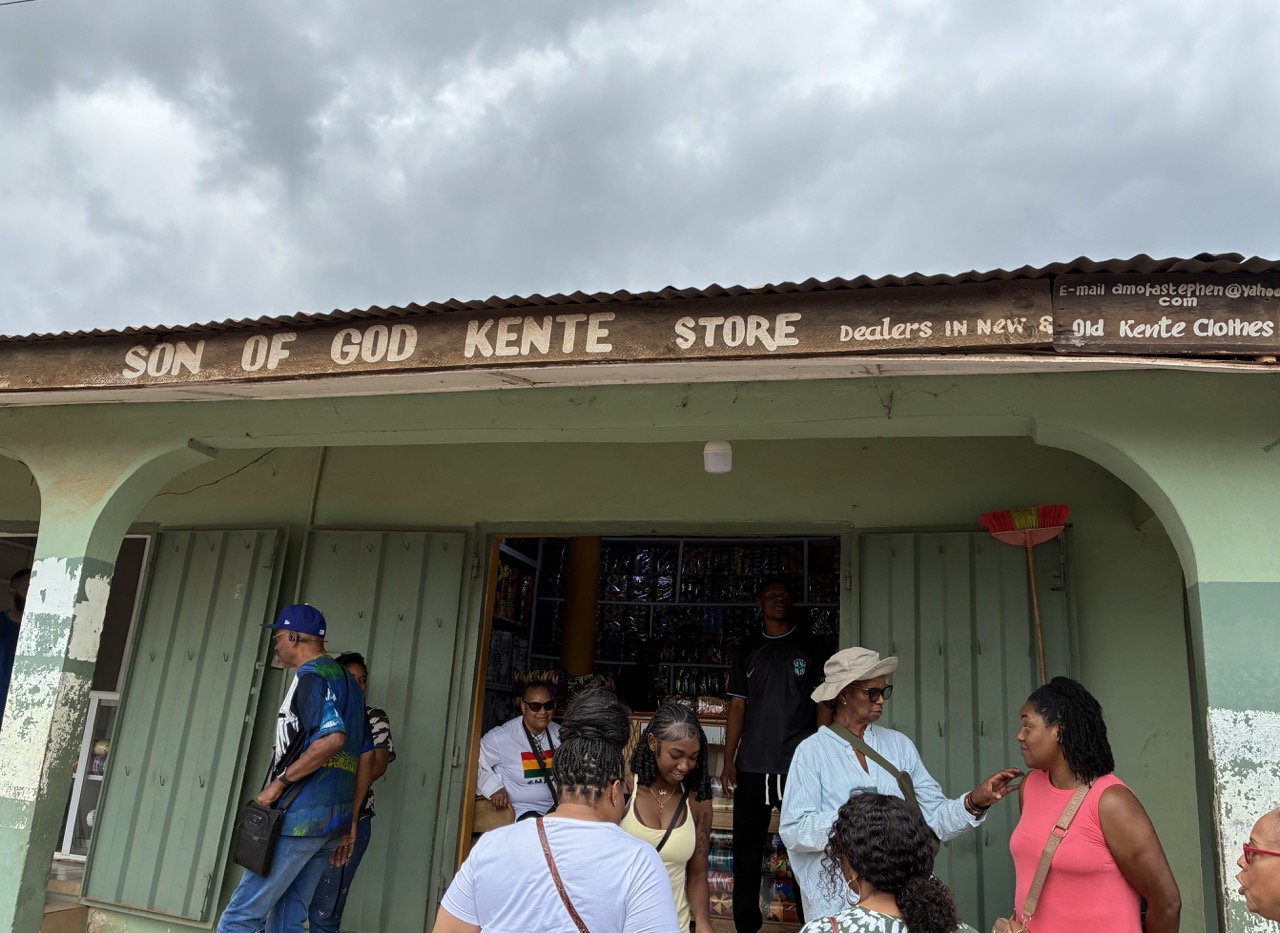
I didn’t step into the store. Why would I after seeing the fascinating process of how the cloth was made?
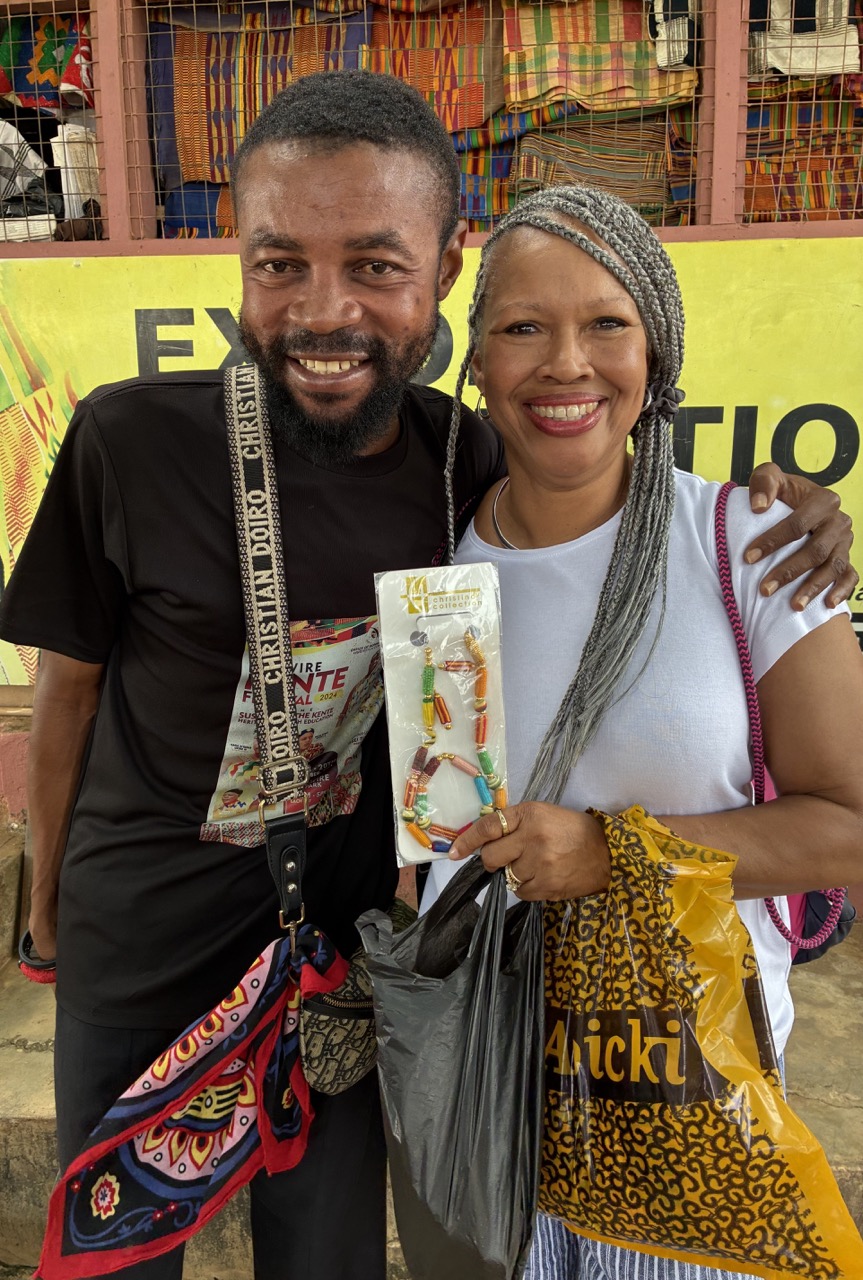
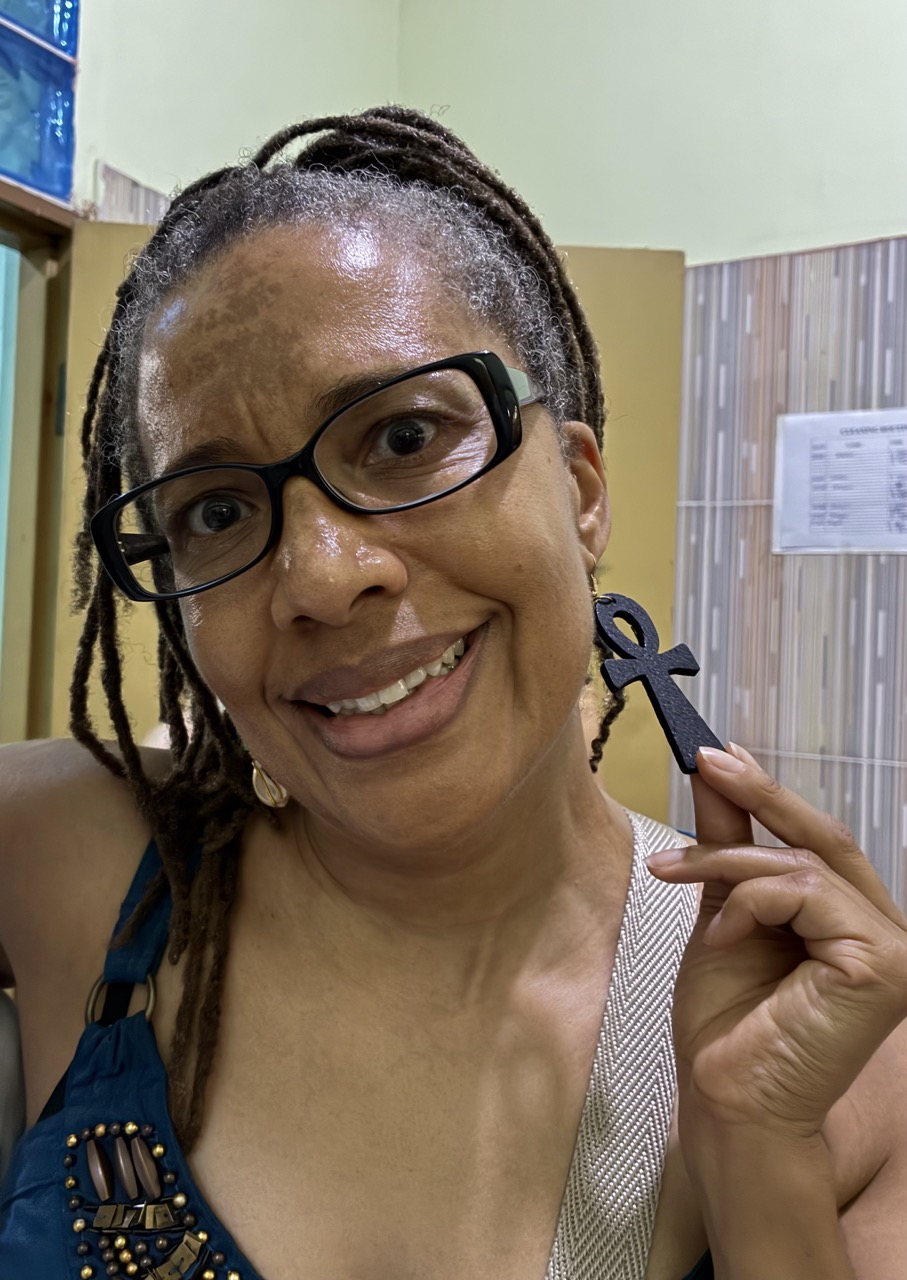
As I milled about in the street, I ended up in a negotiation with one of the children who was selling jewelry. Initially, he wanted a whopping $10 for a very cheaply made pair of earrings that had bead colors, representing the Ghanaian flag, with a cowrie shell at the end. I paid $2.
I had wanted to buy earrings as a souvenir for myself, but this was more of a purchase for the experience. The child was so politely persistent, including the flattery of calling me his “auntie.”
I took the earrings out of the small pouch and discovered that one earring didn’t have a hook. The other child vendors immediately told my seller, who’d moved on to another potential buyer, what had happened. I saw an ankh earring and took that to go with the cowrie shell and bead earring. I handed him the hookless earring in exchange.
He didn’t seem too happy with the mismatch, but I knew, a) whoever made the earrings could even out the two sets; and b) whenever I wore those earrings, I’d remember this story, which got fleshed out at lunch.
Besides, the photo op with my earring seller was priceless.
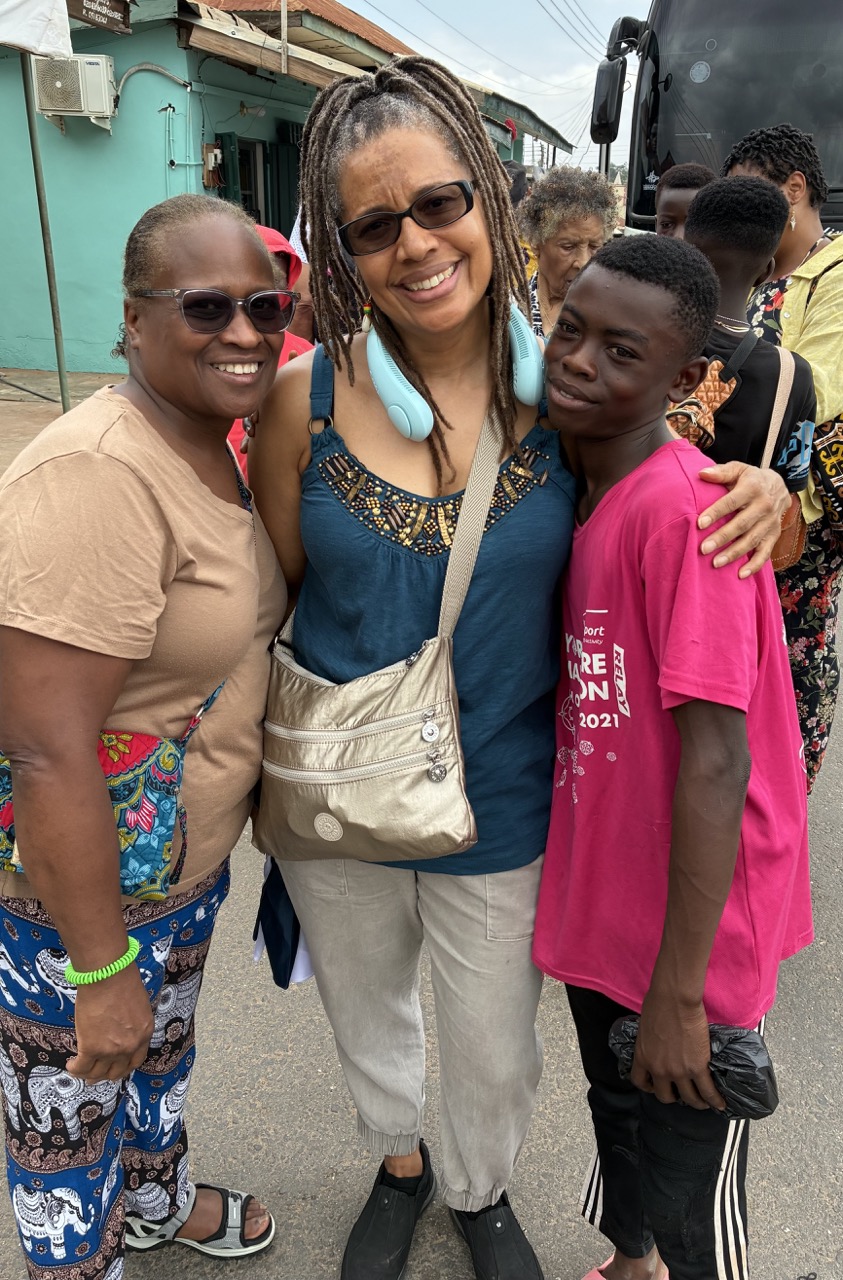
At lunch, I told the story behind my mixed earring set. One man at my table, stated that he’d bought something from one of the kids because they had the same name as his. Another man at the table said the same thing had happened with him, coincidentally having the same name as a child vendor. When I showed them the picture of my earring seller, he was the same boy! I concluded that kid would own the country when he grew up.
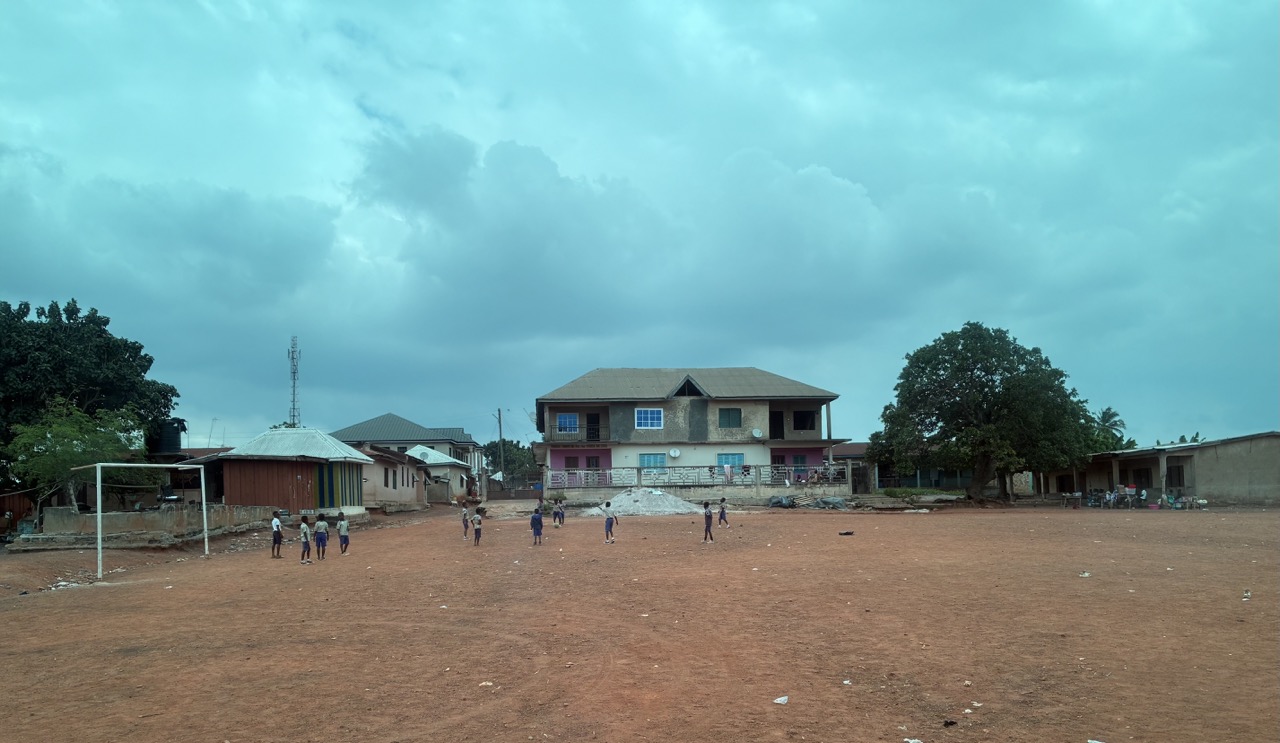
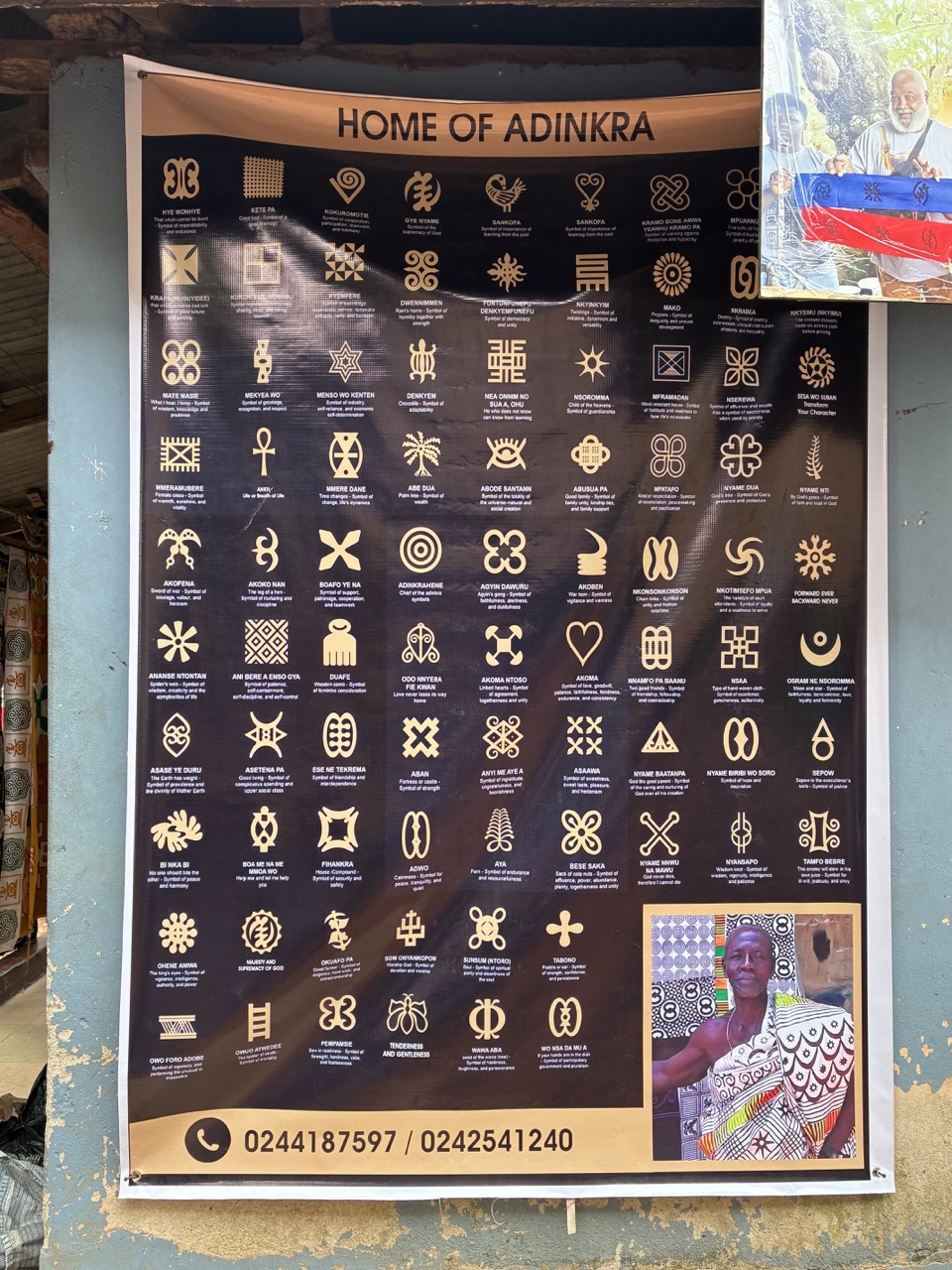
Next stop: Ntonso, an Adinkra printing village located in the Ashanti region. The view from my side of the bus showed a soccer field with school kids.
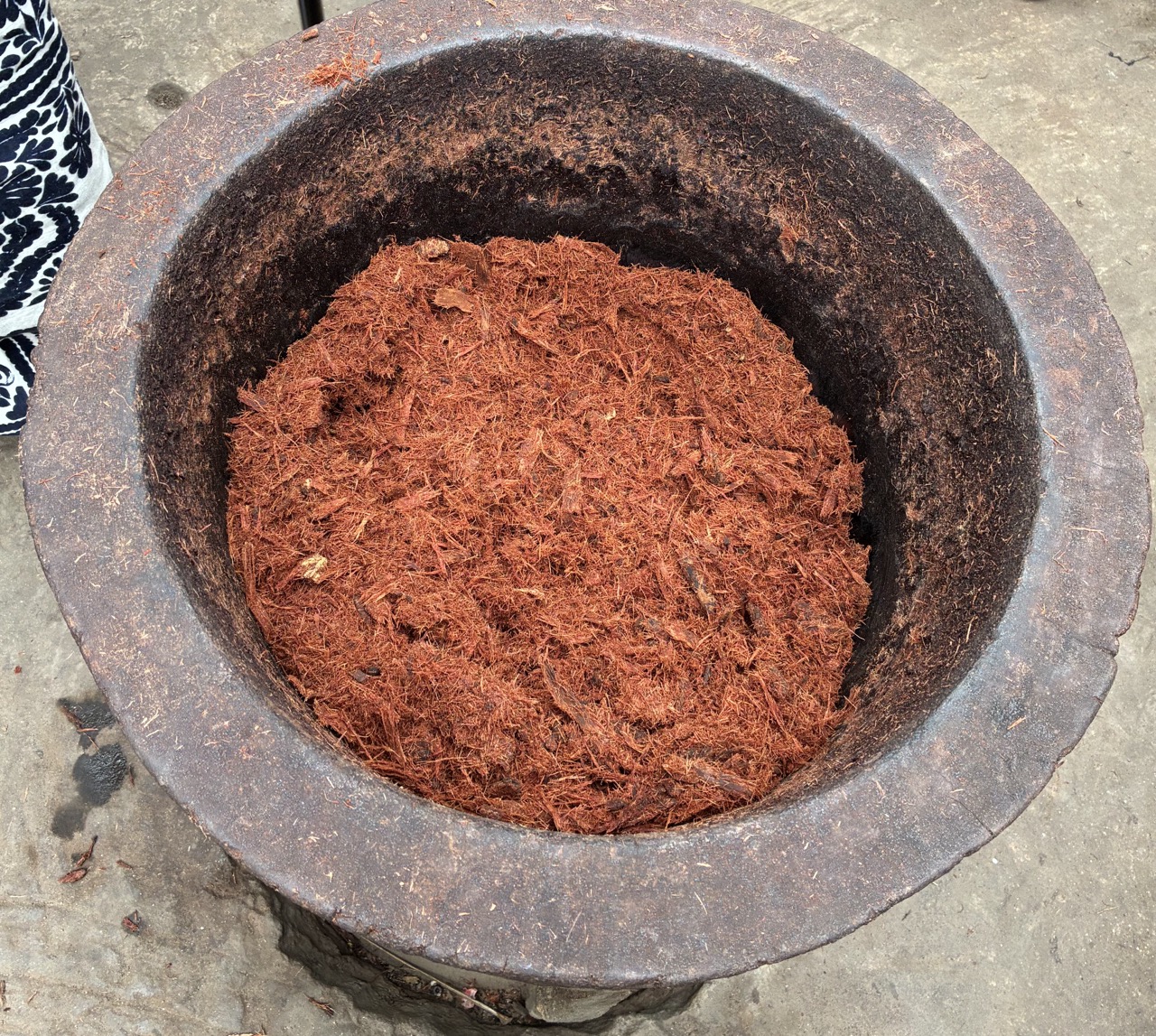
On the other side of the bus, we learned how print ink was made from tree bark. First, they soaked the bark in water, then beat it to a pulp with a large mortar and pestle. They boiled and concentrated the pulp multiple times over a week. The color changed from light red to black.
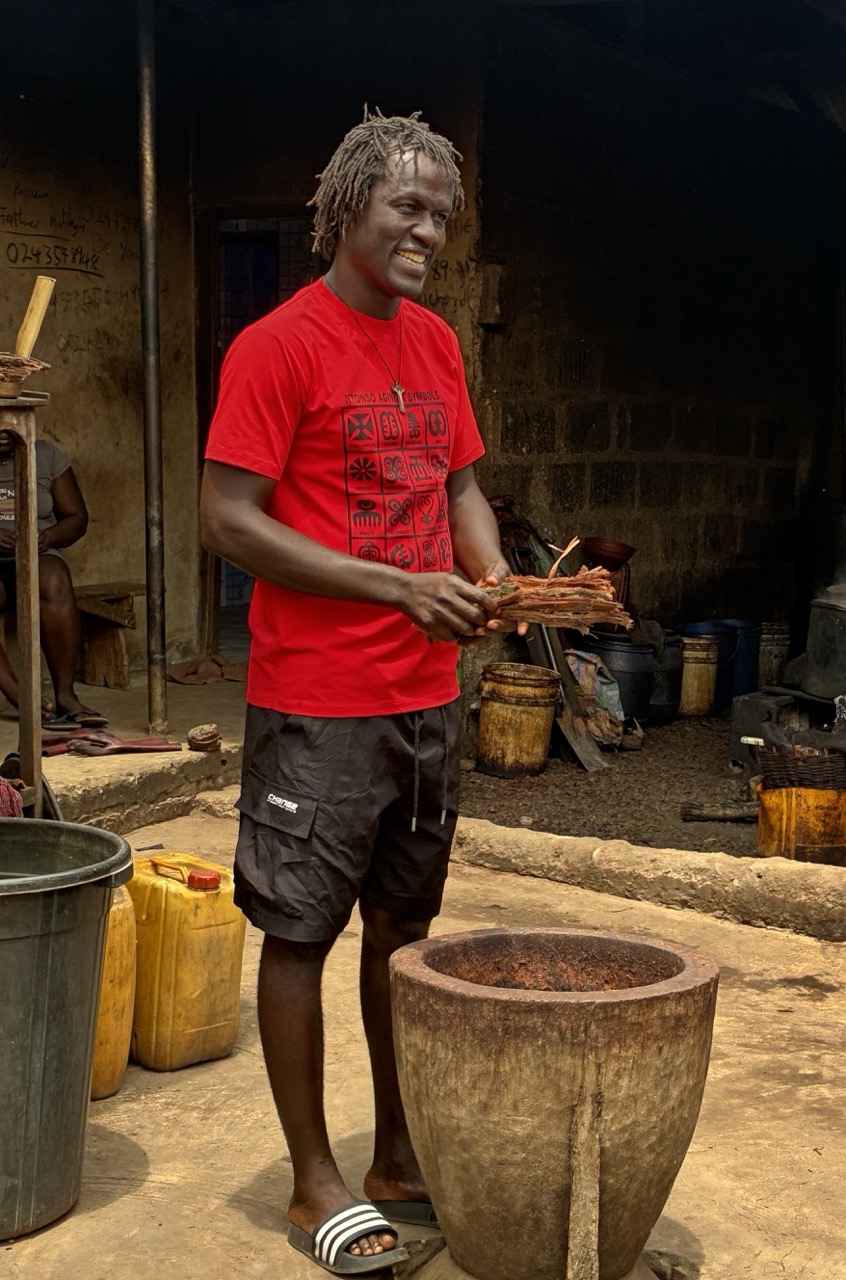
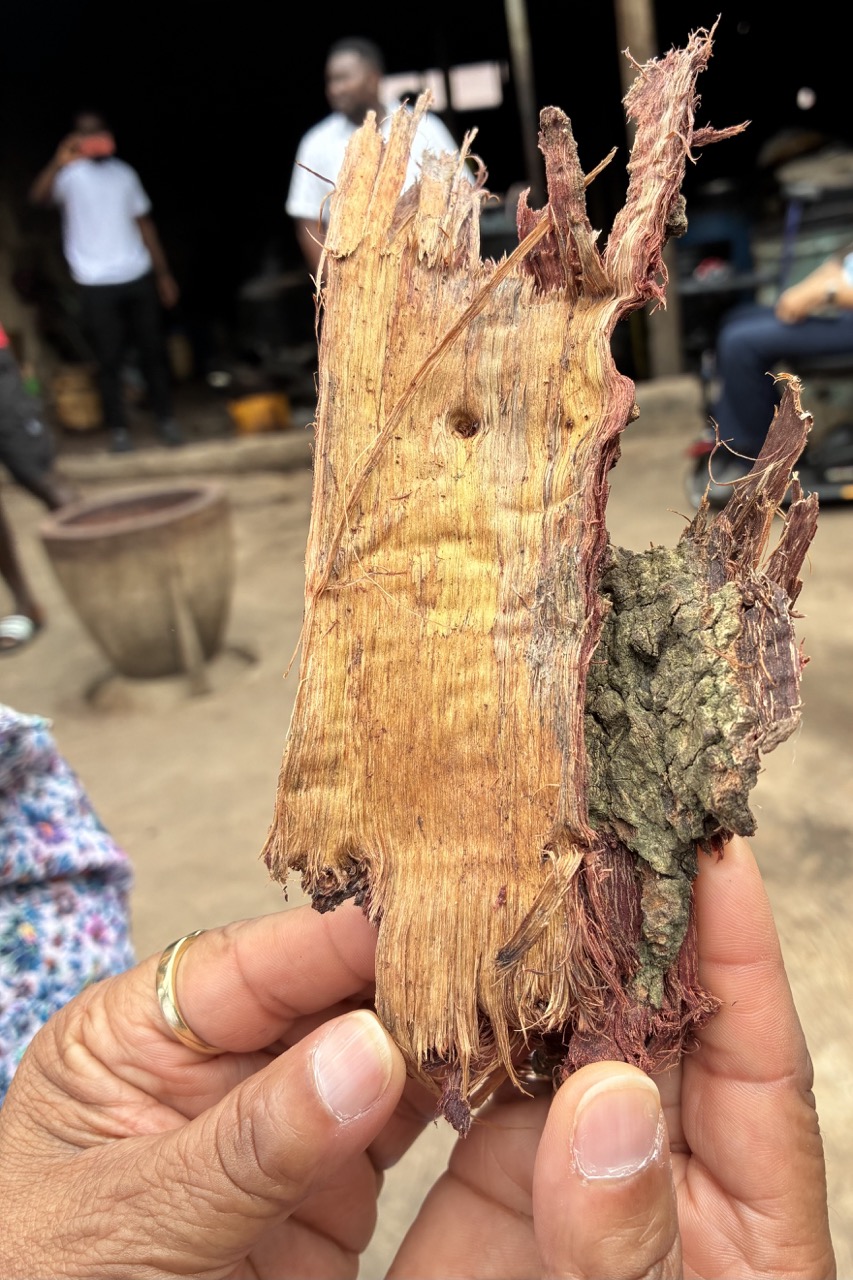
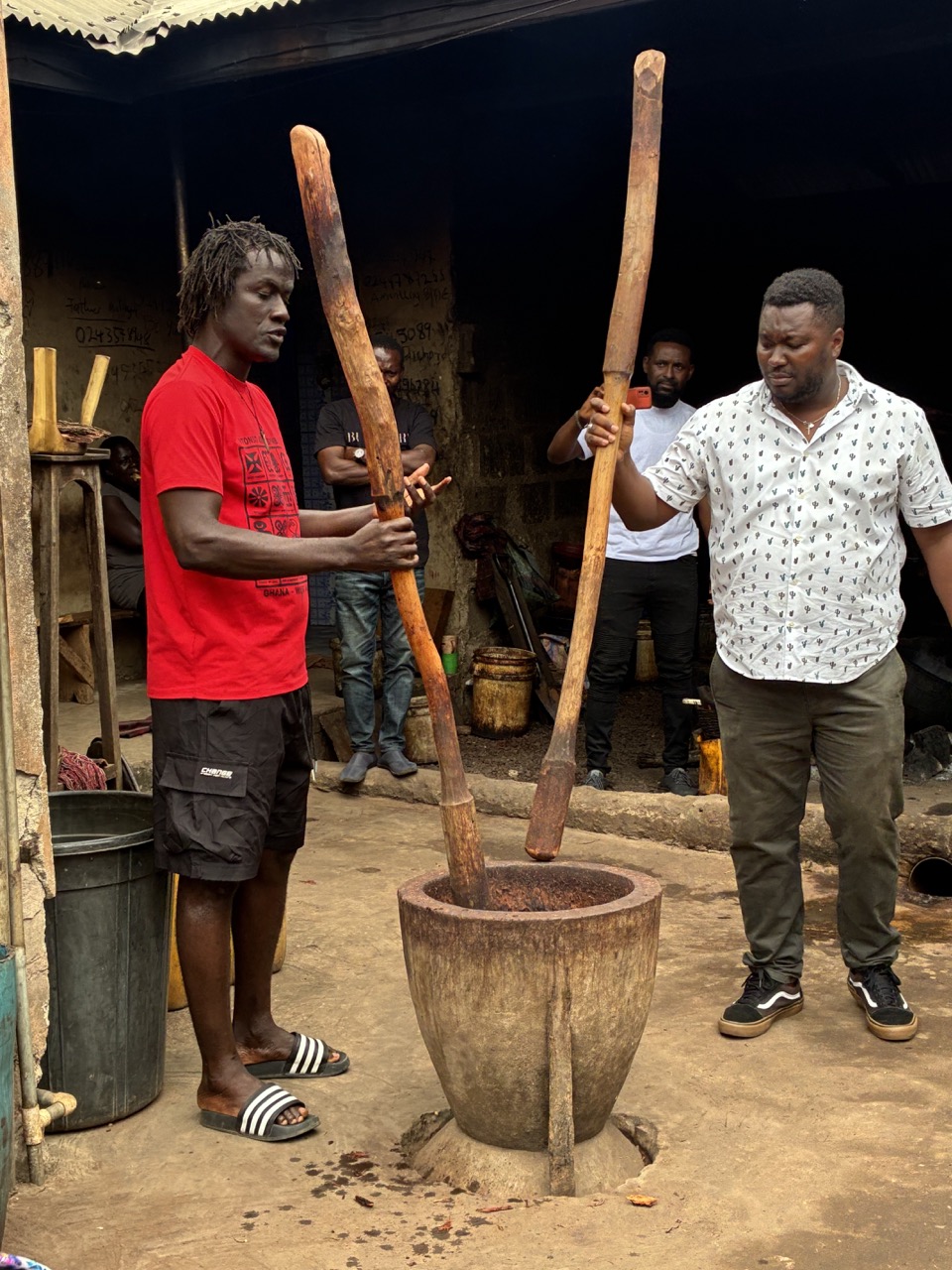
After our tour guide and the printing expert demonstrated how to beat the wood pulp, we were invited to try. My sister, ever so enthusiastic about trying new things, was my partner. We had to sing “Miss Mary Mack,” so she could get the rhythm.
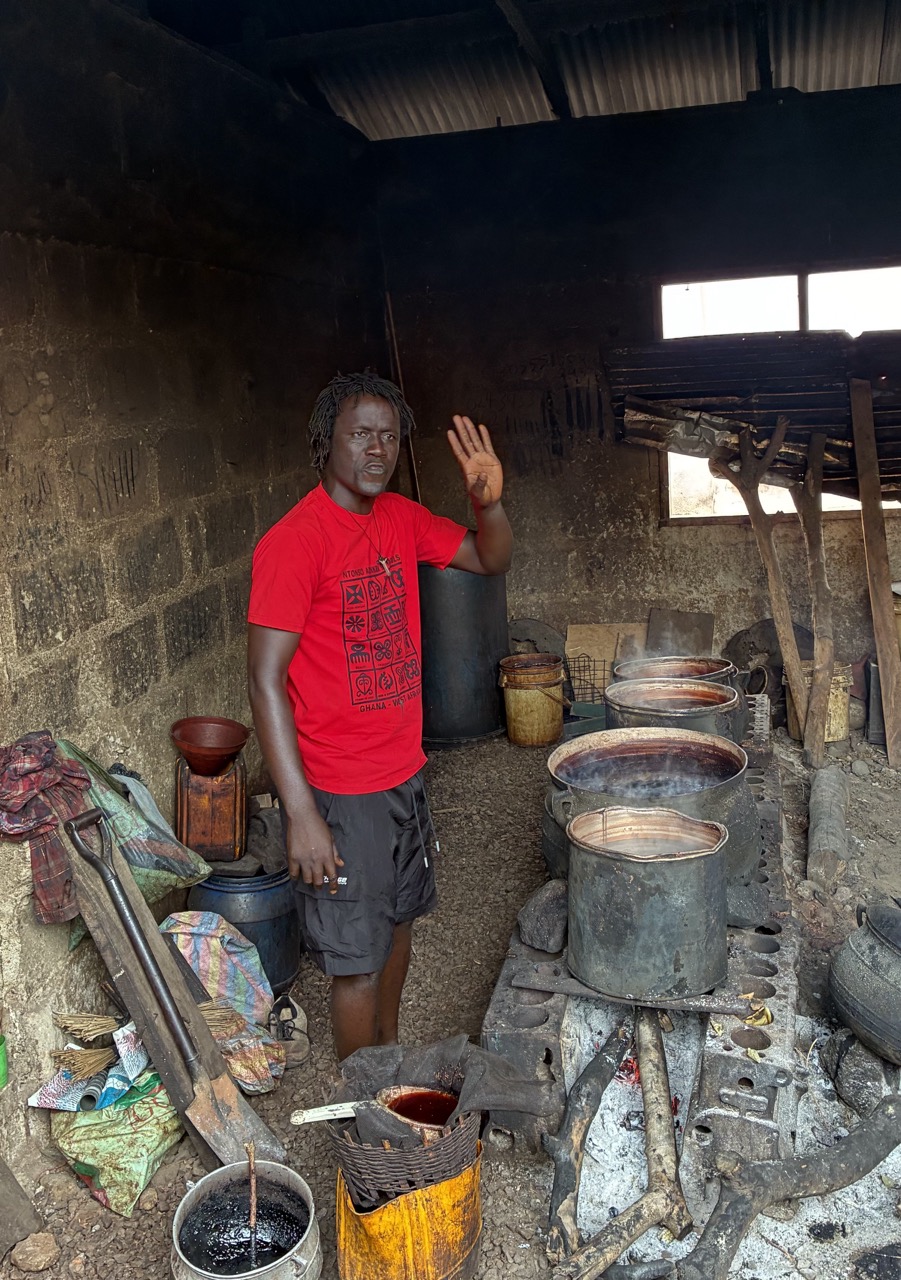
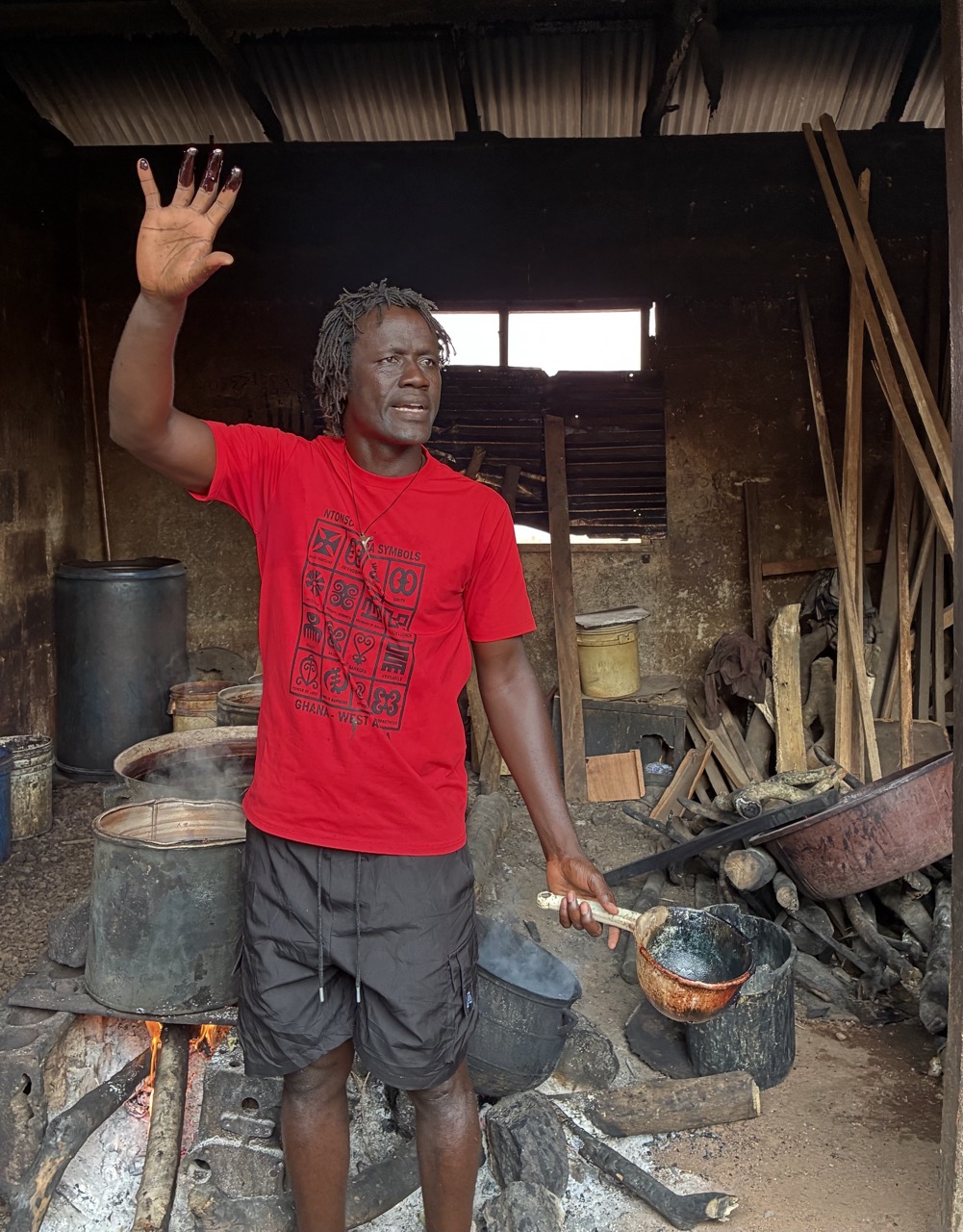
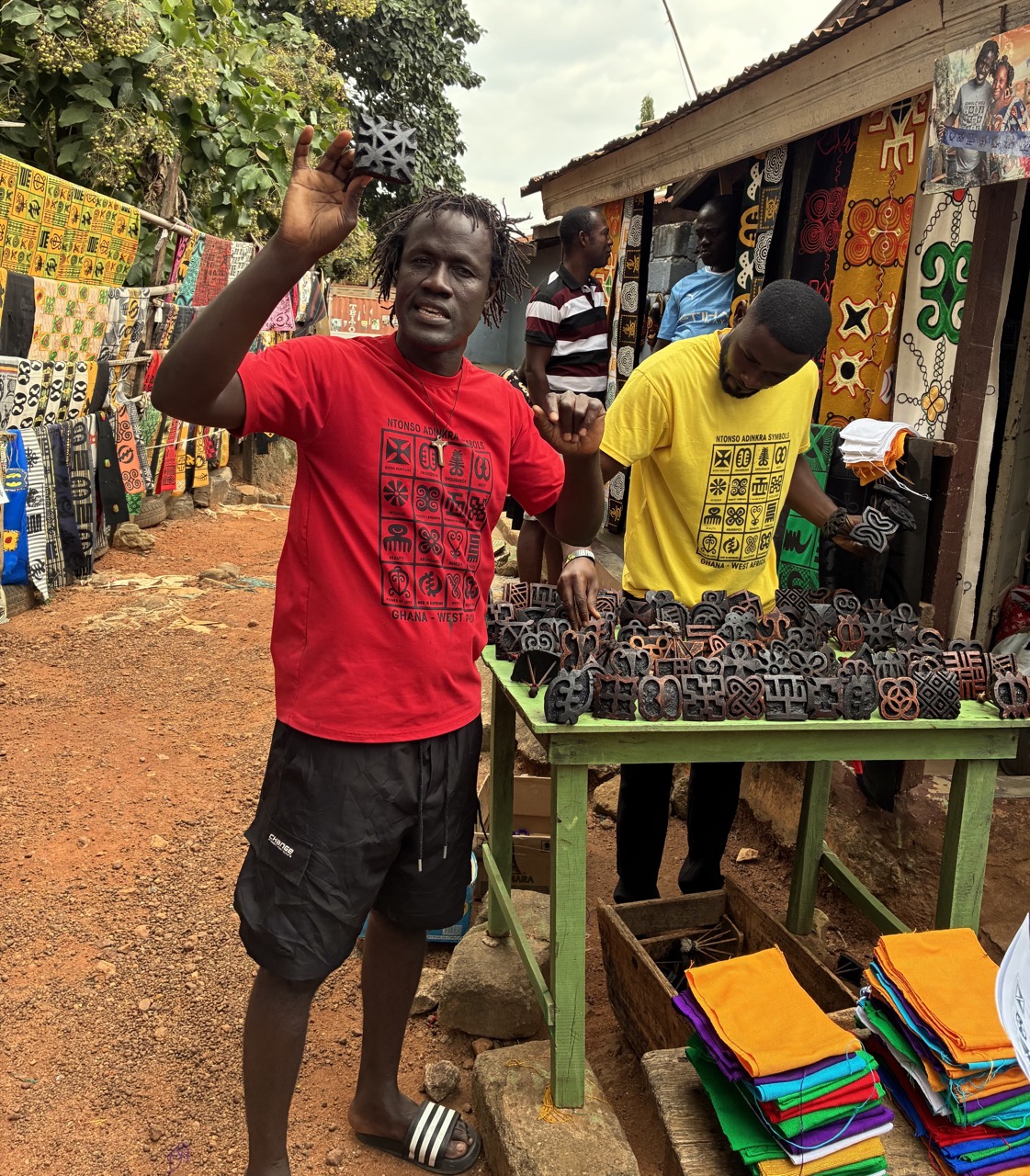
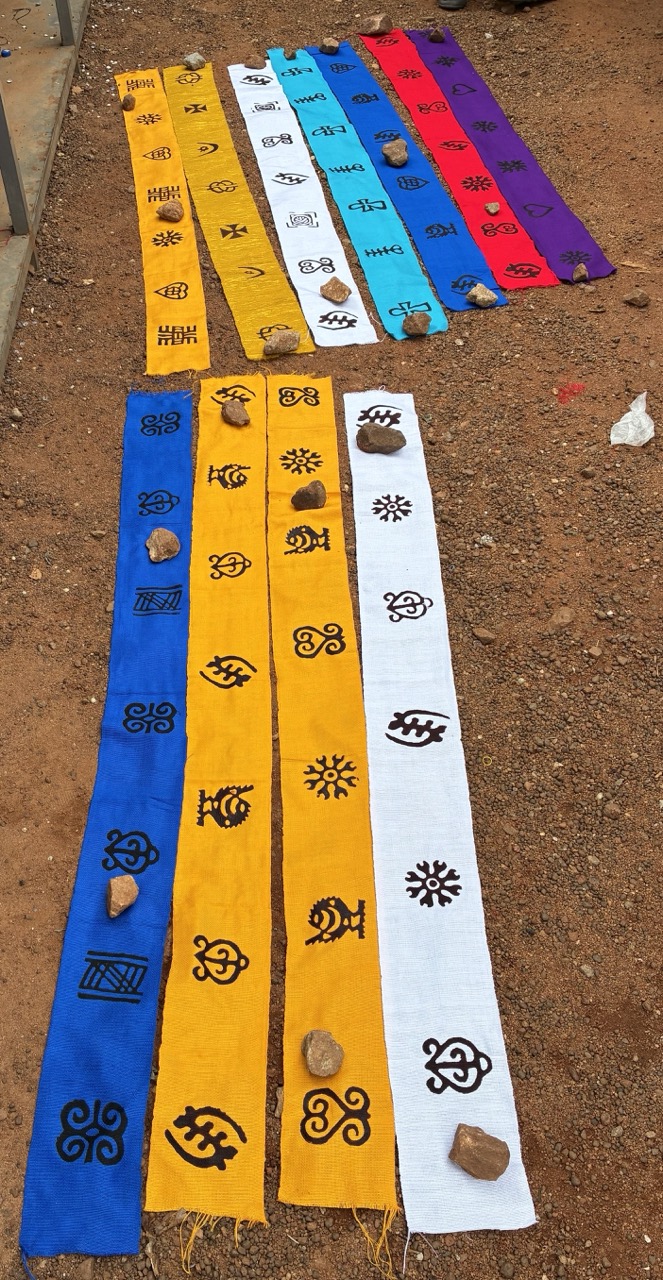
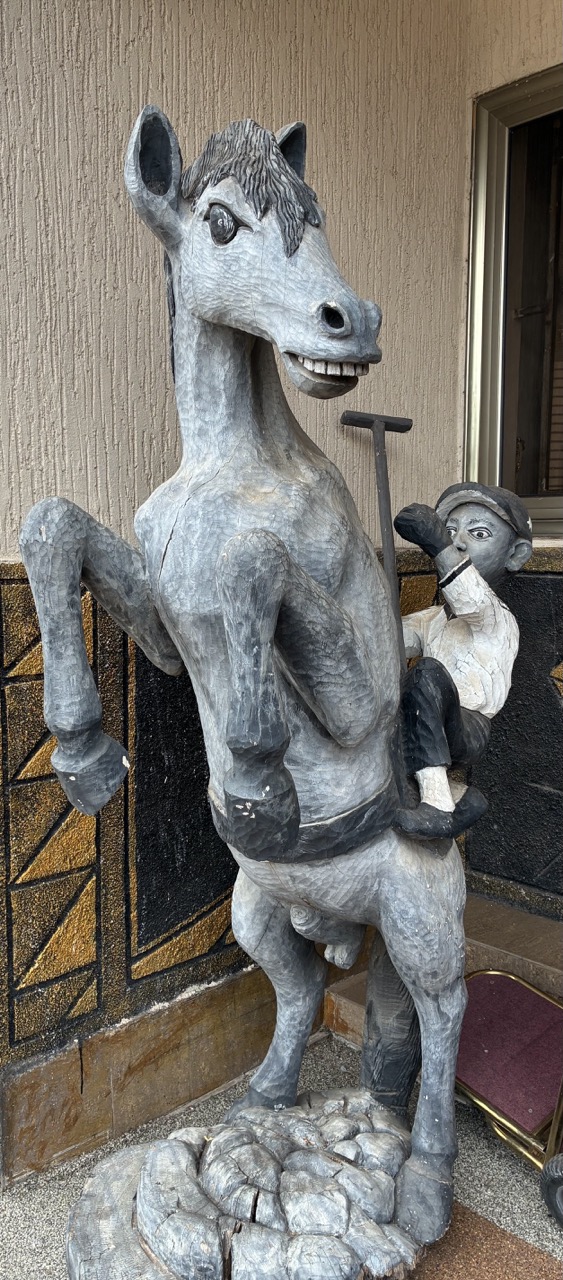
Before entering our lunch venue, I saw the statue of the horse and jockey. I recalled the menu I’d seen in the morning. So, “horse oeuvres” wasn’t a typo, but a play on words?
During lunch, some thought we had already run out of decent table conversation. One of the men talked about killing chickens. I reminisced about the time my grandfather had killed a chicken. My sisters and I wouldn’t eat it. At the request to change the conversation, we then discussed the horrors of American education.
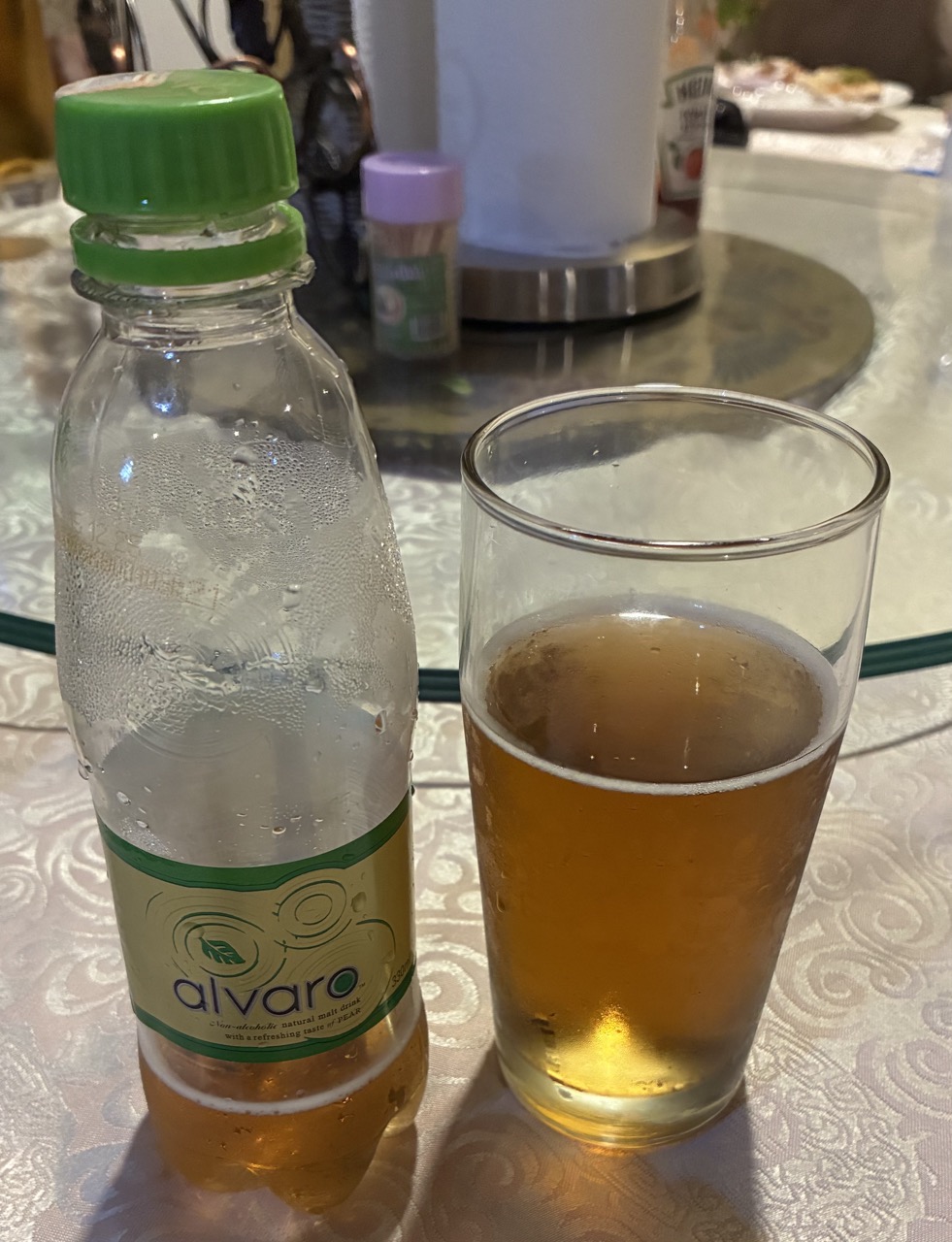
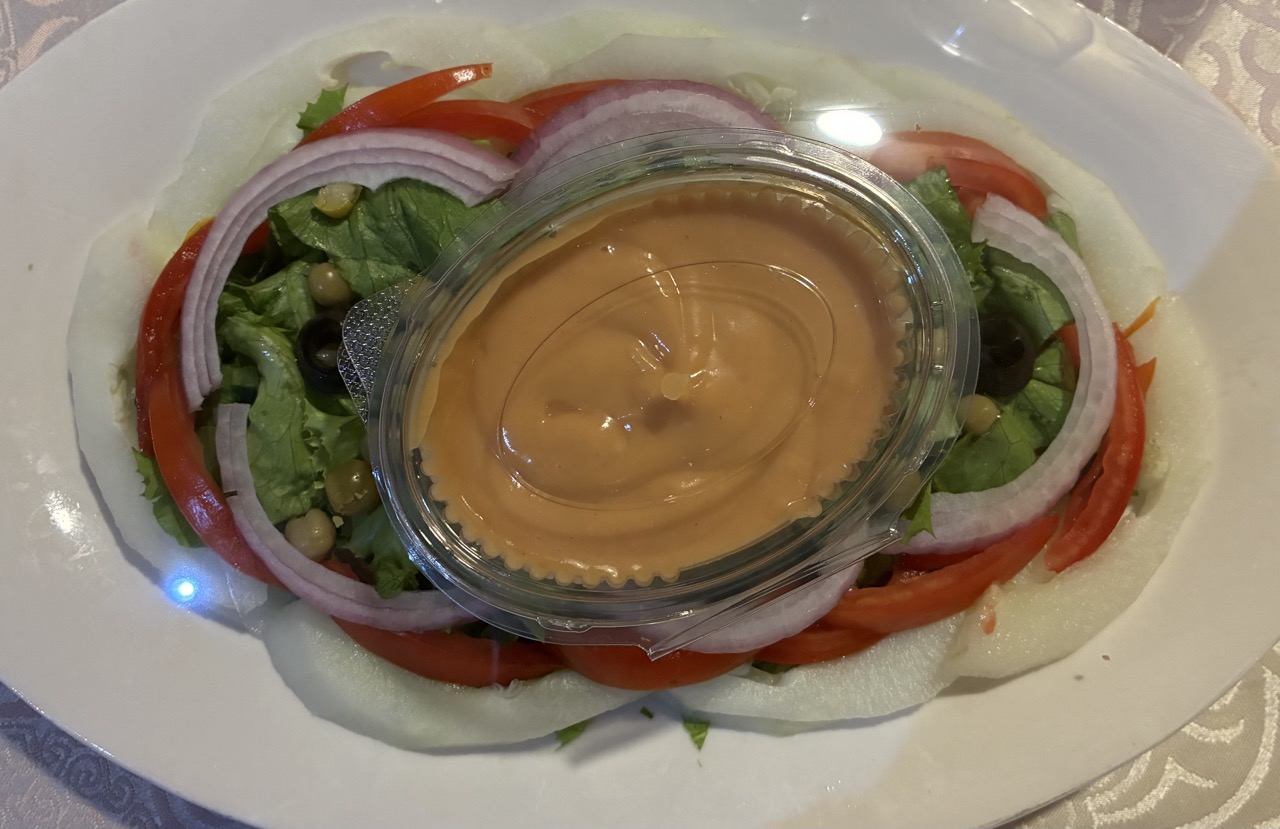
I paired my fried Black Star and salad with Alvaro, a pear-flavored non alcoholic malt drink.
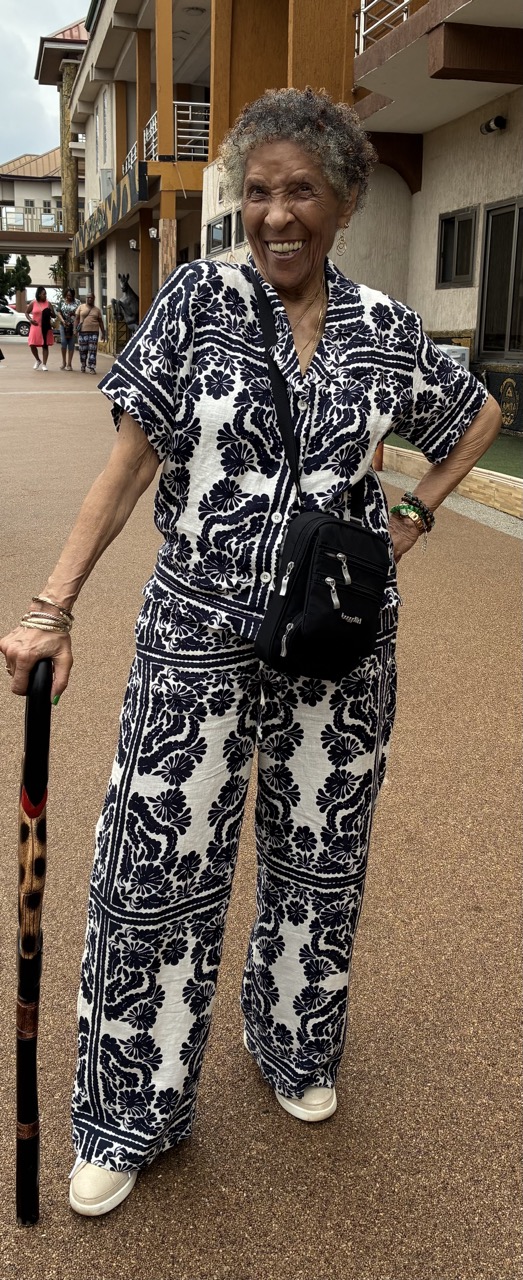
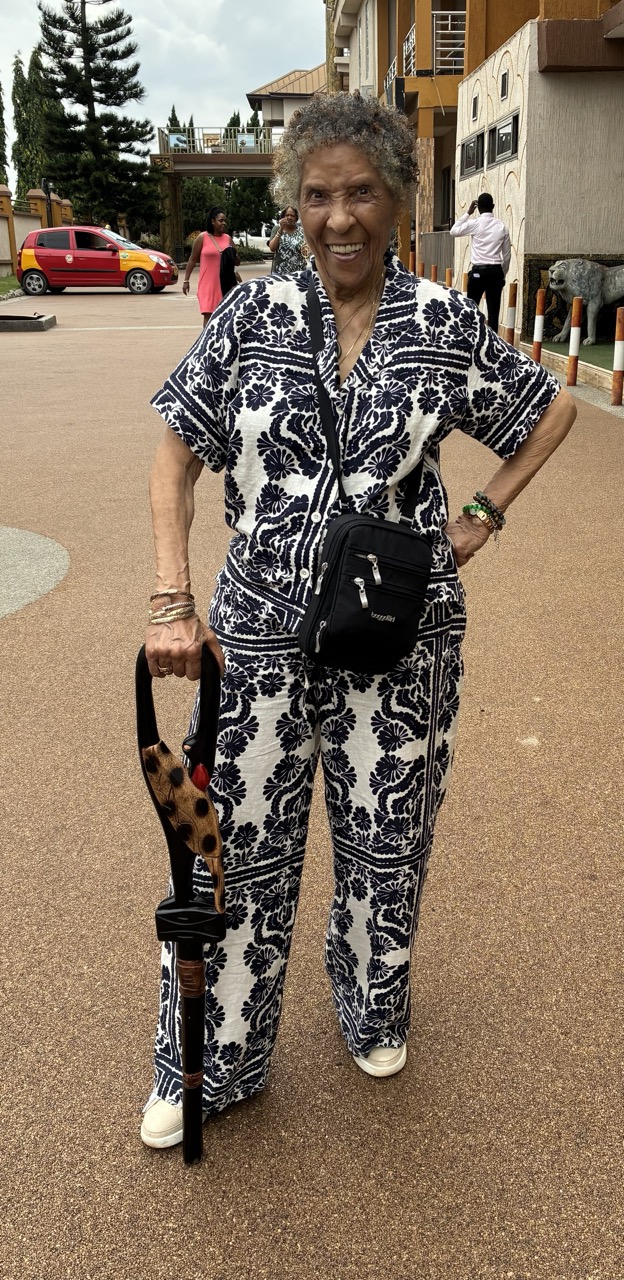
After lunch, I got the opportunity to take a few pictures of our fashionable nonagenarian.
En route to the mall, I asked our tour guide if we could buy postcards. He made a face, confirming what I thought: postcards weren’t much of a thing in Ghana. However, he stated that at Labadi Beach, we may be able to find postcards.
Then, he gave me a mini history lesson. The area and people were called “La.” When colonizers arrived, Ghanaians referred to them as “the bad people,” which transformed into “Labadi.” NEVER refer to nationals as “Labadi.” They are the La people.
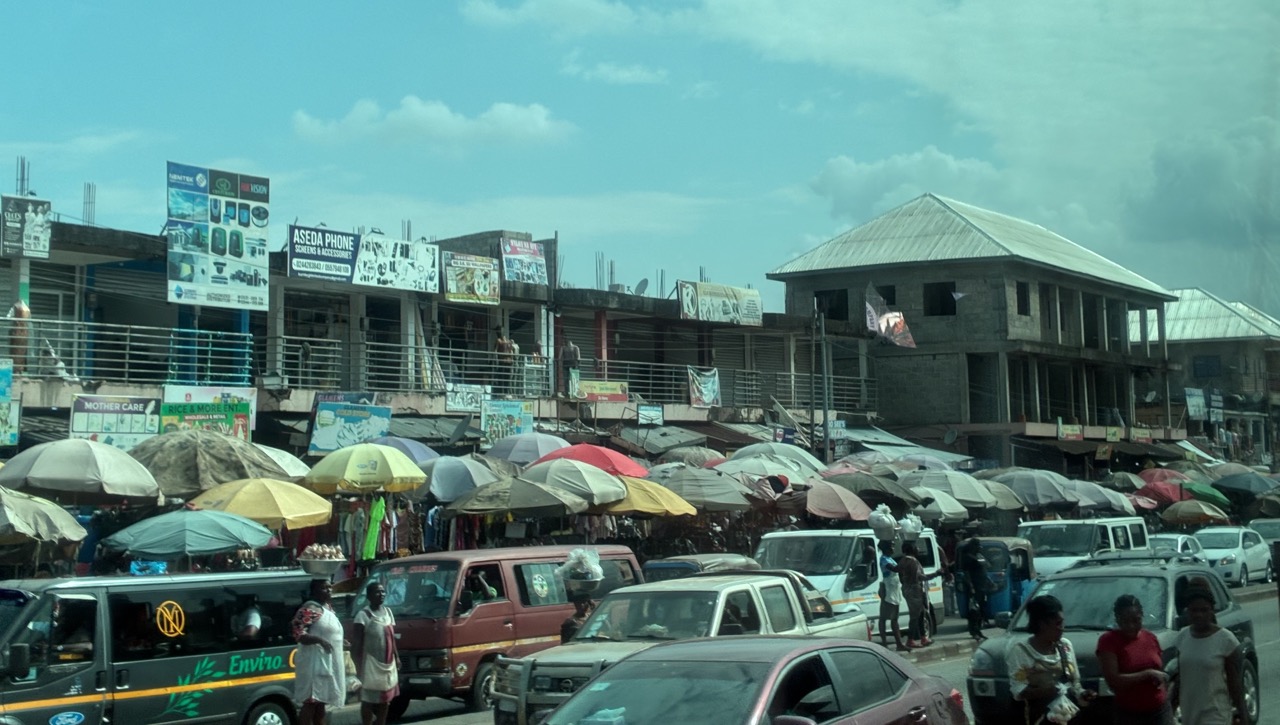
Refuelled by lunch, the shopaholics were ready to tackle another type of market, The Kumasi City Mall. They dutifully followed Dr. Kofi into one of his favorite stores to look at even more fabric and premade shirts. They were warned not to haggle.
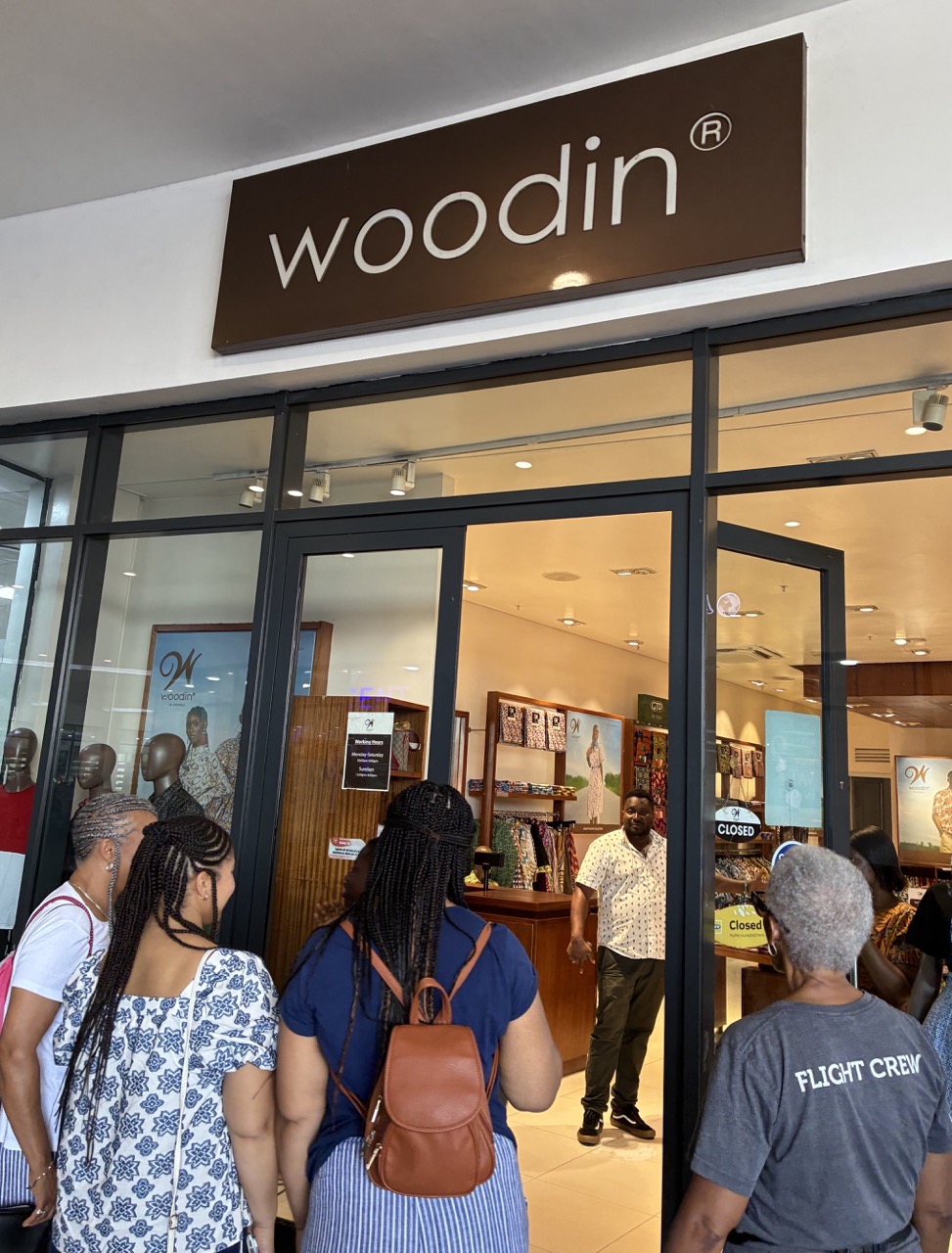
I only used the bathroom and bought a small tupperware container to replace the broken liquid soap travel bottle. My nieces found a coffee shop.
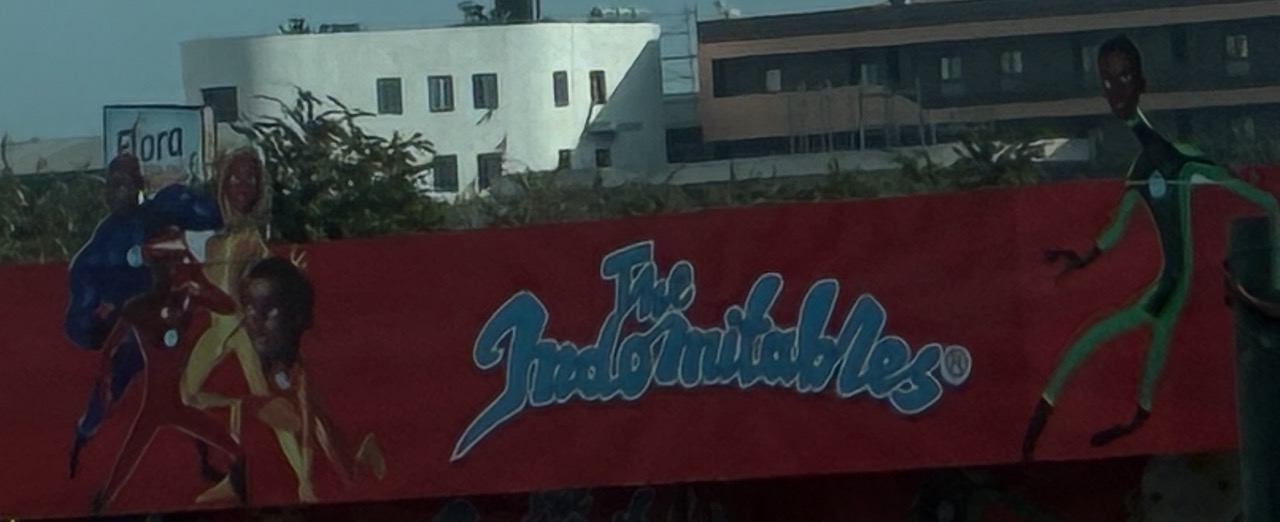
On our way to the hotel, an advertising for noodles reminded me of The Incredibles.
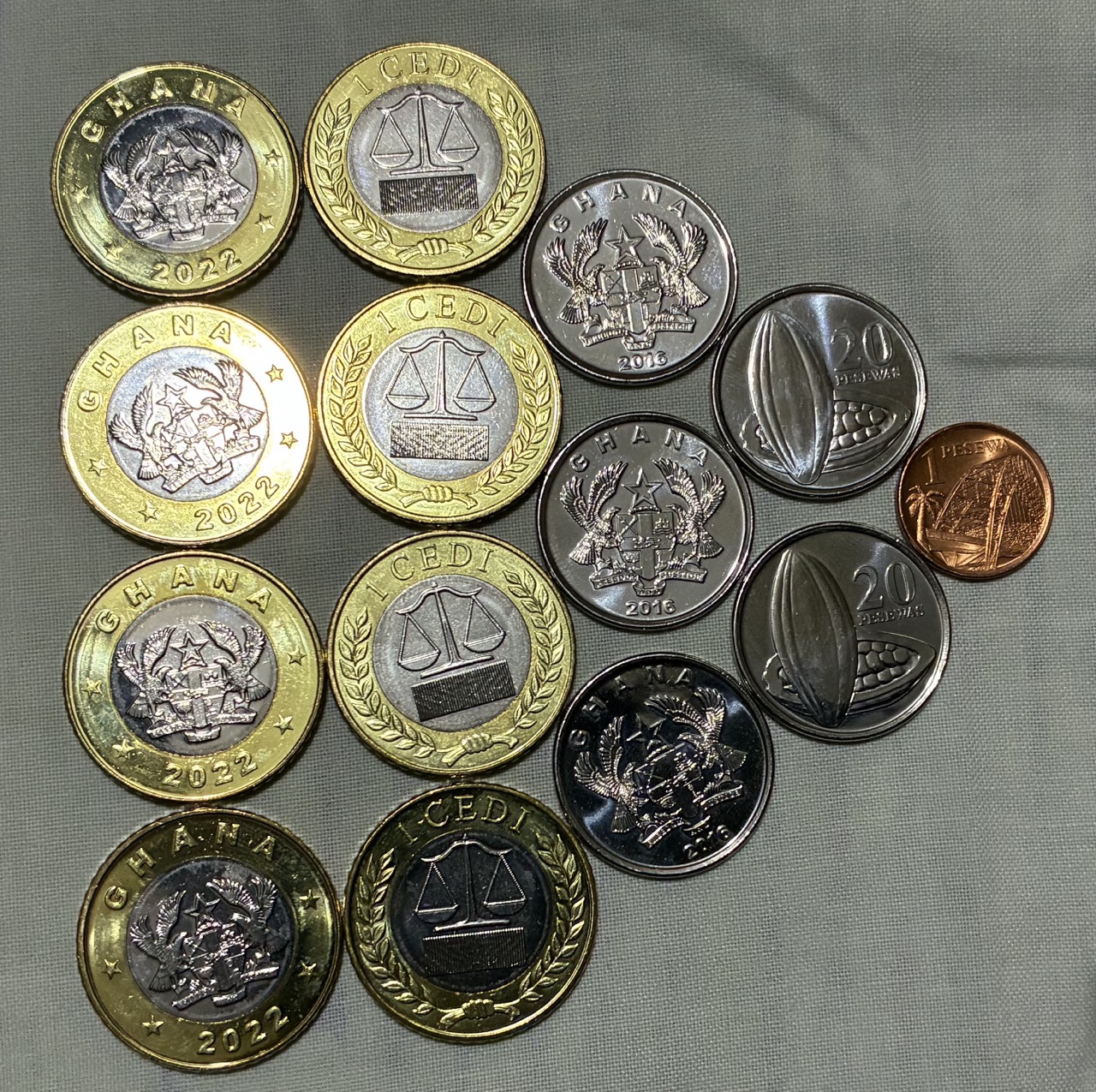
One silver lining for buying a plastic container at the mall was receiving a lot of change. The designs evoked thoughts of freedom, justice, food staples and beautiful landscapes.
Once we returned to the hotel, a mudcloth vendor and designer shirt/dress vendor were there. I wasn’t tempted in the least, especially since there weren’t any fanny packs among the mudcloth backpacks and duffle bags.
After dinner, Dr. Kofi invited us to introduce ourselves, including what we did for a living and why we were on this trip. Most stories were either funny, poignant or both. Many of us were in the medical or education field. We were all one degree of separation from Dr. Kofi.
One support staff member caught everyone’s attention when he said that one of his hobbies was “mischief.” He explained that he enjoyed saying controversial things to get a better understanding about something.
After all the introductions, one tour member shared that his daughter had had an accident that day and asked for us to keep her in our prayers. Then, my sister announced that our father had passed out today, but he woke up. She asked that he also be kept in prayer.
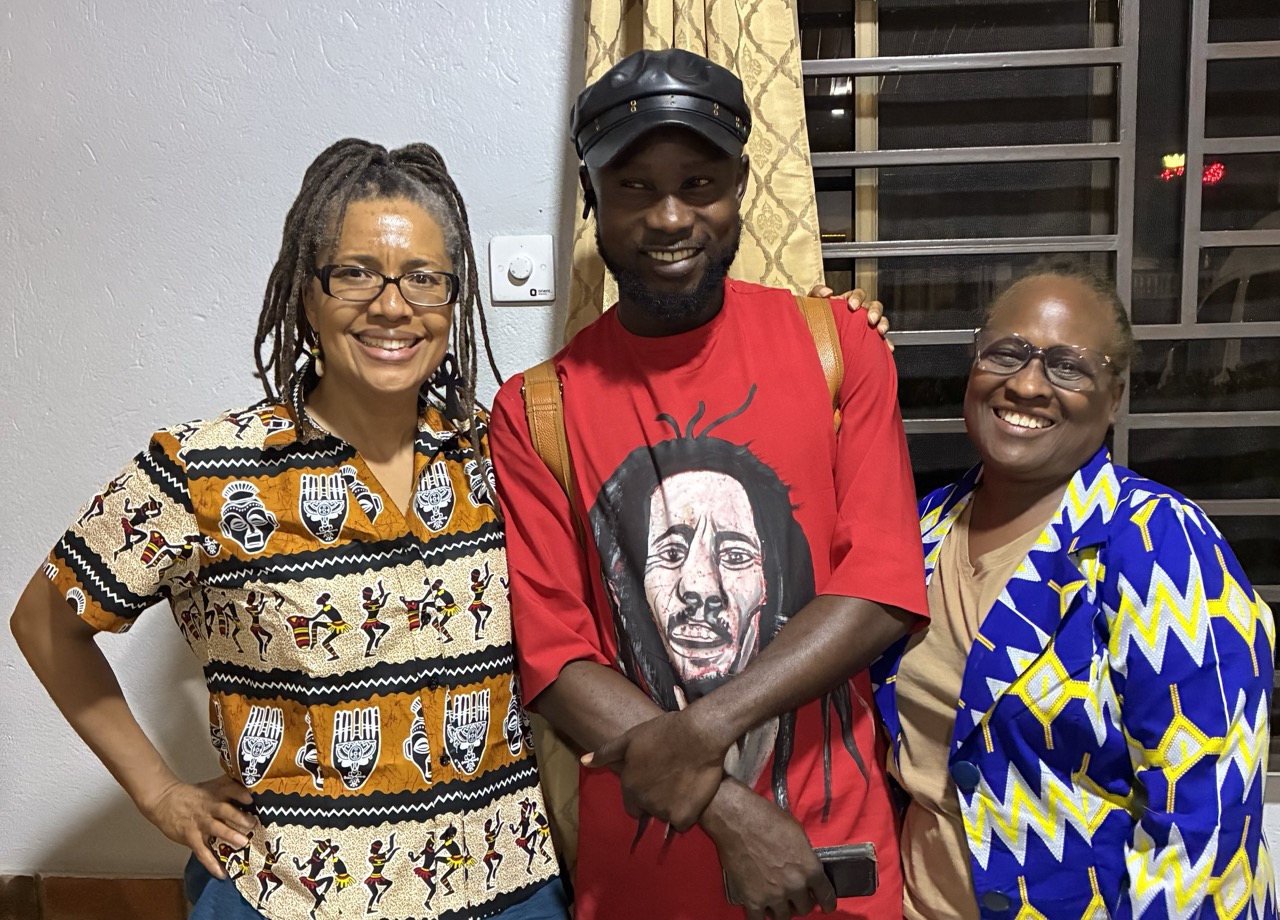
Once the group prayer had concluded, my tailor arrived with the shirt I’d ordered. Fit like a charm.
After showering, I talked to my parents. The connection wasn’t the best, but it was good to hear their voices. Mom explained that some people forget to breathe, which sounded like a strange explanation since breathing was automatic, but I was happy to hear that dad’s vital signs were normal. As one of my aunt’s once said, “No matter how old you are when you lose your parent, it’s too soon.”