My head was full of prayers for Dad during the morning walk. I thought about my leave-the-country curse. Just before I had left the States to serve as a Peace Corps Volunteer in Tanzania, my maternal grandfather passed. A few days before I returned to the States after completing my PCV service, my paternal grandmother passed. Shortly after I’d left South Korea after teaching ESL for 14 months, the Asian market crashed. A month after I left the States to teach in Egypt, 9/11 happened. About a week after I relocated back to the States after teaching in Honduras for three years, that country had a coup.
So, yes, I was a bit superstitious. In that same unscientific vein, I hoped to see Dad again since I wasn’t relocating to Ghana. I hadn’t been vacationing in those other instances when bad things happened.
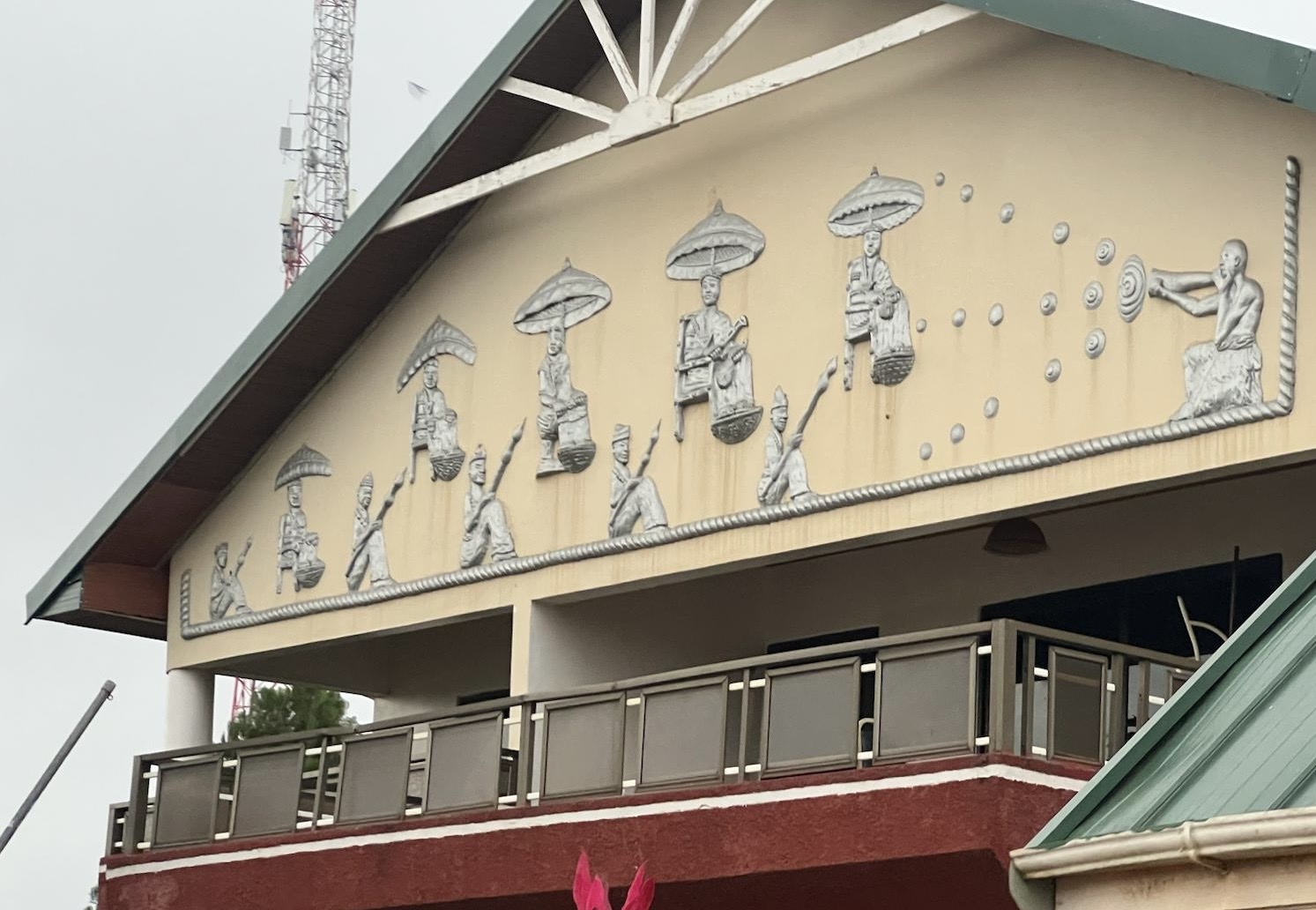
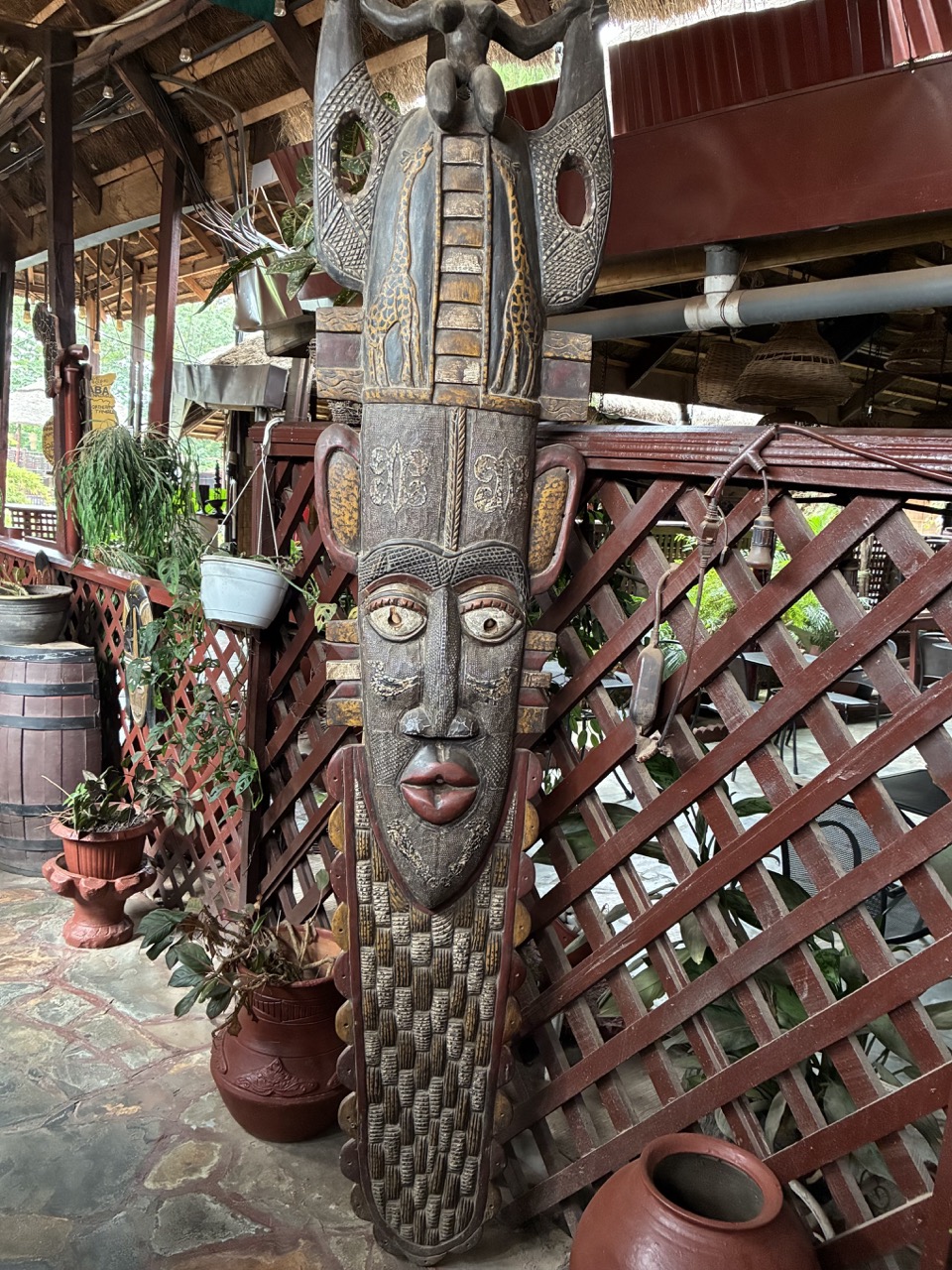
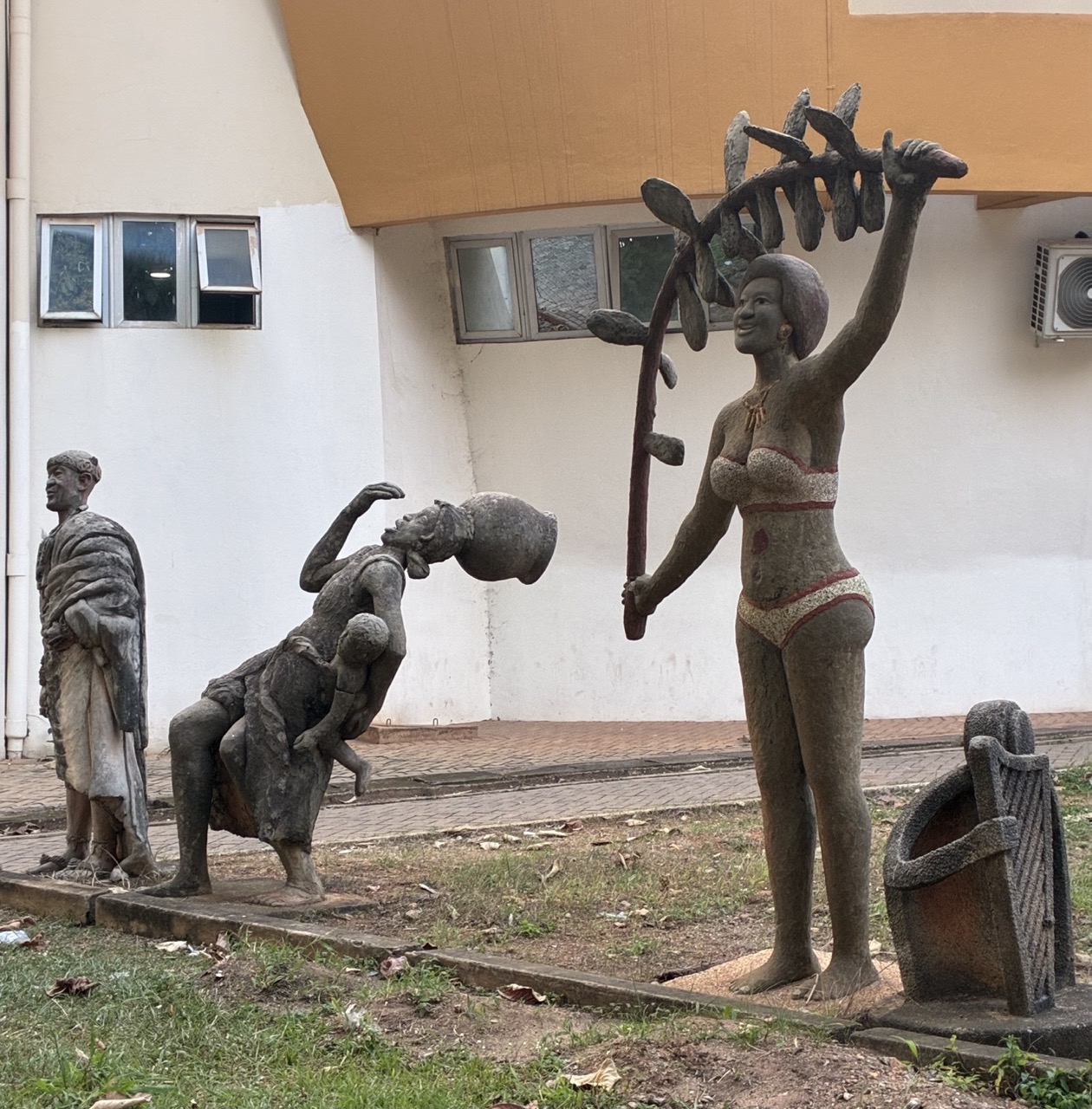
Few things distracted me from thoughts concerning Dad, but I’d love to know the colorful story behind this outer house decoration. Reminded me of a griot enlightening African royalty.
While at breakfast, a registered nurse in our group sat down beside me. I explained to her that Dad had “forgotten” to breathe or held his breath until he passed out. She asked, “Does he have Alzheimer’s?” When I agreed, she told me that sometimes that part of the brain which regulates breathing, stops communicating.
That made far more sense. When that started happening, she explained, patients soon die. She wasn’t that abrupt with the prognosis, but it was still the same conclusion no matter how it was worded.
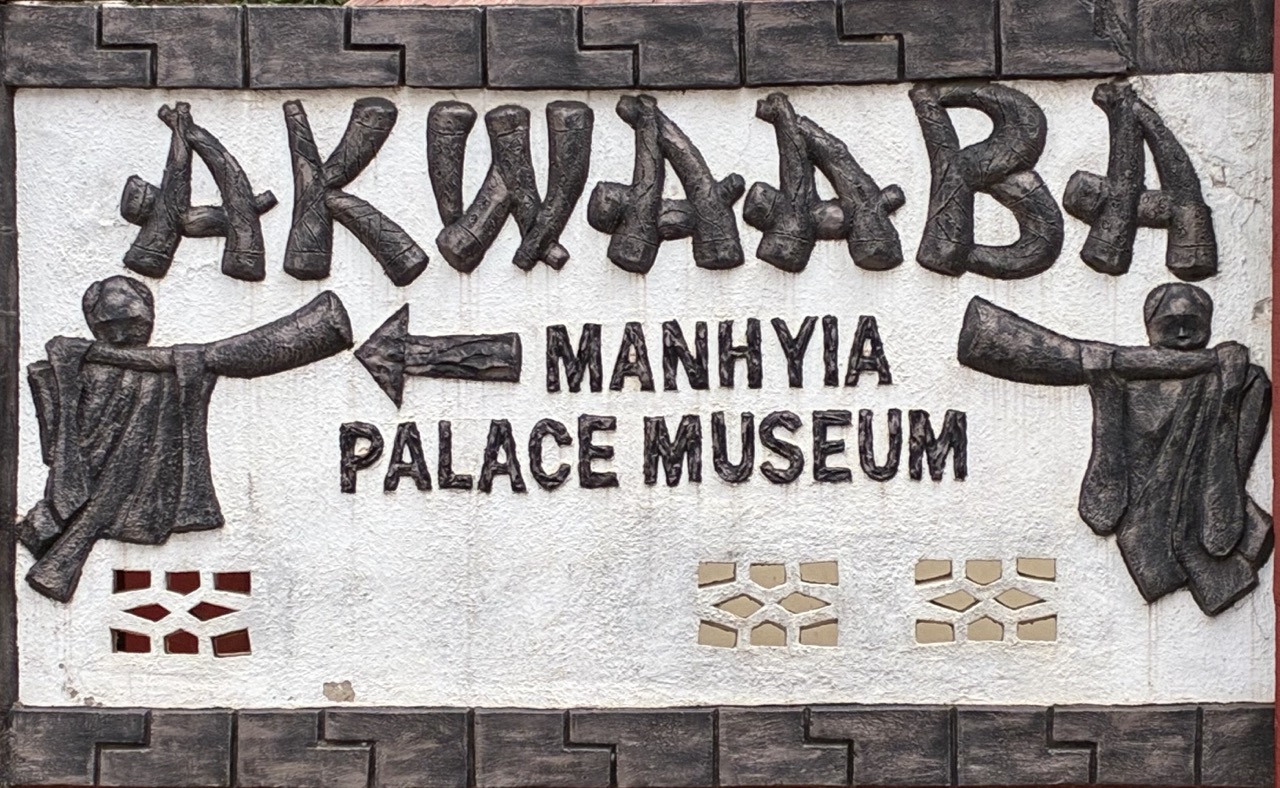
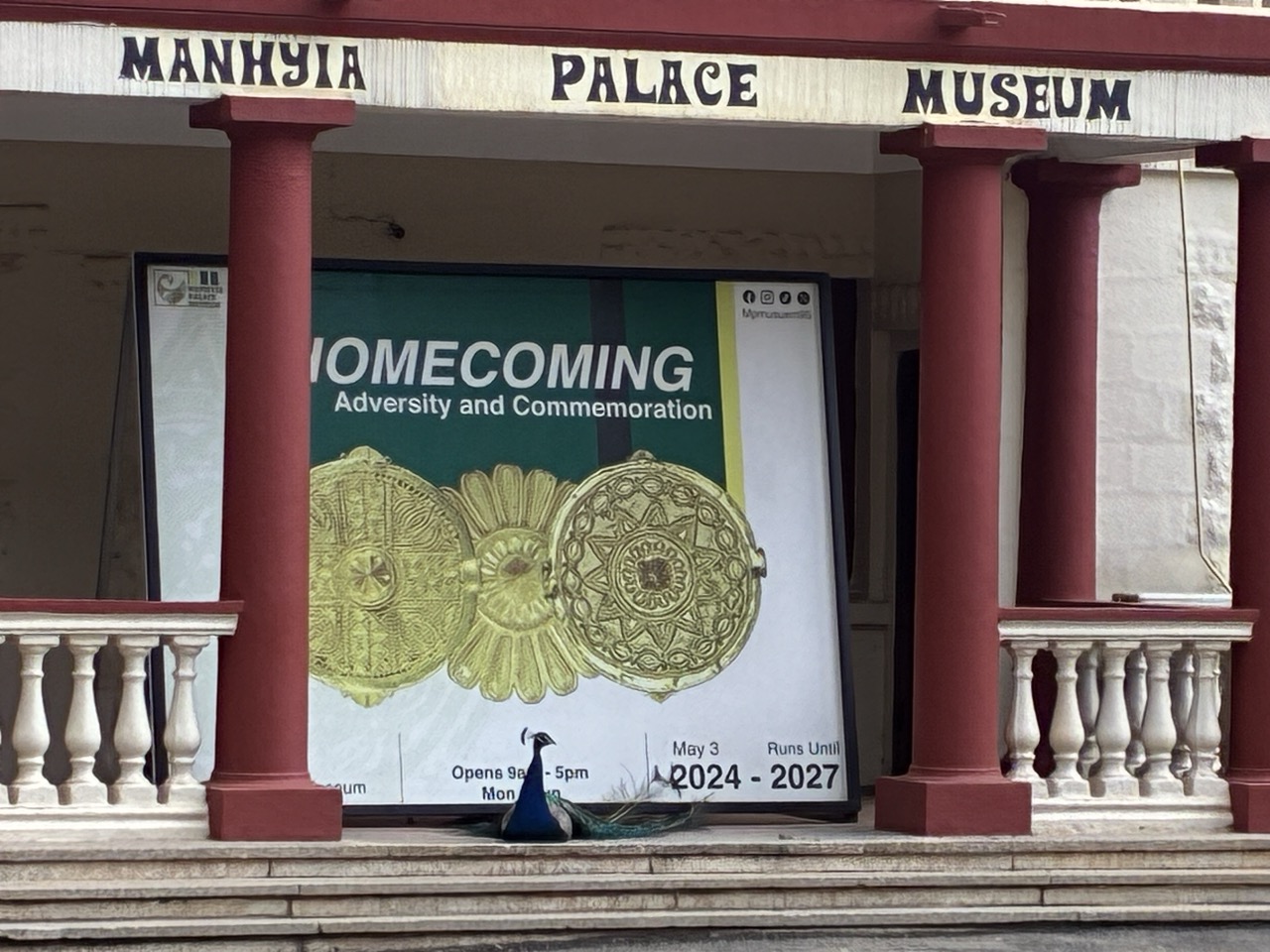
Today’s first destination: The Royal Museum of the Kings of Ashanti. I jotted down as many notes as I could while taking pictures. May have been easier to document the visit using video, but I didn’t want to use a lot of storage space on my phone.
- Kings are the strength, carried on men’s shoulders. Queens are the soul, carried on four men’s heads.
- Most common wood: mahogany, which queens are carried in. Kings carried in a wicker basket.
- Prempeh I, King of the Asante Empire, spent 28 years in exile in Seychelles, then returned to a home given by the British, but he didn’t accept it. He paid out right to own the home. He lived in it until 1971, then turned it into a museum. The home became the meeting place of the Asante with three telephones for communicating.
- Asante is a nation, not a tribe.
- 1935 flag colors of Asante made of gold (wealth), black (people) and green (forest)
- A rich Black man living in his forest.
- Eagle, crocodile, python. No matter where you are, you’re supposed to be strong.
- Pronounced “Ah-SAWN-tay” without the “h,” which was what the colonizers mispronounced it.
- Kings are embalmed, then ceremonially buried.
- Ceiling fan was 100 years old. Enjoyed the royal breeze. Sounded like a twin engine.
- Radio was 75 years old.
- TV: had to make an appointment to see it back in the day when that technology was scarce.
- Mirror of Independence presented to the king by Nkrumah.
- Gramophone no longer works.
- Chessboard with customized Ghanaian pieces.
- Gold ore (unprocessed) presented to the 15th Asantehene (King), Otumfuo Opoku Ware II.
- Second living room for prime ministers and other dignitaries.
- 1931-1970 the 14th Asantehene, Otumfuo Nana Sir Osei Tutu Agyeman Prempeh II, at Kumasi airport with eight wives and twenty-one children.
- 1945-1977 Nana Amma Serwaa Nyarko. The king’s sister ruled as queen from same bloodline (NEVER a husband and wife).
- Asante King’s children can never be the king. Only queen’s children since she knows 100% that all the children she births are hers.
- King selects new queen; queen selects new king.
- Queen sits on the left side of the king because that’s where the heart is.
- Thrones are spiritually-charged. If a man sits on them, he gets erectile dysfunction and women become barren.
- If a Black man drinks akpeteshie (Ghanaian spirit distilled from palm wine or sugarcane juice) every day for three months, he then becomes a white man, then dies.
- Clay bowl with three heads, holding hands, symbolizing unity.
- Israeli fridge 75 years old, never repaired it and still works.
- Kenté is over 300 years old.
- The stool is a symbol of power. Once the king dies, stool is blackened with sheep’s blood, wooden ash and sets for 42 days.
- Kings are alive in the spiritual world.
- 42 days in Asante calendar month.
- King Otumfuo Opoku Ware II (lawyer, Italian ambassador (1970-1999)).
- Feet on footstool to protect king from evil intentions.
- 1977-2016 (Queen) Nana Afia Kobi Serwaa Ampem II lived until 111 years old.
- Current King 75 years old and Queen is 99 (brother and sister)
- Asantehene is a chancellor at Nkrumah University.
- In 1874, the British invaded and destroyed Kumasi along with palaces and looted and placed inside British Museum. After 150 years, Ghana finally got some of their artifacts back, but some Ghanaian treasures are on loan from the British.
- Because of the Antiquities Law, the British cannot be prosecuted for what they stole because it was “legal.”
- The British exiled King Prempeh I in Mahé, Seychelles along with chiefs because the Asante people kept walking to wherever the royalty were on land. For 28 years, King Prempeh I educated himself in English.
- 65-year-old Nana Yaa Asantewaa, Queen Mother of Ejisu, credited with leading five thousand Asante people in March 1900 against the British who wanted the Golden Stool. The stool was hidden. The war lasted nine months. Nana Yaa Asantewaa kept Golden Stool with her. The British used enforcement from Northern Ghana, Nigeria and Sudan to eventually defeat the Asante, but the British never captured the Golden Stool.
- In 1695 the Golden Stool was heavenly made, not human-made. Humans aren’t allowed to sit upon it.
- Otumfuo Osei Tutu II (Barima Kwaku Dua) became Asantehene in 1999.
(Please click on individual pictures to see the full view, then click on the browser back arrow to return to blog view.)
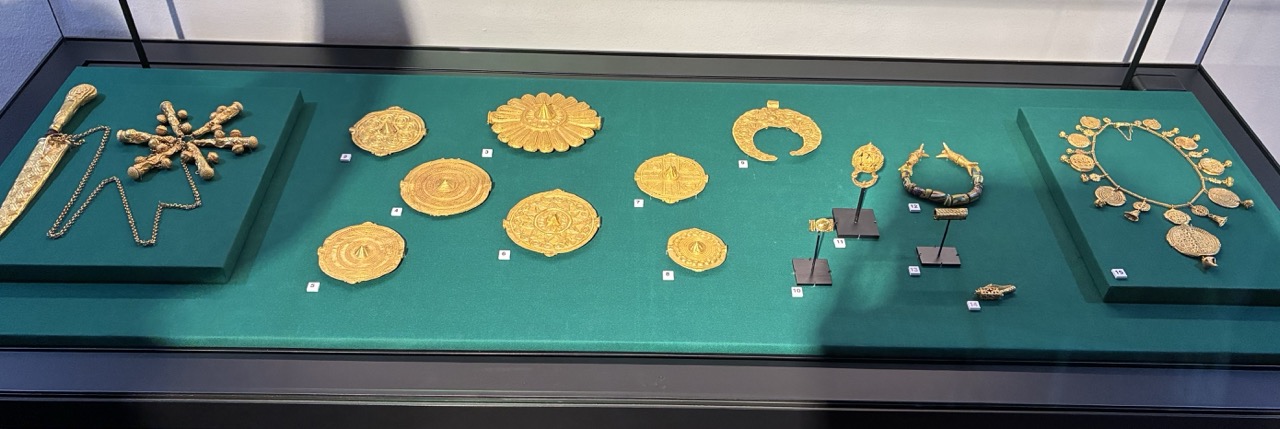
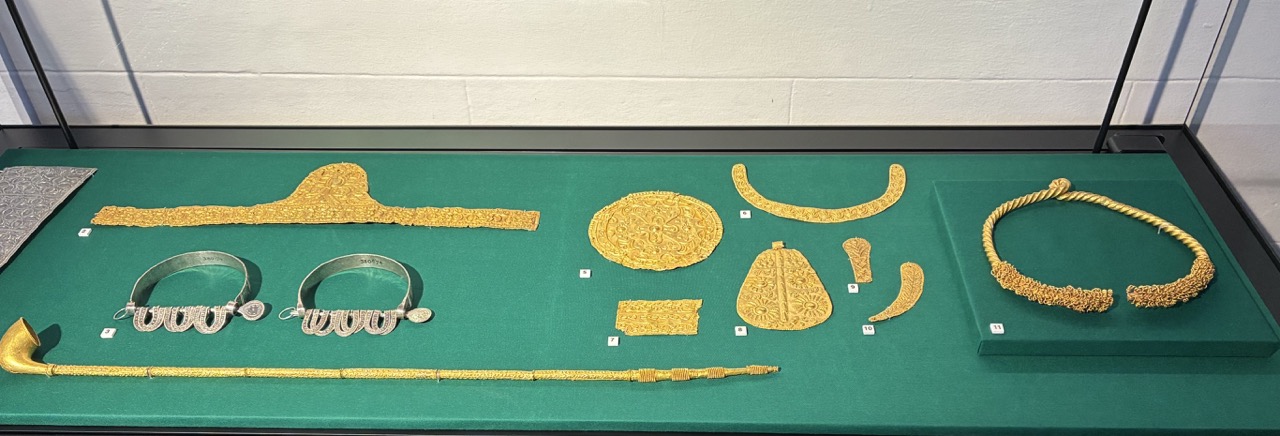
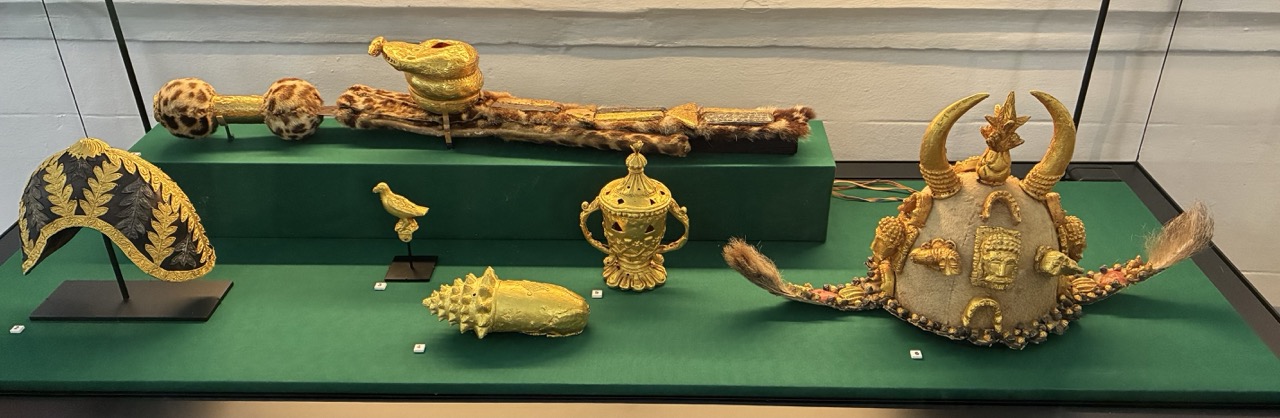
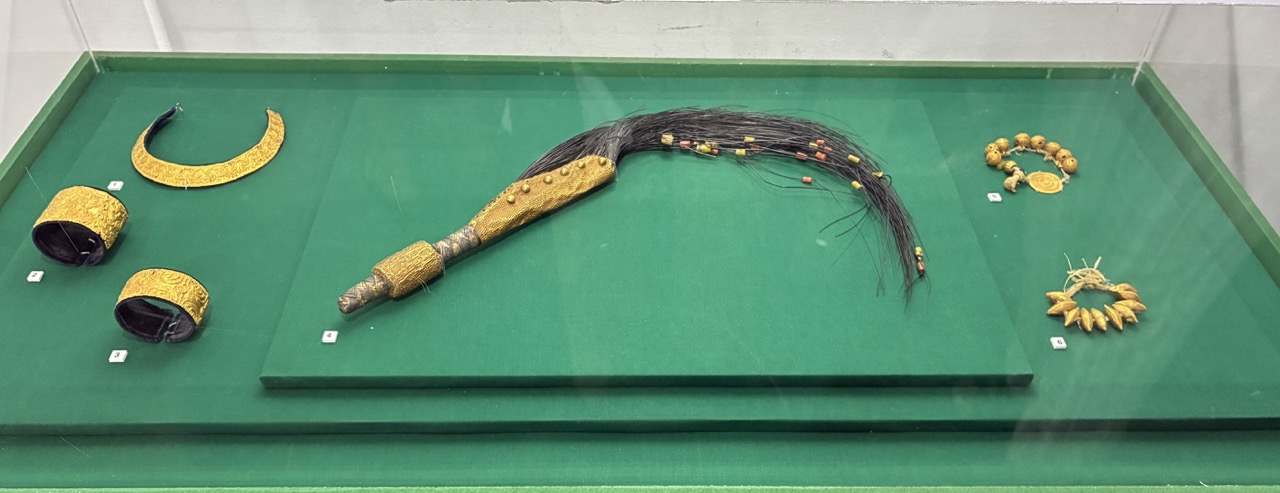
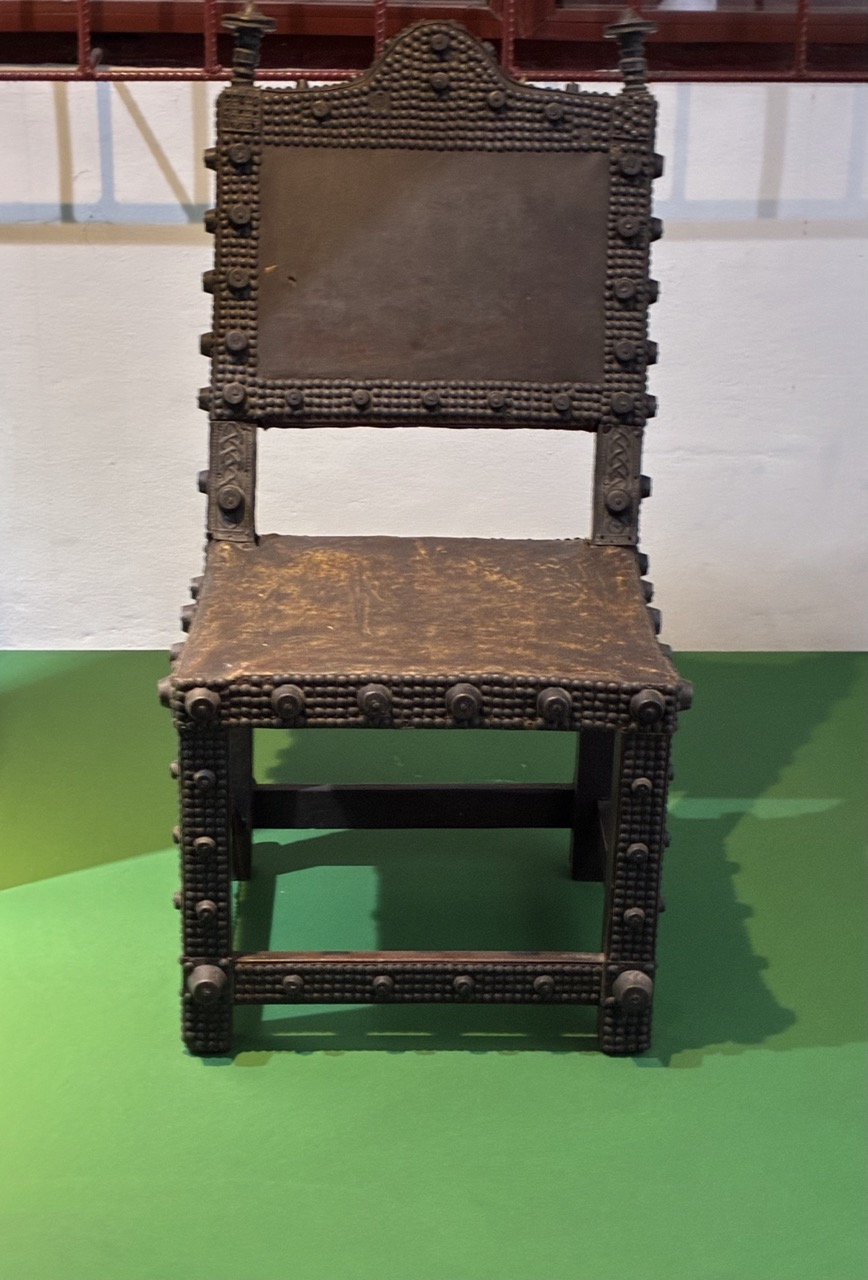
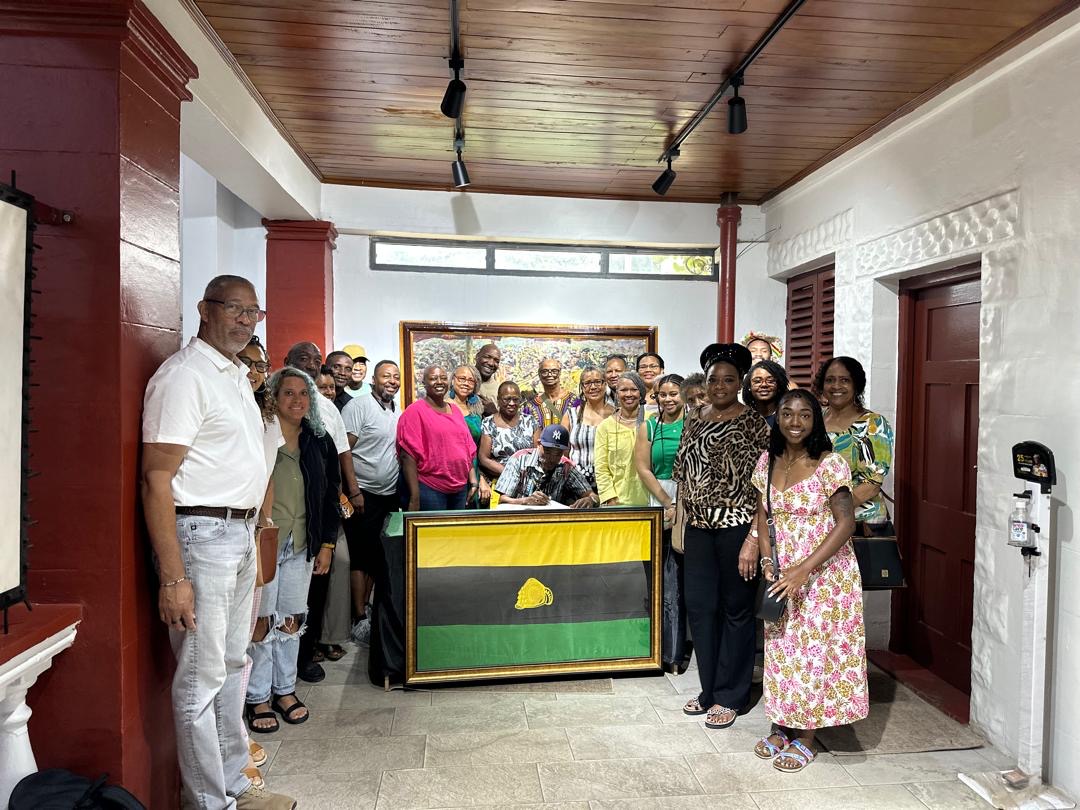
Many in my tour group wanted to raid the British Museum, Eric Killmonger style, and recapture looted Ghanaian artifacts after hearing the consequences of the Antiquities Law. Imagine stealing another country’s treasures, then passing a law to declare that the theft was legal after the fact.
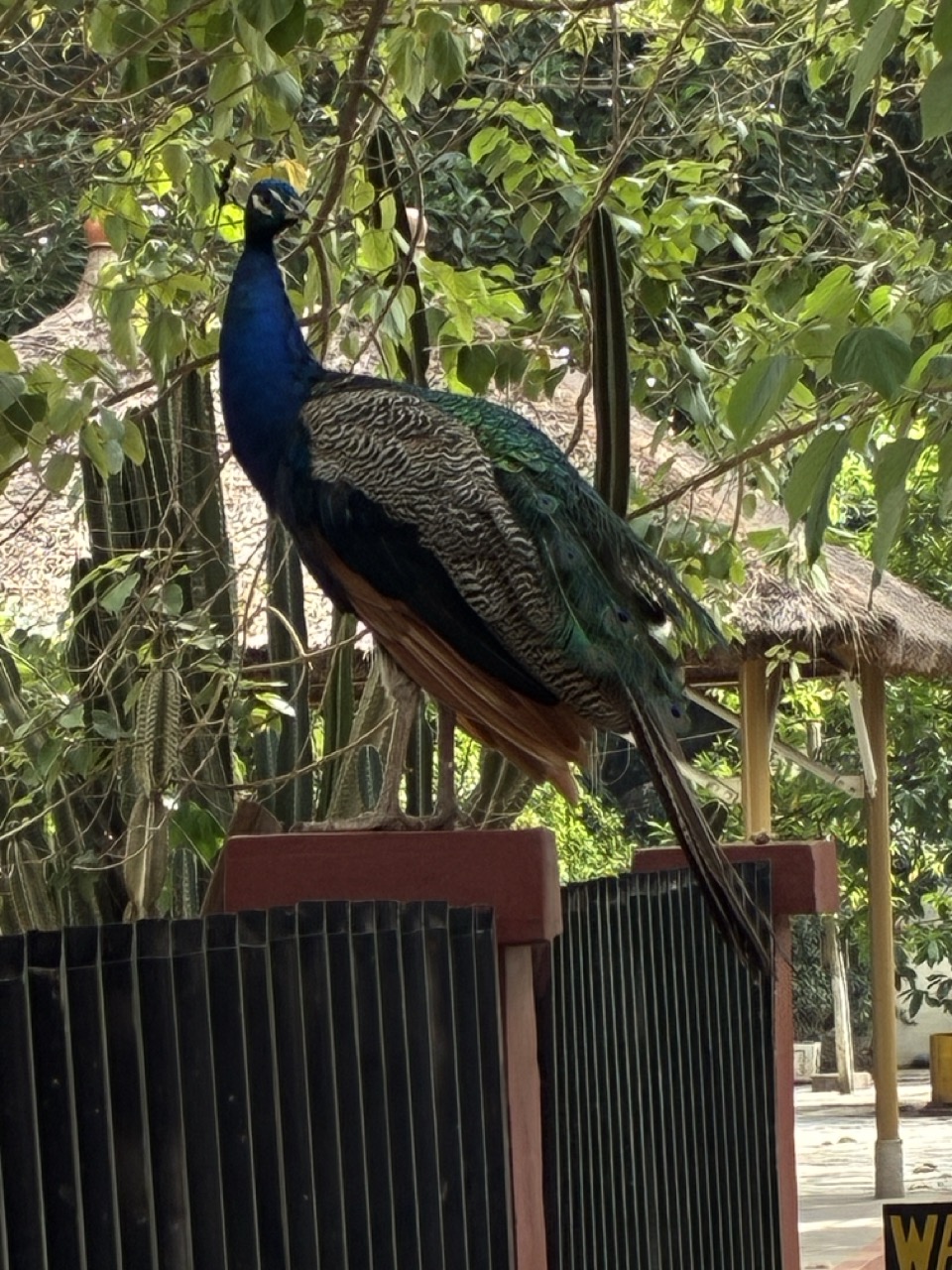
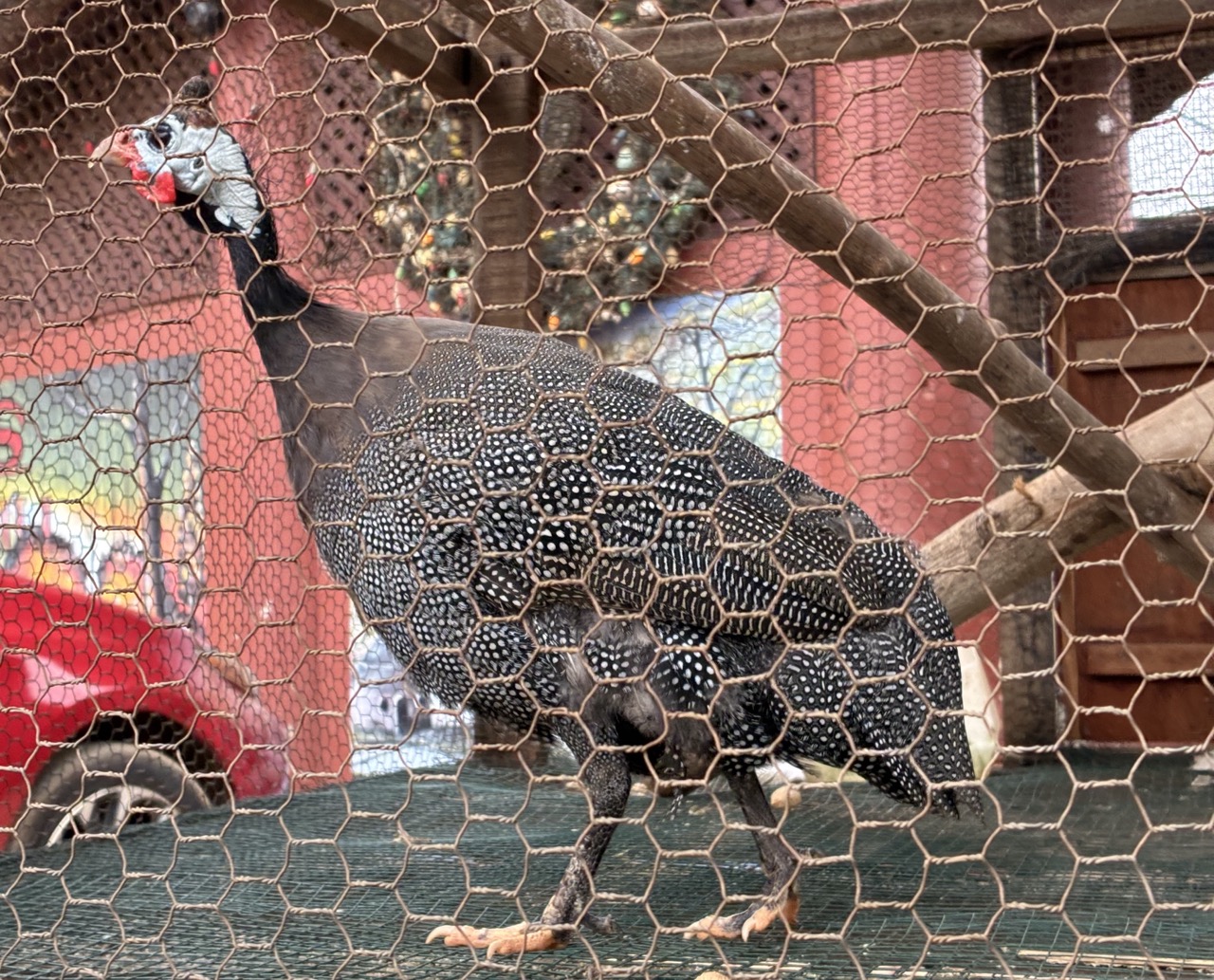
Fortunately, the museum grounds offered a refreshing break from the consequences of history. Peacocks roamed around as I tried my best to hold onto a rubber tree. The tree definitely won.
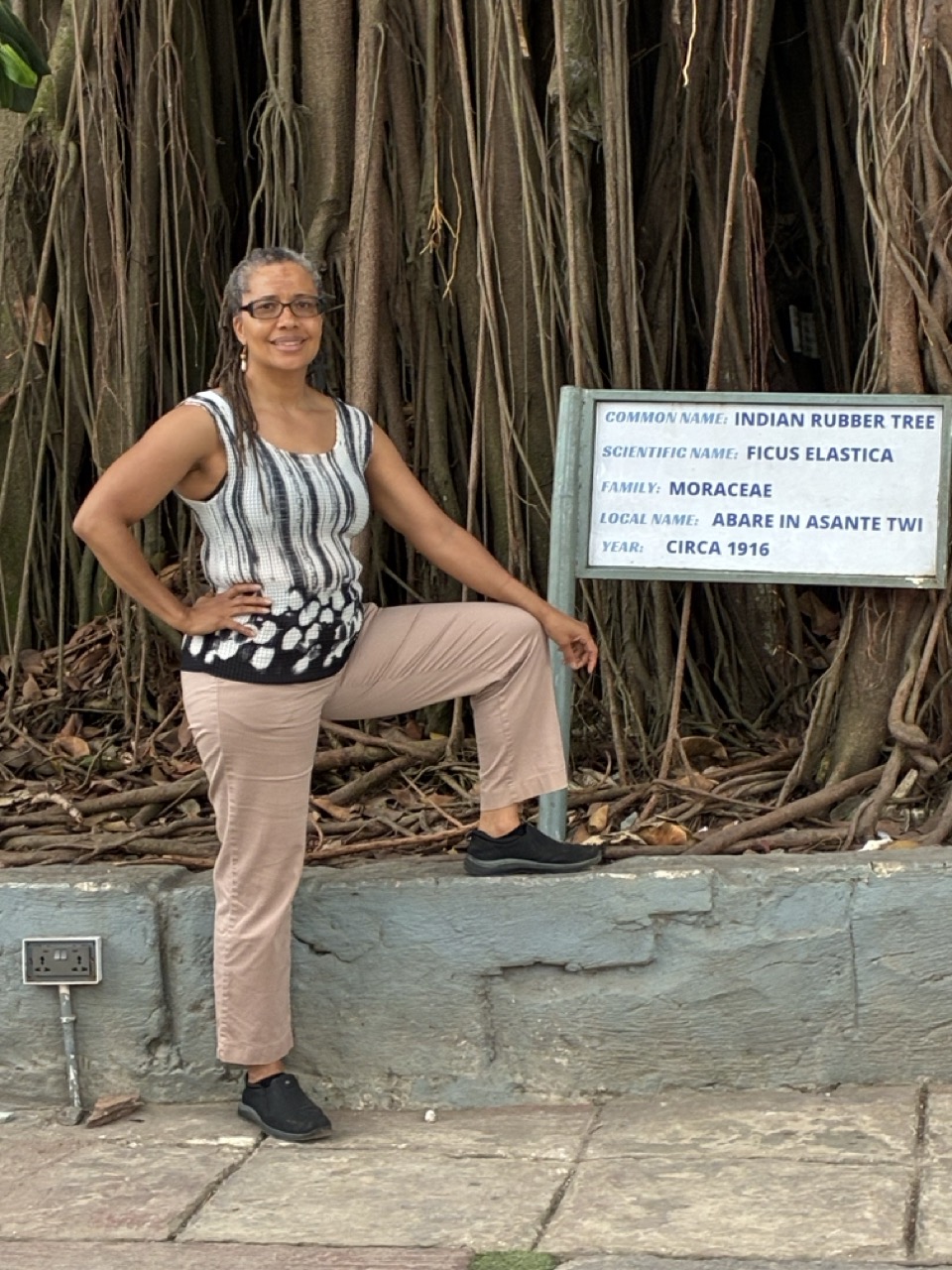
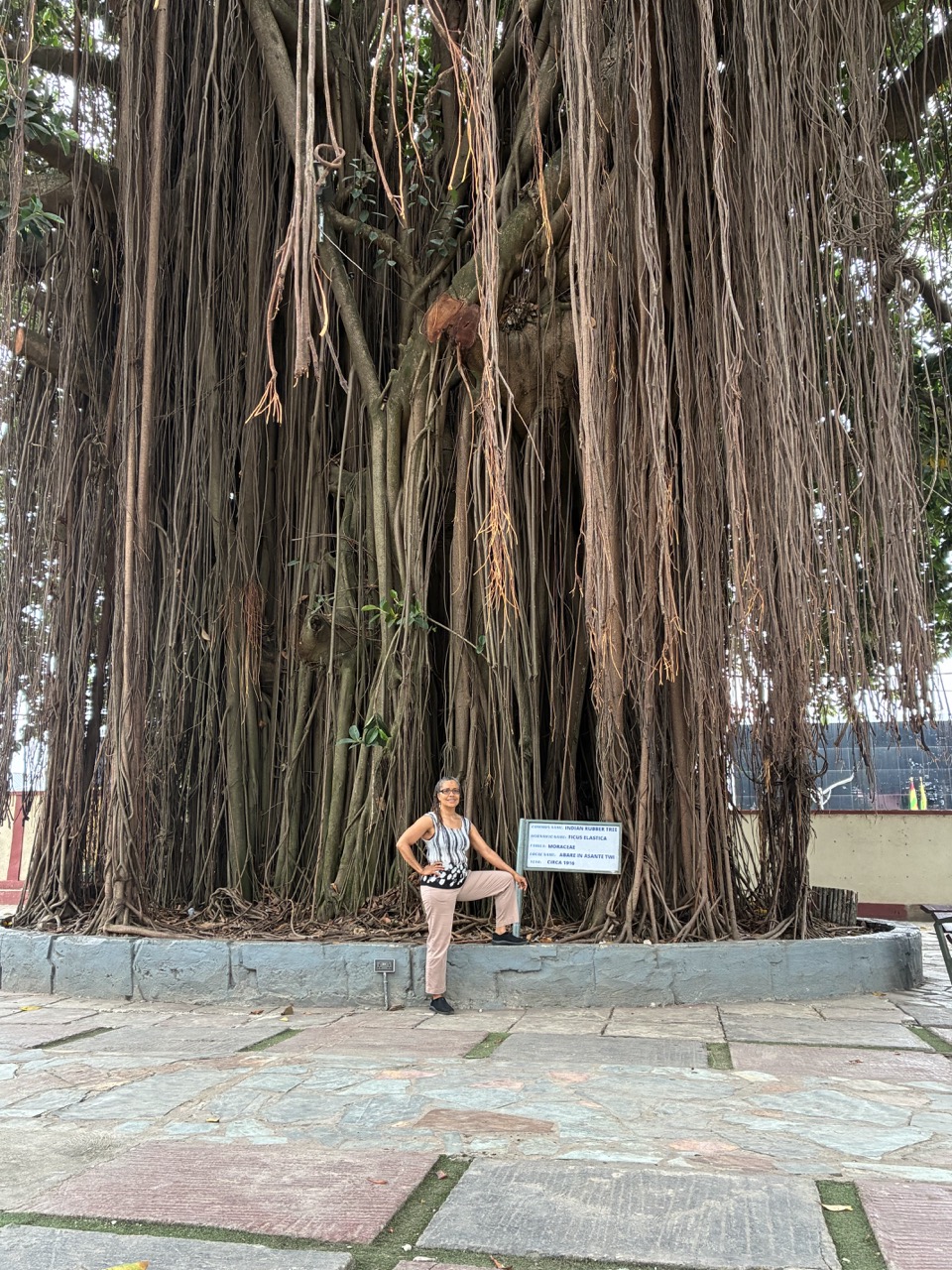
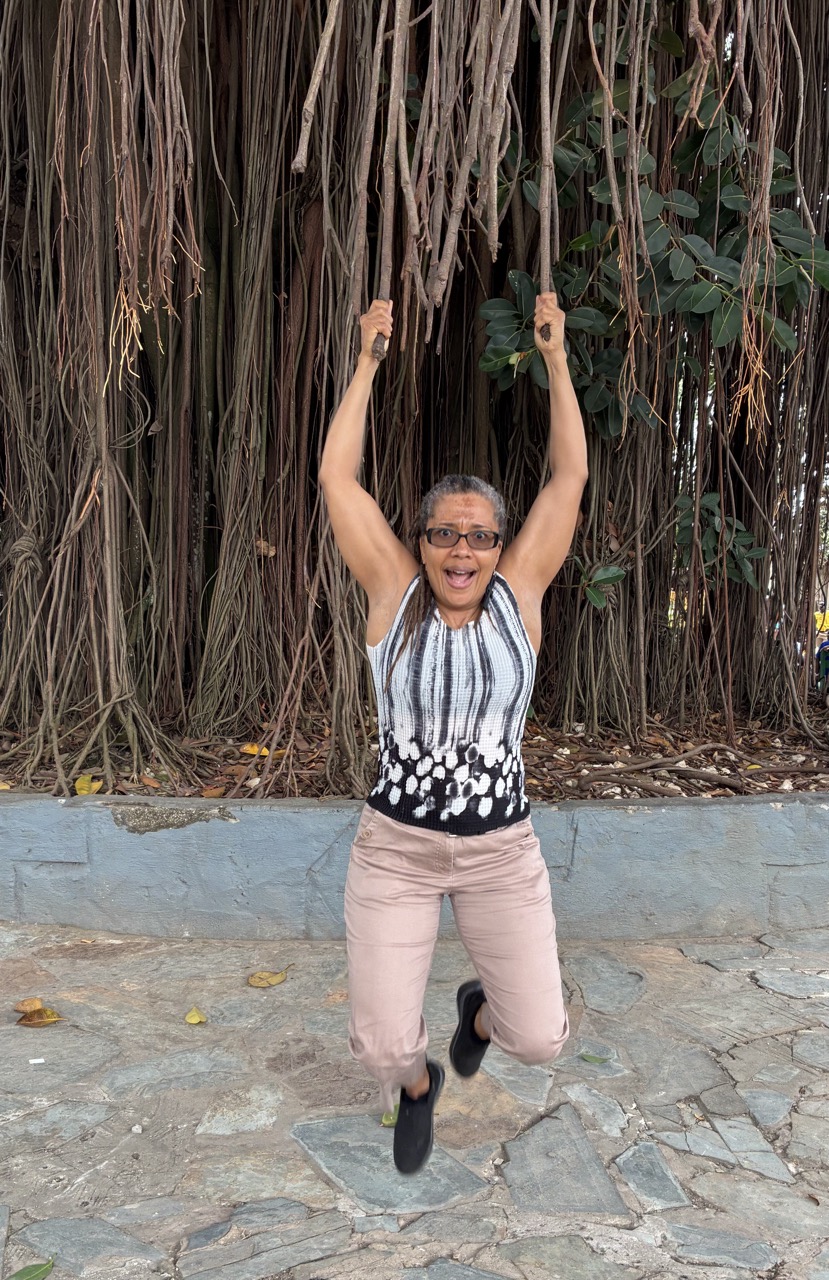
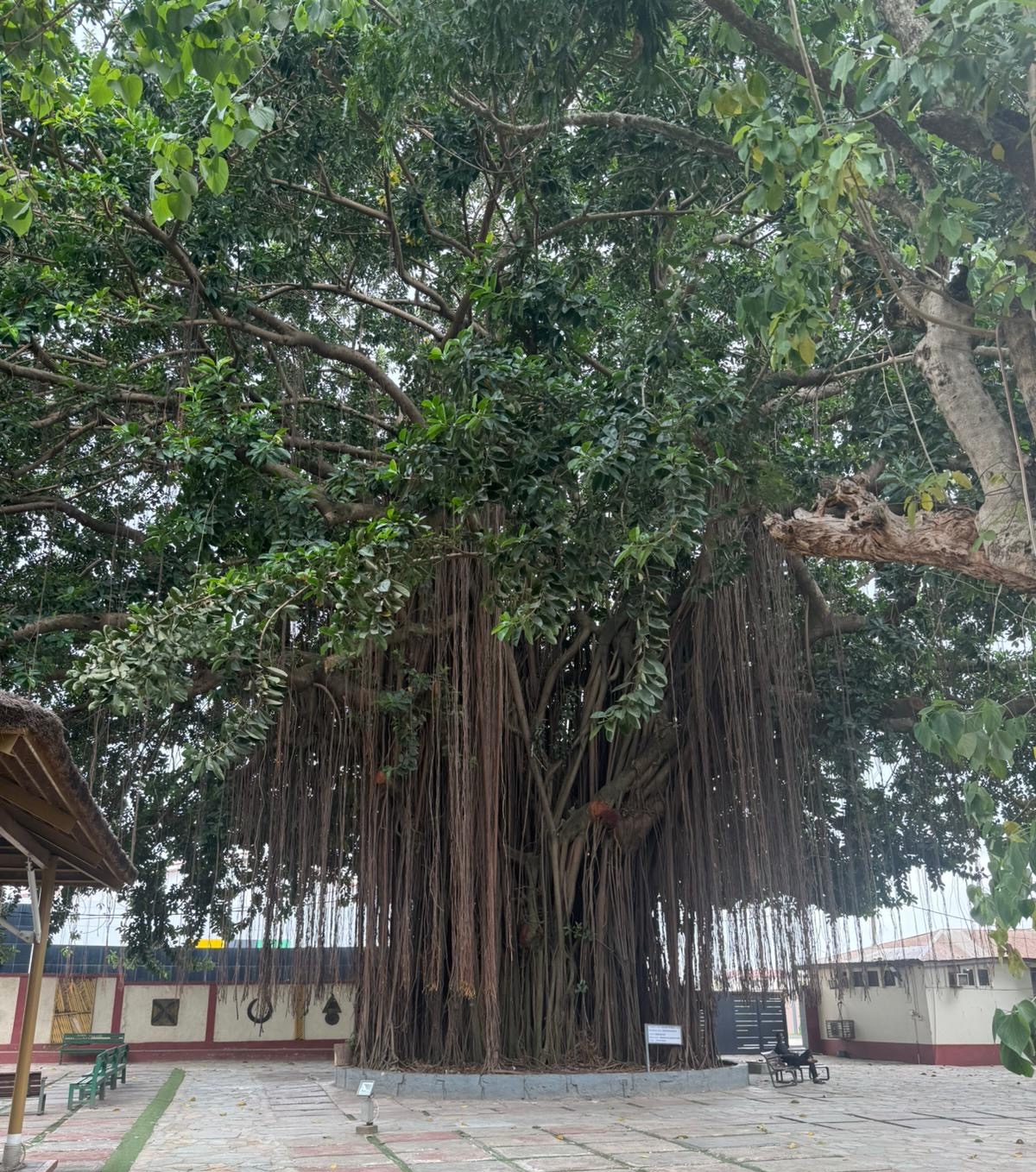
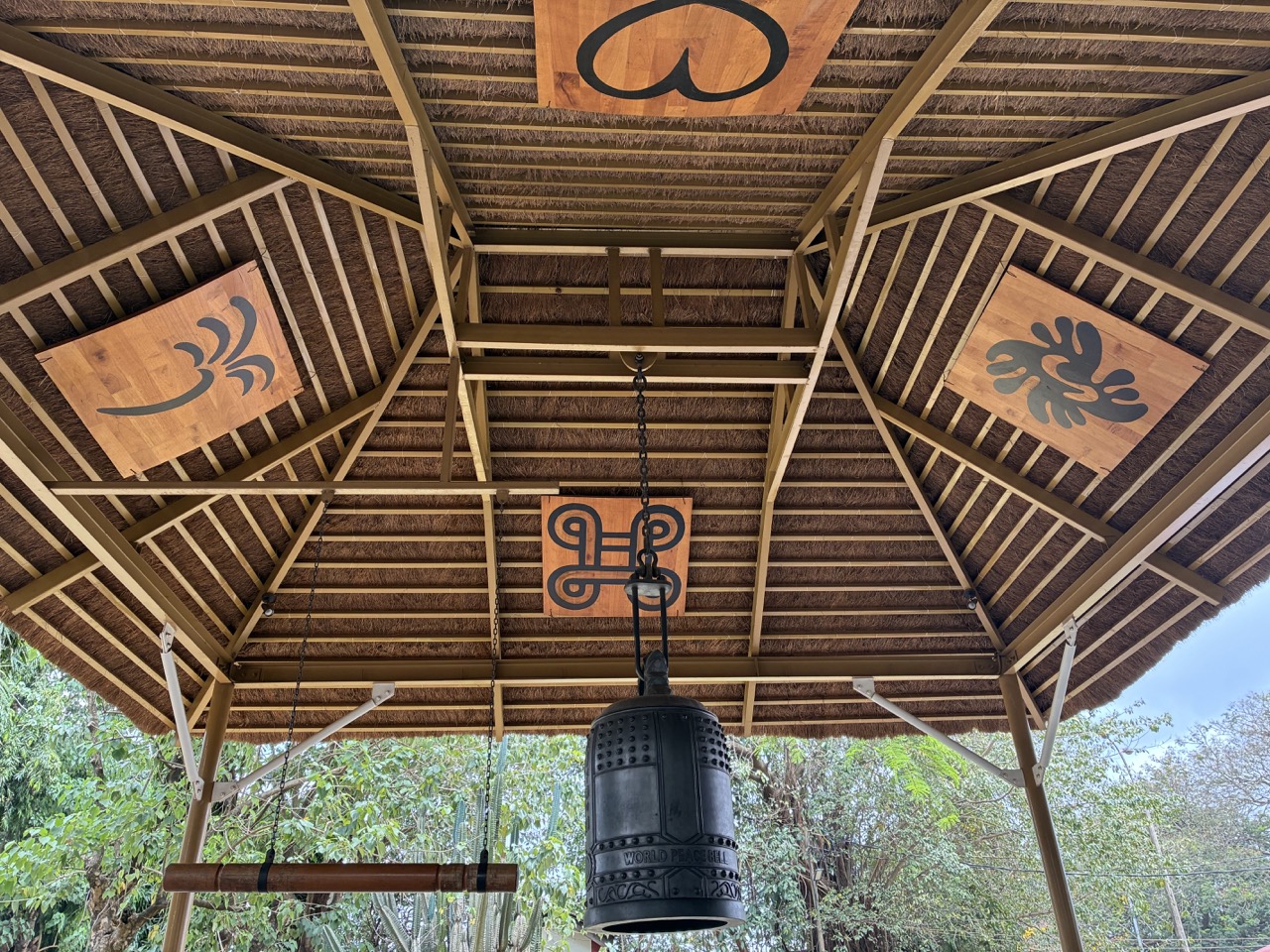
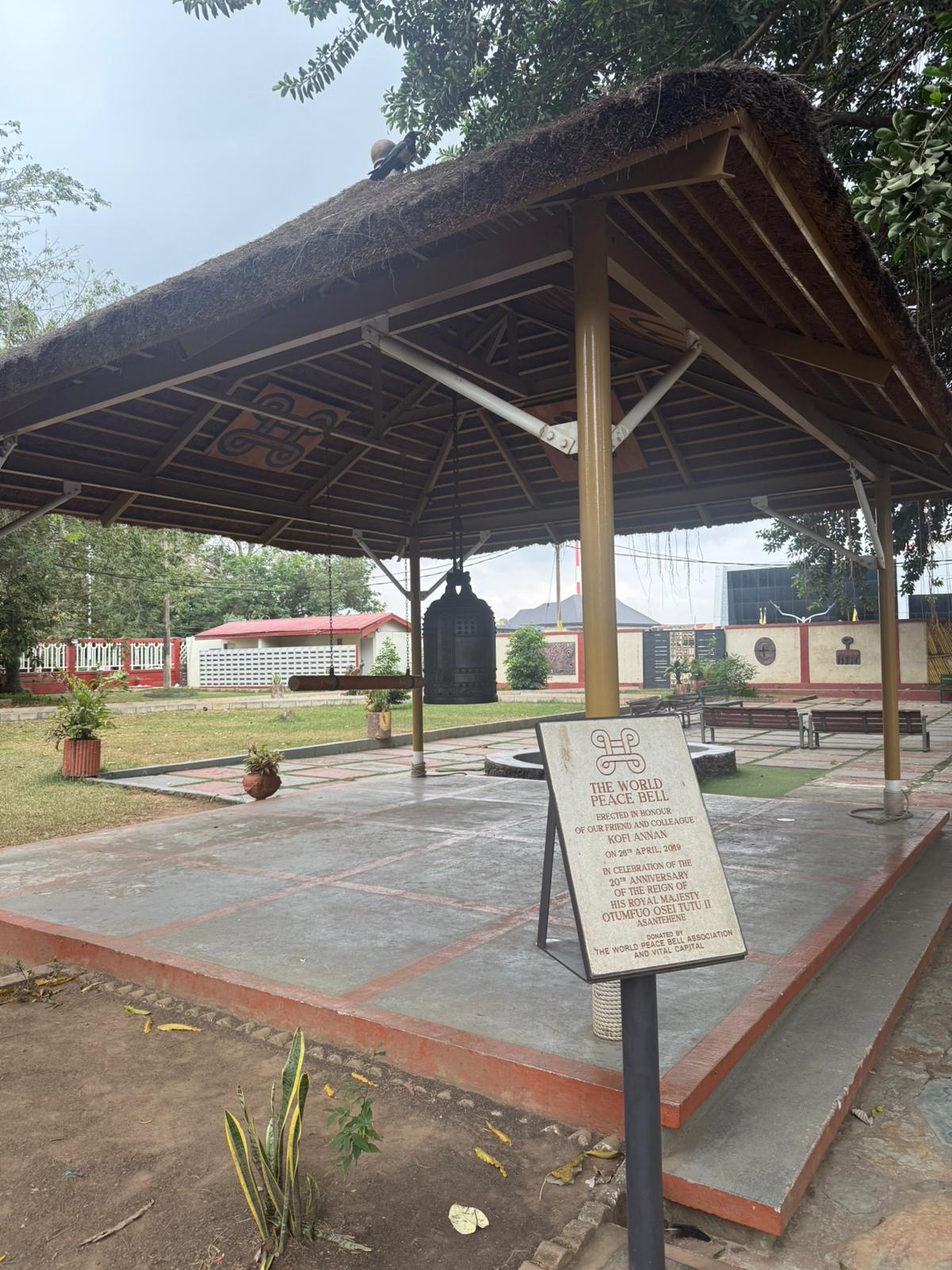
The World Peace Bell reminded me of Korean bells I saw and heard when I lived in South Korea, especially during the Buddha’s birthday celebration.
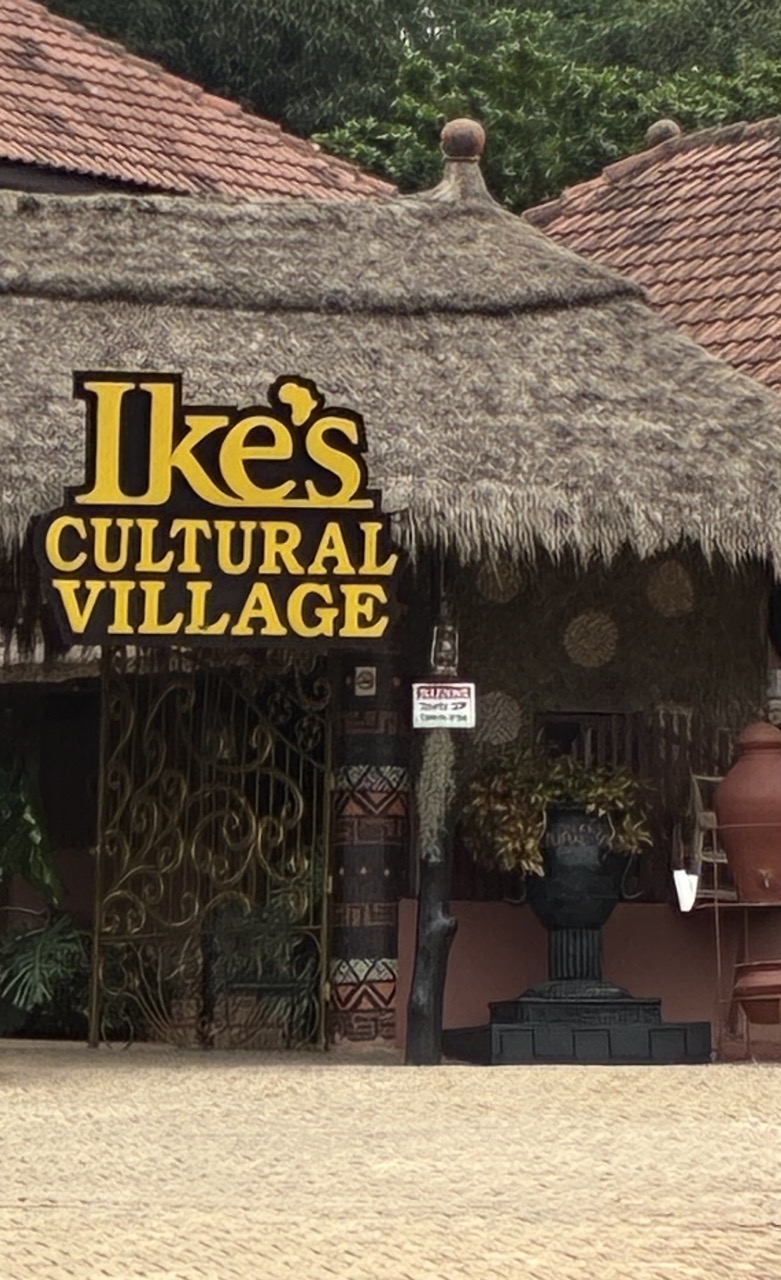
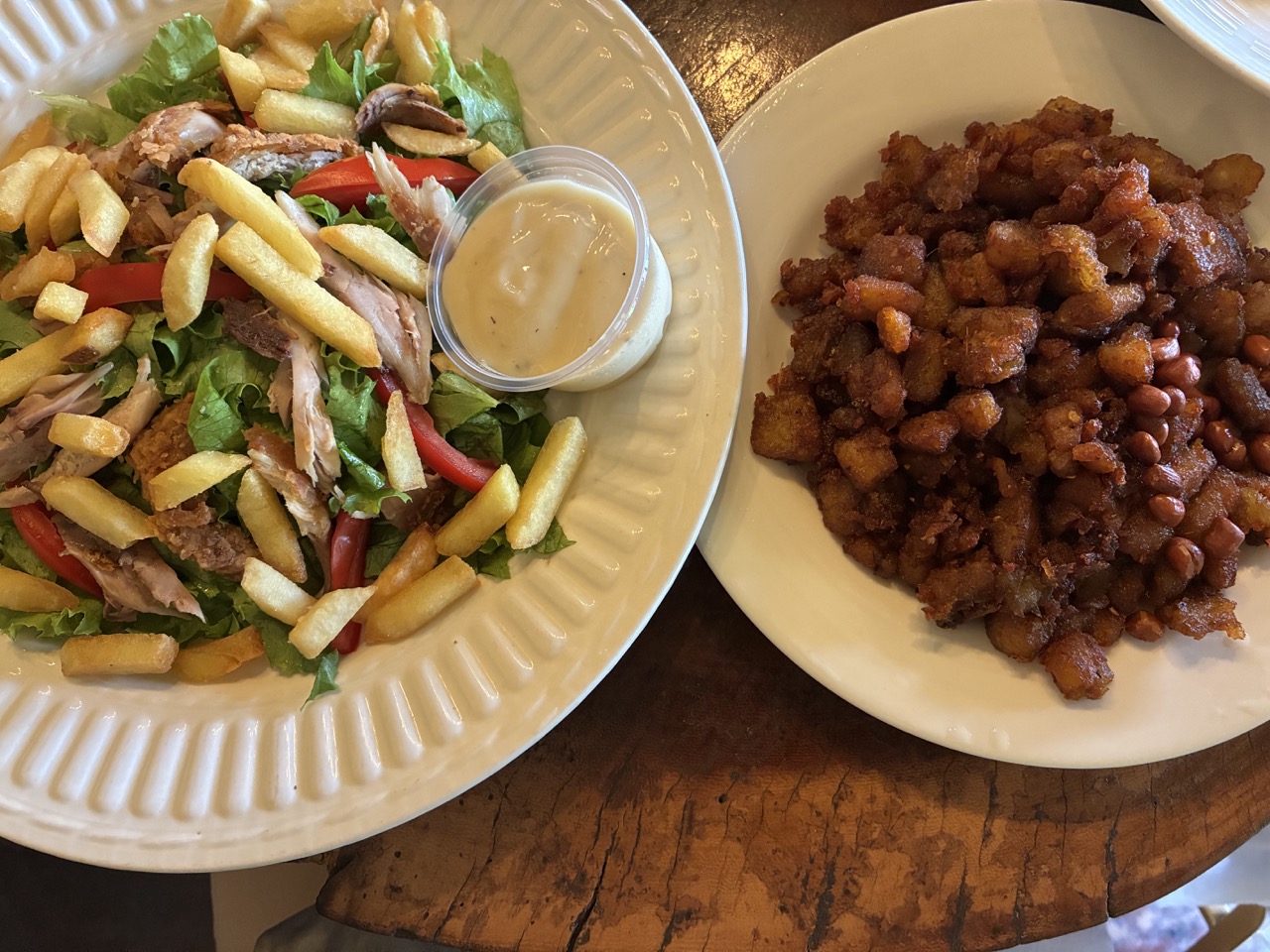
Even with pre-orders, lunch at Ike’s took over two hours and hardly anyone had their drinks with their meal. I had delicious kelewele with groundnuts with an the Everlian salad, which consisted of chopped fried chicken with breading, french fries, greens, and tomatoes. Once again, I had enough leftovers for breakfast.
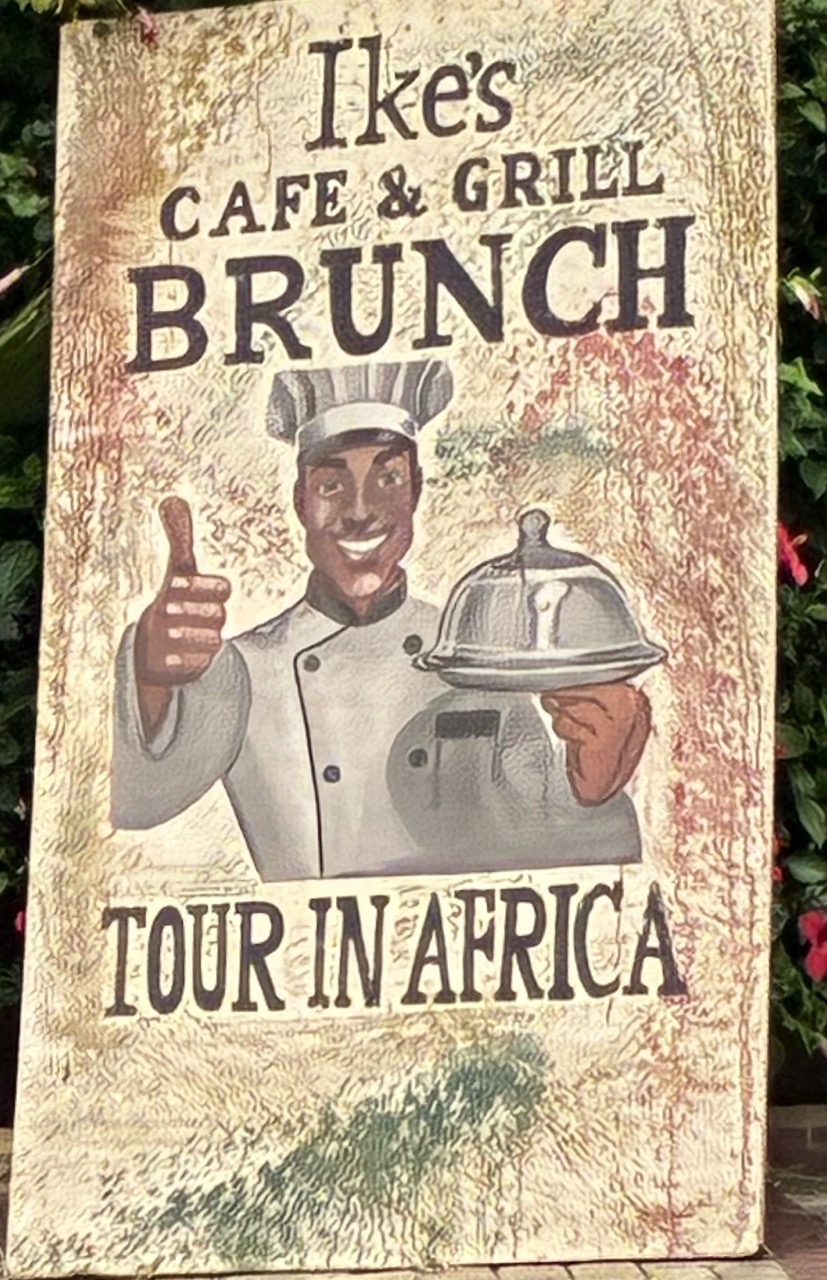
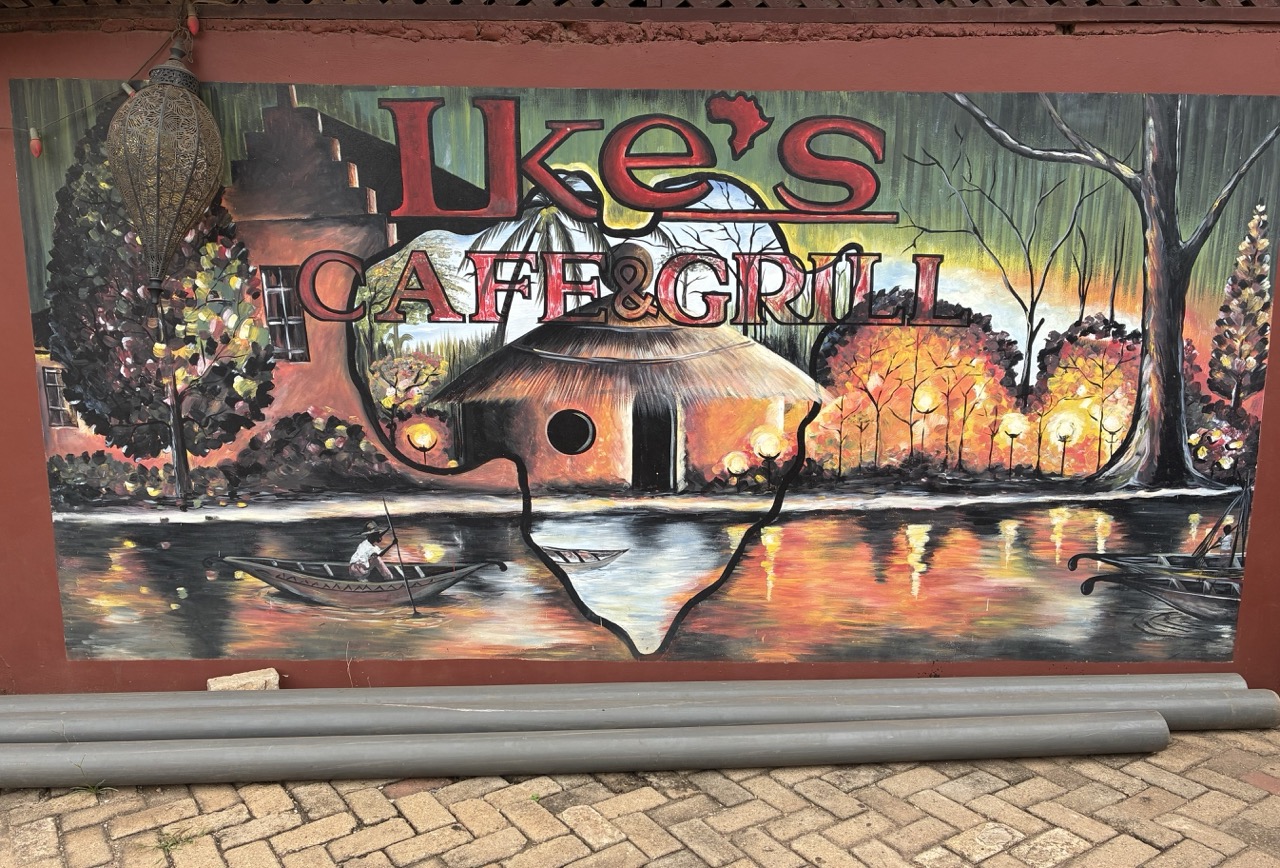
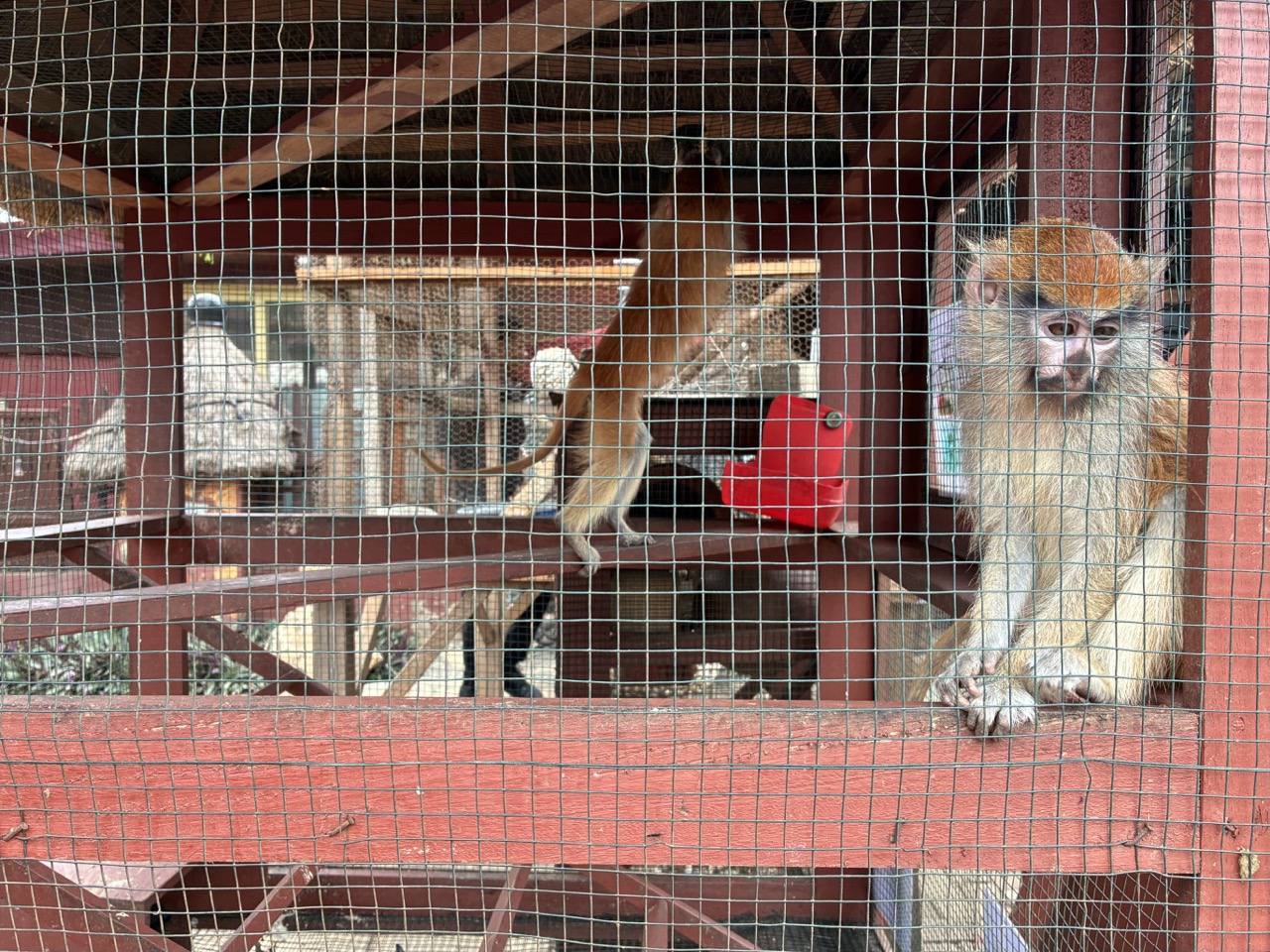
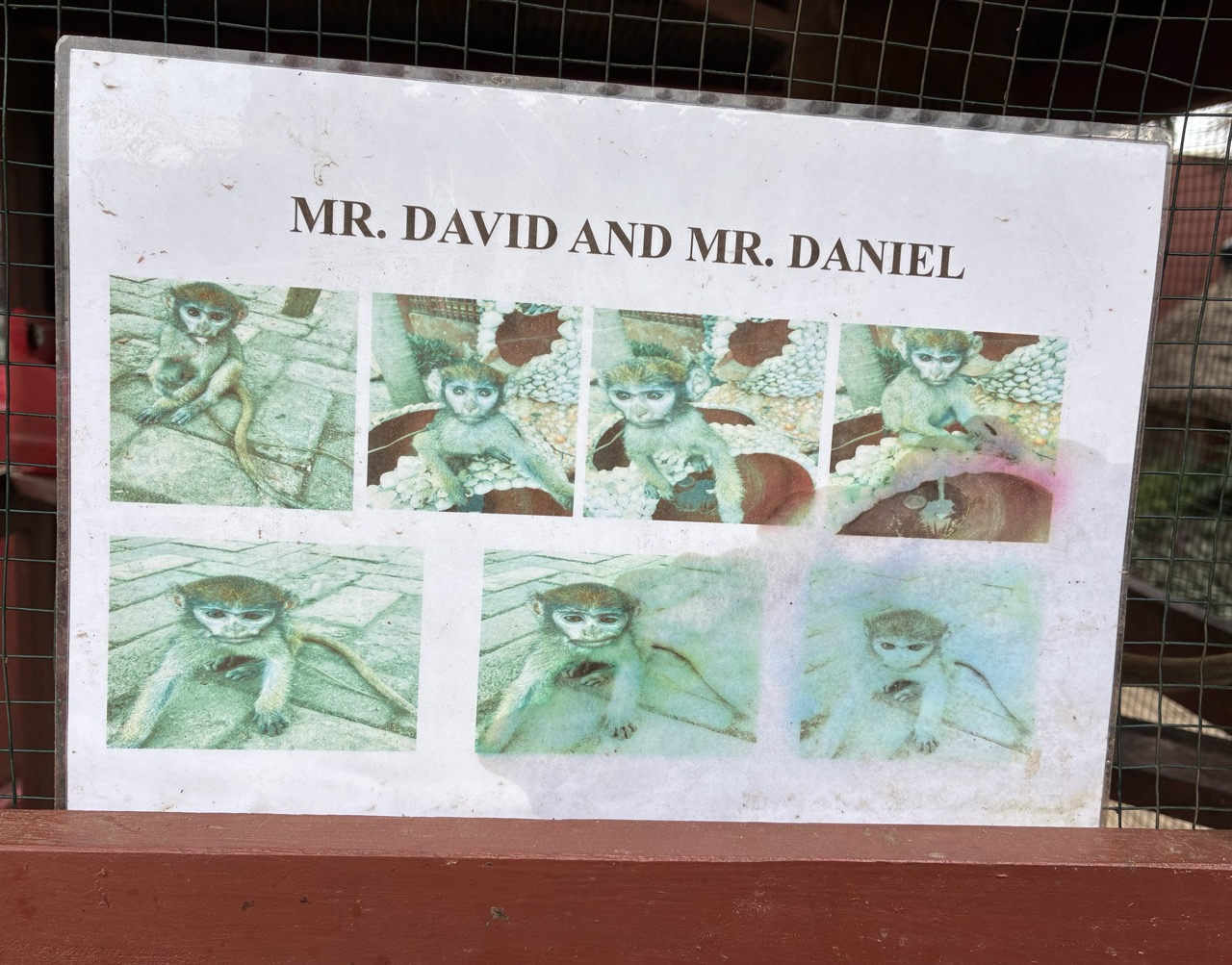
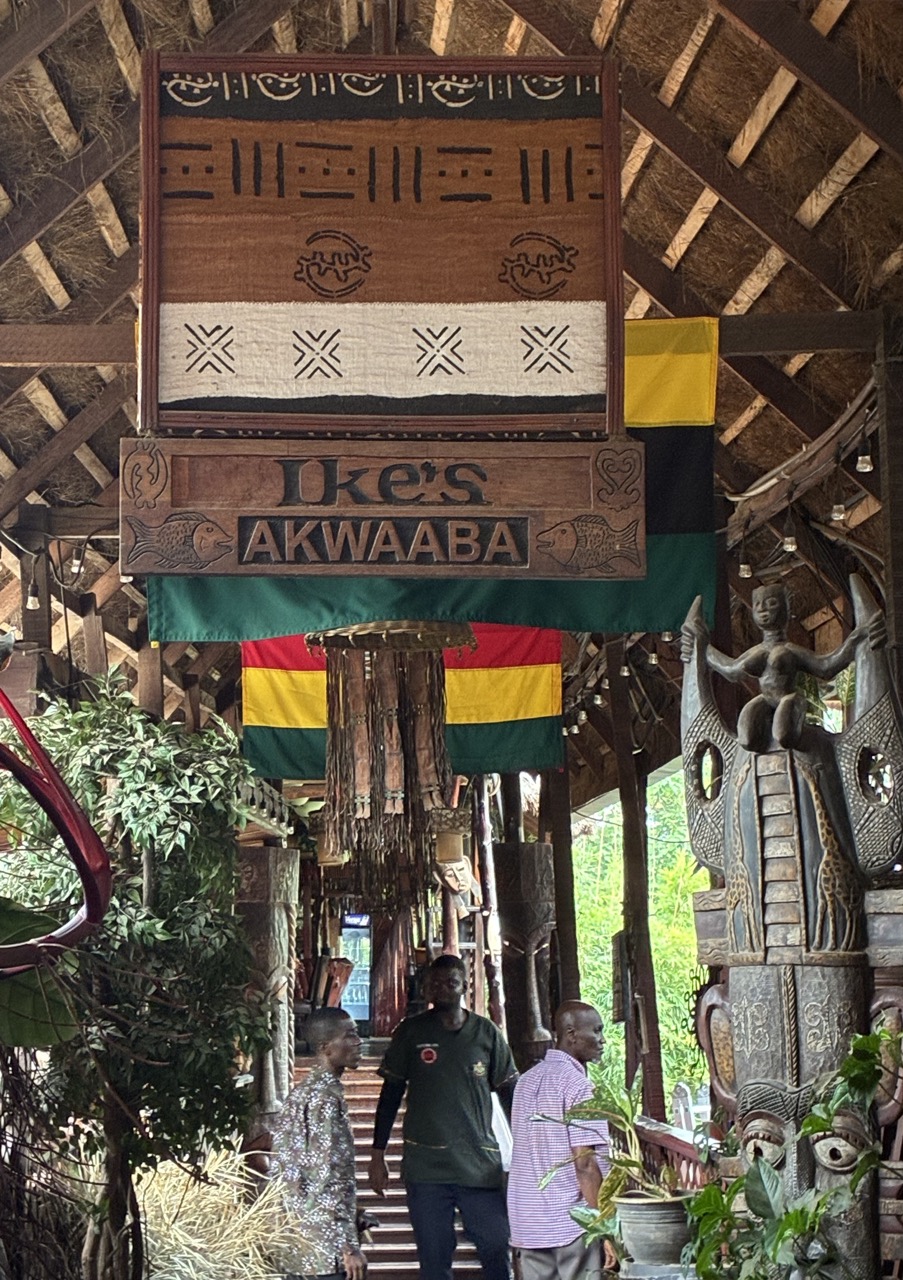
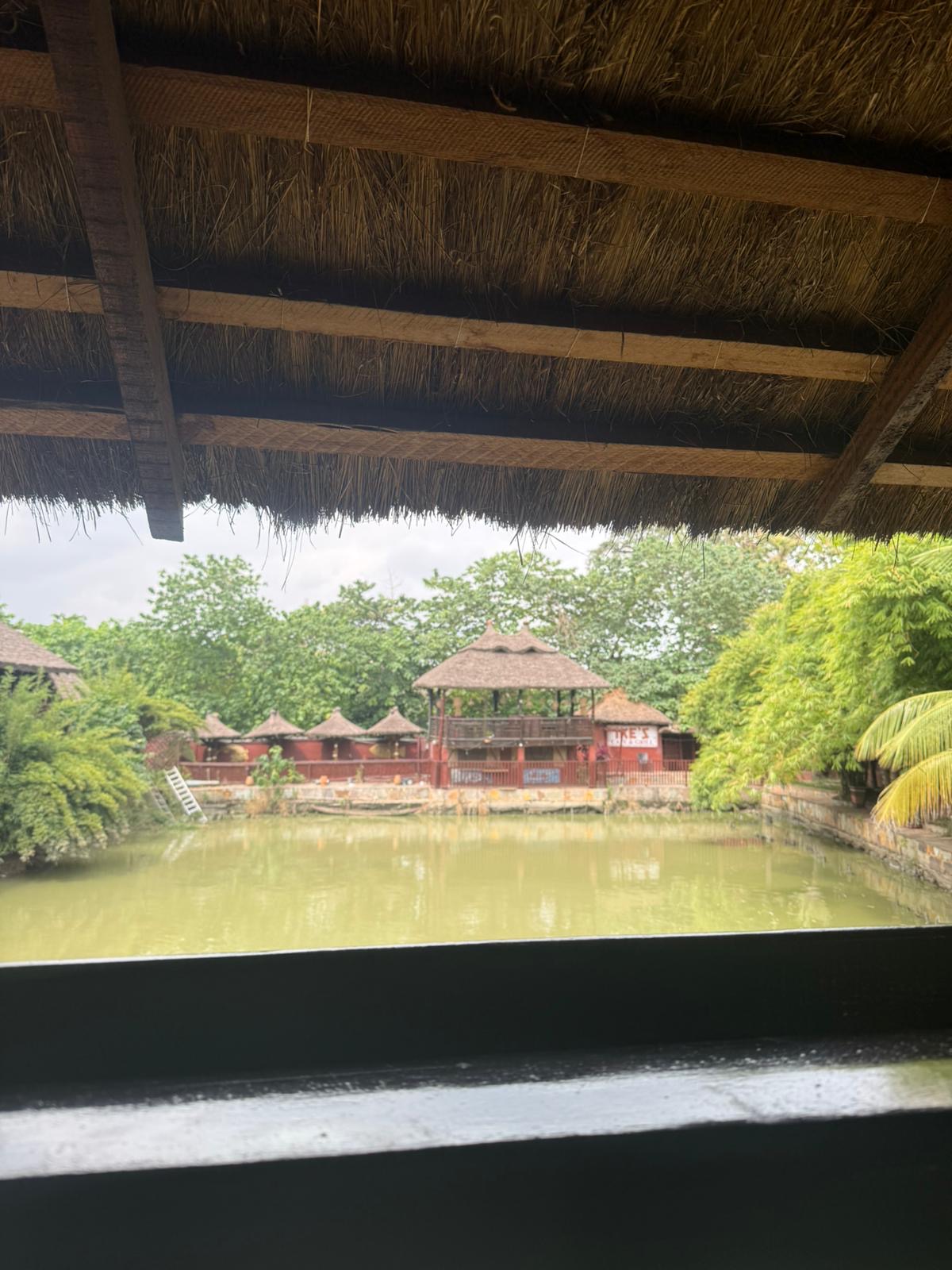
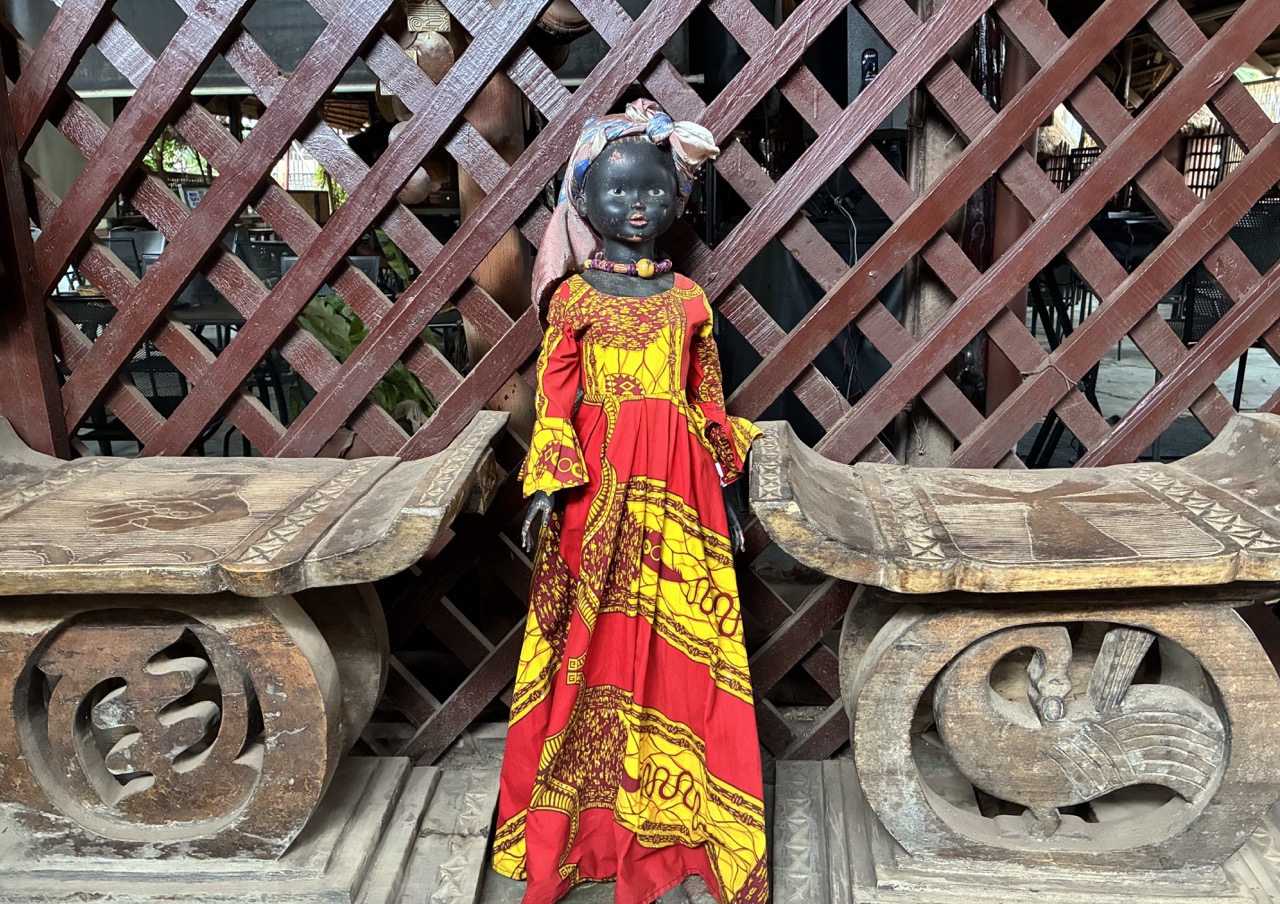
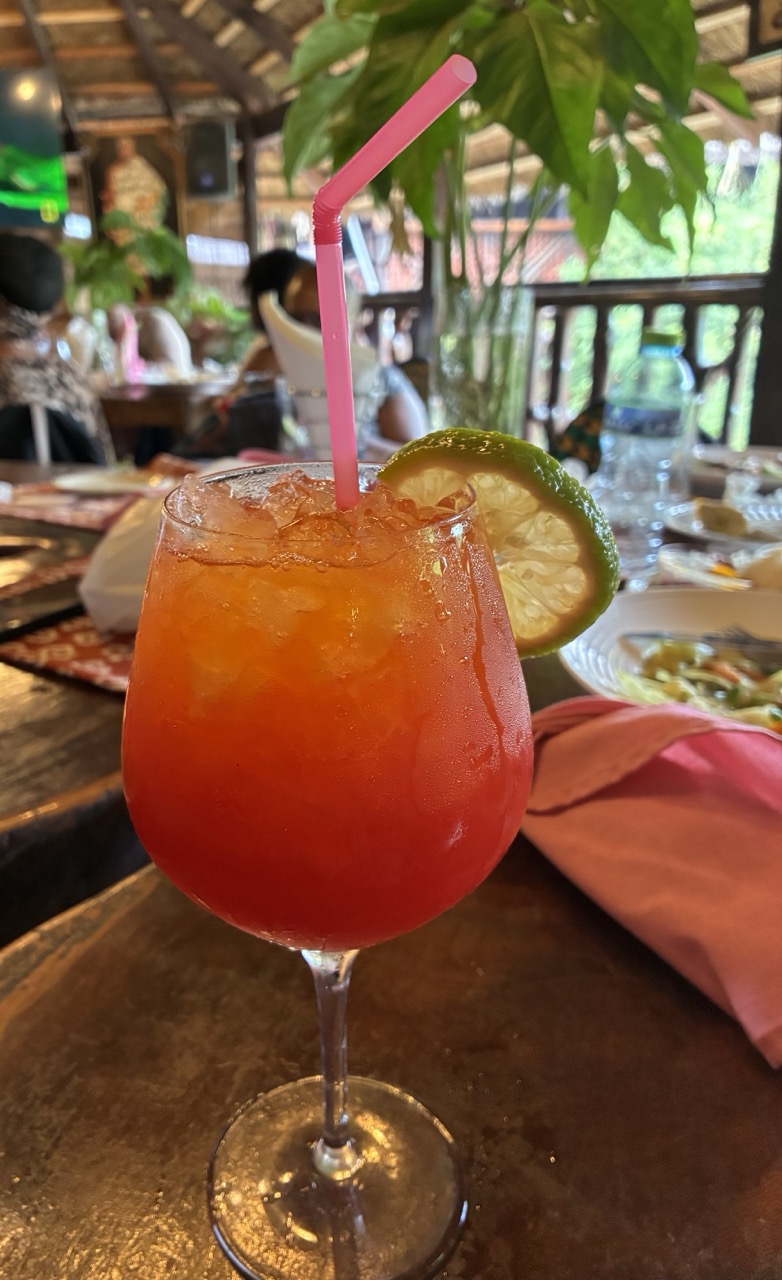
The ginger maiden (ginger, OJ and cranberry) came very late, but was refreshingly cold and sweet.
As we were about to leave, a young man inquired about my “daughters.” I told him they were my nieces. He said they were very beautiful. He asked one of them where they were from. Then, he attempted to pass his phone to one of my nieces to input her number. I intercepted his phone and told him she and a boyfriend.
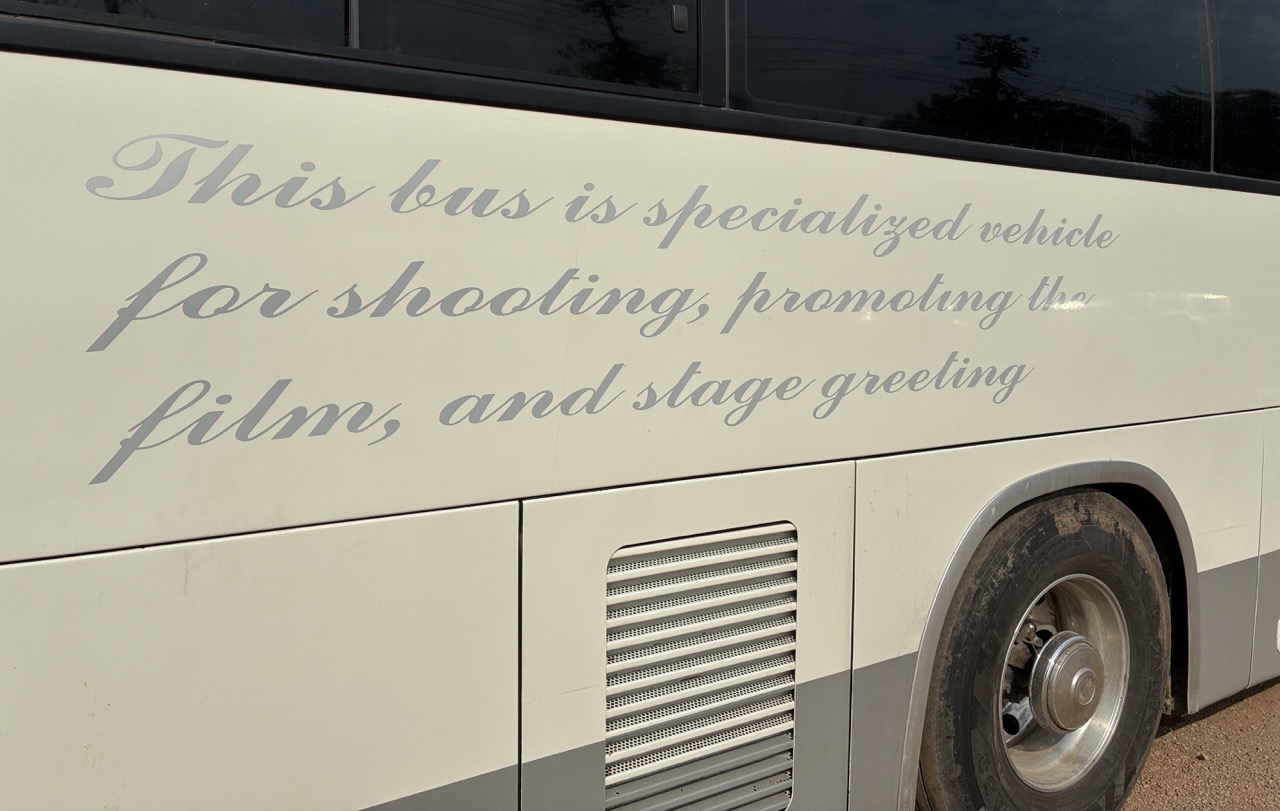
For the first time since touring Ghana, I noticed what was written on the side of our bus in English. How I wish I could take a film crew around. I’ll have to get a film crew together first. I realize there’s no expiration date on dreams, but life has a way of getting in the way.
Despite the fact that we went to the mall yesterday, enough people clamored to return today for snack-shopping. One of my nieces wanted to go to jewelry store because someone had bought an inexpensive gold bracelet.
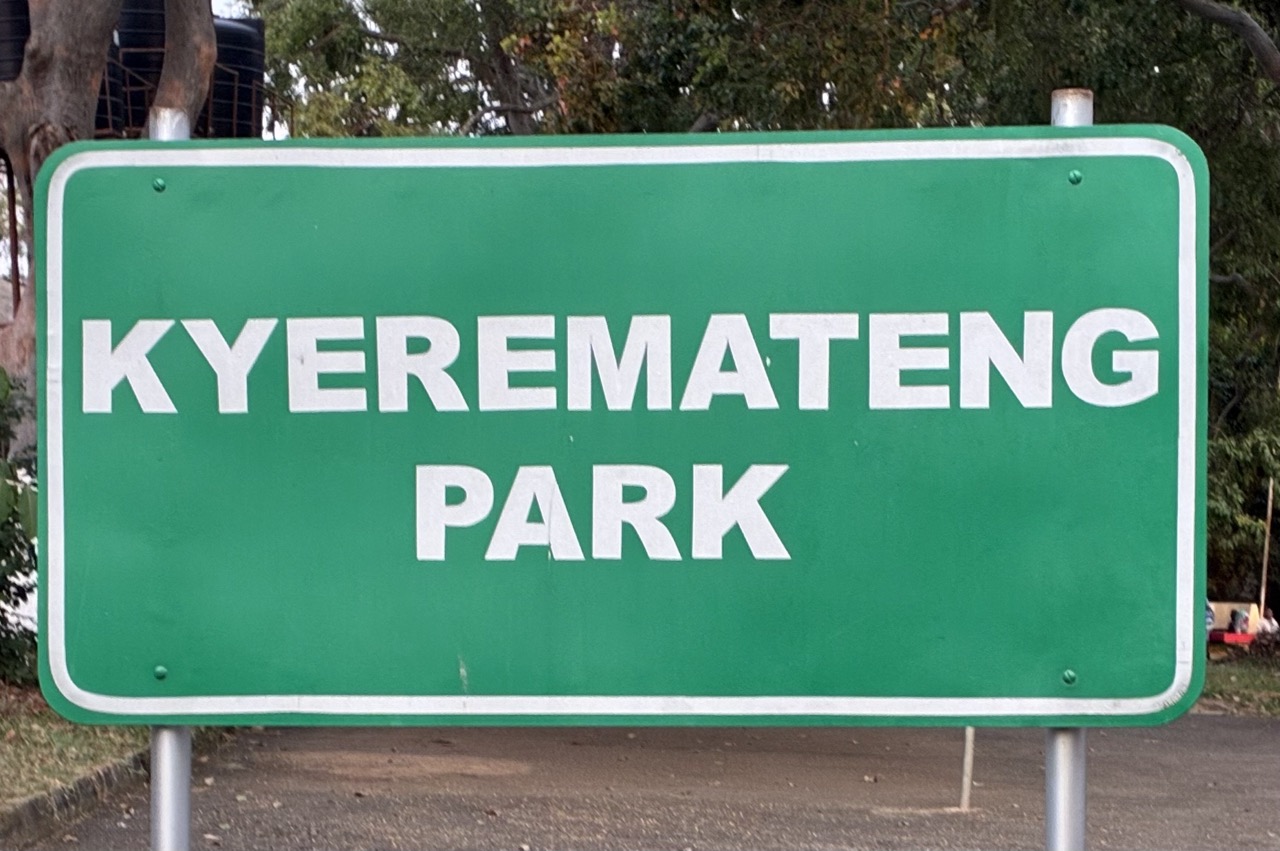
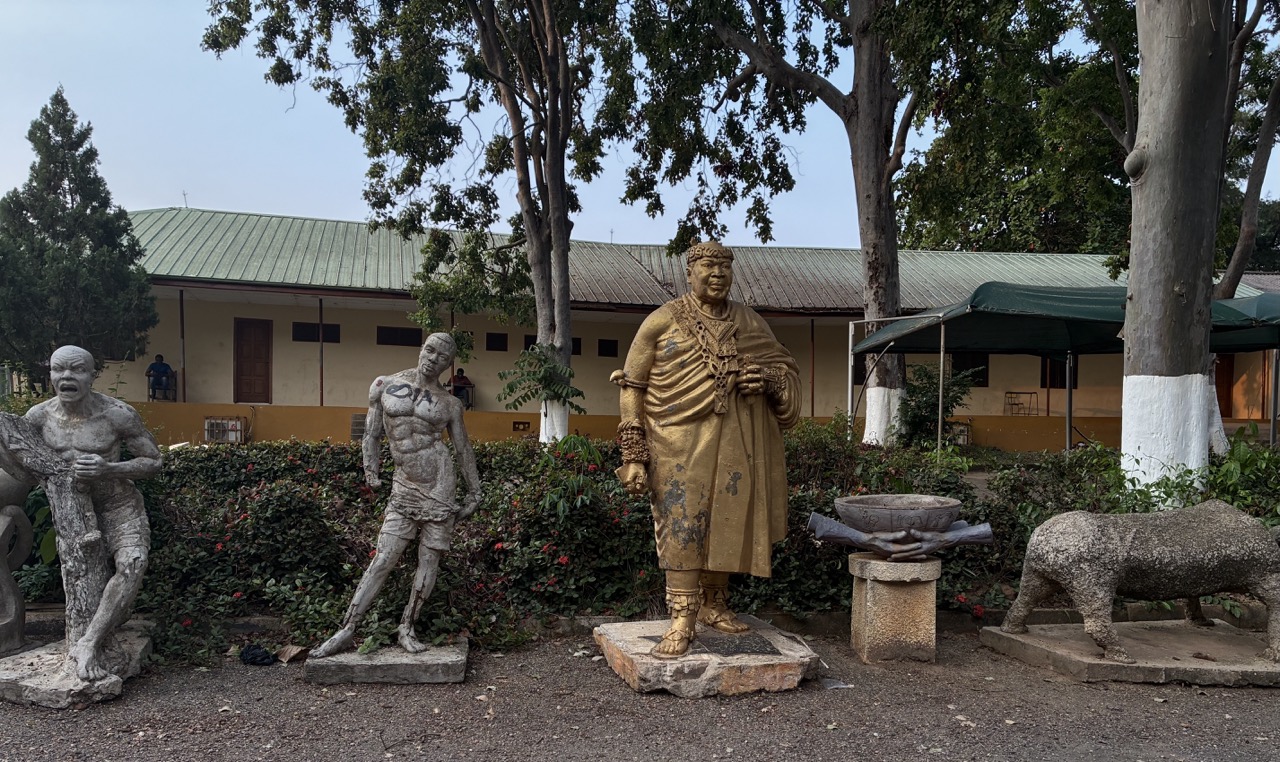
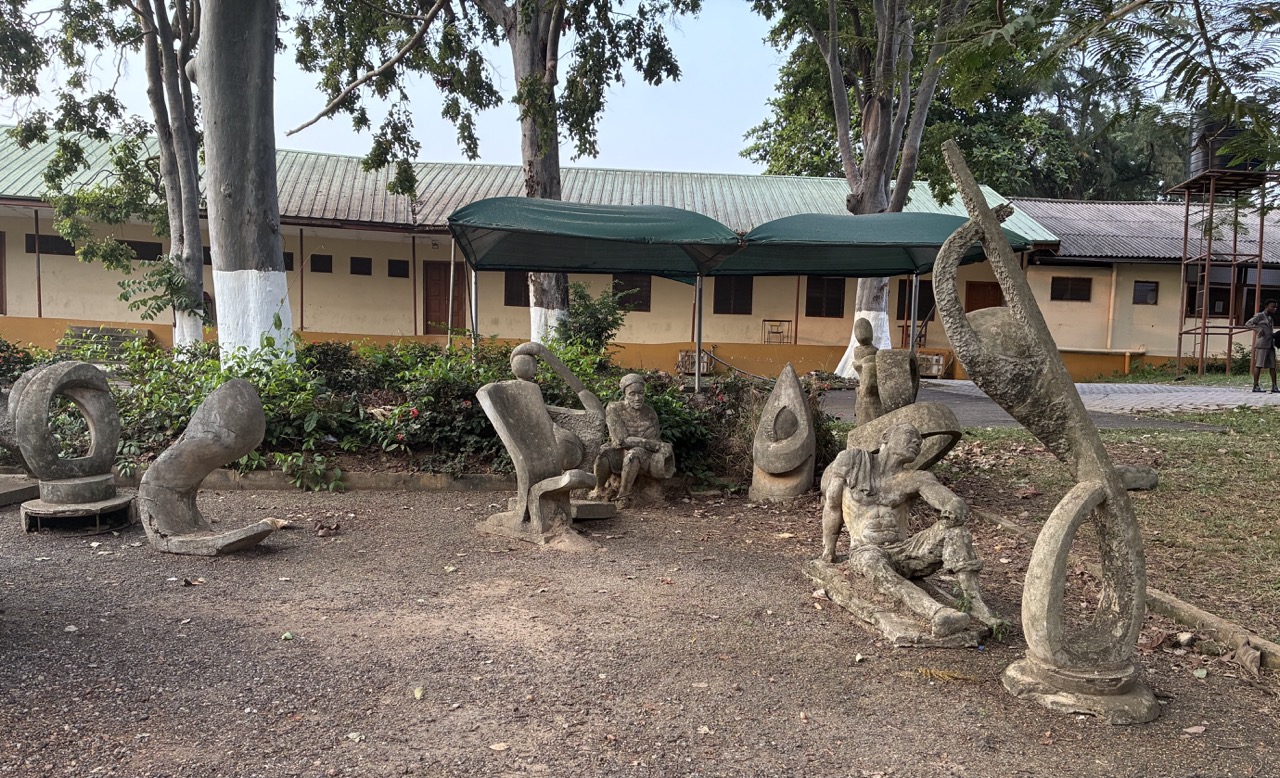
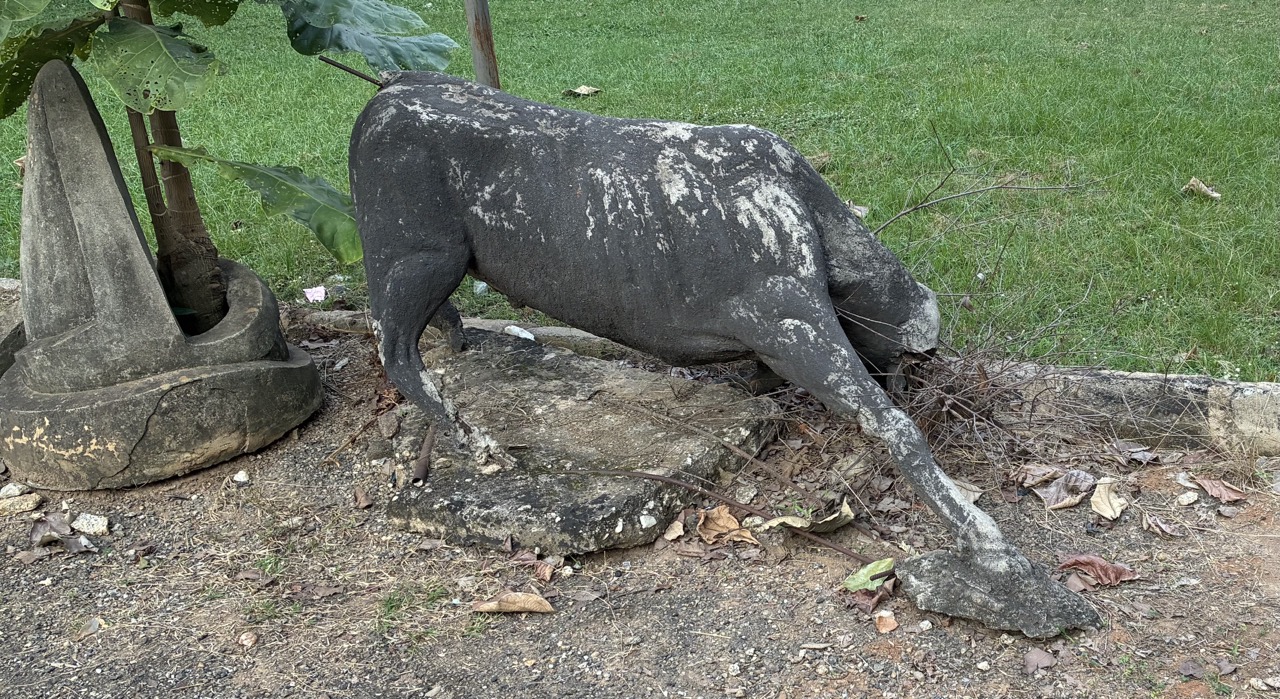
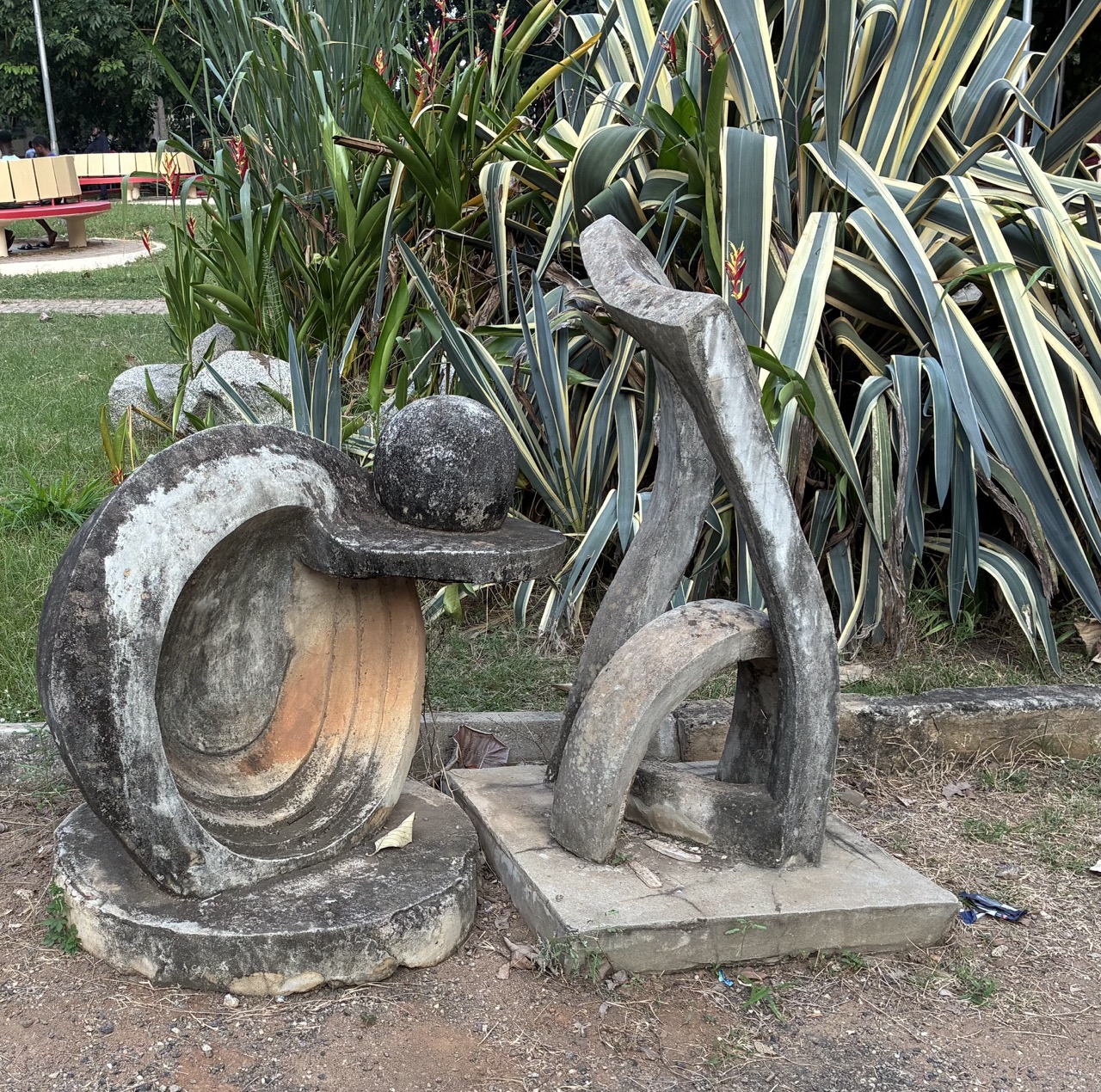
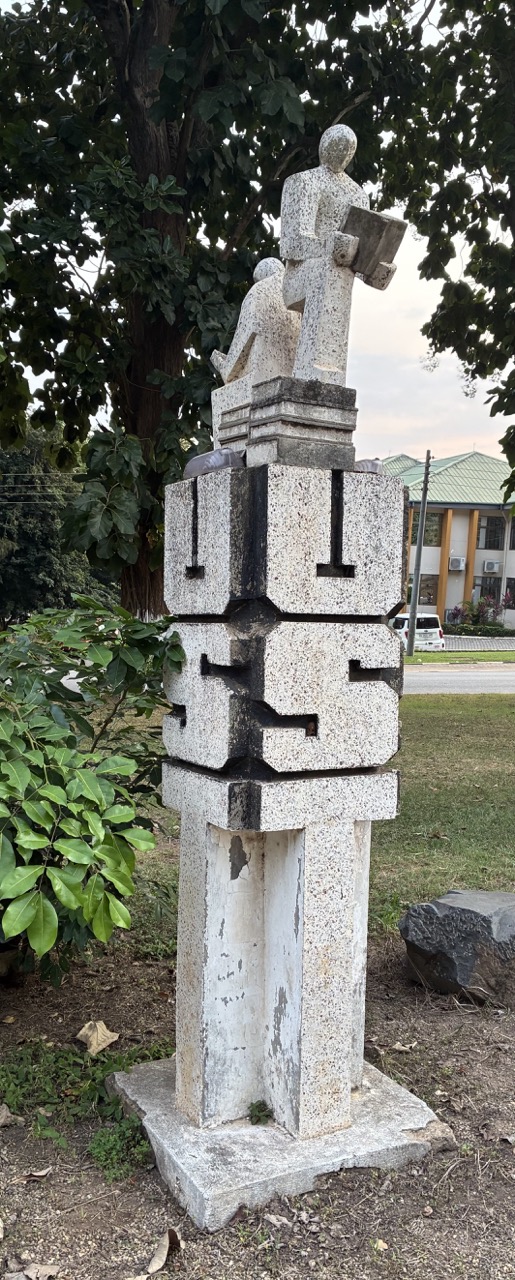
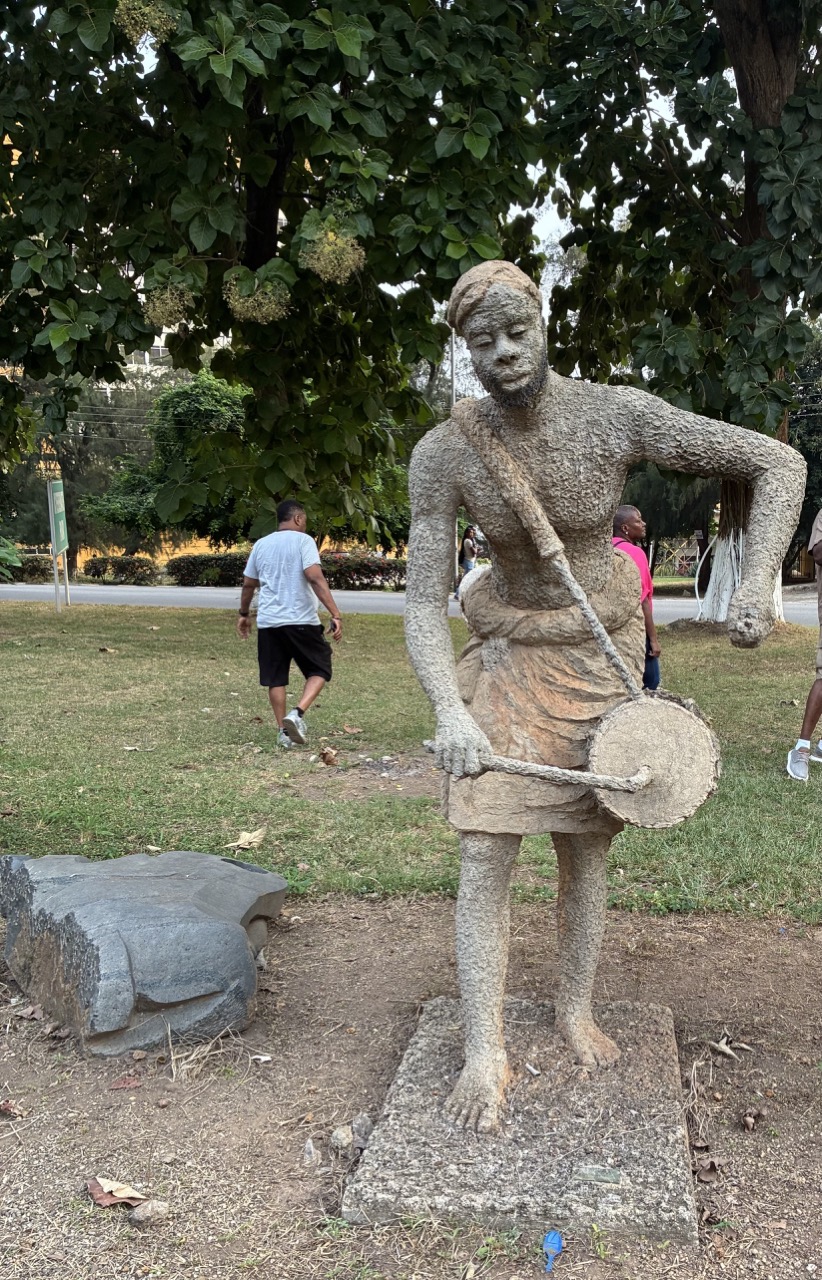
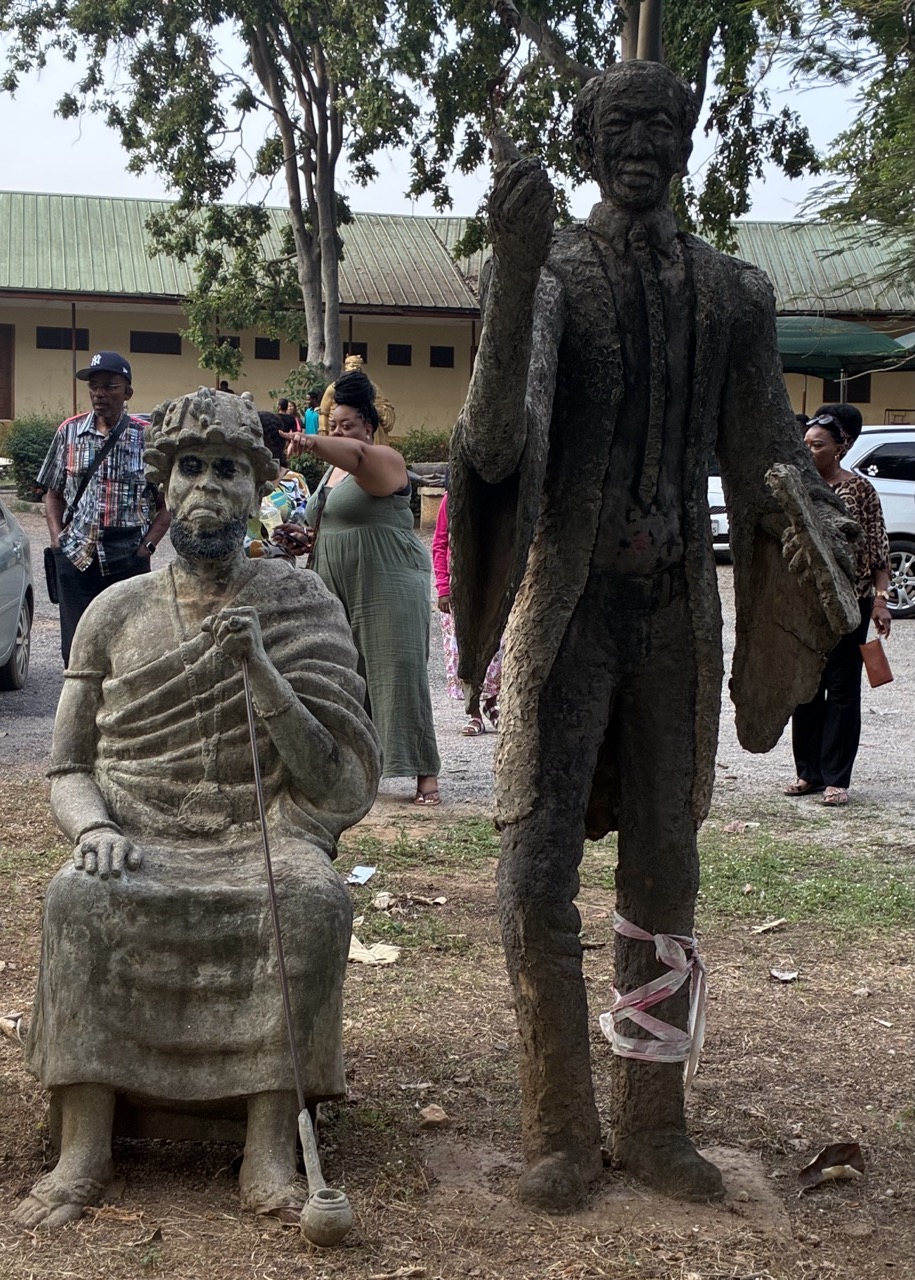
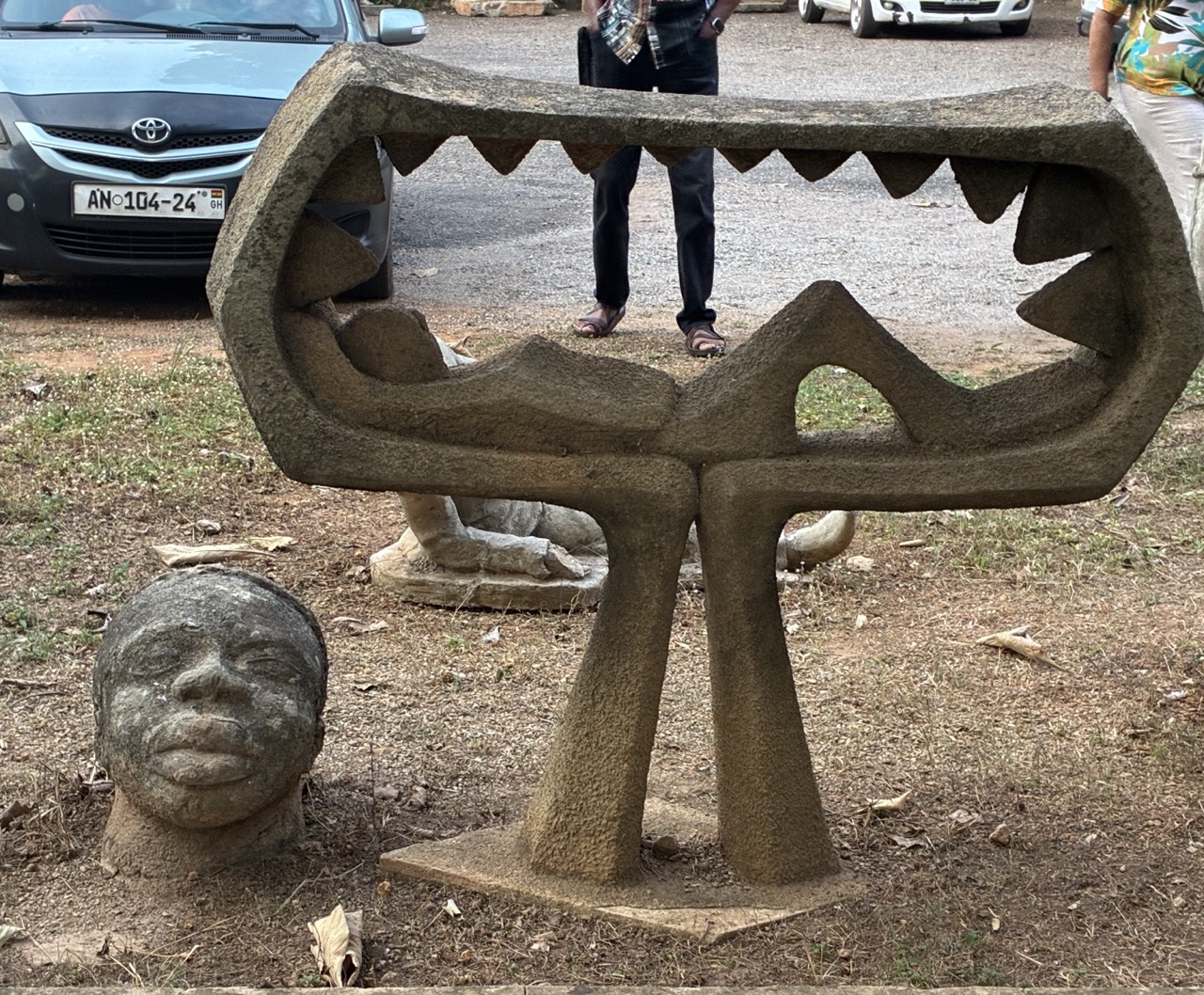
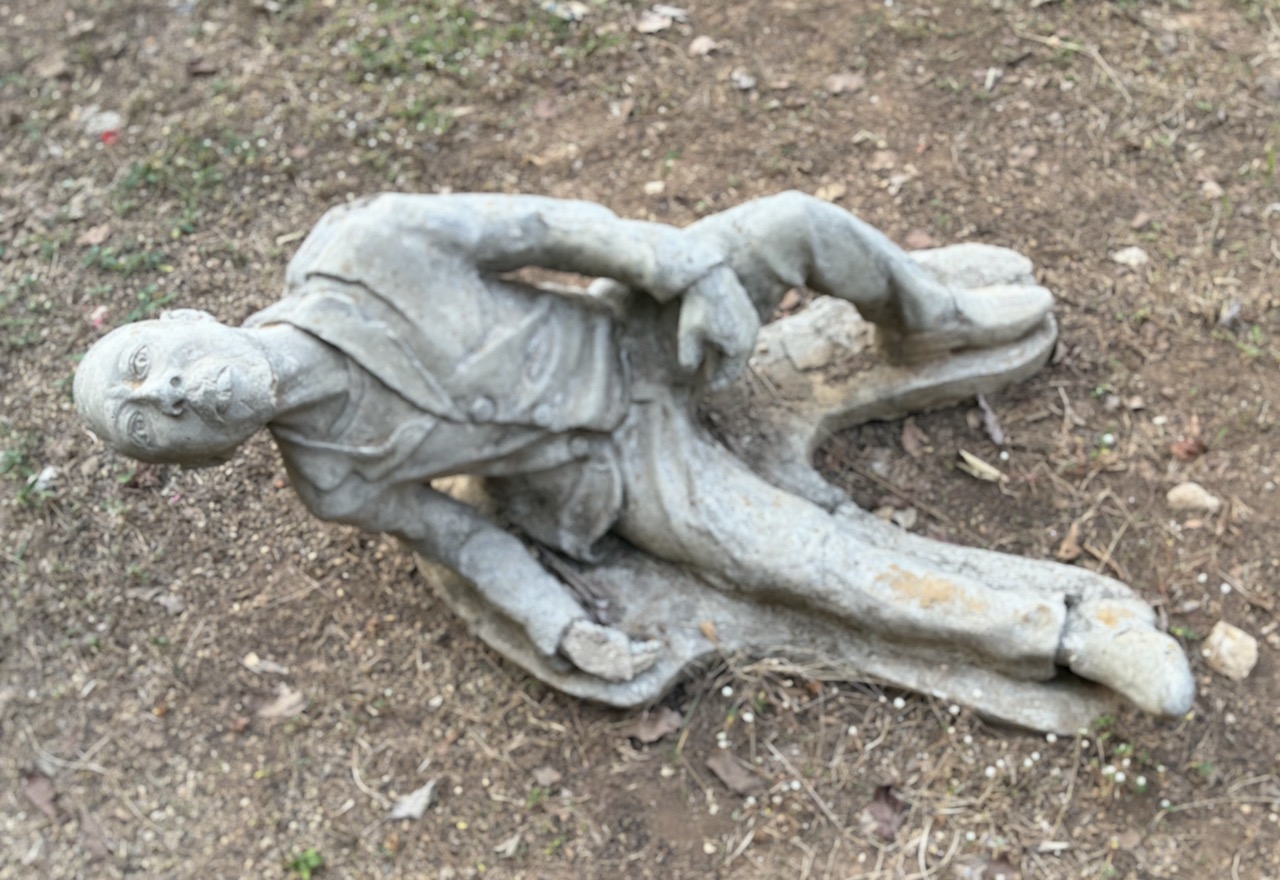
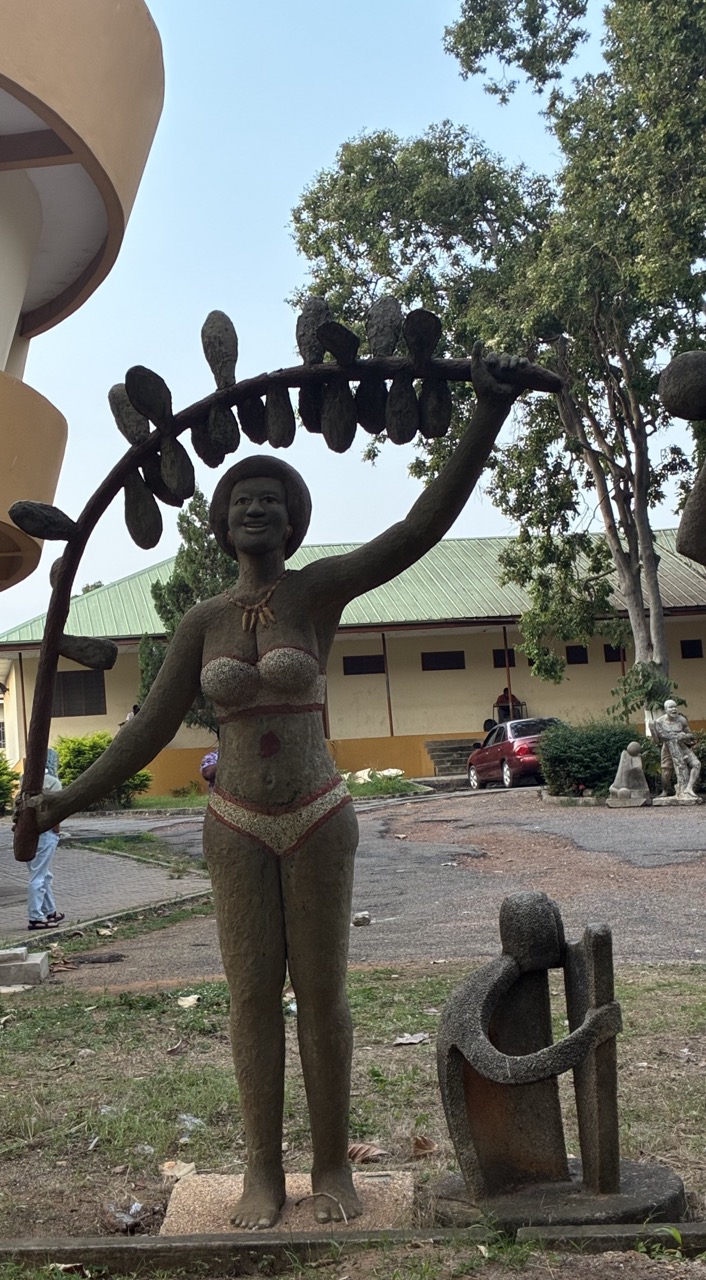
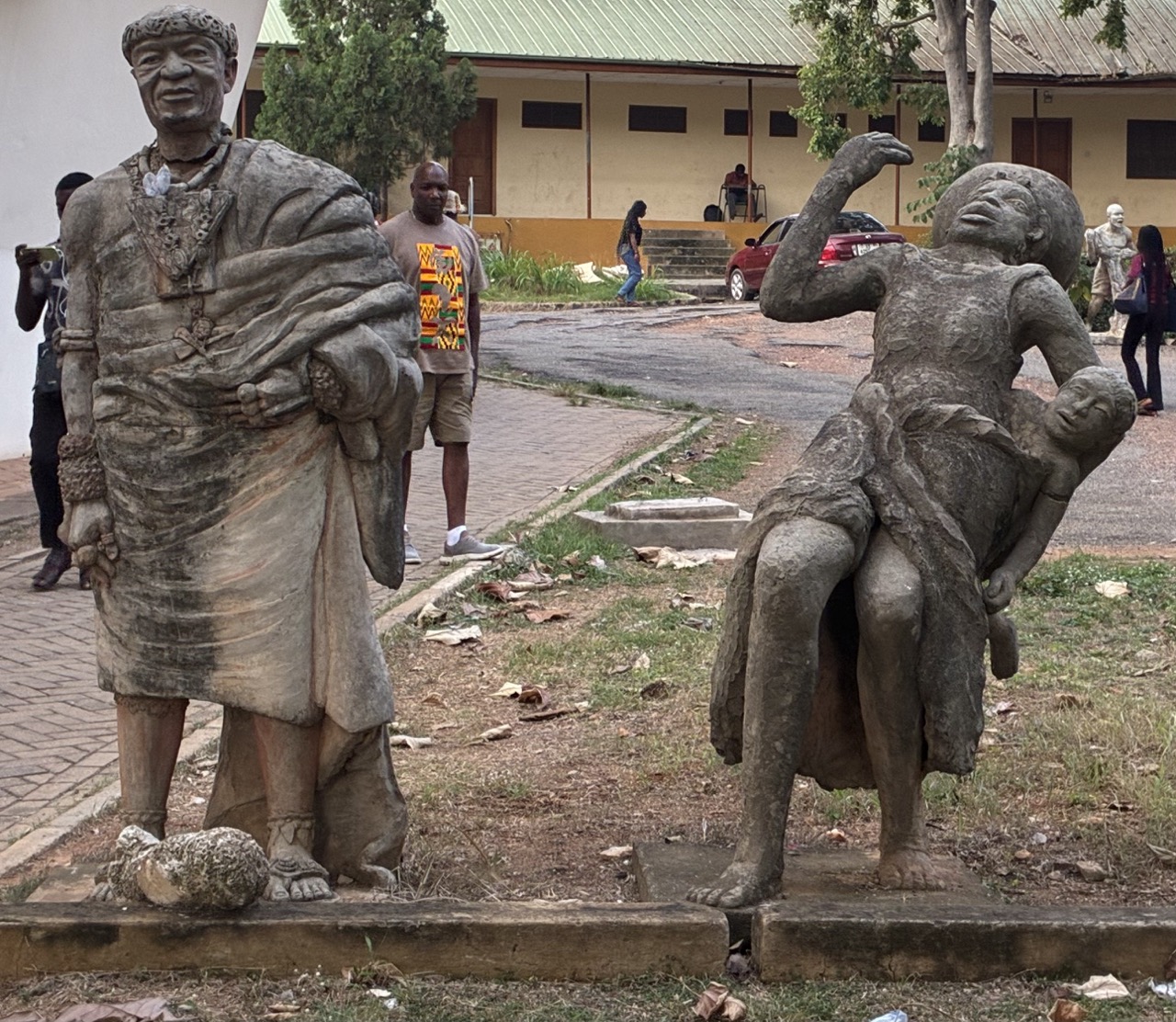
We spent less time at University of Nkrumah than at the mall. Fewer people exited the bus to tour the park. We had seen a few statues while bus traveled around campus before stopping at a small park that hosted a menagerie of statues. Part of me wanted to know the meaning behind the statues; however, my brain couldn’t really absorb and retain more information at that point.
Dinner had the lowest turn out to date. Even the tour guide wanted to skip it. The highlight of the meal was my sister reporting that Dad was in better spirits.