
I woke up minutes before the 6:15 alarm. I needed that extra time to eat leftovers. The two pieces of yam were frozen. I nibbled them a little before abandoning the effort. I ate all the kelewele (fried plantains), which had the added joy of groundnuts sprinkled throughout.
Groundnuts vs. Peanuts: groundnuts have three nuts to a shell instead of two. Whether cooked or not, groundnuts taste similar to raw peanuts.
We didn’t have a morning walk nor a formal breakfast since we traveled this morning. Staff passed out bags of breakfast that included mango juice, dragonfruit, pineapple and watermelon slices, an omelette, bread, onion/green bell pepper/ carrot mix, oatmeal, brown sugar packet, tea creamer packet, one slice of toast, cut diagonally.
(Please click on individual pictures to see the full view, then click on the browser back arrow to return to blog view.)
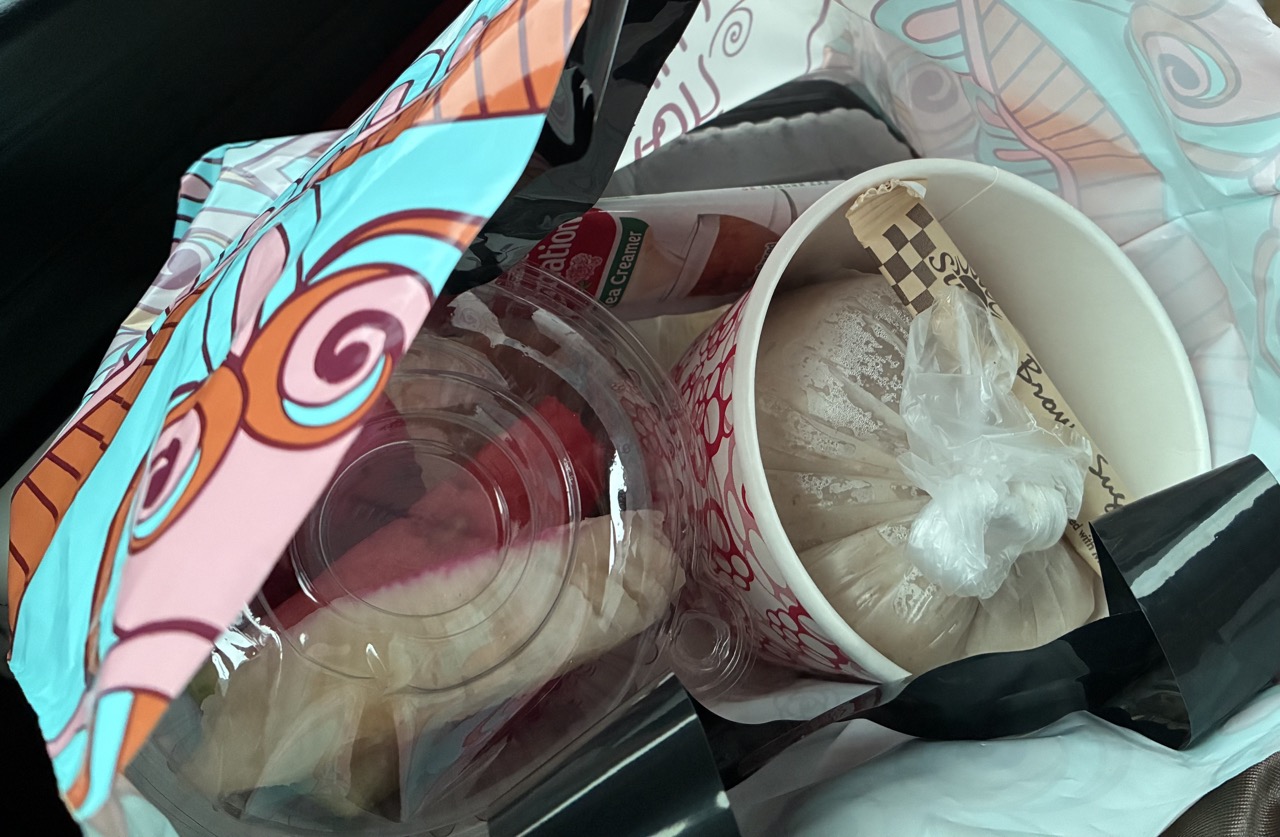
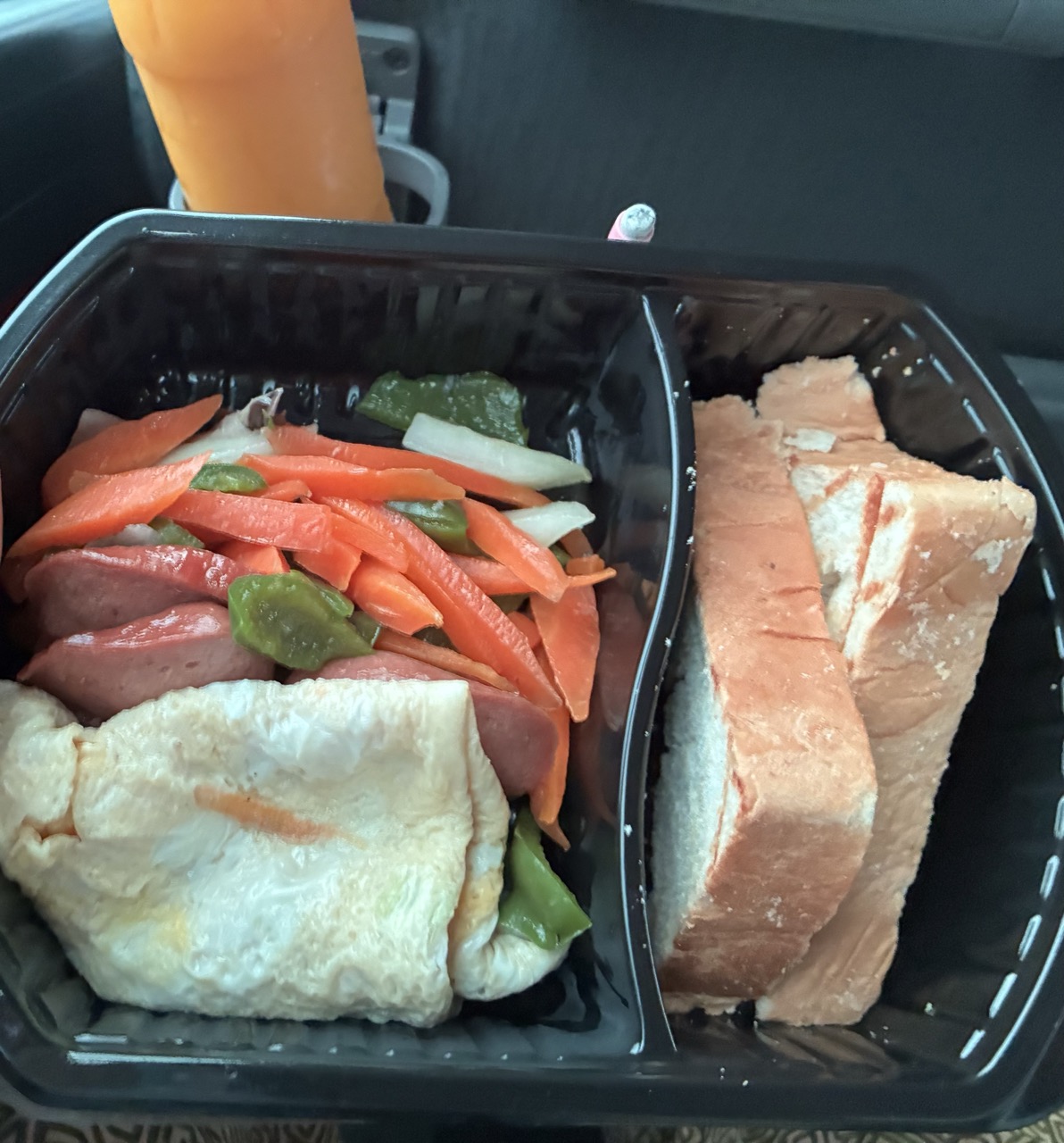
After a few minutes on the road, our tour guide received a call from the hotel, telling him that one of the guests had left their airpods. A hotel representative raced to rendezvous with the bus and return the property. Talk about above and beyond service.
Tour staff collected cedis for the lunch buffet in another time-saving effort.
Our first rest stop had a beautiful lawn with lizards. Next, the police stopped our bus at a checkpoint. No police boarded. Instead they inspected around the bus. We were on our way in under five minutes.
I definitely didn’t eat my money’s worth during the lunch buffet although I thoroughly enjoyed the fresh mango and pineapple. Most of the food was deliciously seasoned, but once again, I was one of the few who appreciated the spiciness. The small salad bar had the longest, slowest queue because servers only replenished enough for two-three people at a time despite the crowded dining room. The lamb involved a lot of work. If I were at home, I would’ve picked it up and cleaned the bone with my teeth.
Of course, the clean stocked bathroom was a big hit.
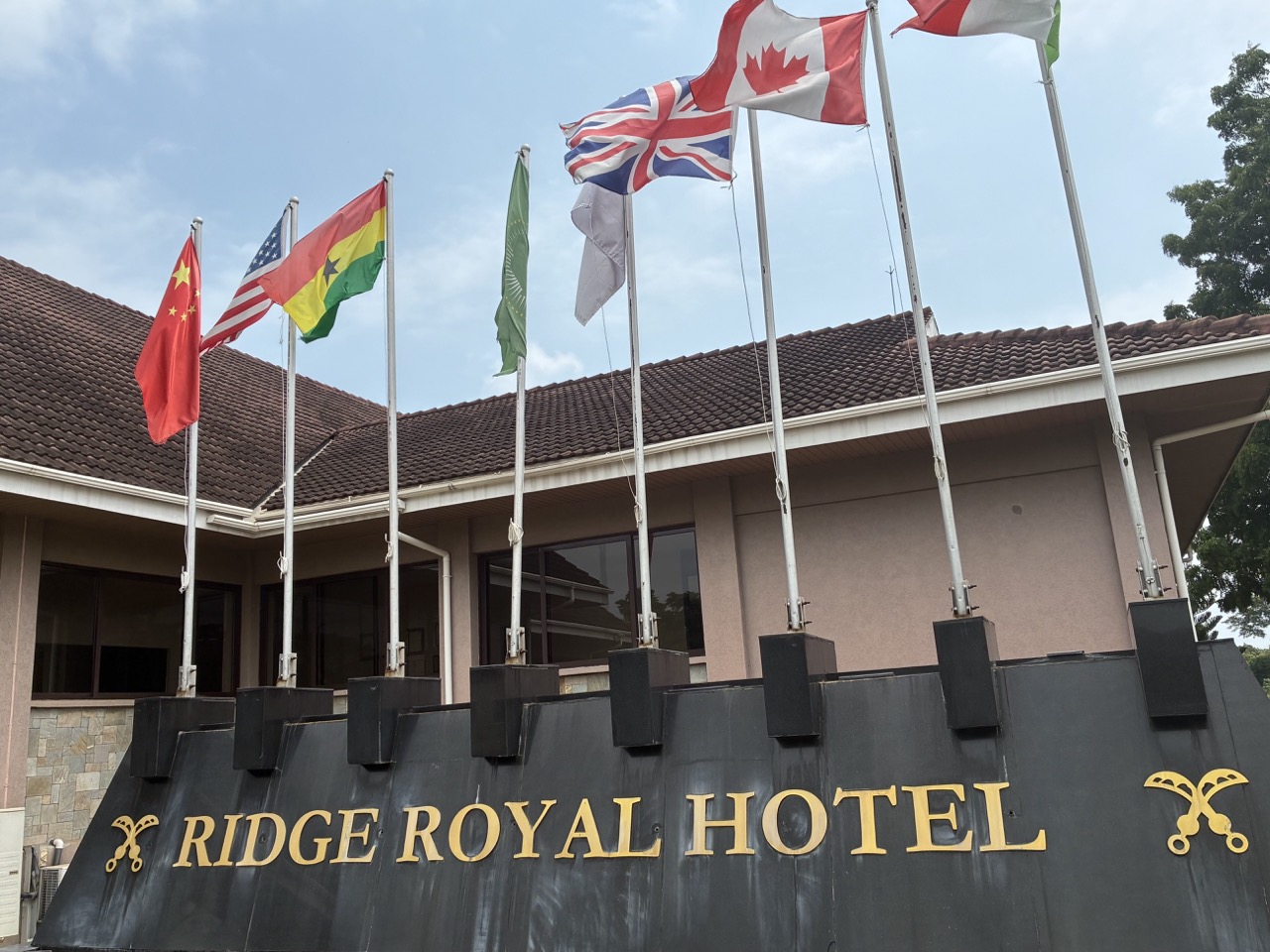
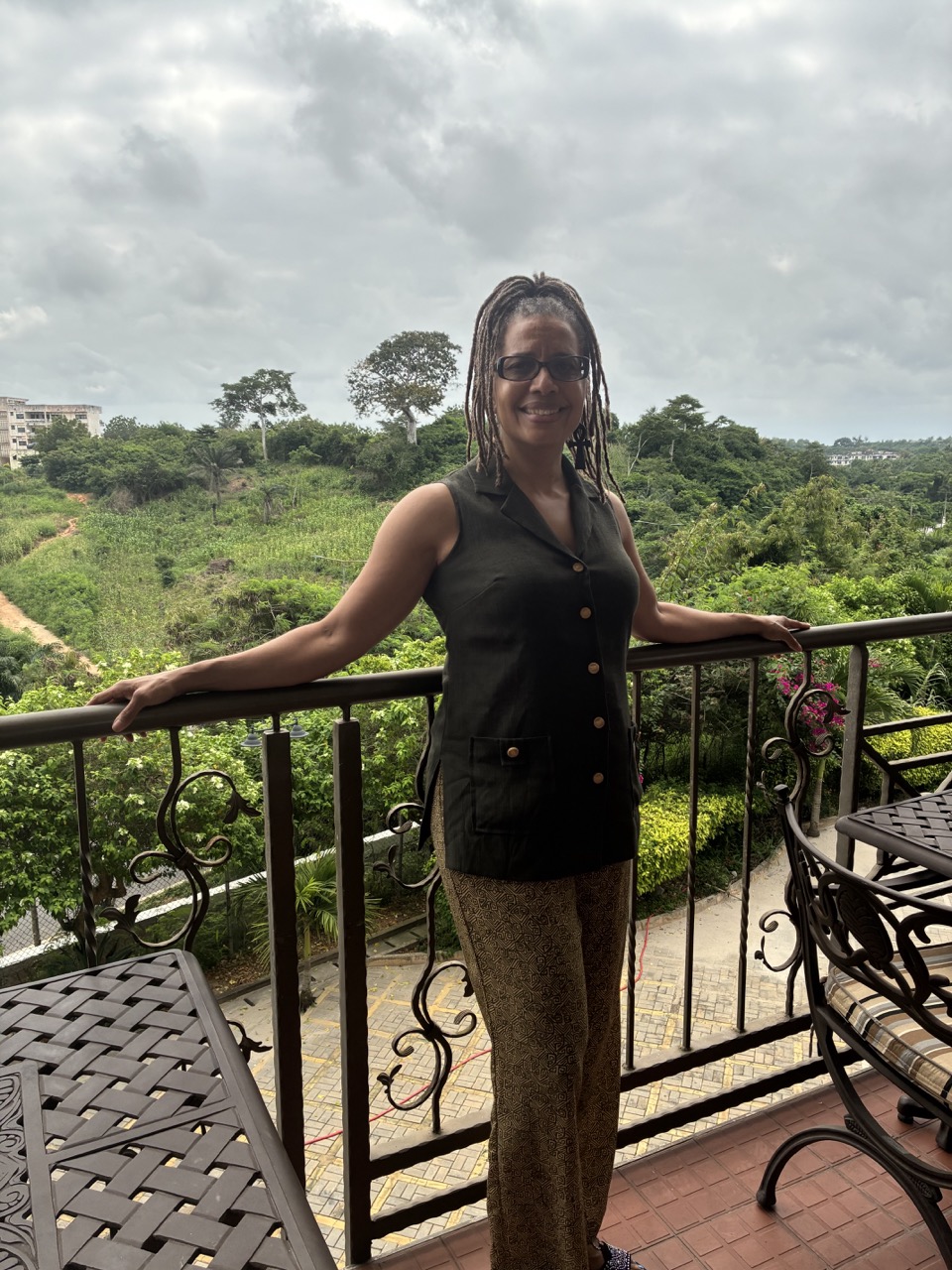
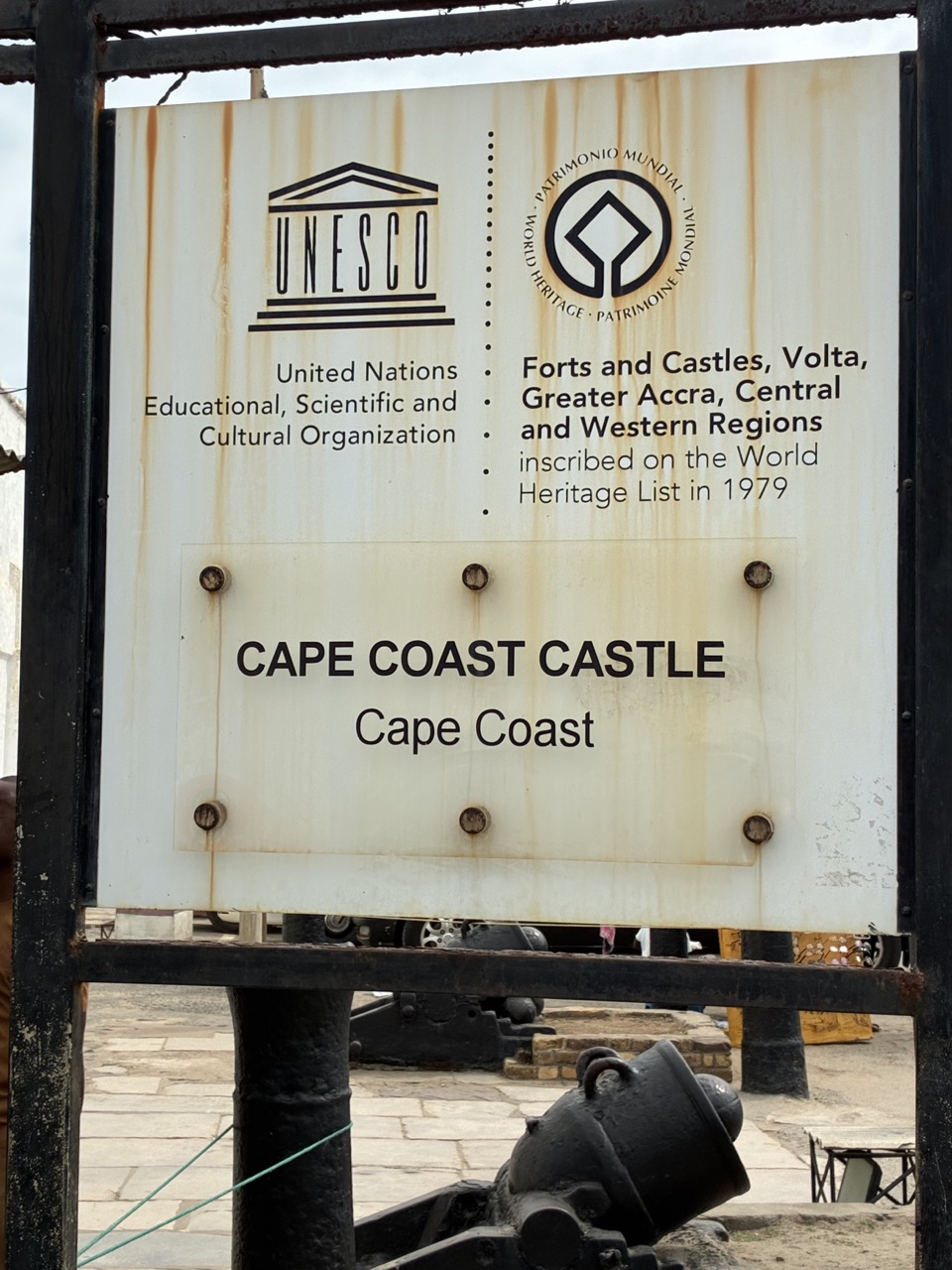
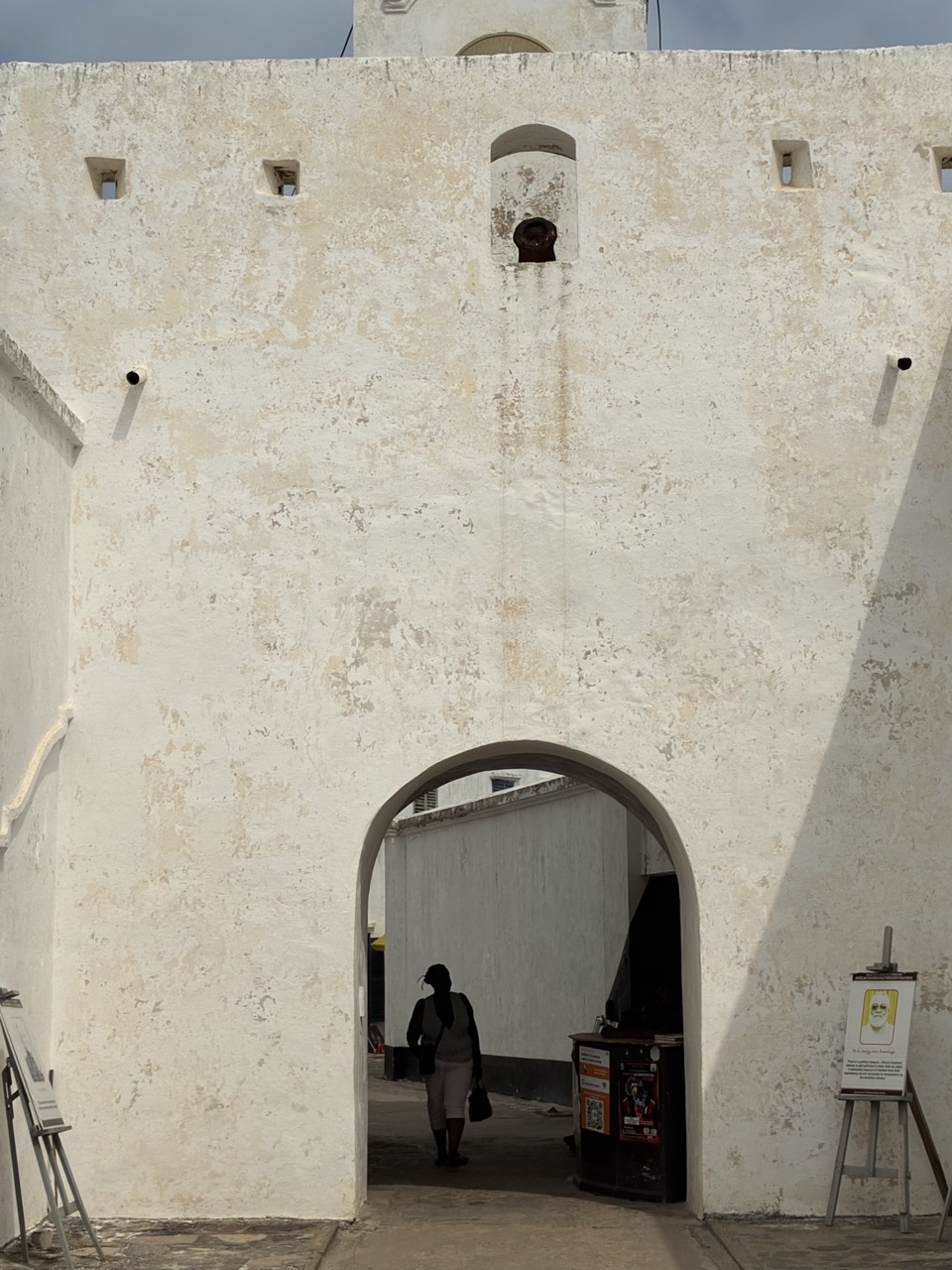
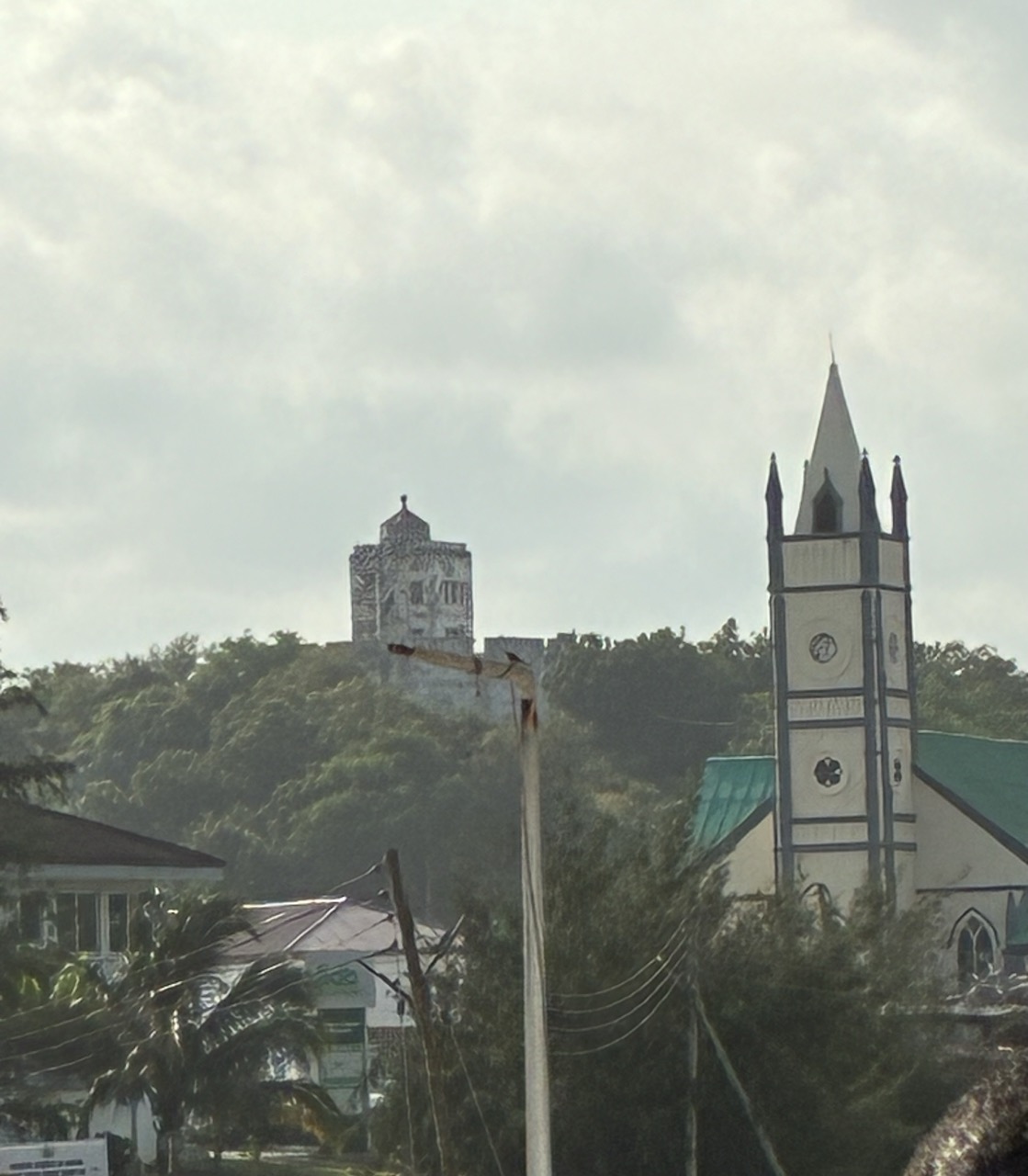
Next stop: Cape Coast Castle. How does one mentally prepare to visit the site where one’s enslaved ancestors departed from the African continent?
Captives were shaved, fed and treated with shea butter to make them look more attractive. Except for when they were branded with hot metal dipped in oil. The biggest dungeons were located underground. Enslaved Africans were held in crowded, claustrophobic conditions until they were murdered, died due to inhuman conditions or transported across the Atlantic Ocean.
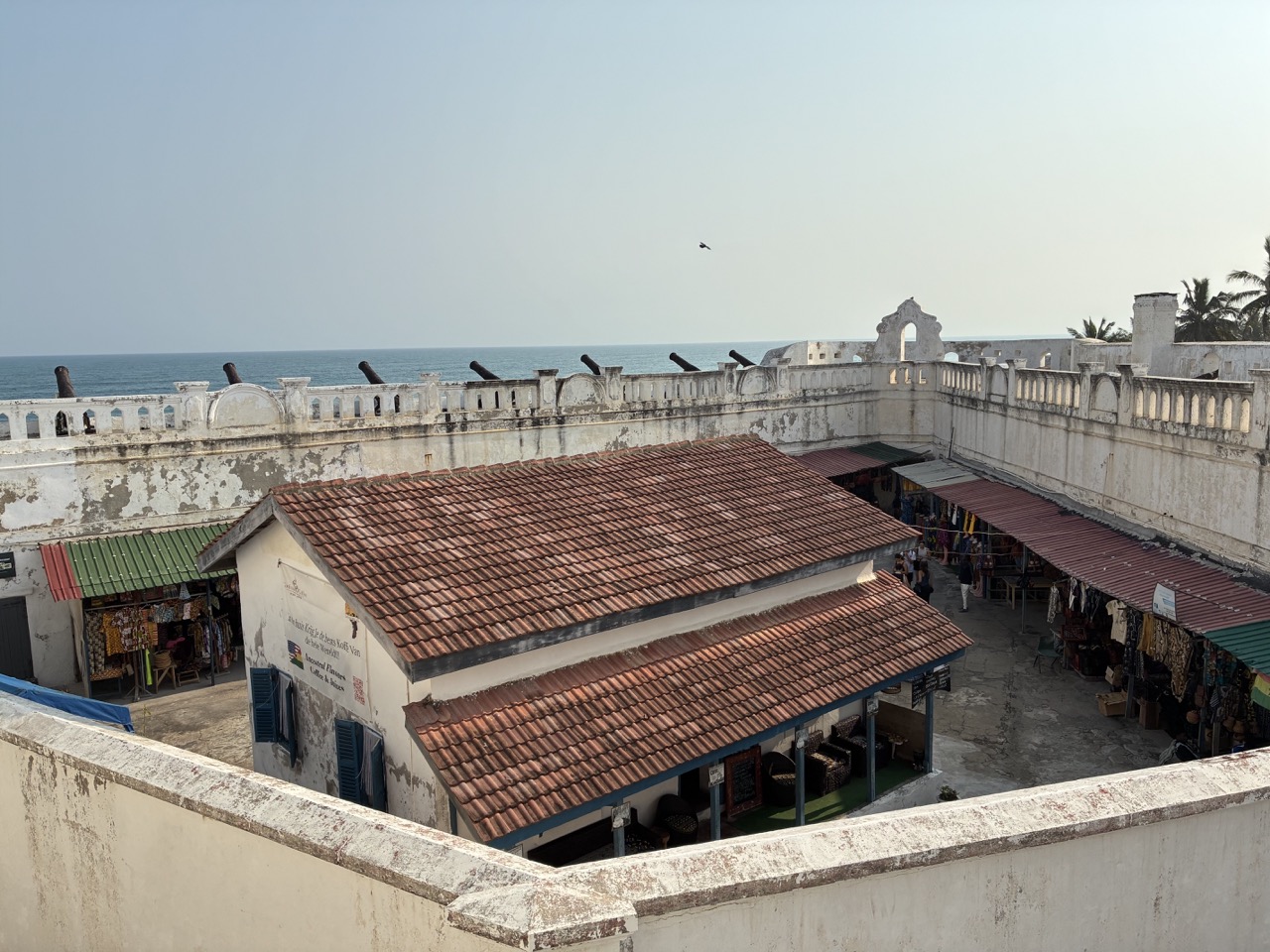
The Portuguese constructed the Cabo Corso (Short Cape) in 1555 along with Elmina (The Mine) AKA St. George’s Castle in 1482 originally as trading posts in the gold trade. In 1653, the Swedish built the fort on the same site. The Danish and Dutch briefly had possession of the fort. Eventually the British corrupted the name “Cabo Corso” to “Cape Coast,” and used the site to greatly expand slavery in the 1660s.
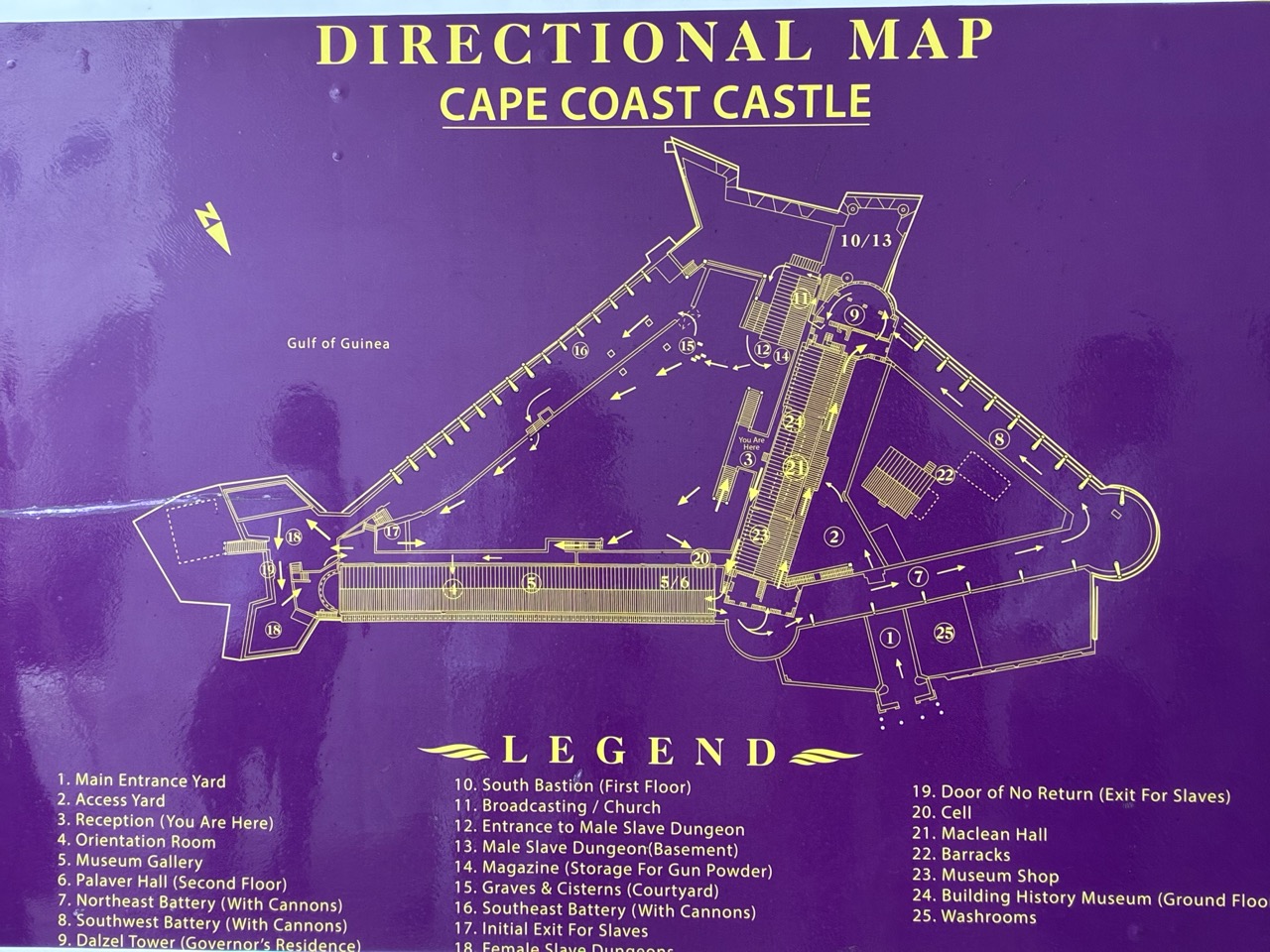
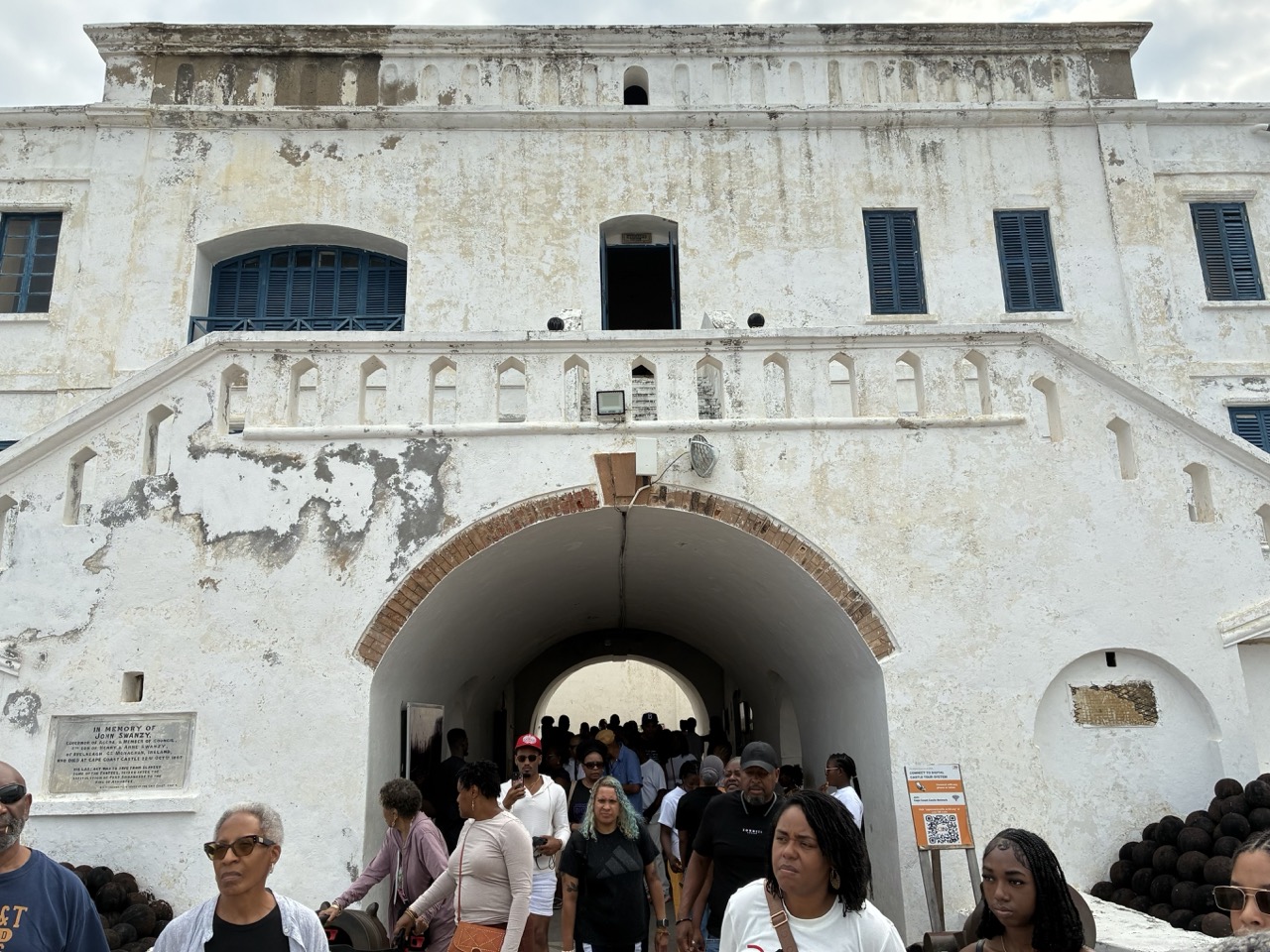
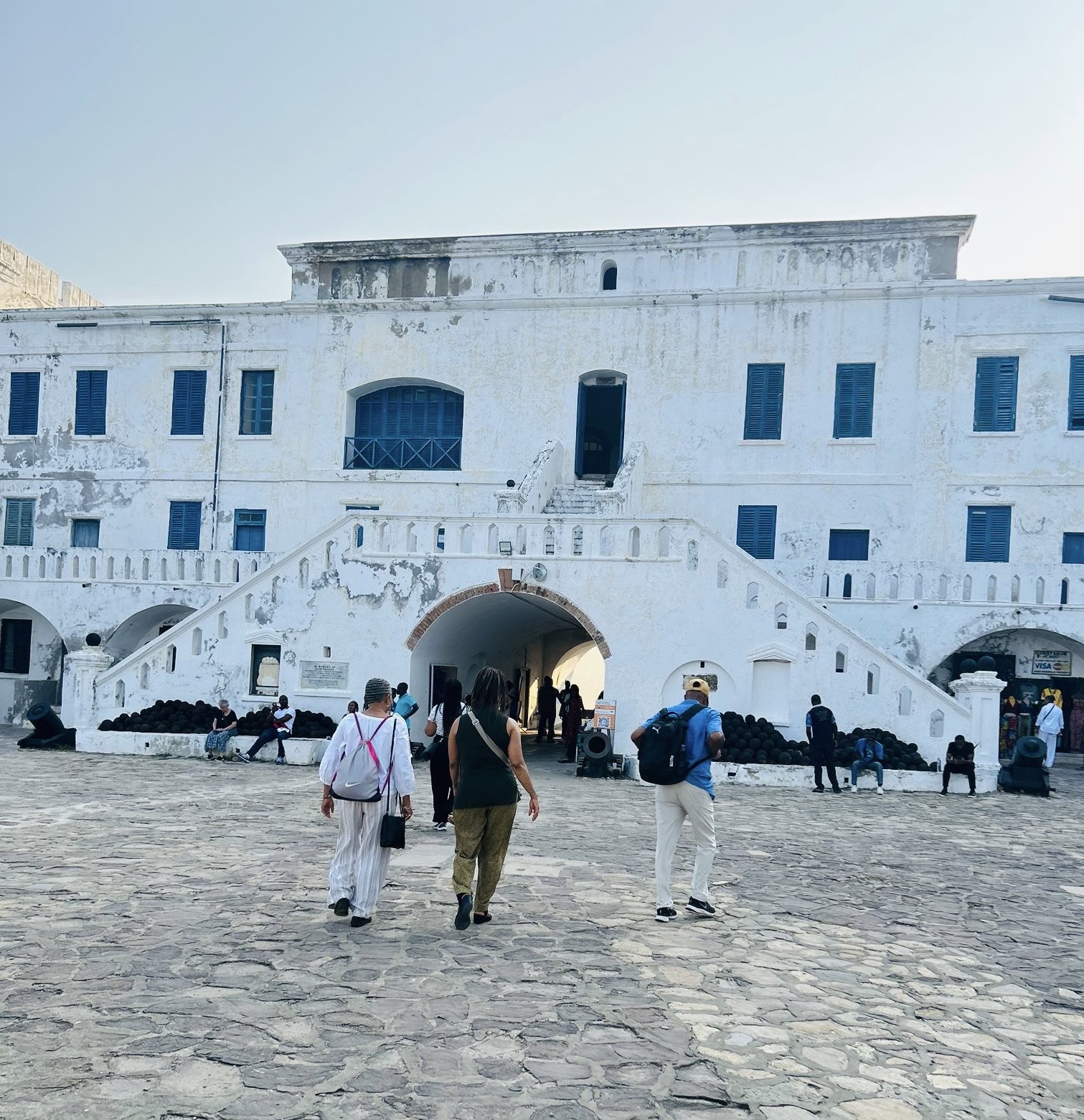
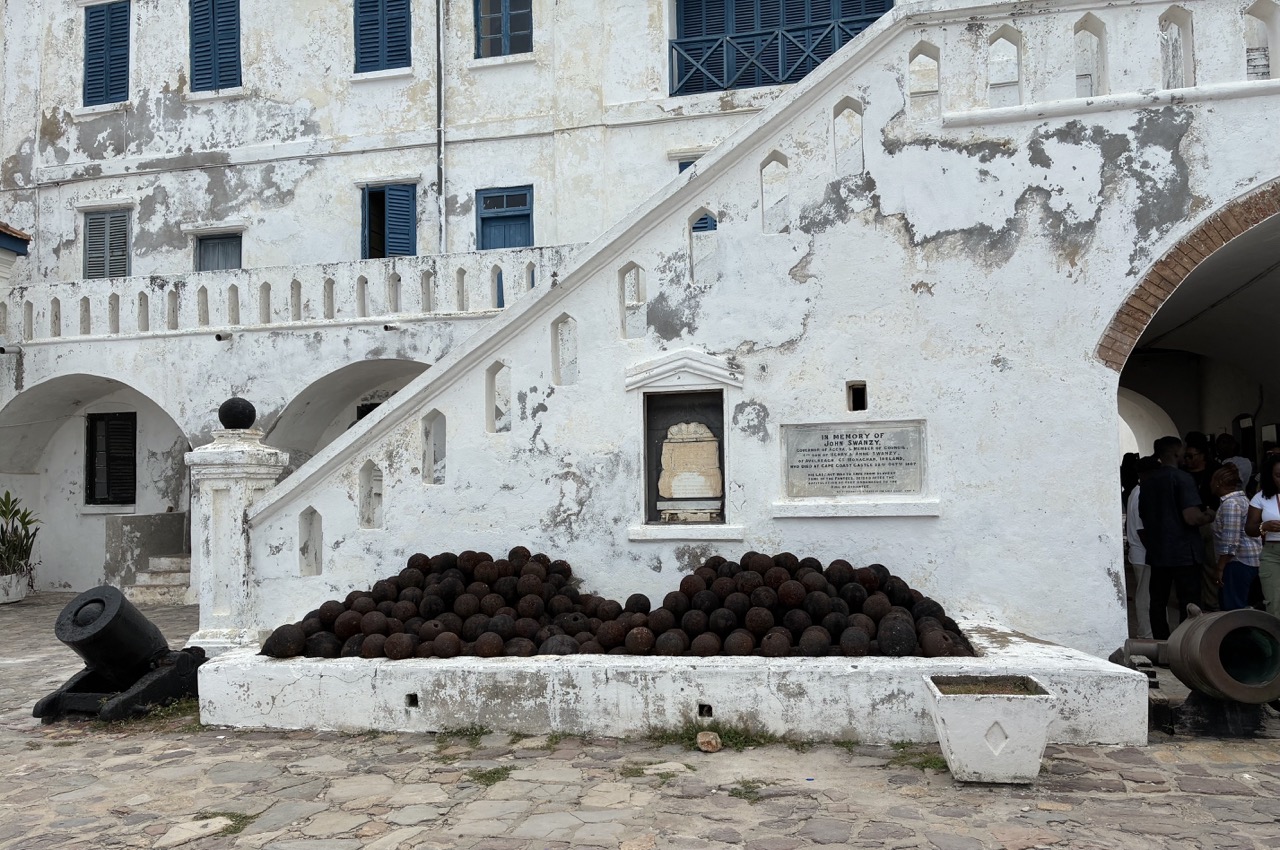
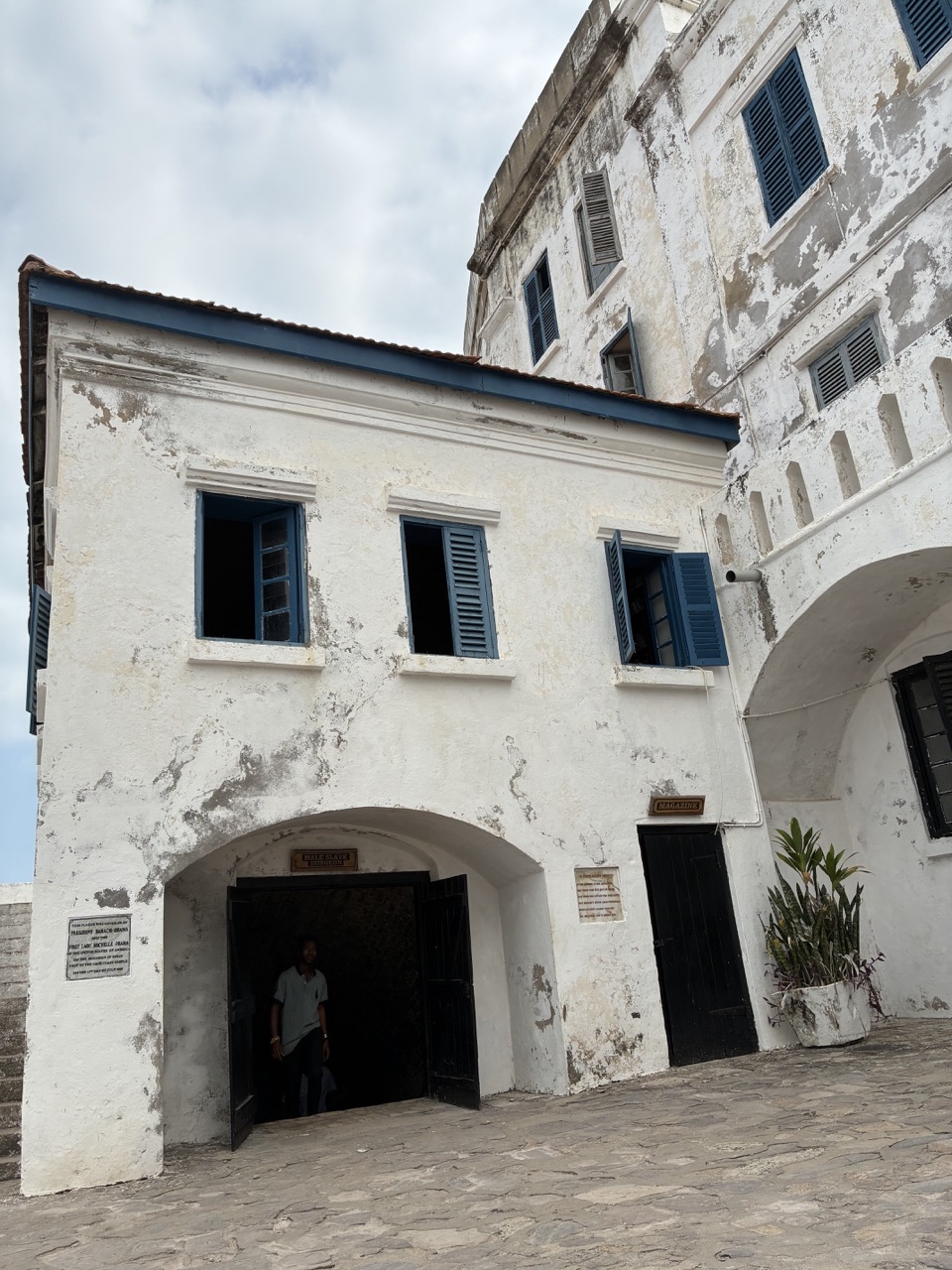
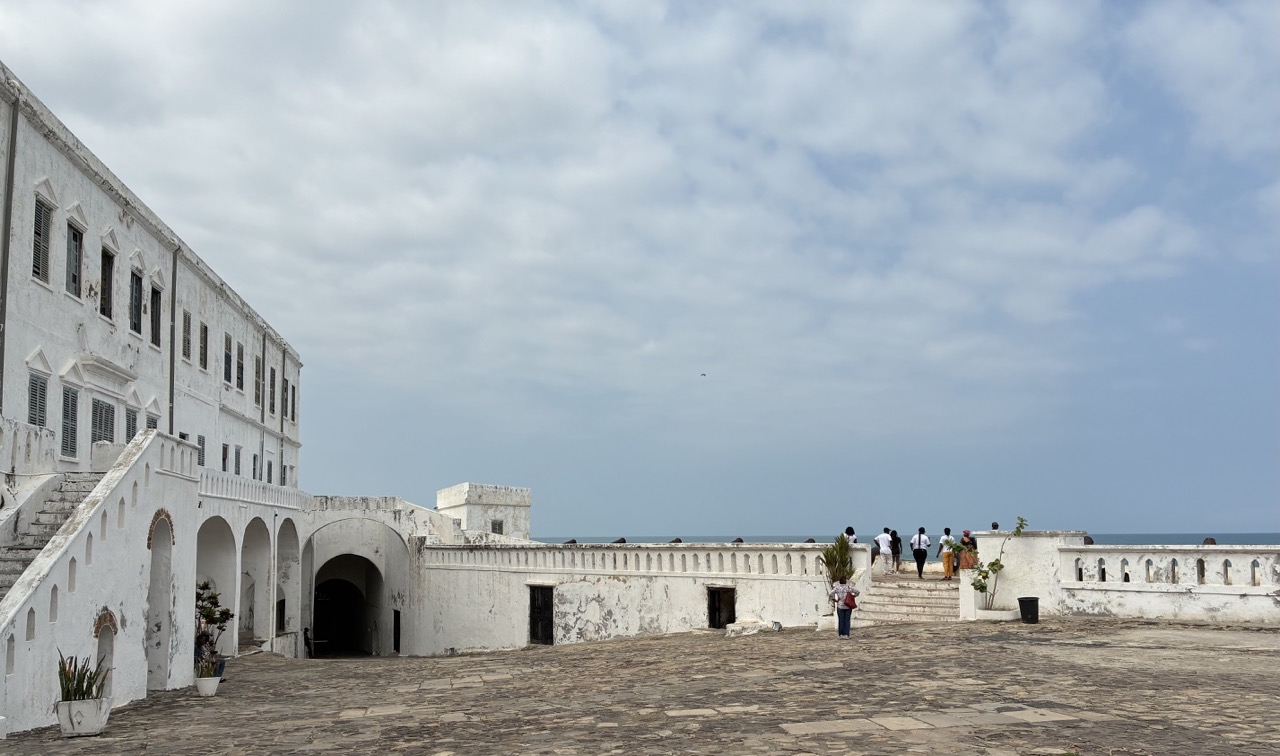
Enslavers used five dungeons to groom Africans to see who was physically, psychologically and spiritually sound.
The Haitian rebellion (1791-1804) helped spur the abolition movement. The British ended slavery in 1833. Captain George Maclean blocked the tunnel at the end of legal slavery in 1834. In 1888, Brazil was the last country in the Western Hemisphere to abolish slavery. The last country in the world to abolish slavery was Mauritania in 1981.
After Ghana achieved independence from the British in 1957, part of the castle was used as a prison for Africans for 33 years, from 1959 until 1992. The British had converted the castle into a prison, but not in the same place as the dungeons.
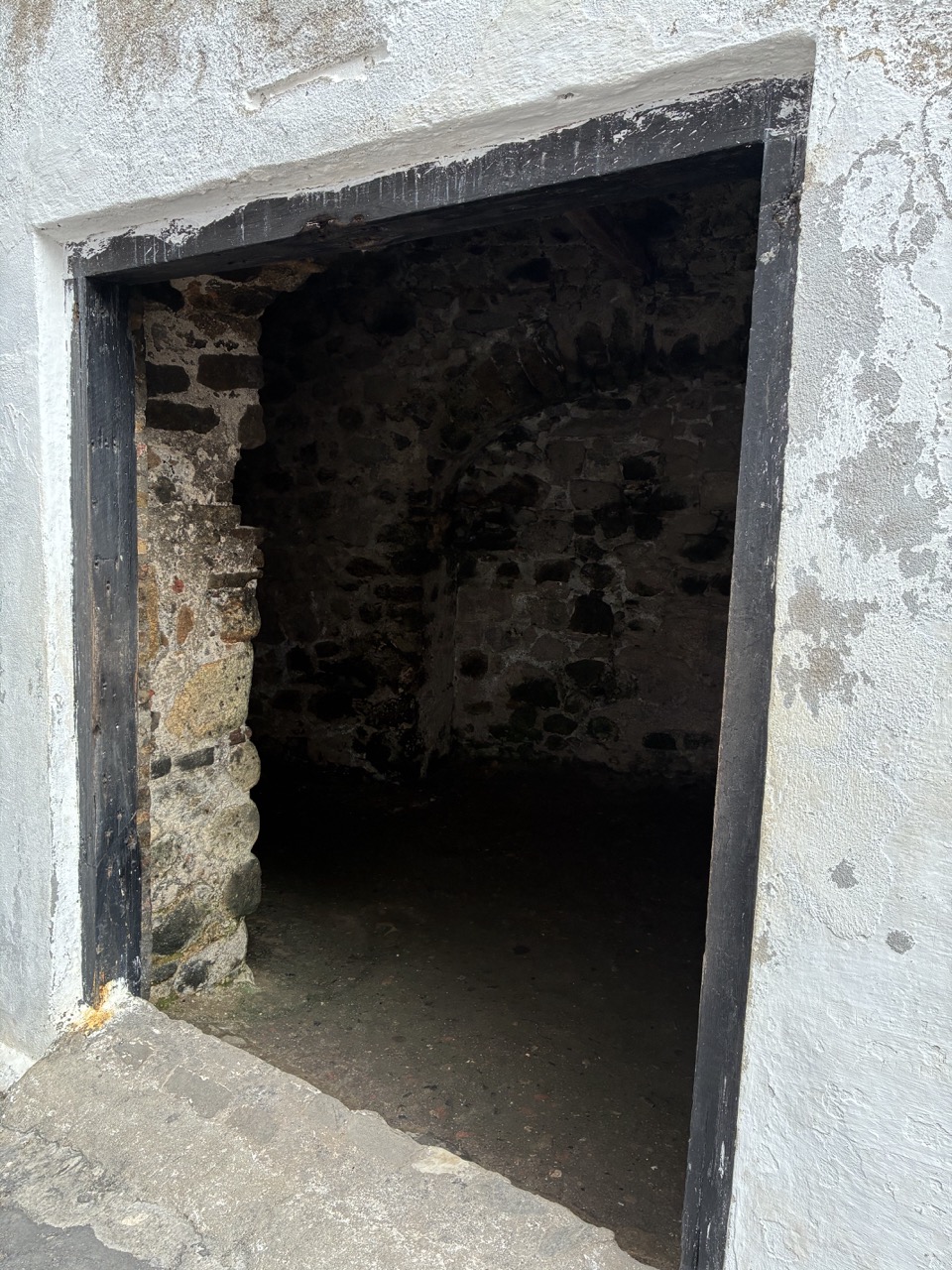
As we stooped to enter a tomb/dungeon AKA the “Cell of No Return,” I thought of the irony that people also entered the pyramids at Giza the same way out of deference to a deceased pharaoh who was ritualistically buried.
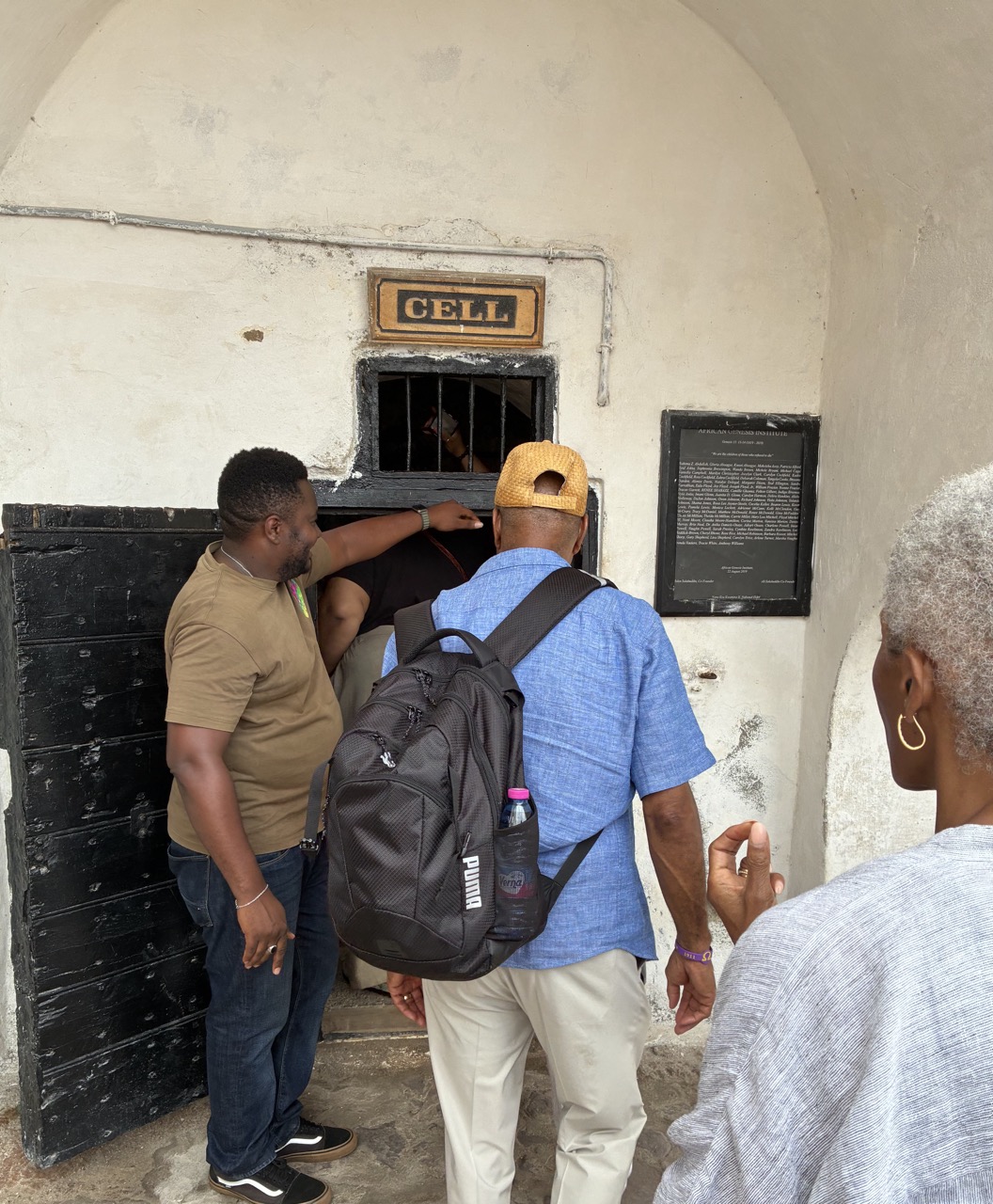
However, there was no deference given to the captured Africans by enslavers. Although this room was called “Cell,” “Suffocation Chamber” would have been more appropriate.
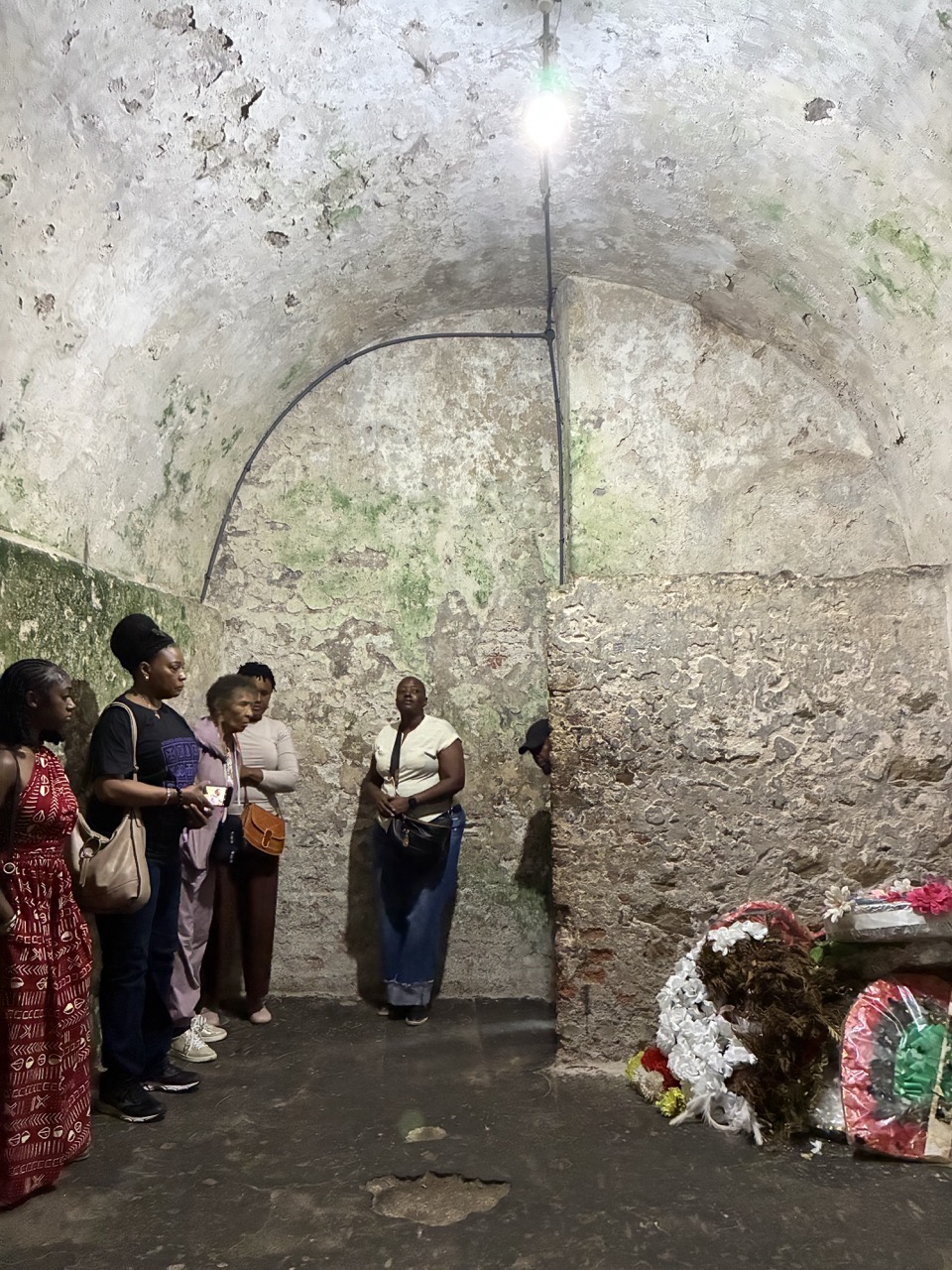
Enslavers starved, dehydrated, and suffocated Africans who fought for their freedom. After 24-48 hours, their bodies were removed, then laid out as a deterrent for others.
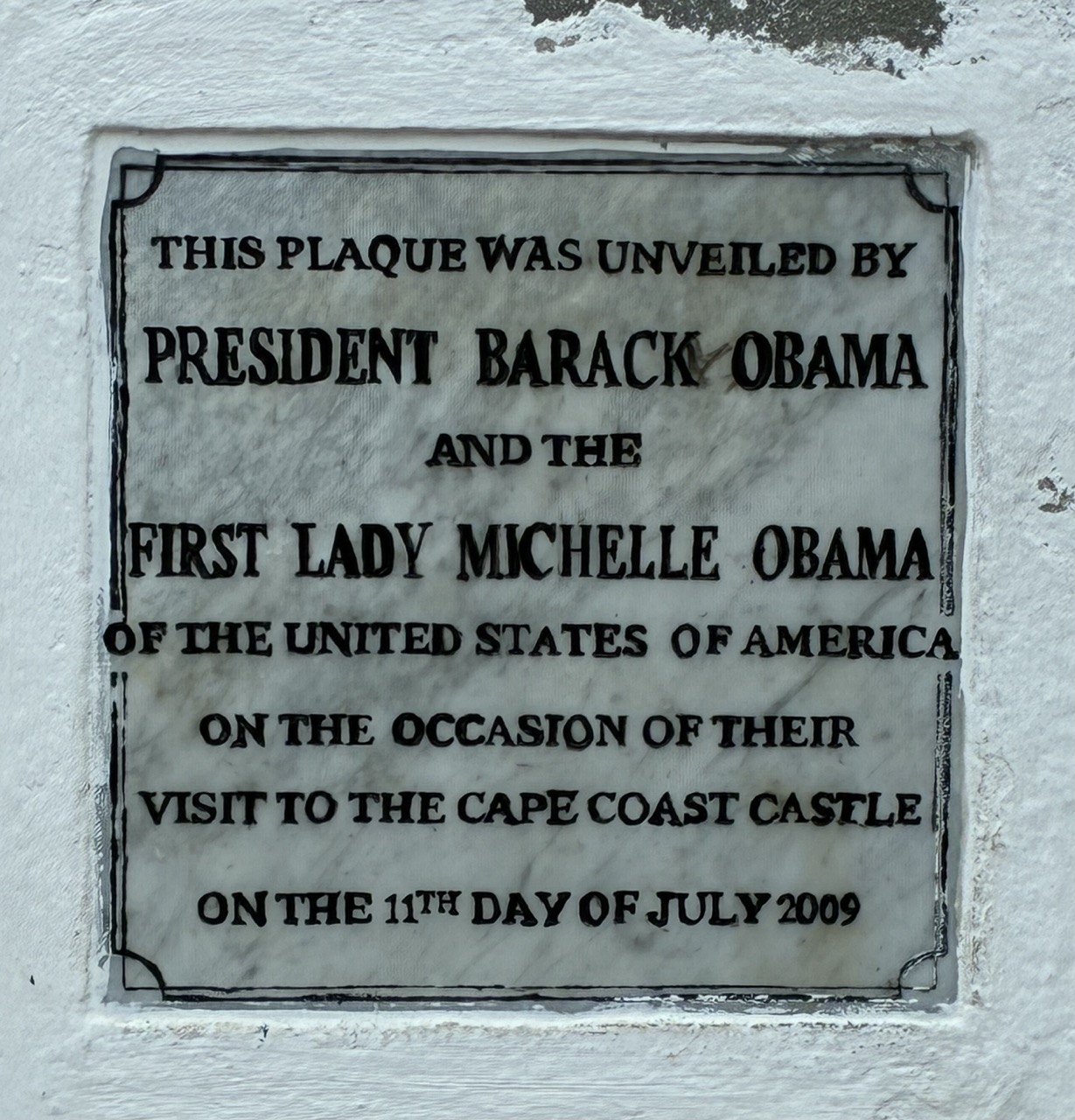

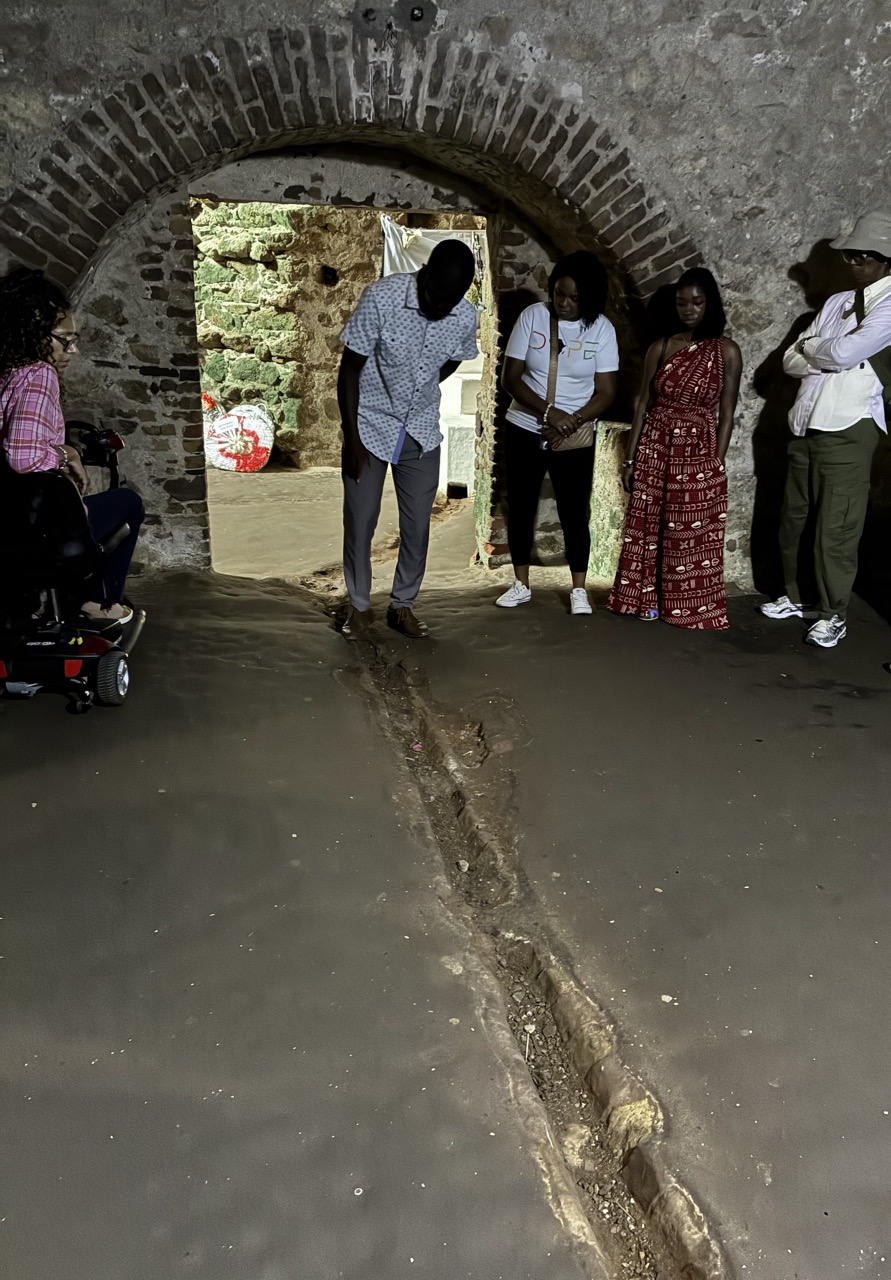
I silently prayed while entering the male slave dungeon, which consisted of a few rooms. Each small chamber had held 100-200 people with only three small holes at the top of the high walls to allow cool, fresh air. The windows were far too high to see out of or escape through. Enslaved Africans spent one to three months in a dungeon.

A trench bisected the floor, which collected human waste that flowed into the sea.
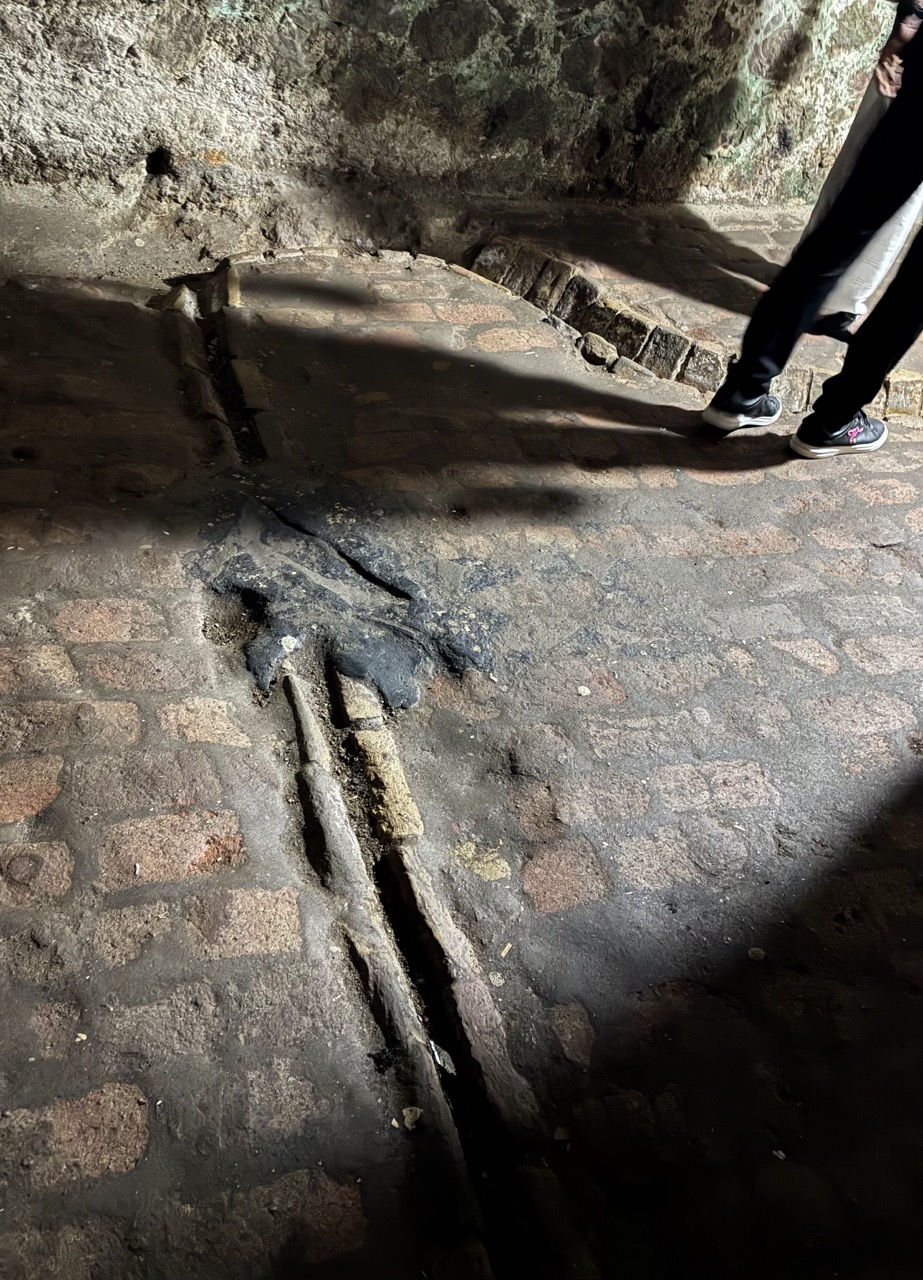
Sand had been thrown on top of vomit, blood, and sweat. Stratified layers of compacted bodily fluids caked the dungeon floor.
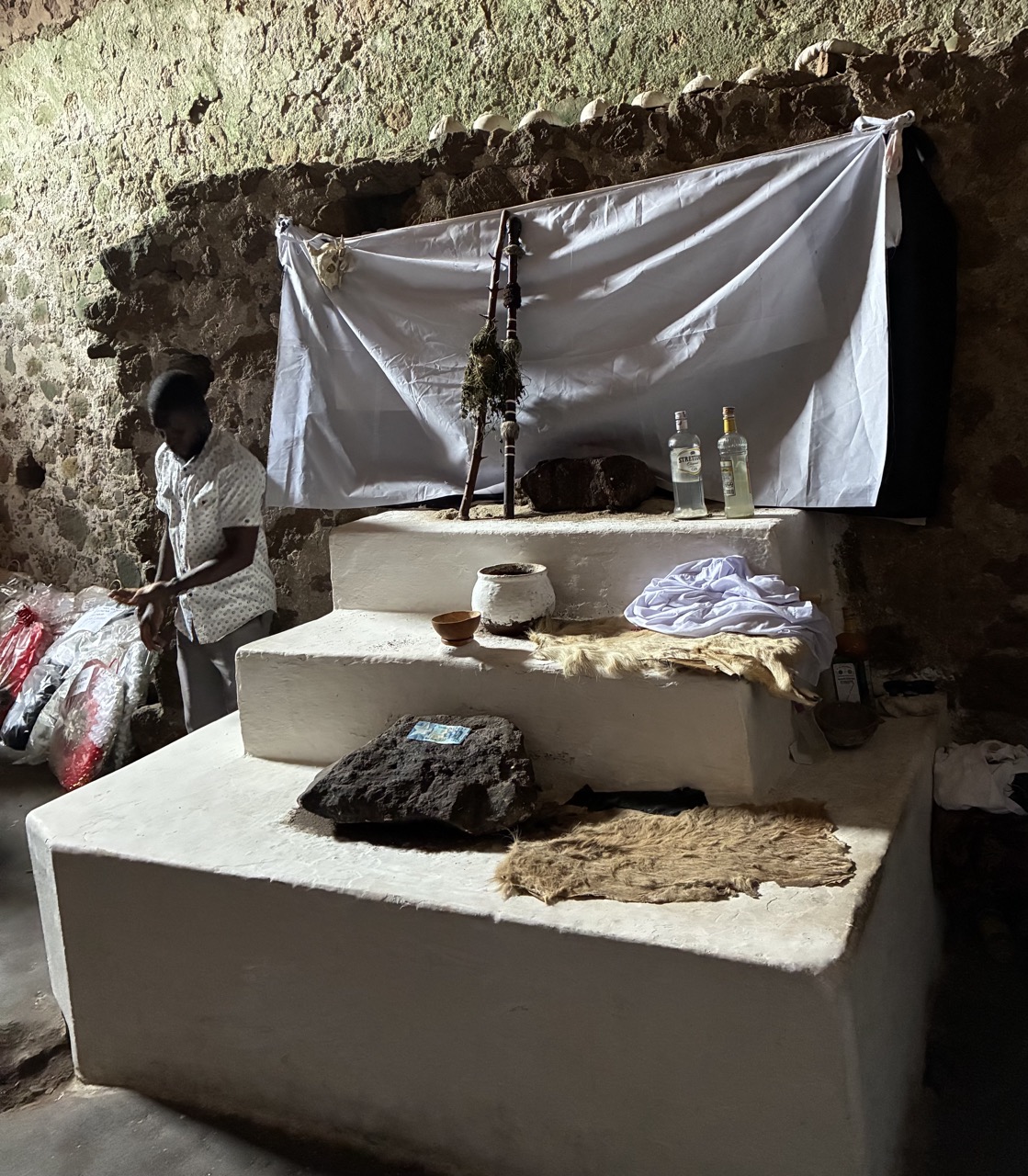
An altar was built in 1973. Although deceased Africans were put to sea, some believed that their spirits lingered within the castle itself.
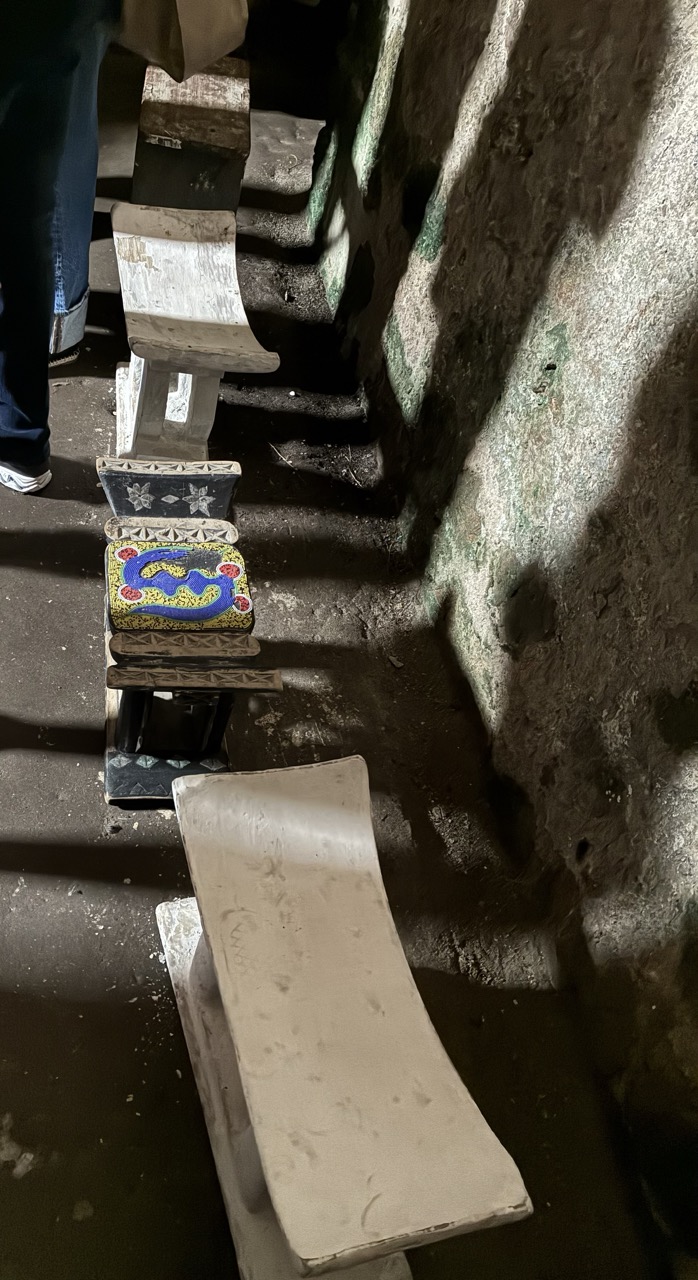
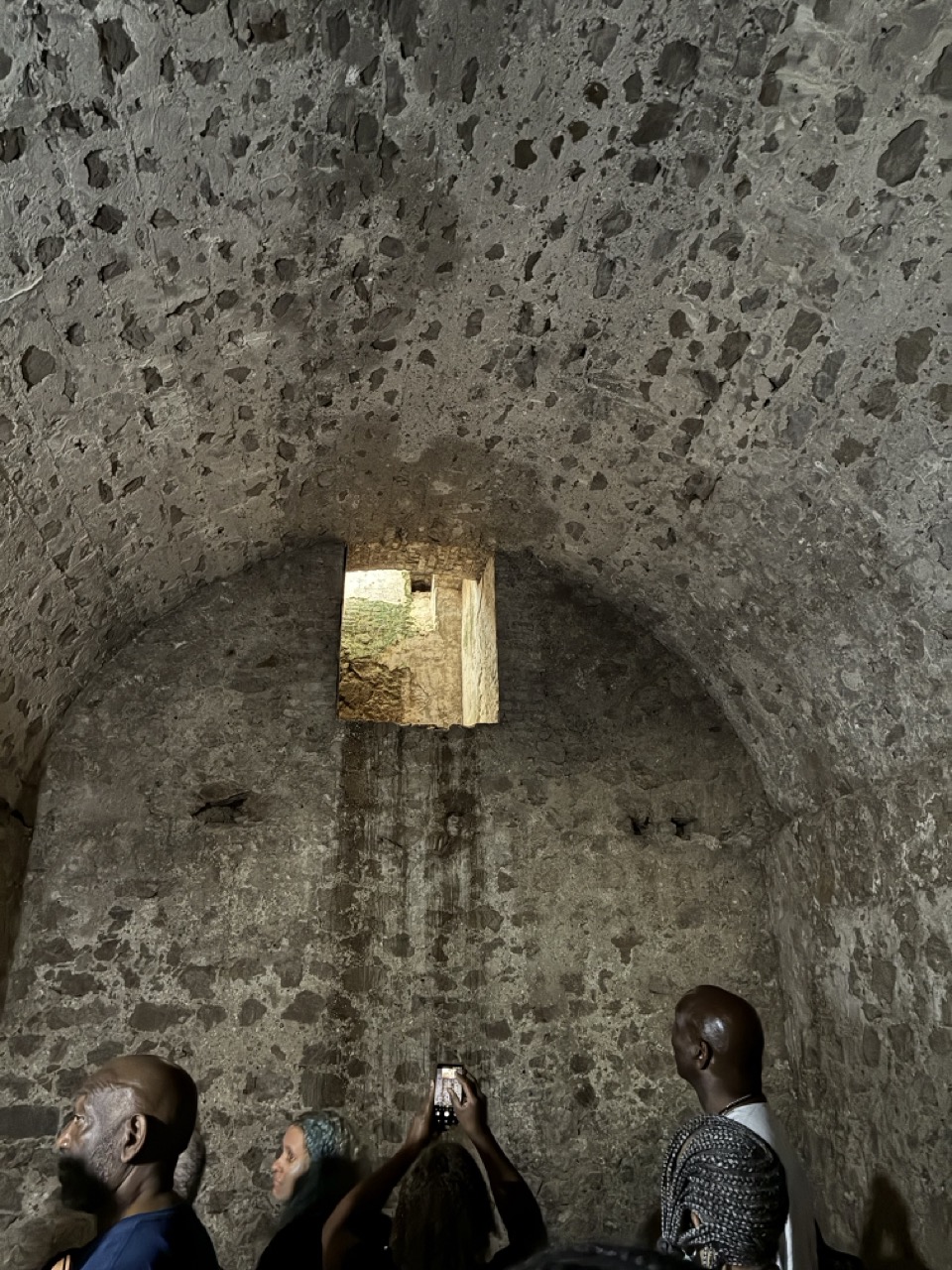
Africans lost their rights, identity, and name. They were insured as property. Some enslaved Africans had never seen the ocean before. If one jumped into the ocean, then others went with them because they were chained together.
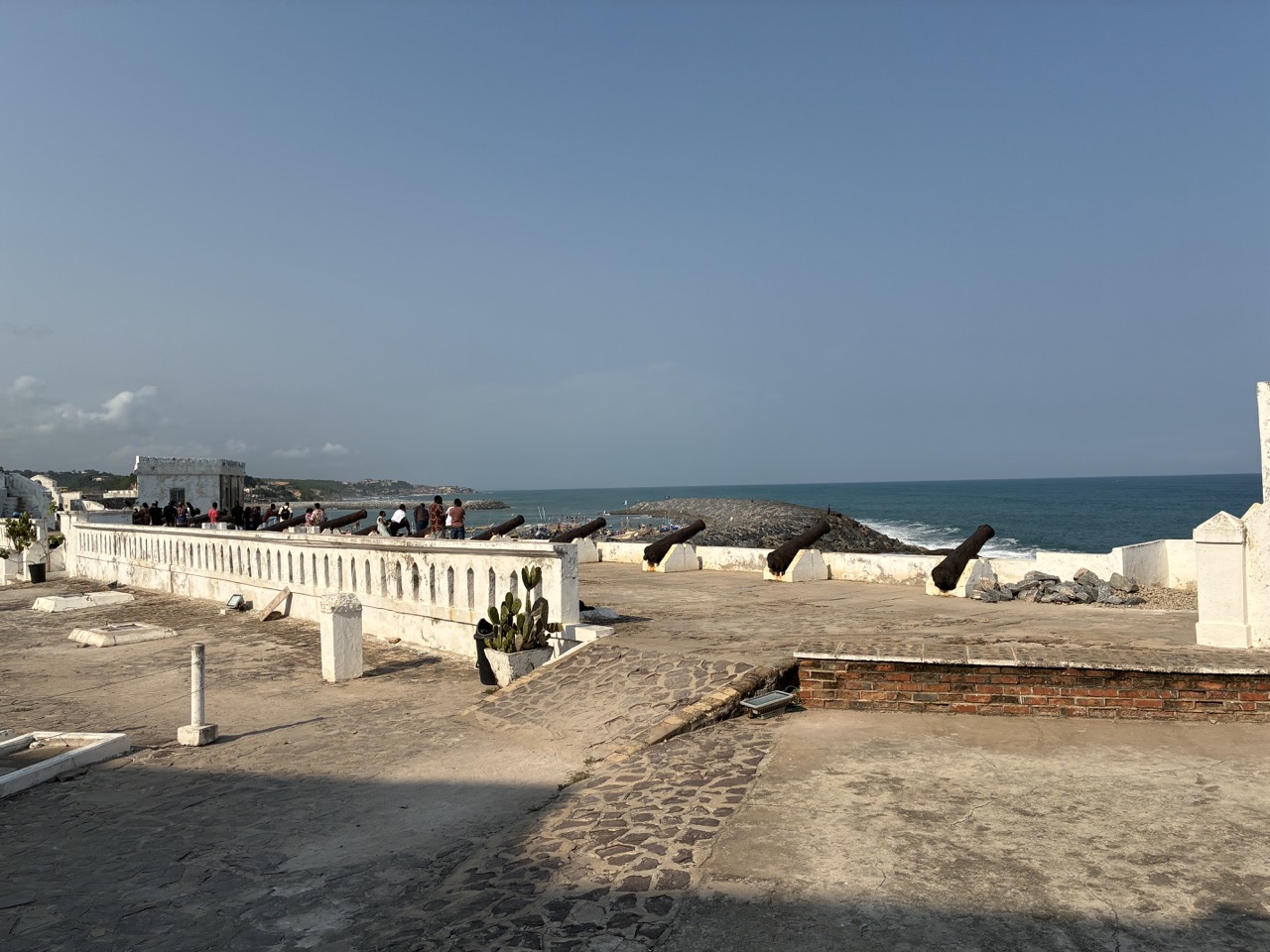
A hole in the dungeon’s ceiling opened to a church, so enslaved Africans could hear the gospel service. Anglican church goers could hear the enslaved Africans as they entered and exited their place of worship. Elmina had a Catholic church above its dungeons.
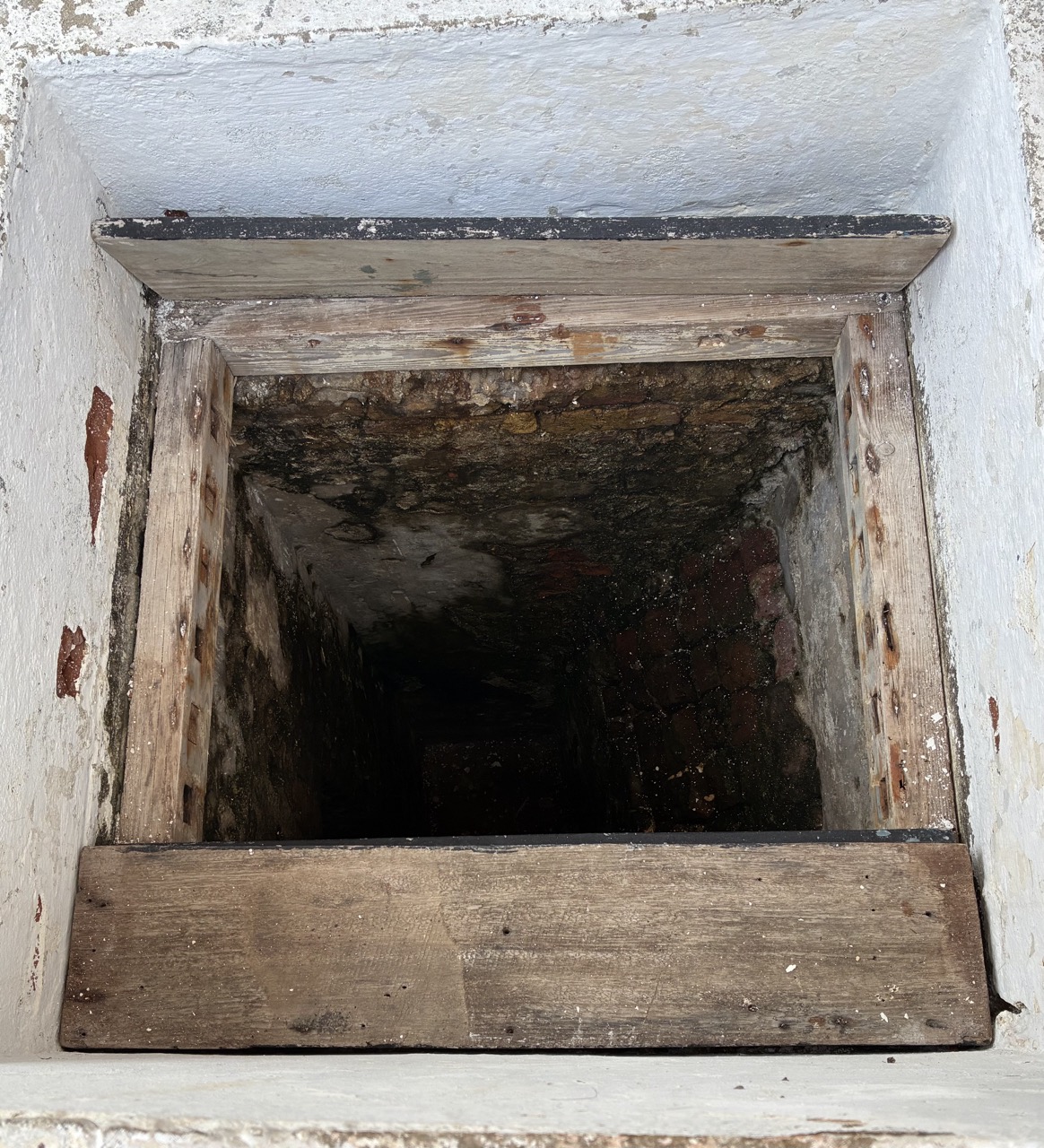
I marveled at how any so-called Christian could walk past that gaping hole, knowing the egregious conditions and misery that humans at the other end of that opening suffered, and still think of themselves as good religious folk.
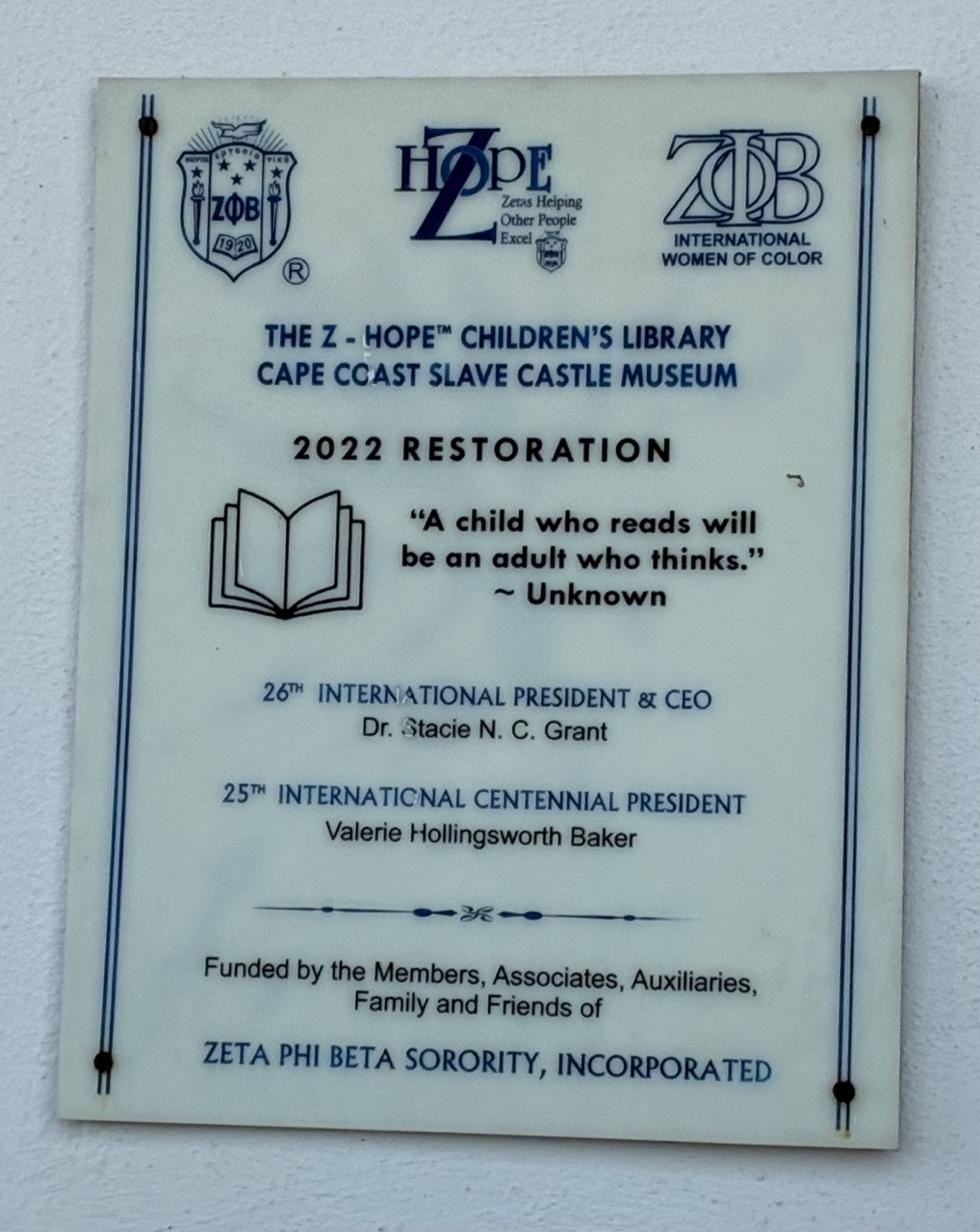
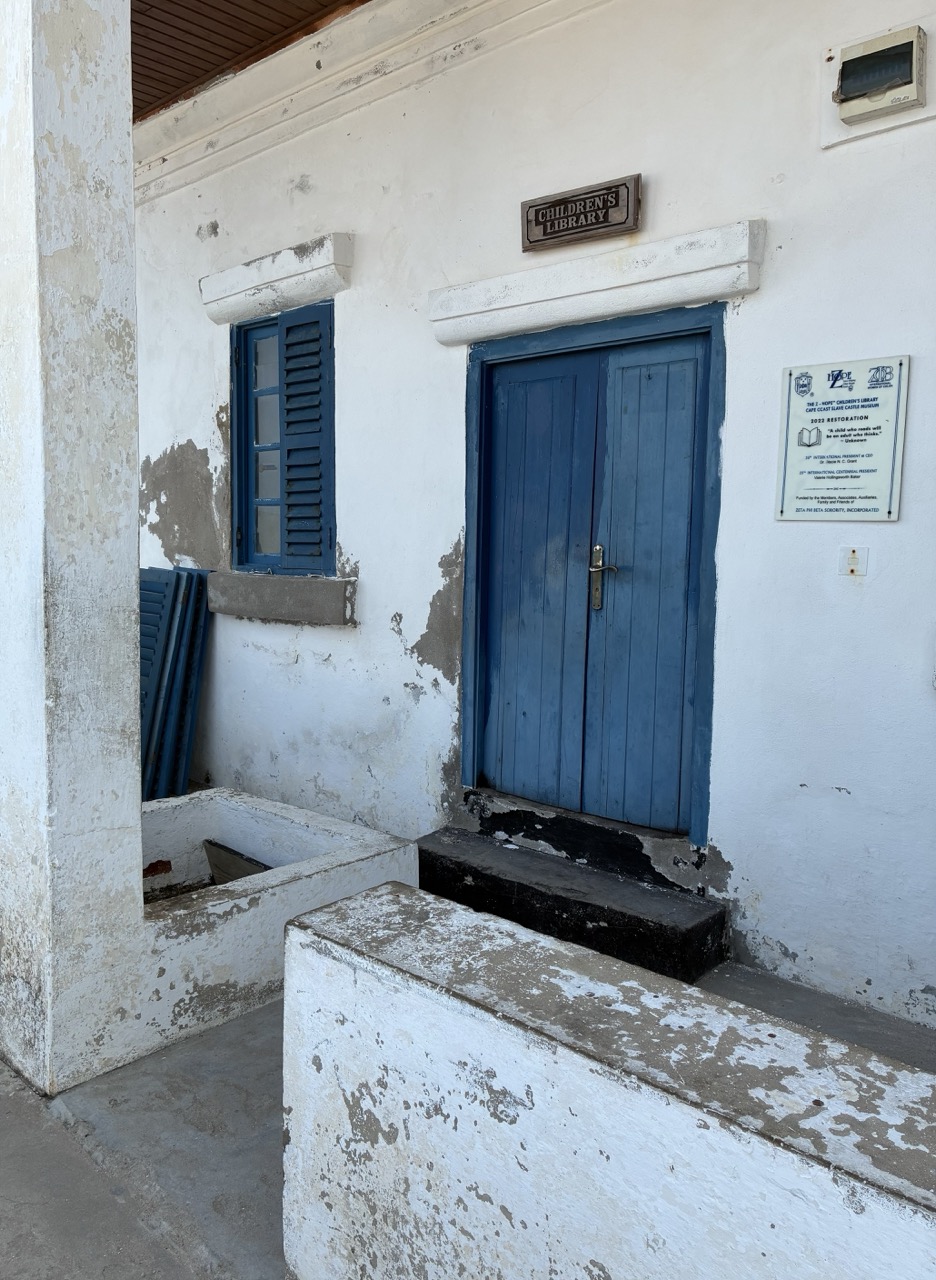
Fortunately, a Black sorority donated money to help repurpose the former Anglican church into a children’s library.
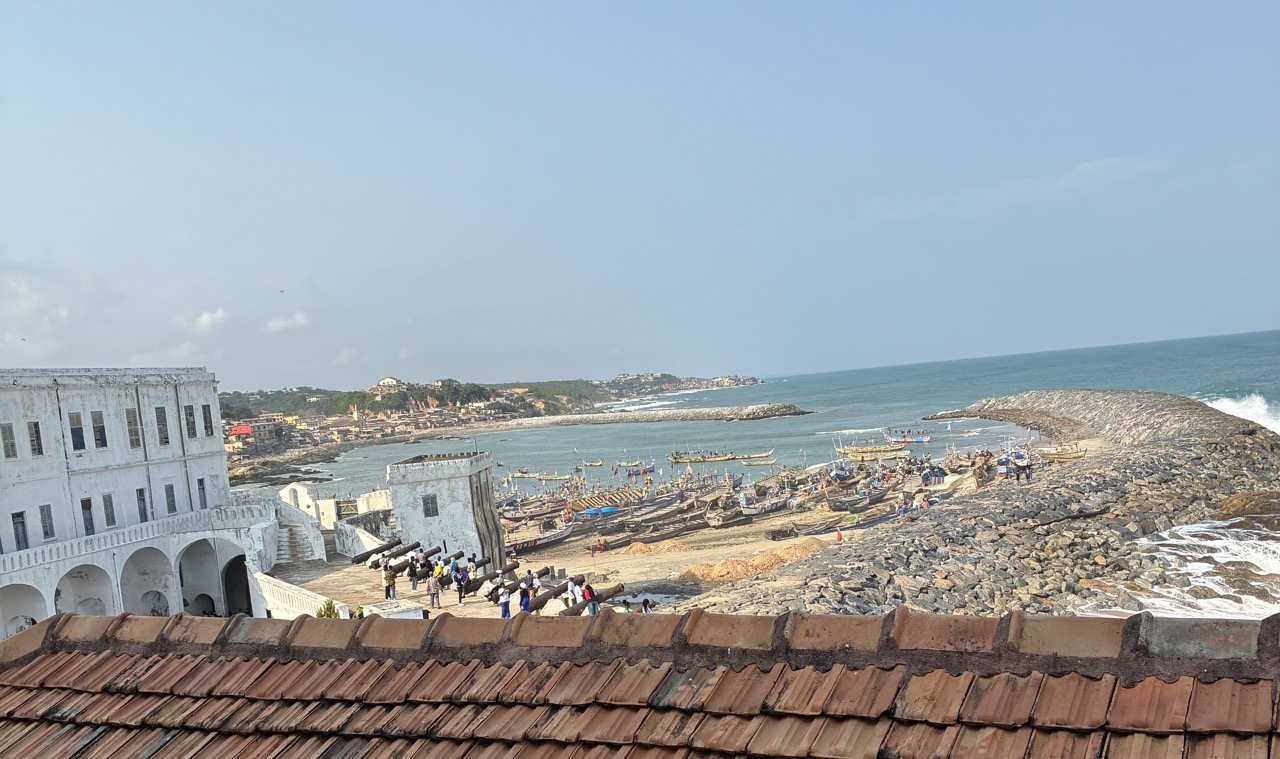
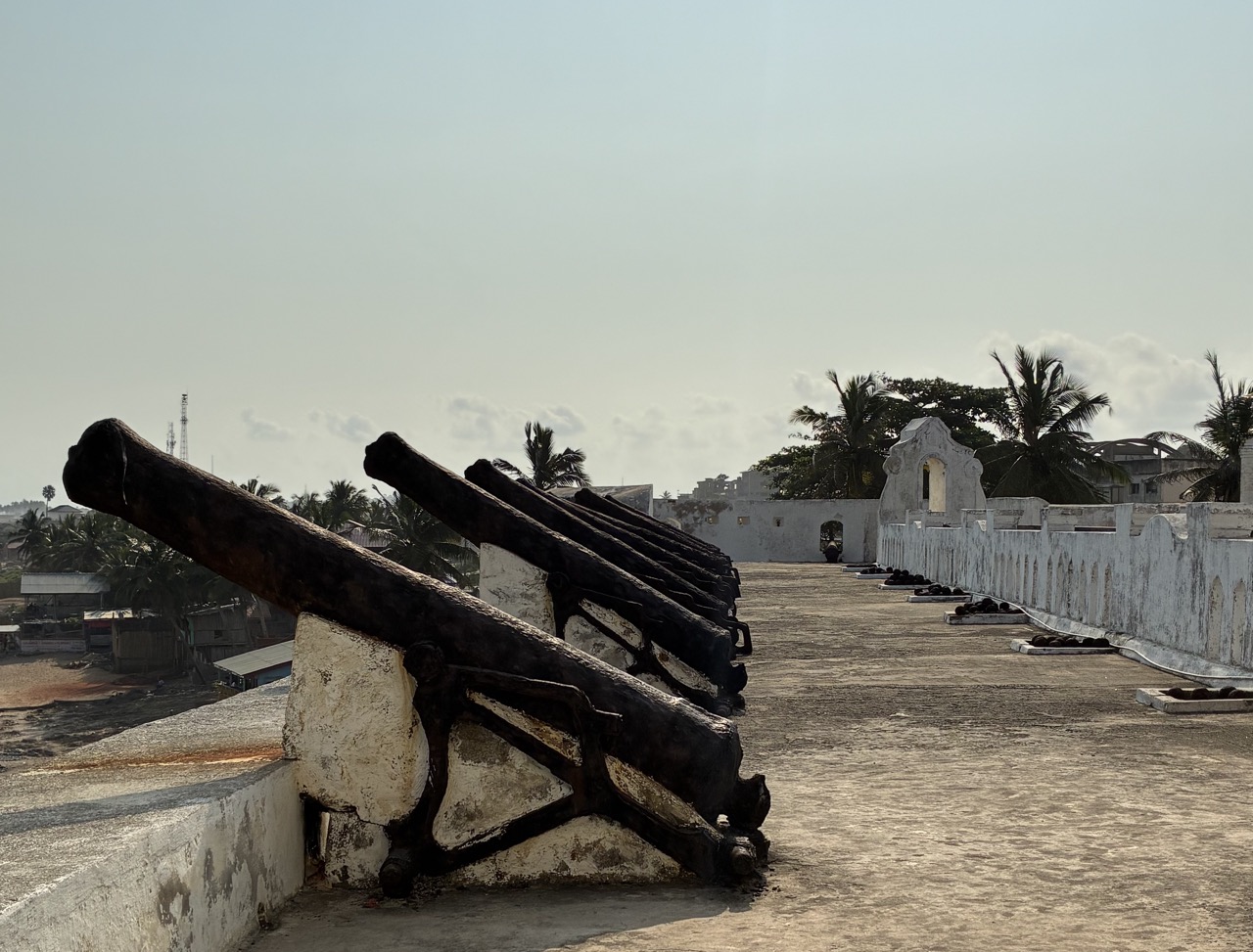
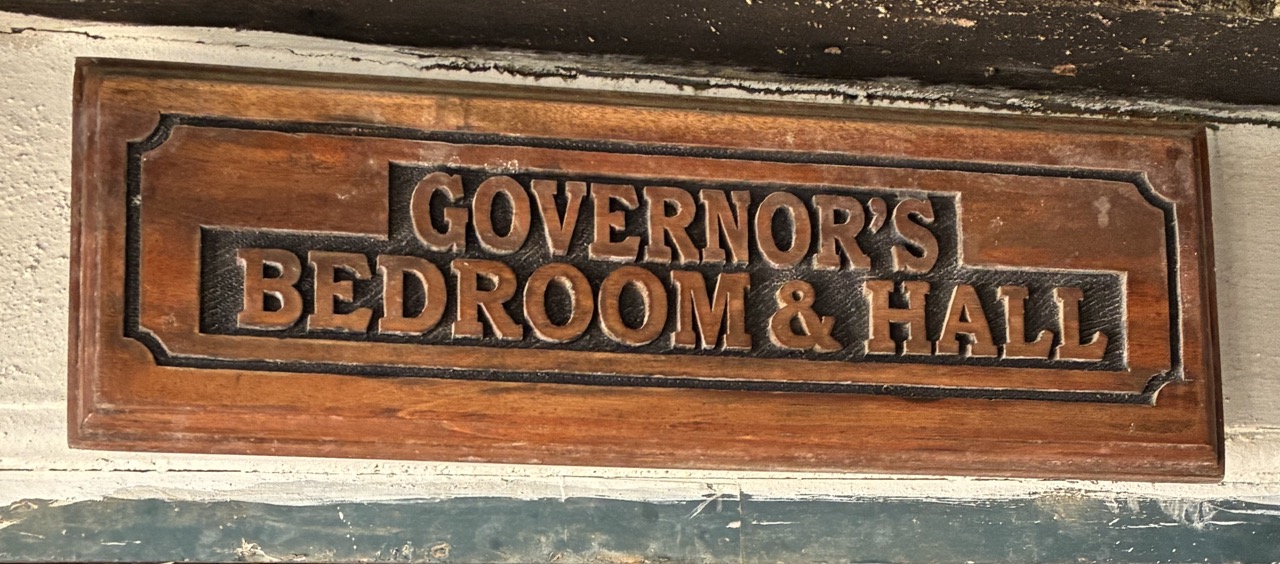
The governor’s place, located above ground, had windows, allowing natural light and breezes.
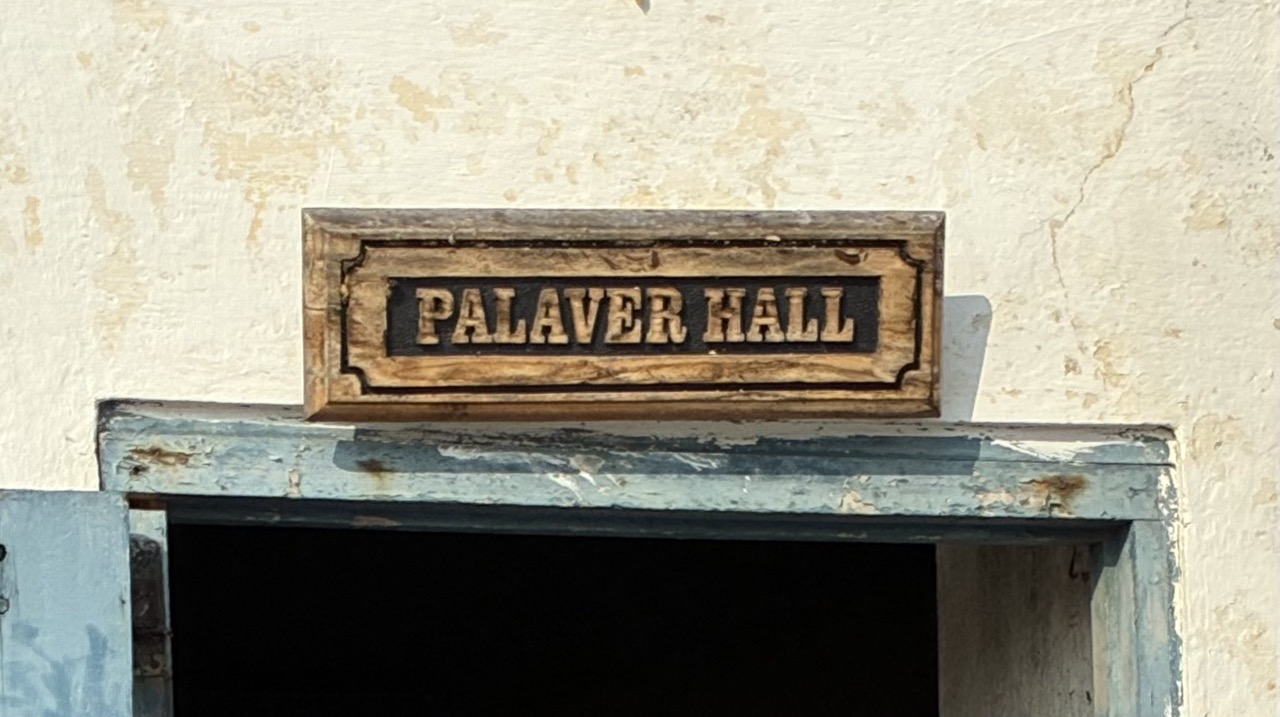
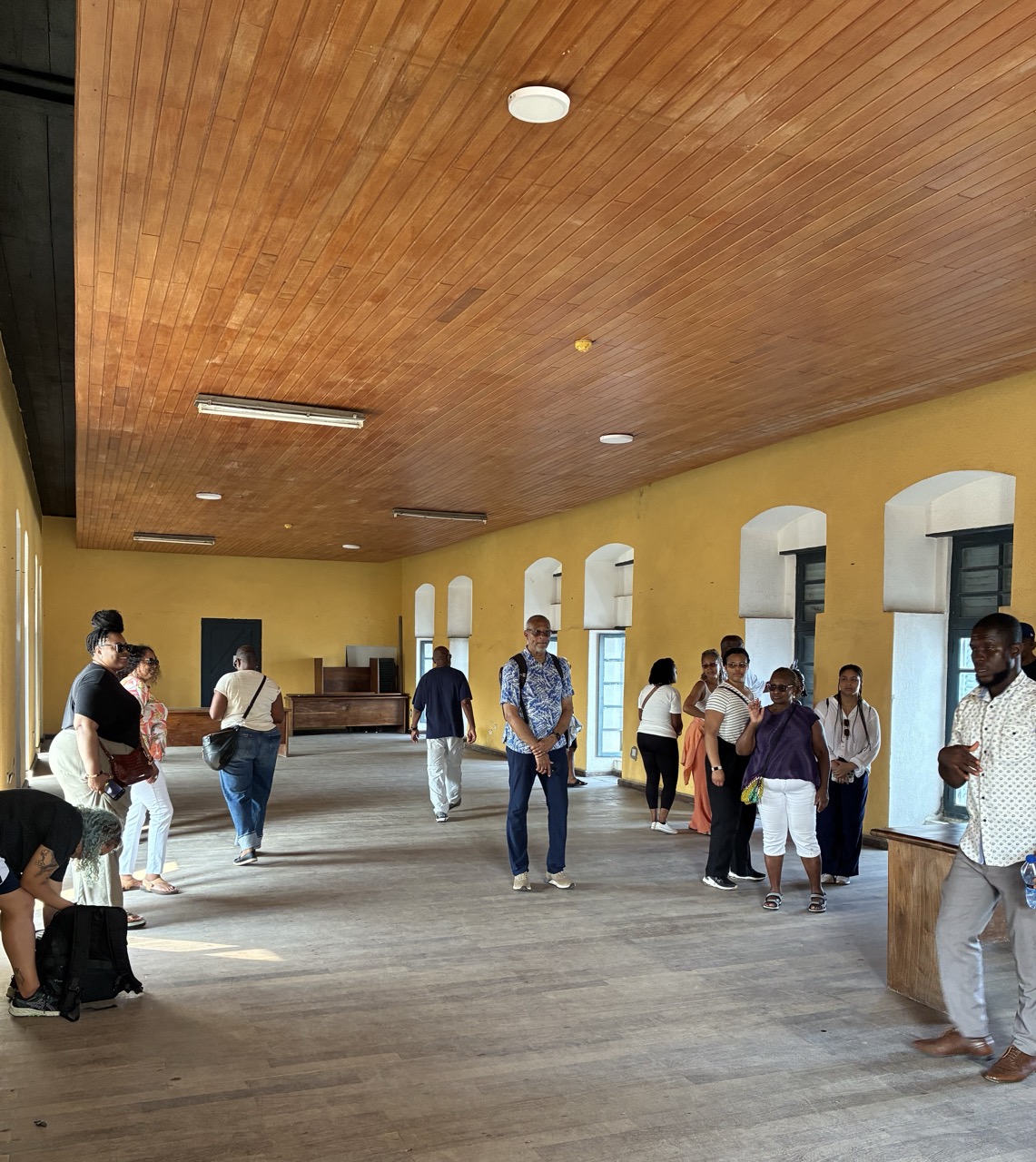
Palaver Hall used to be the marketplace.
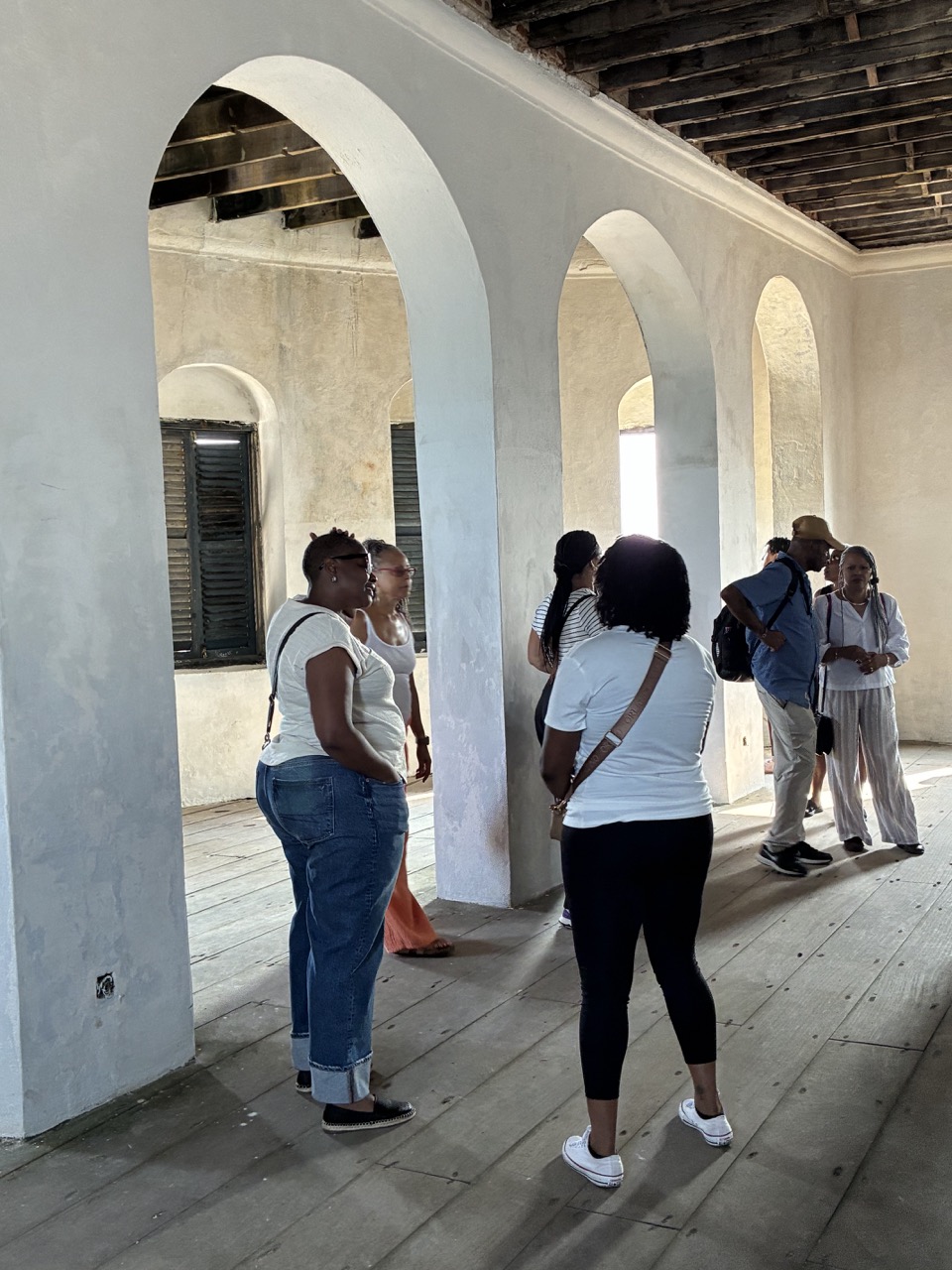
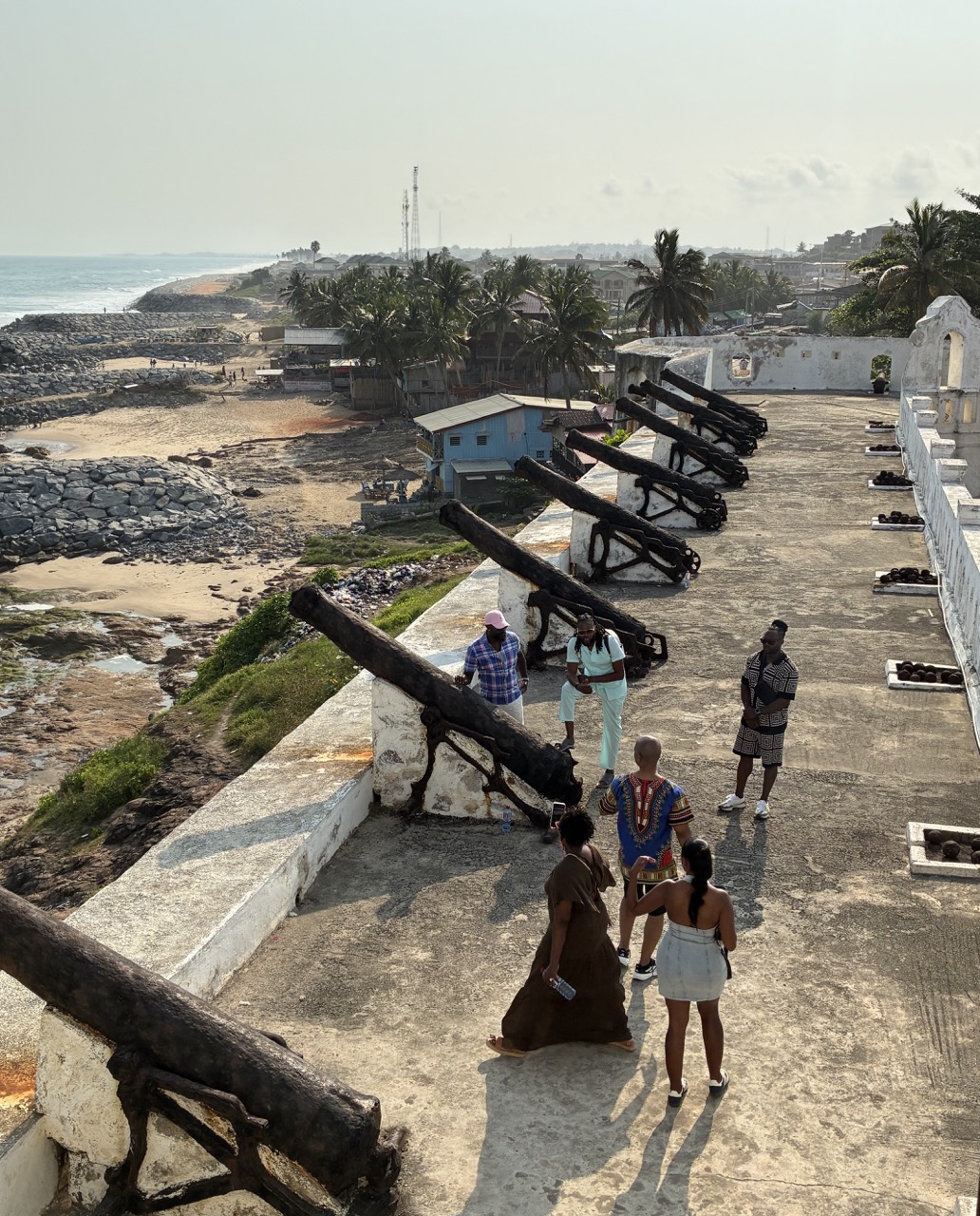
The women’s dungeons were above ground, and used to rape African women for breeding. A trench lined around the walls. Women squatted, leaned, but not lie on the floor to sleep.
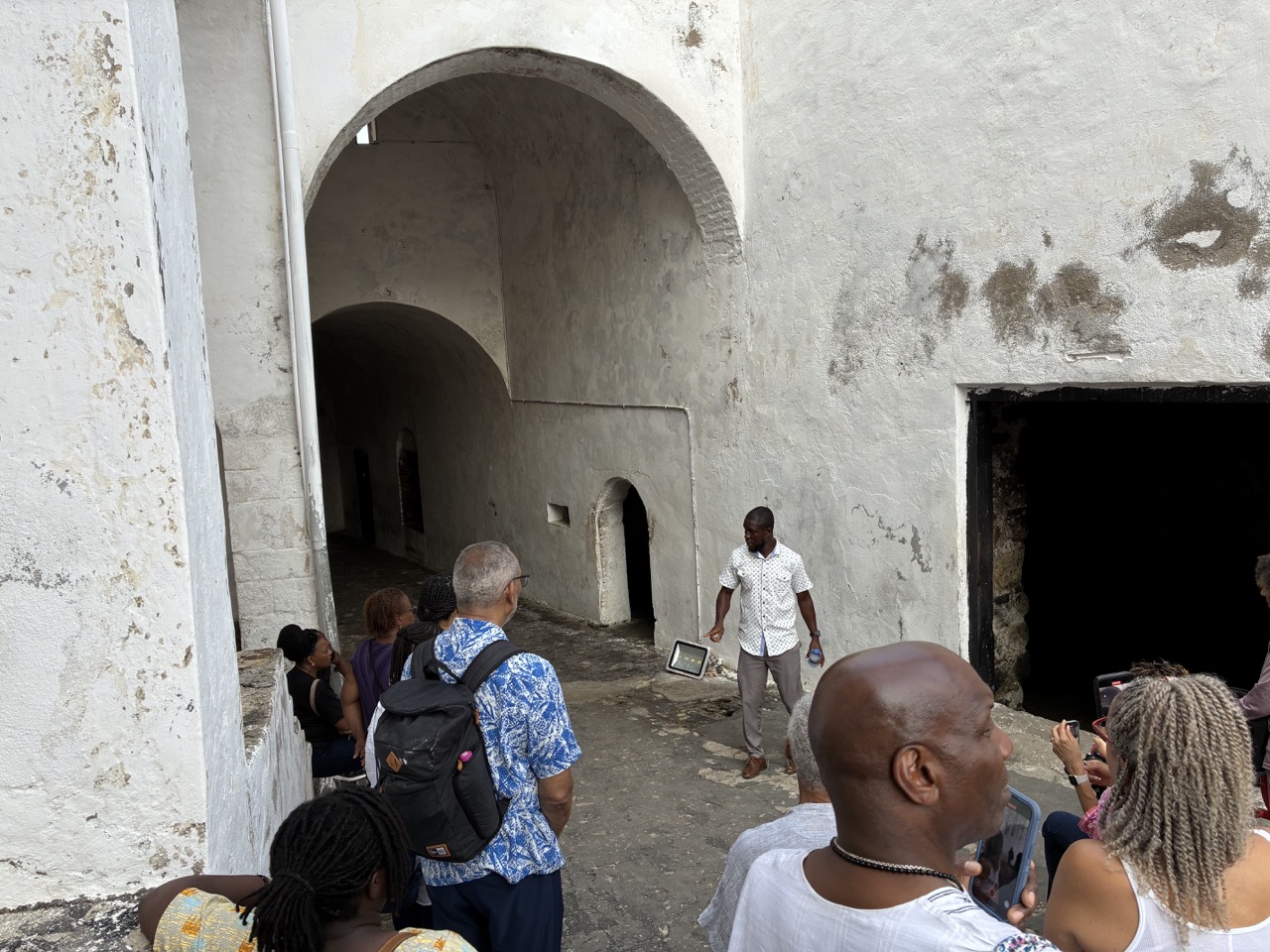
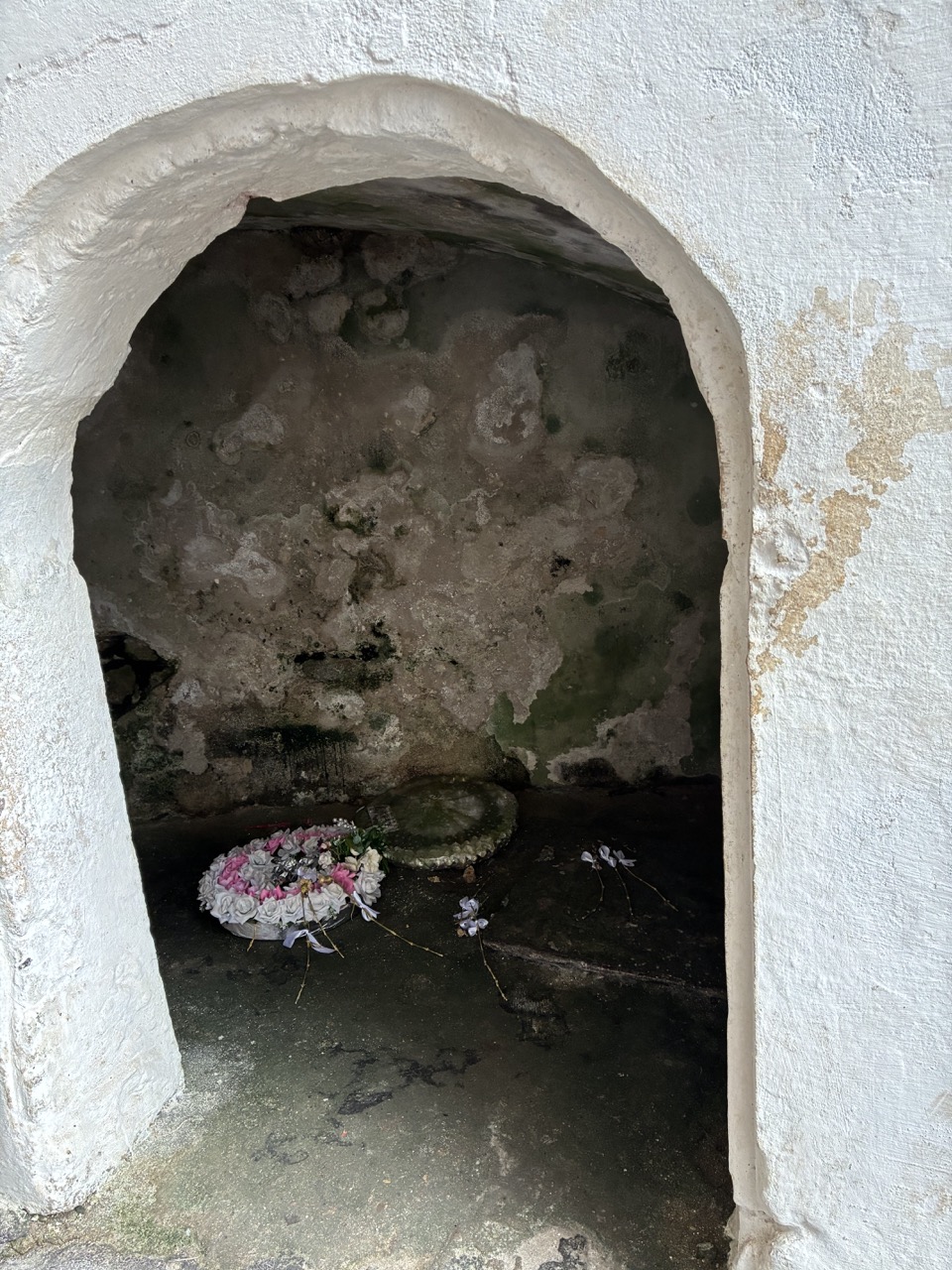
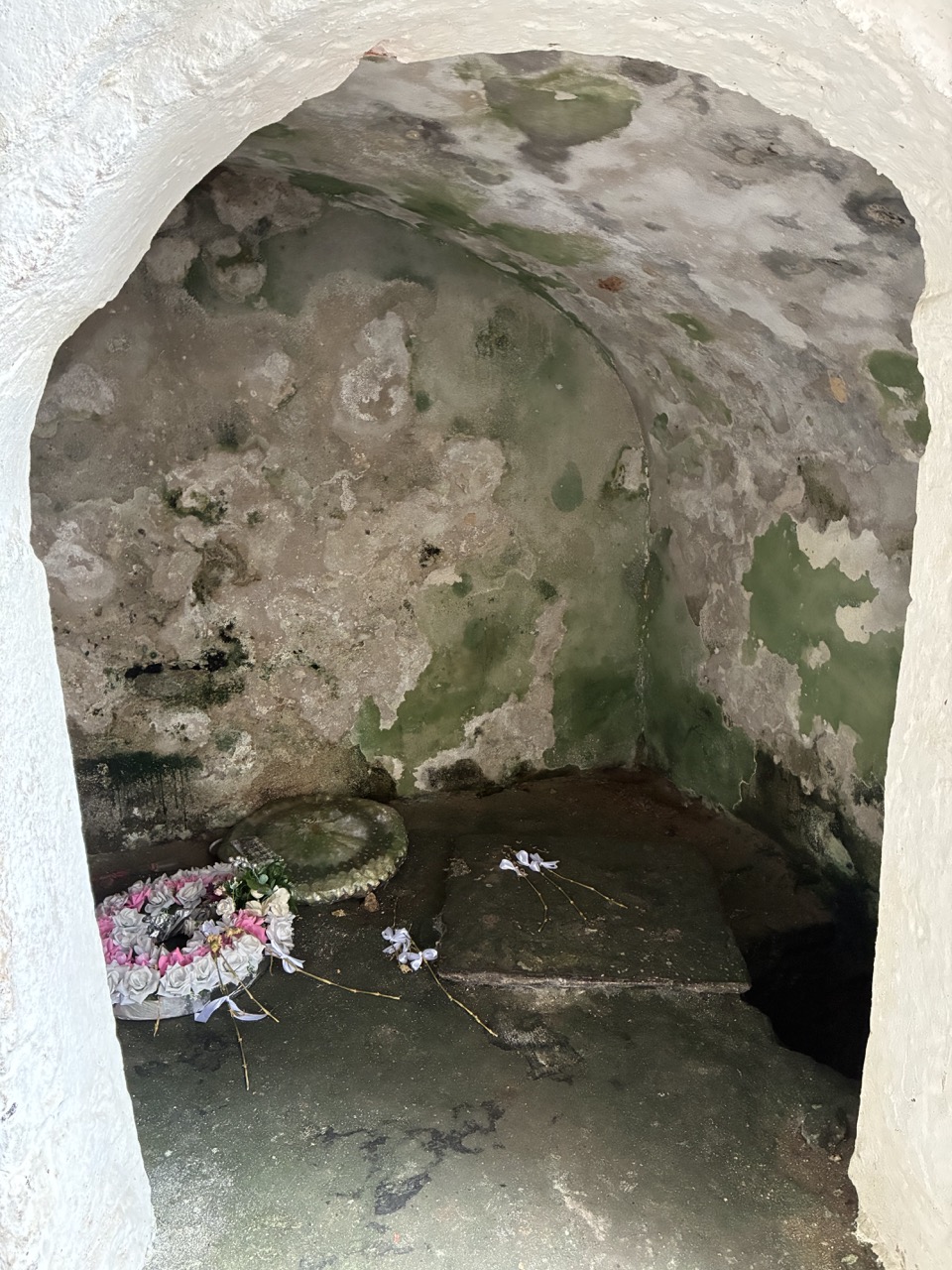
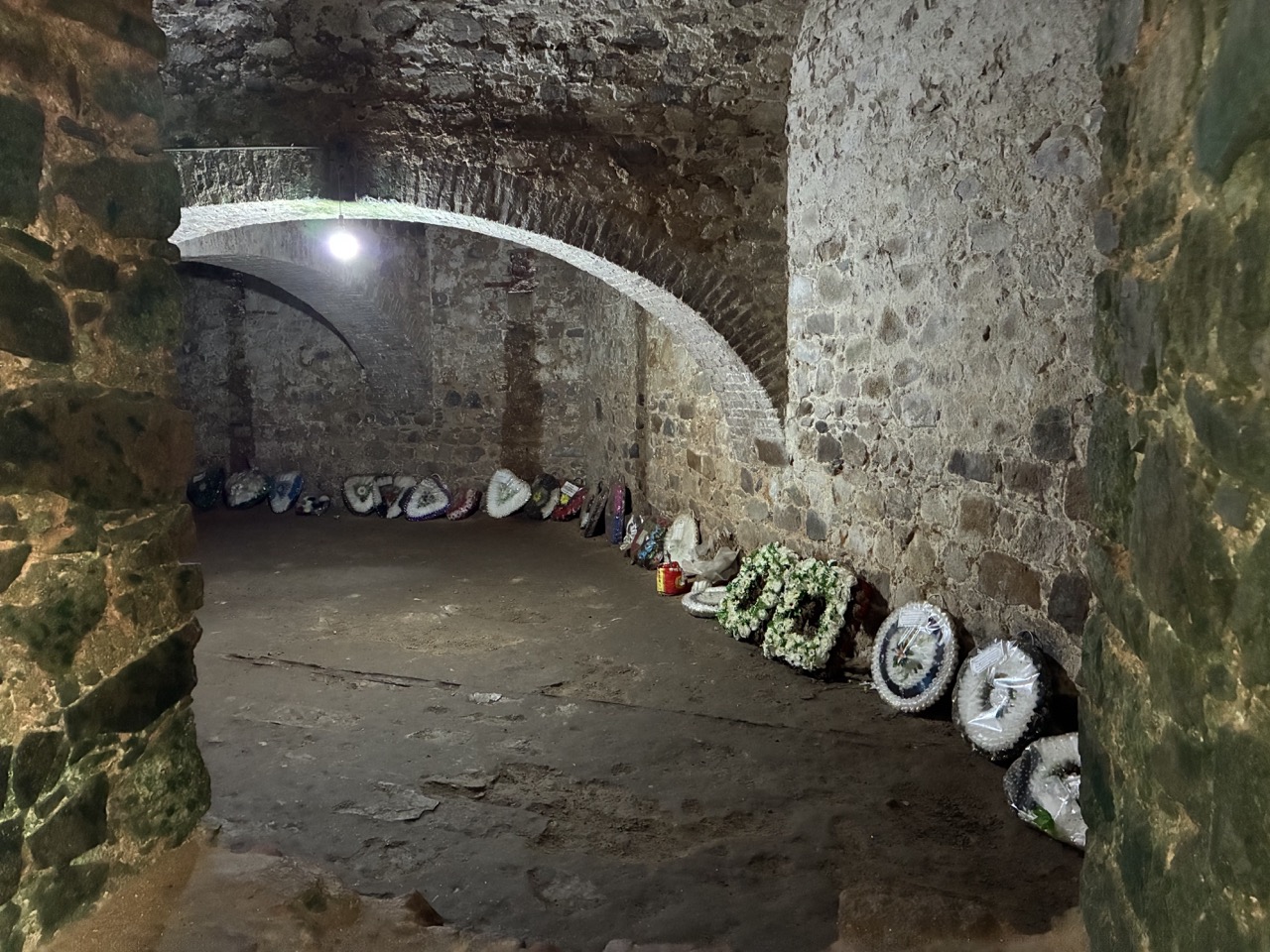
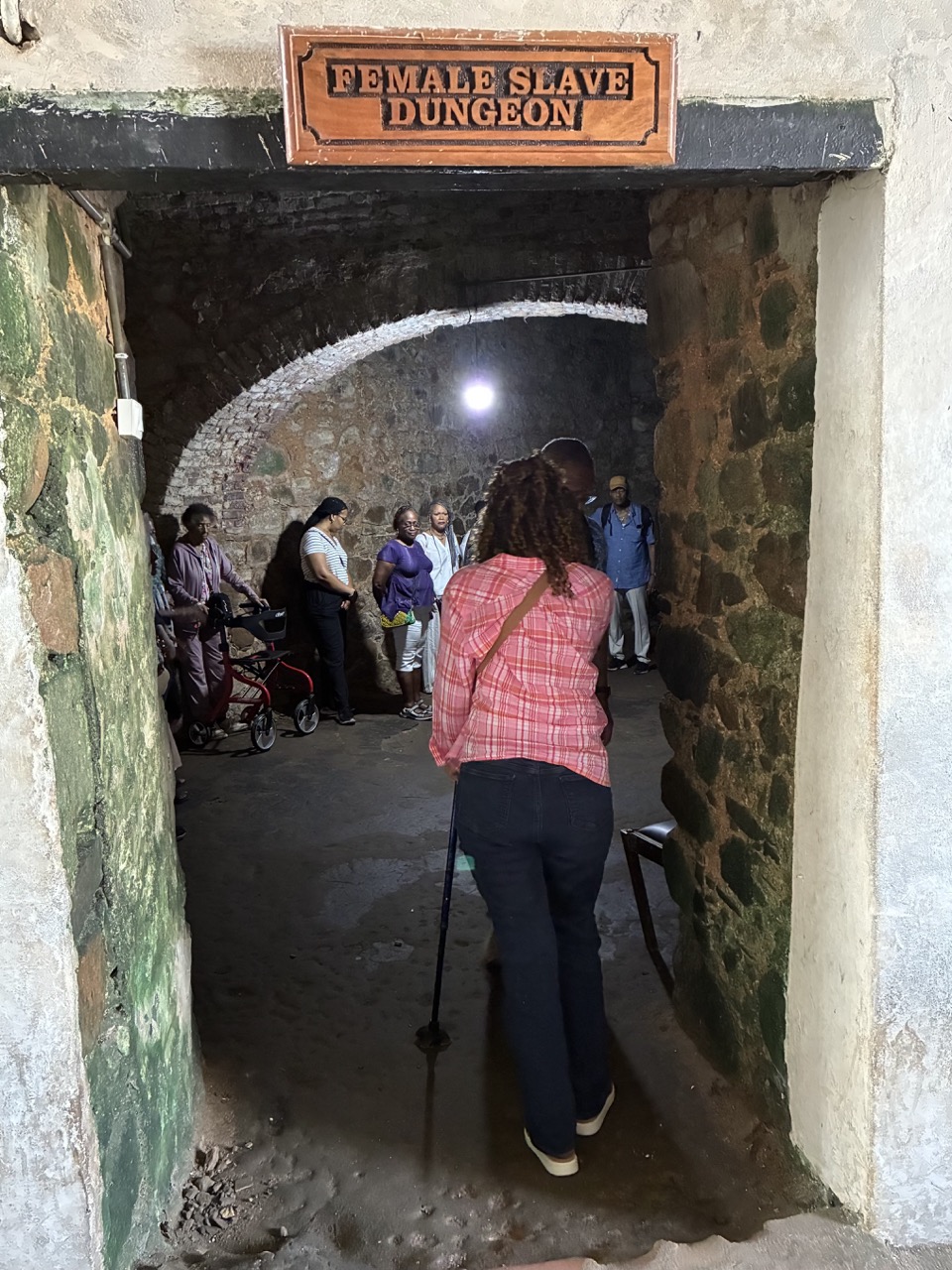
The Gate/Door of No Return was situated between the women’s dungeons.
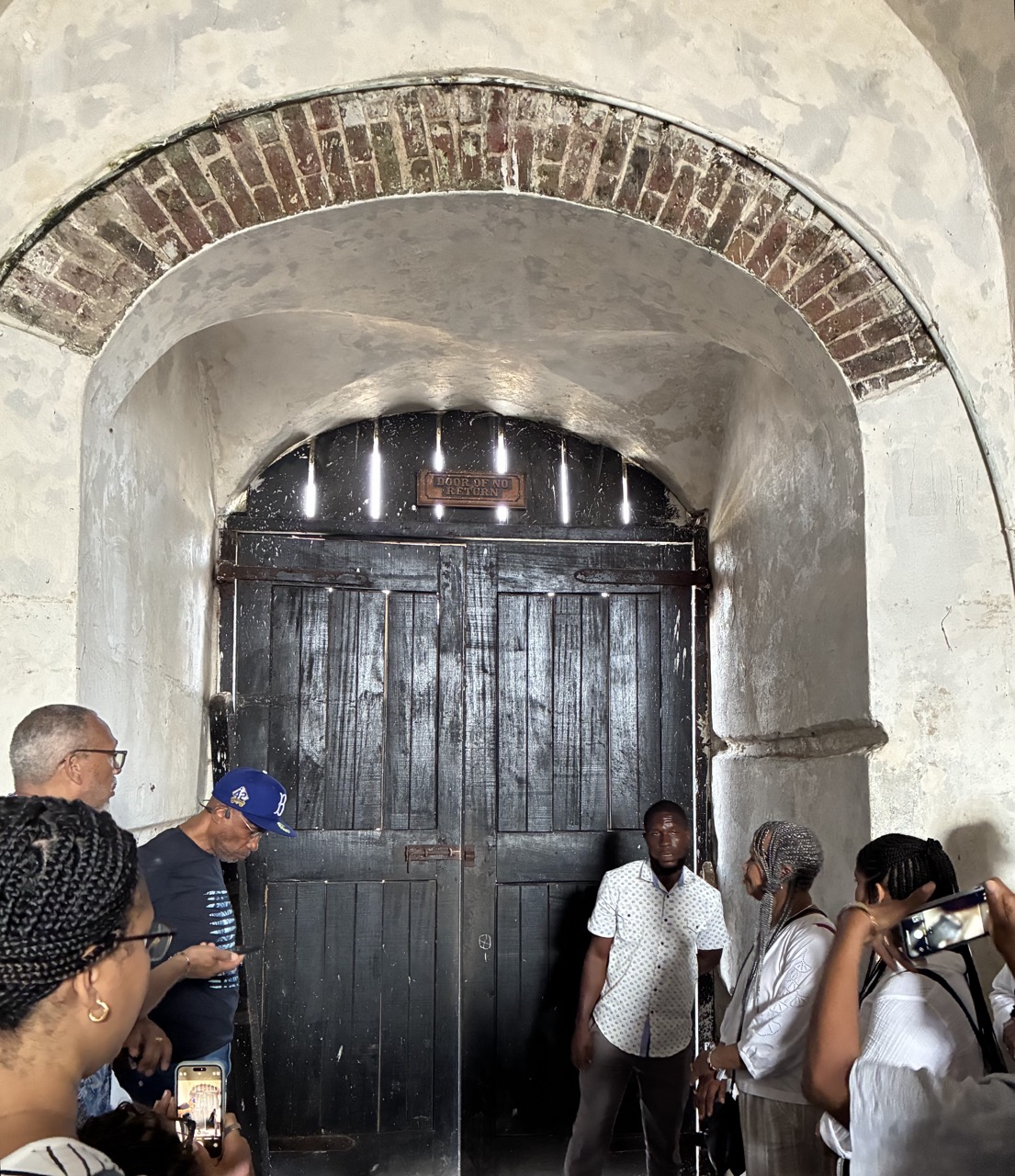
So named because once enslaved people exited through that door, they never returned to the land of their birth.
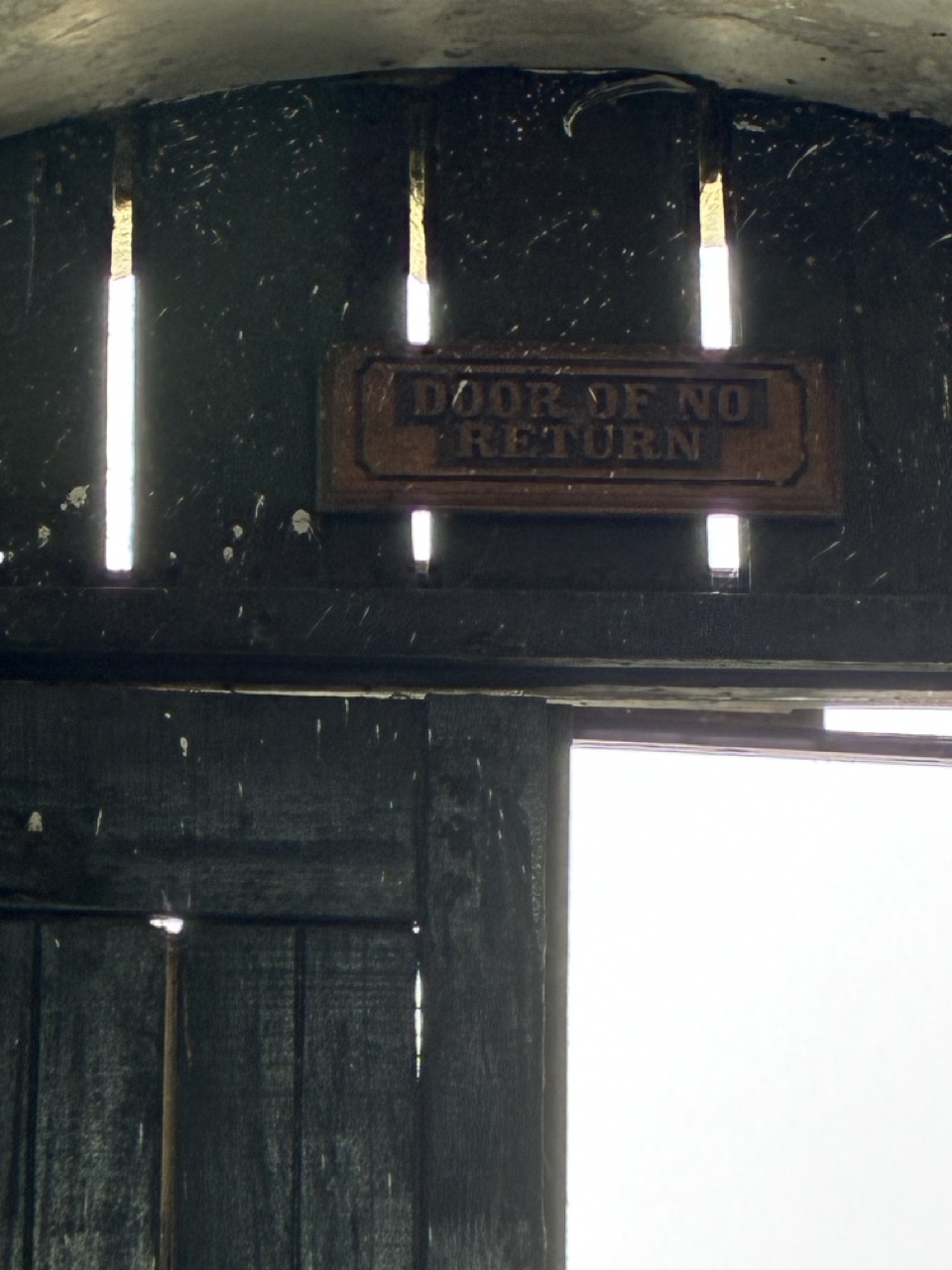
Yet, with so many of us Black Americans visiting every year as we learn about our history before slavery, the other side of the Door of No Return had been named “The Door of Return.”
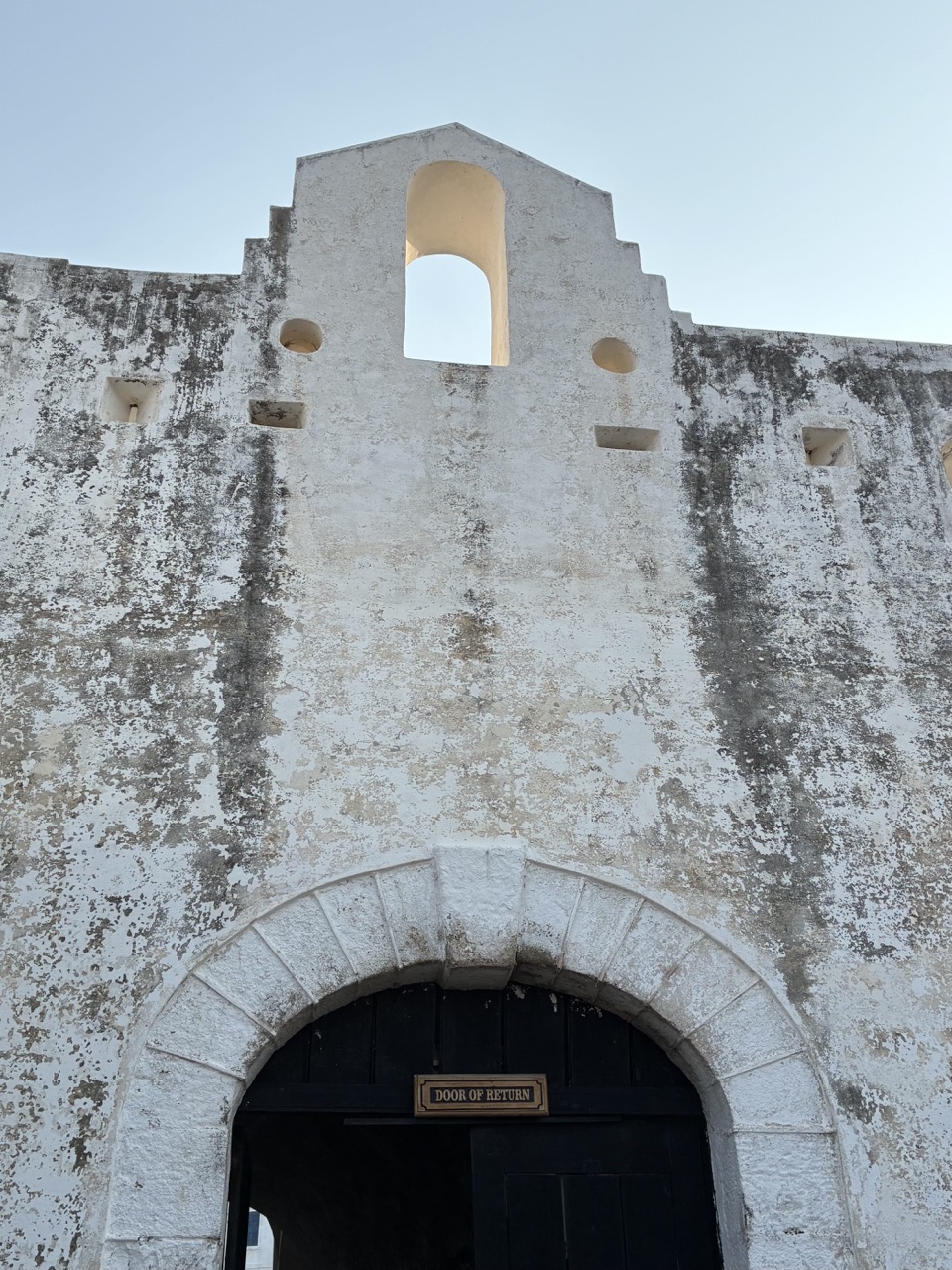
As we reentered, I experienced a sense of optimism. There was no undoing of the past, but we could share our experiences and encourage others to learn history and travel.
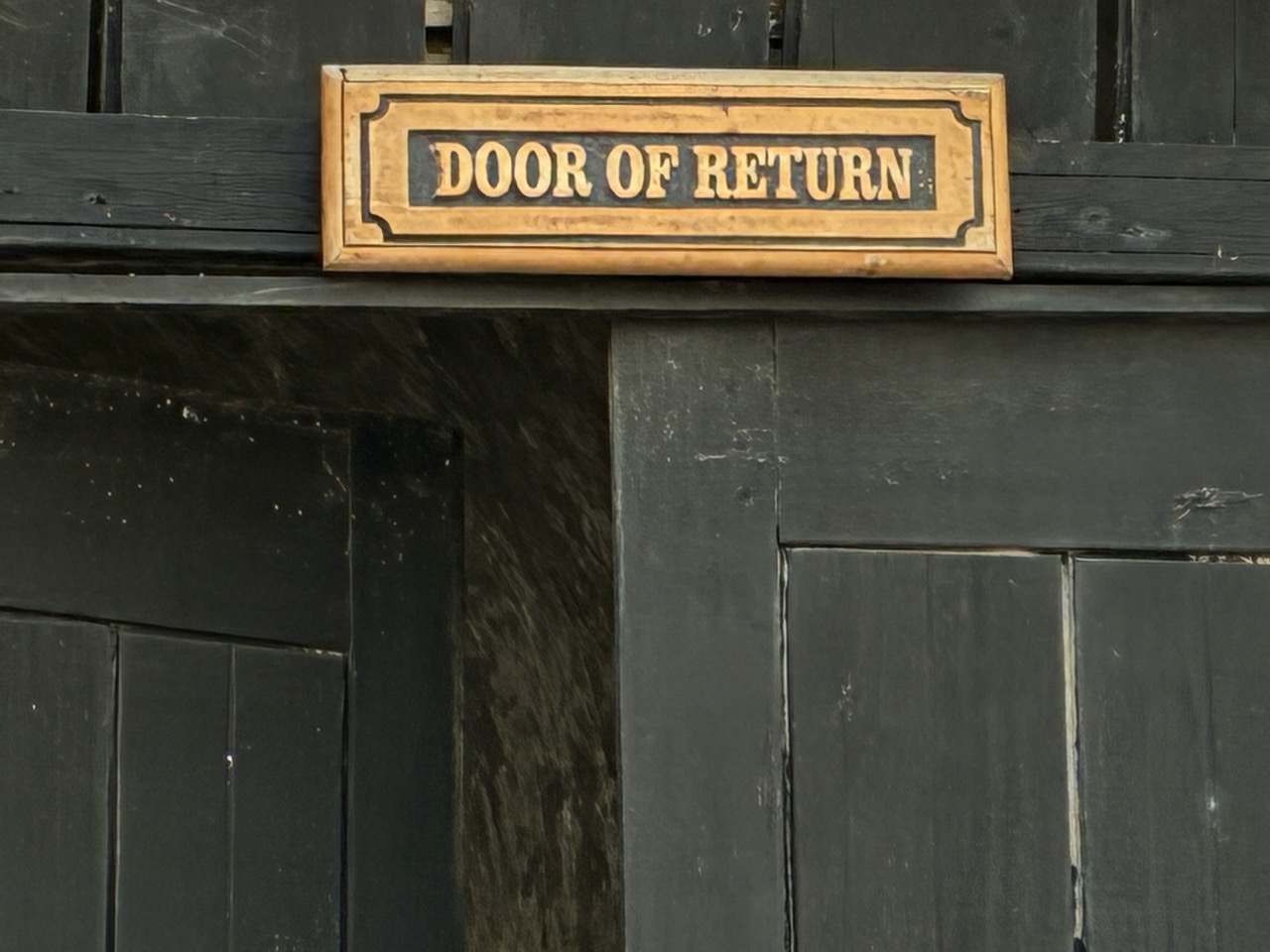
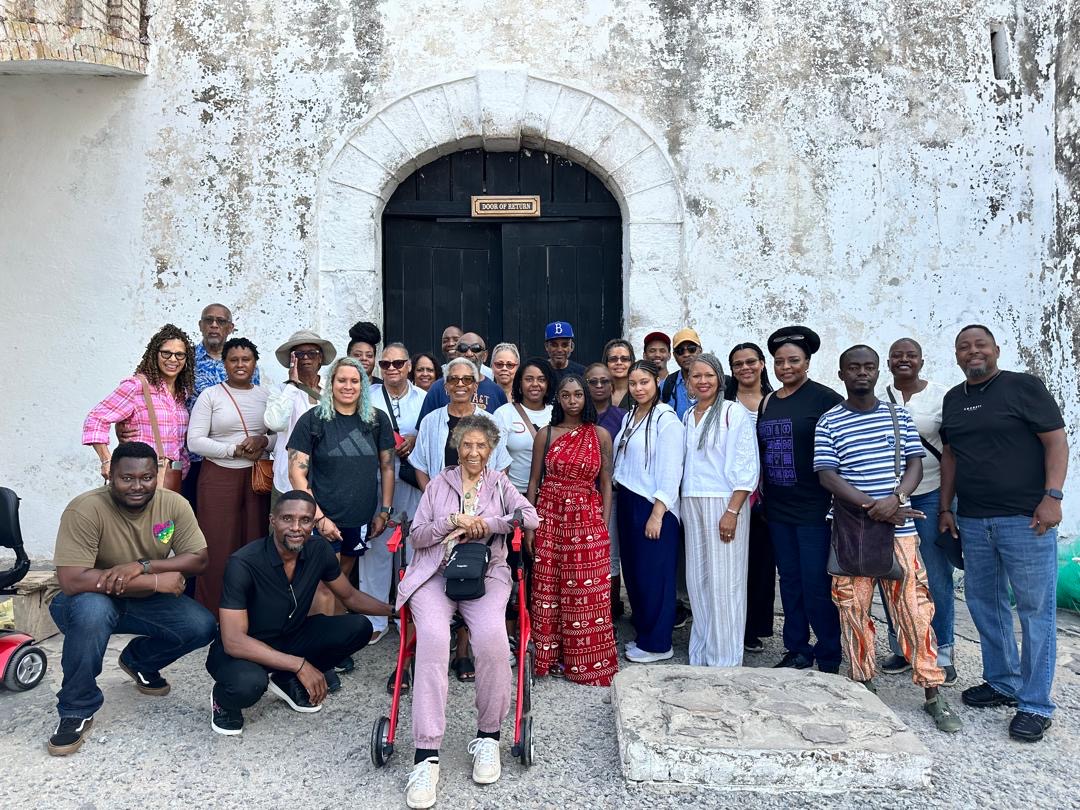
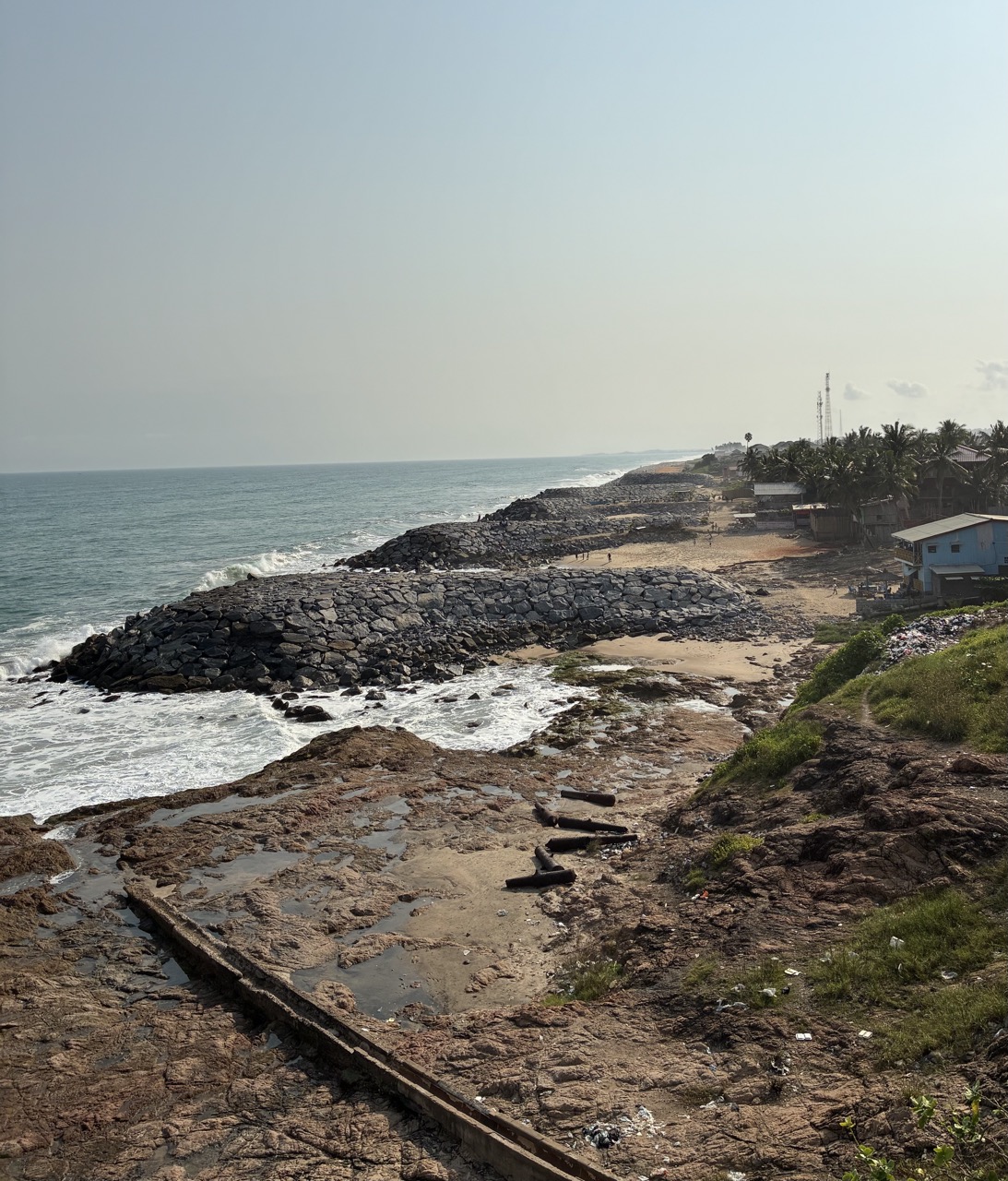
A seawall was built in 2022, so ocean isn’t as close as it used to be.
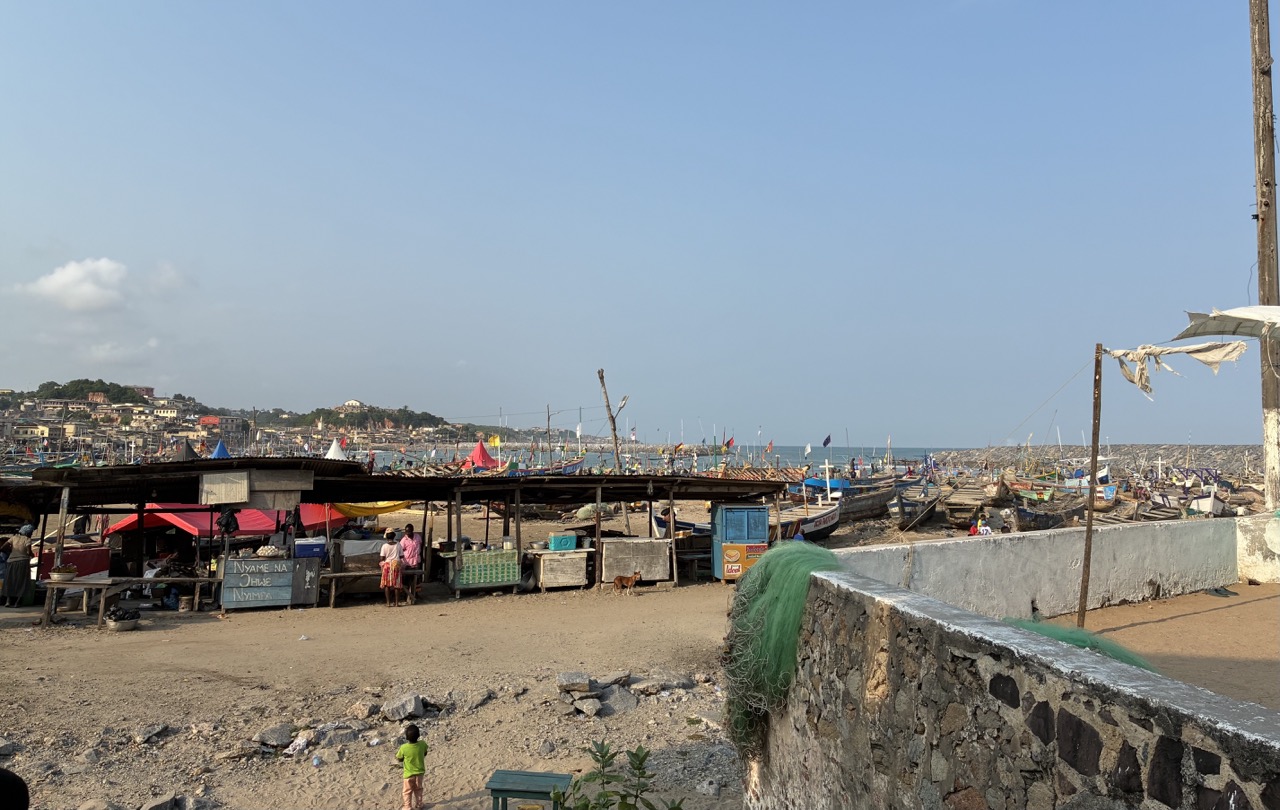
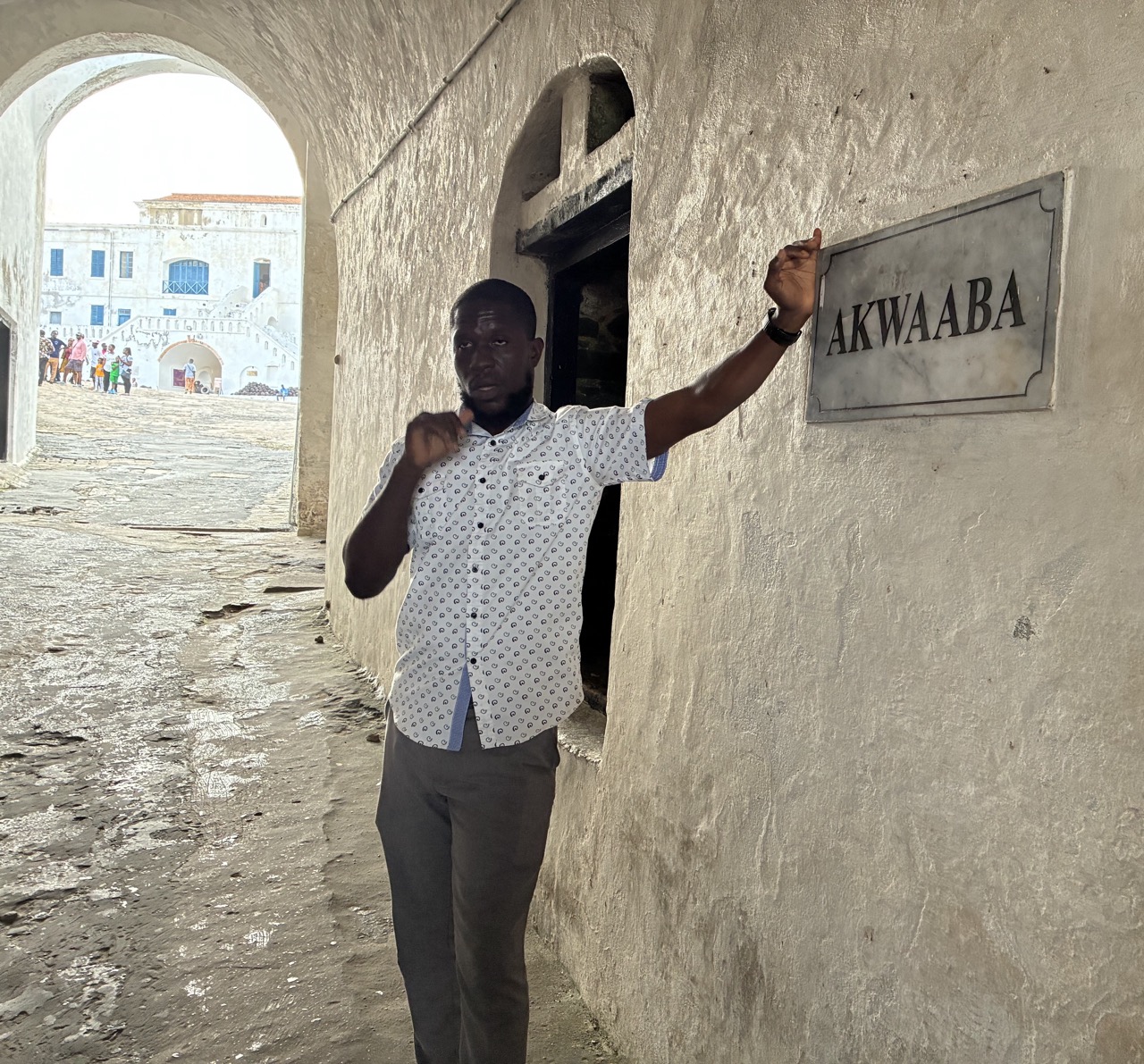
Finally, a reminder that we were always welcomed, Akwaaba.
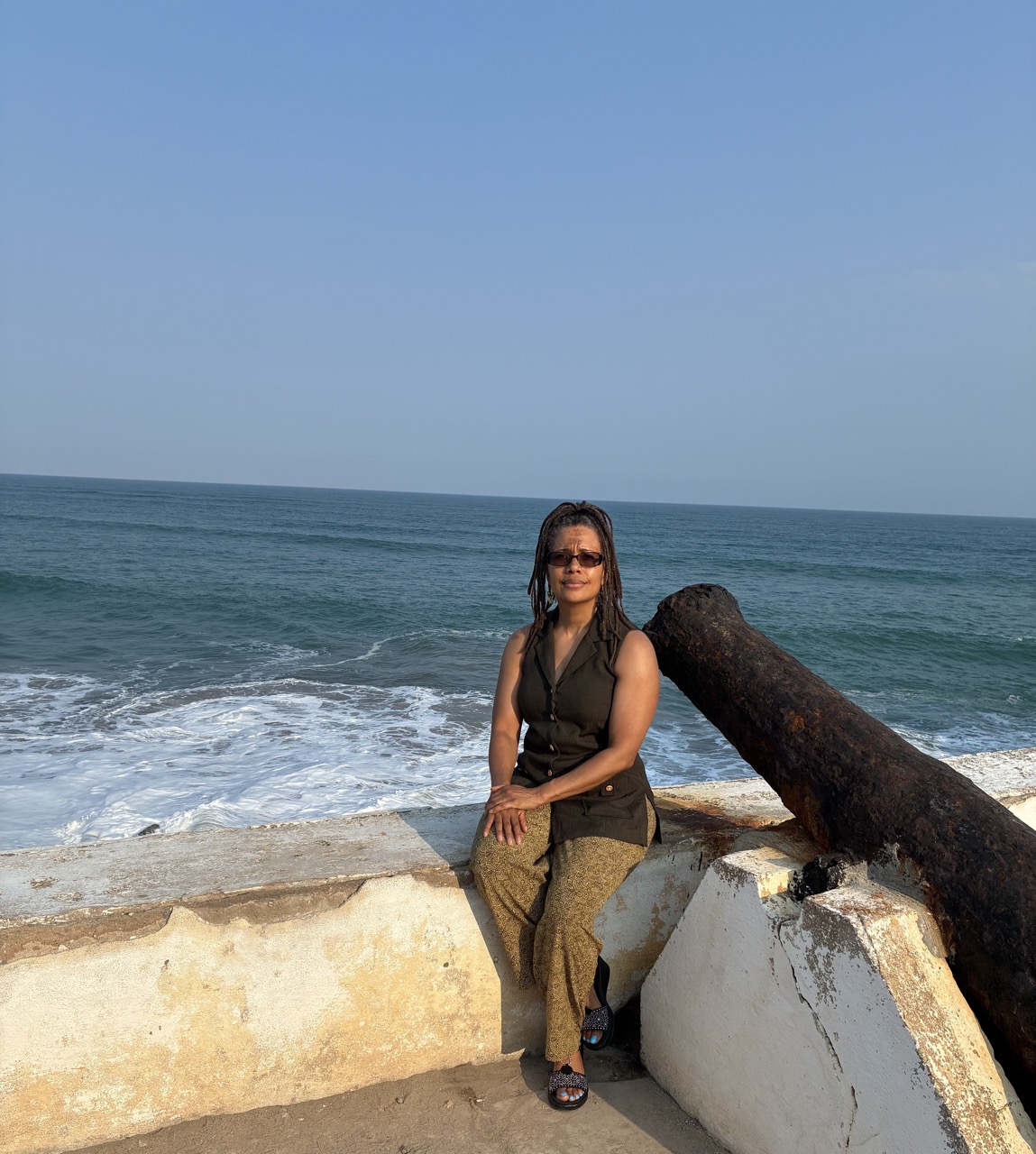
This was the hardest destination to experience. Definitely wanted to capture the moment, but I wrestled with the appropriateness of smiling like a typical tourist. Would that disrespect the memory of what my enslaved ancestors endured?
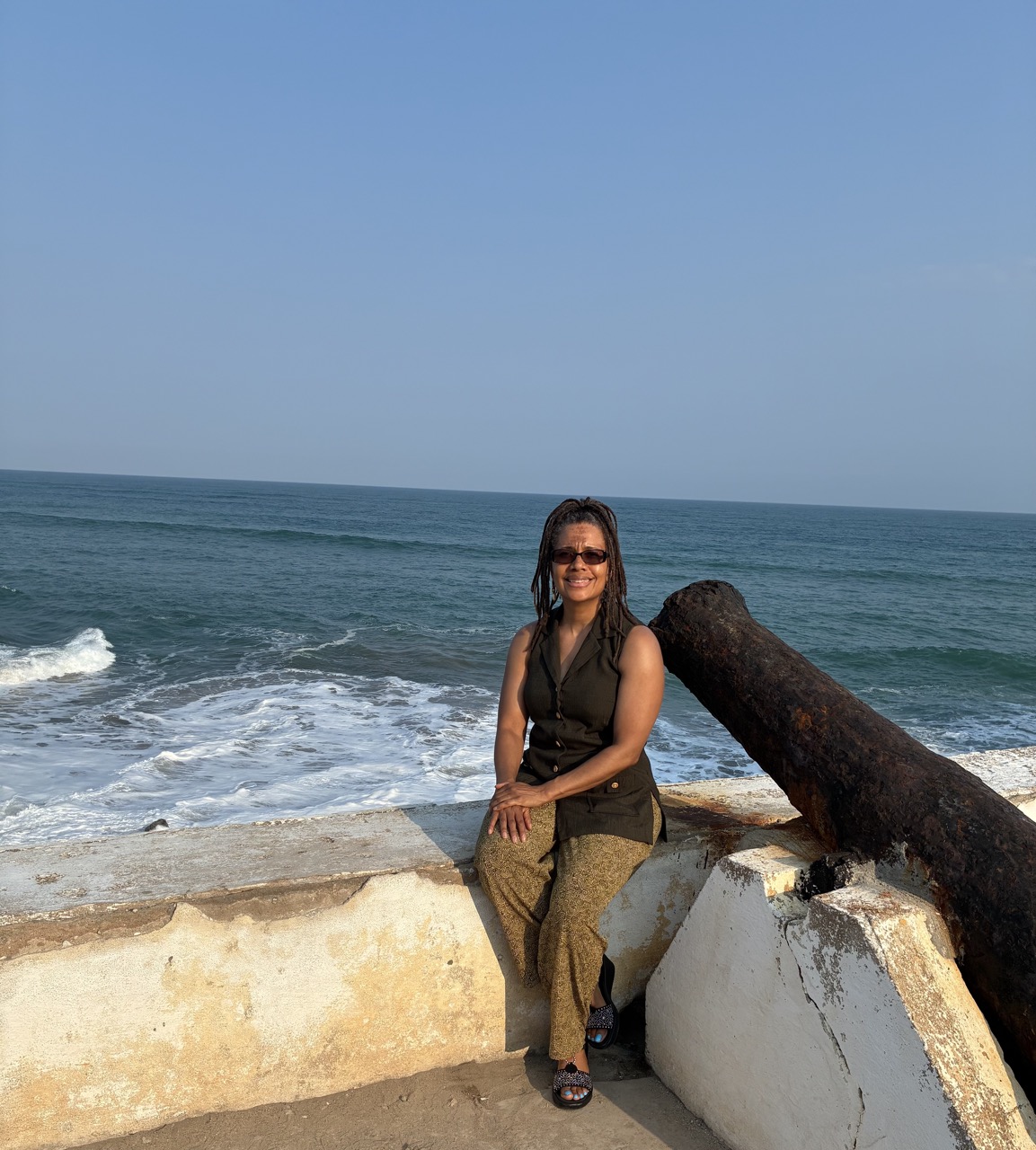
Or was part of the healing and reclamation of the past found in celebrating Black Joy? There is joy in continued progress, even with setbacks along the way. Surely, as Maya Angelou once wrote, we are our enslaved ancestors’ hopes and dreams.
My head was still heavy from our visit when a black goat darted in front of the bus just minutes prior to reaching our hotel. I wondered if there were any superstition to a black goat, versus a black cat, crossed one’s path.
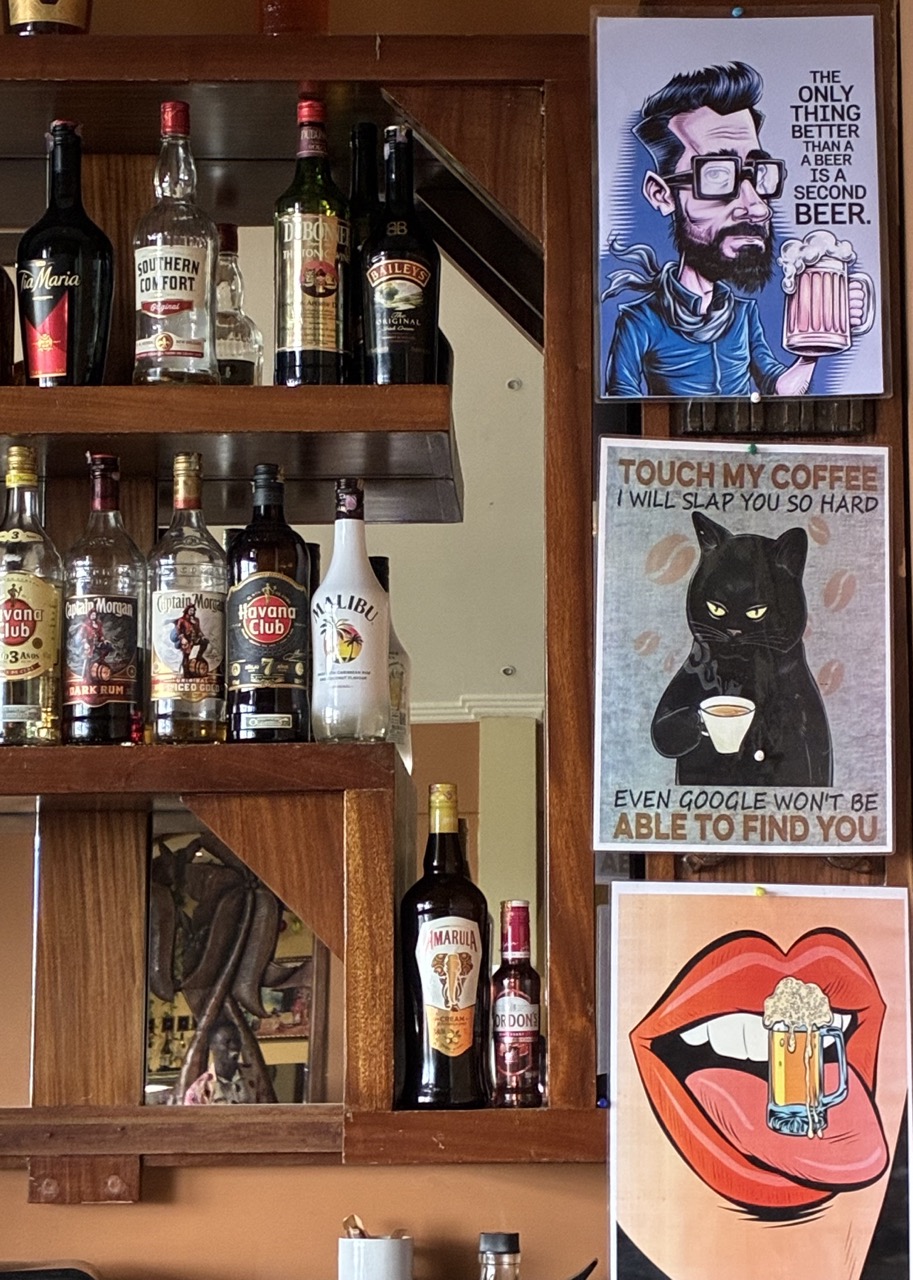
After filling out a registration form, we were escorted to dinner since no golf cart arrived to take us to our room, which was located across the sprawling hilly grounds. Dinner consisted of the usual local food, enhanced by treating myself to a shot of Bailey’s. Much after the fact, servers brought out a salad, which had to be replenished before I got any.
I never figured out how Ghanaians ate salad because there was always a question of salad dressing. Either mayonnaise was brought out or nothing ever arrived. Once I got some salad, without dressing, I combined fresh pineapple and mango with the salad to lively it up.
None of my hot water strategies worked: flipping the lit switch, turning the extra knob in the back of the shower, fiddling with the hot/cold knobs. Afterwards, I learned that the water heater took a LONG time to do its job. I still washed that Cape Coast visit out of my hair in an impressive-looking shower, using tepid water.
Par for course, we retired for the evening watching an old American movie while I twisted my locks.