Ever have one of those days where it seems as if the universe itself conspired against you? As if the same sour note keeps being replayed throughout the day. This was that day.

We all got a bonus shower during our morning walk, leading me to found a new superstition: “Rain Goddess.” Anytime a certain cousin joined us for a walk, it rained. I vowed to carry an umbrella as part of my walking gear, especially when she joined us.
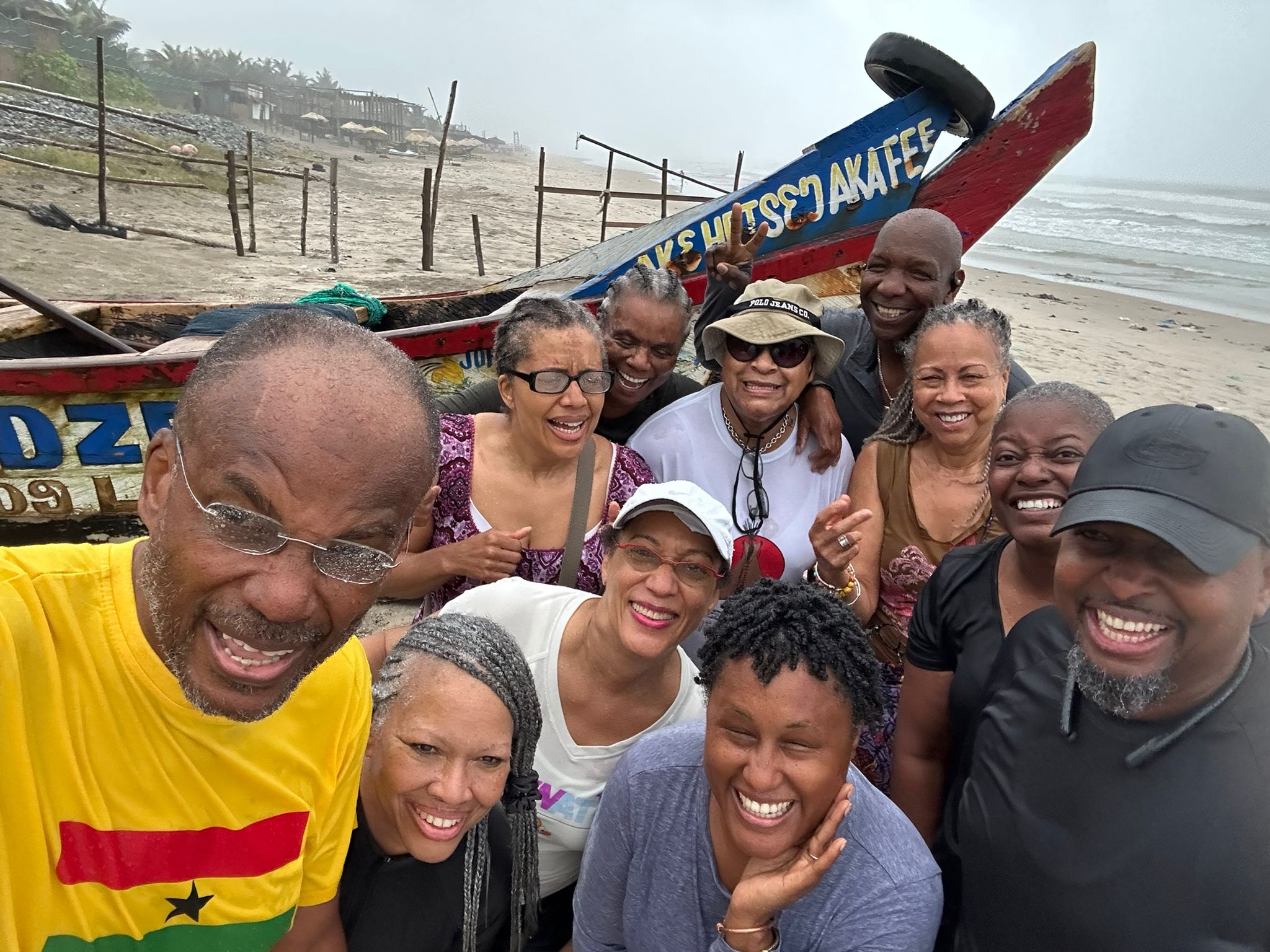
We walked in the opposite direction, which had more hotels and trash, than yesterday. At the turnaround point, we took our group picture at a boat. That miserable look on my face turned out to be an accurate predictor of how the rest of the day would unfold, but I was still optimistic then.
I made a complete clothing change, down to my underwear. The second attire worked out better since the prayer beads looked MUCH better with a solid blue shirt.
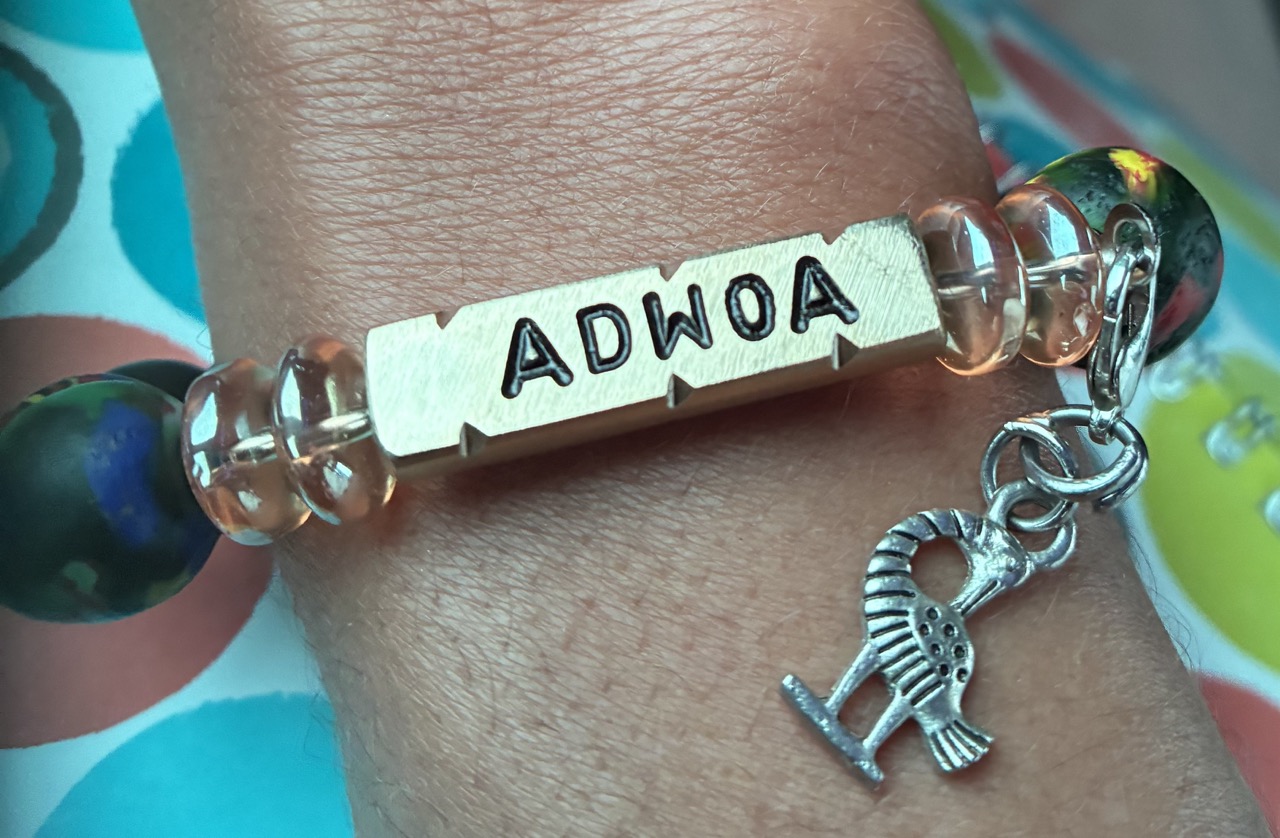
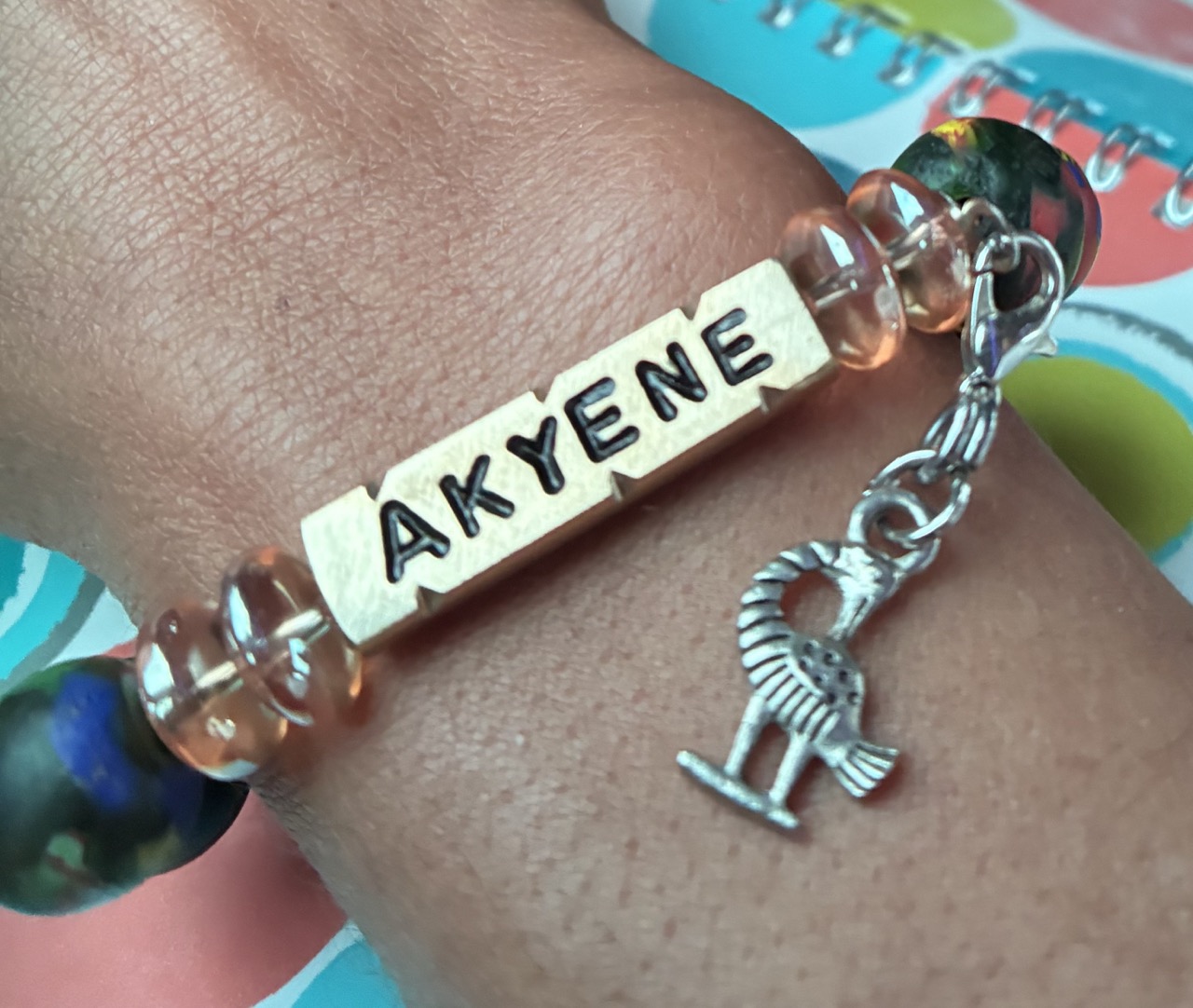
We received our name bracelet once we boarded the bus. The honorific title “Nana” for all the women had been dropped, but the title had been retained for the men. Someone explained that the title was optional, but couldn’t explain why the option wasn’t retained for all of us women. When I asked a staff member if the “N” could be added, he gave me an exasperated “woman, please” look. I accepted my bracelet, thinking that I’d add the “N” with a permanent marker.
The sankota charm on the bracelet meant “to retrieve” and was associated with the proverb: “It’s not wrong to go back for that which you have forgotten.” I appreciated its appropriateness since I’d been taking notes religiously, knowing that I’d lose so many details over time.
(Please click on individual pictures to see the full view, then click on the browser back arrow to return to blog view.)
Our tour guide stated that the bus ride would take an hour to our destination. Dr. Kofi said 90 minutes. I said two hours. In actuality, I didn’t note the time. It didn’t matter. Like everything else, things would happen when they did.
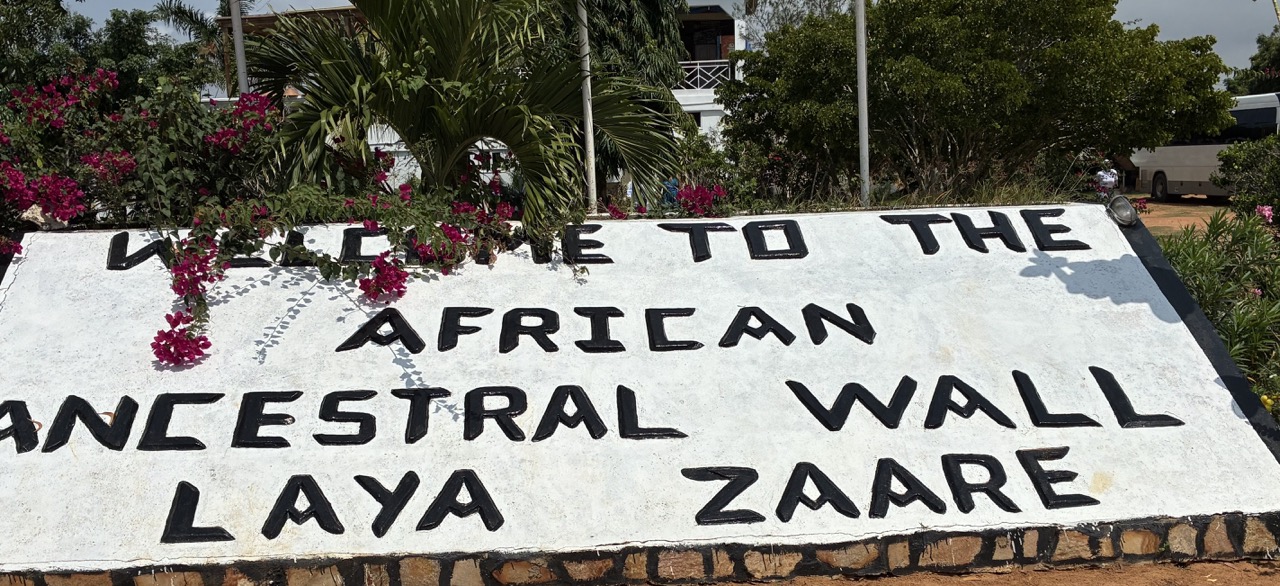
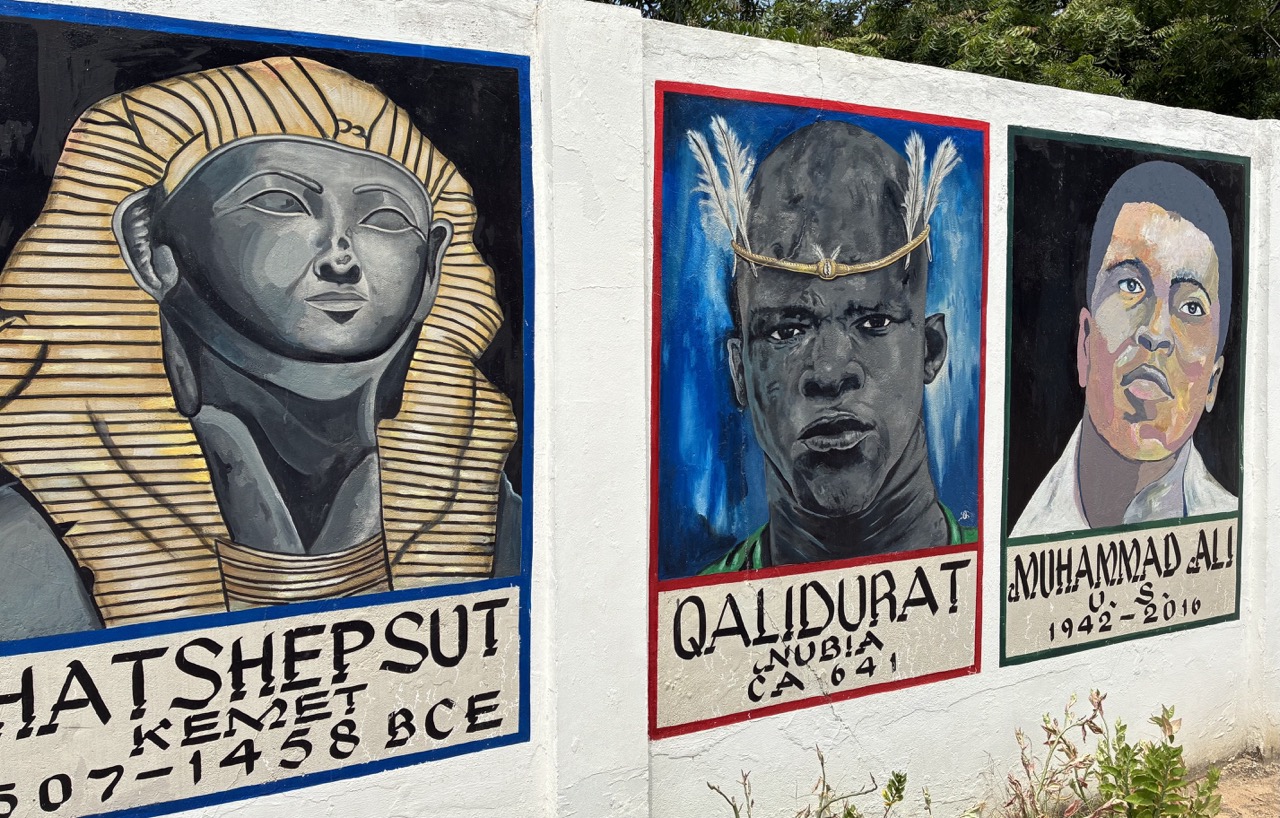
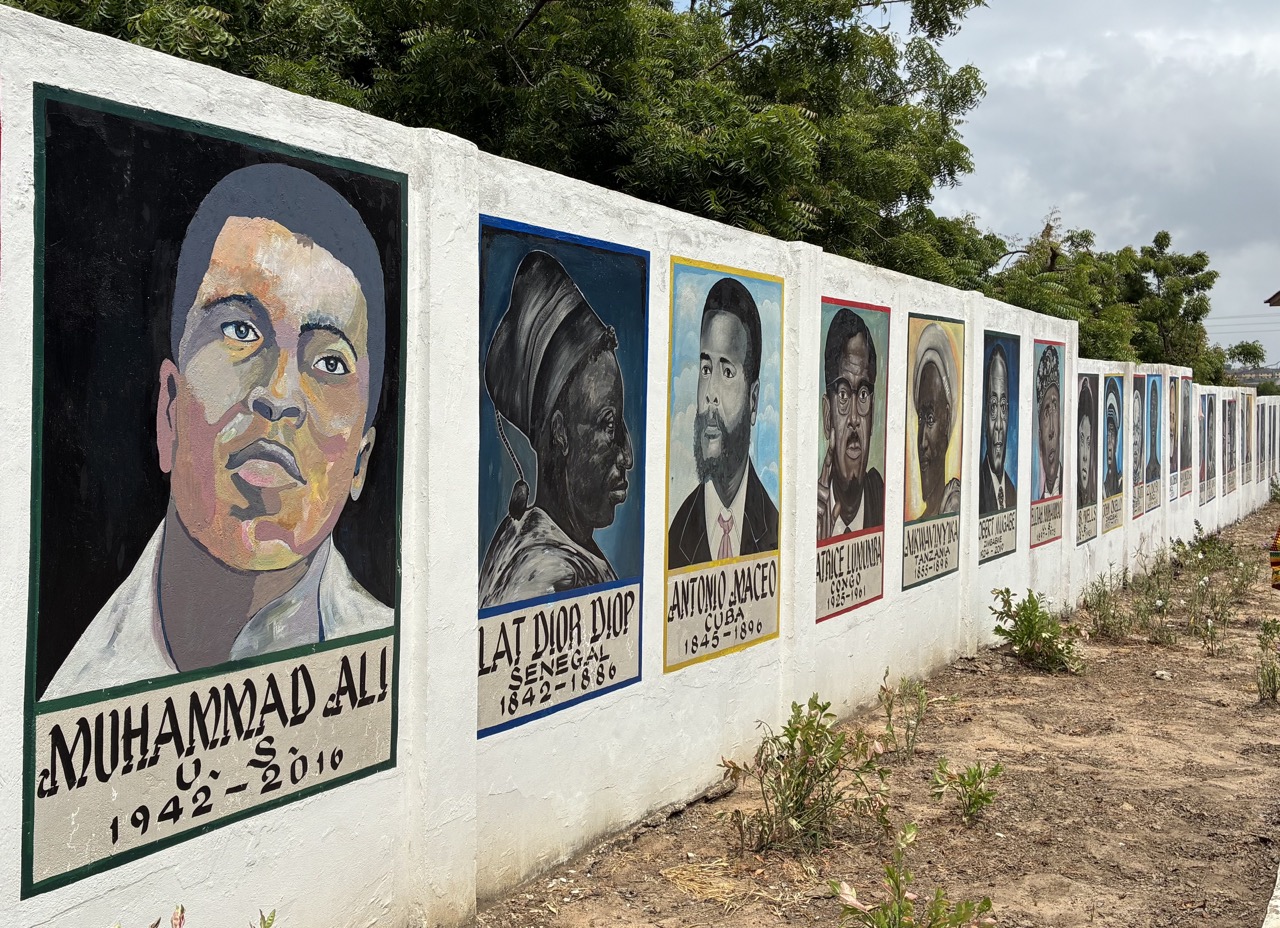
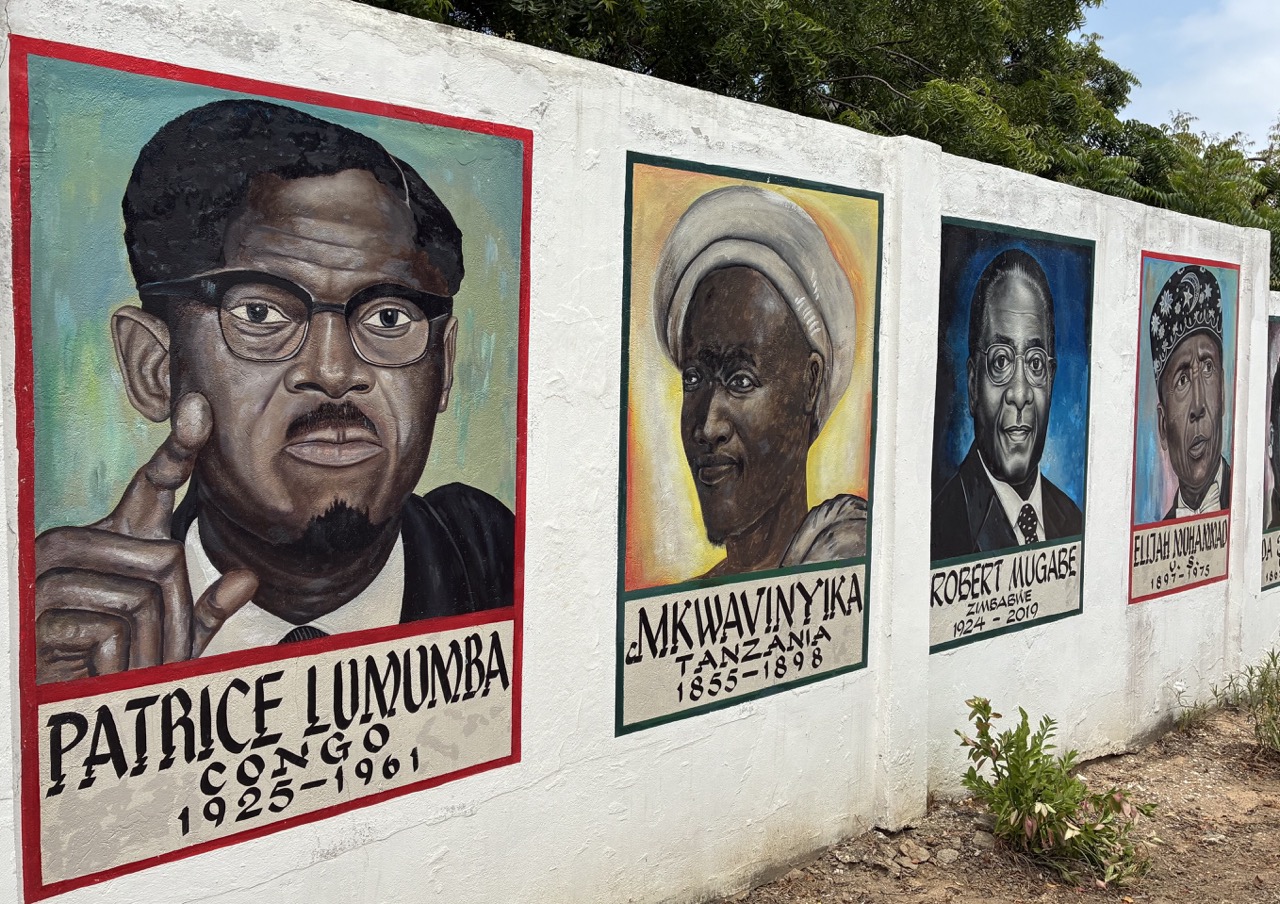
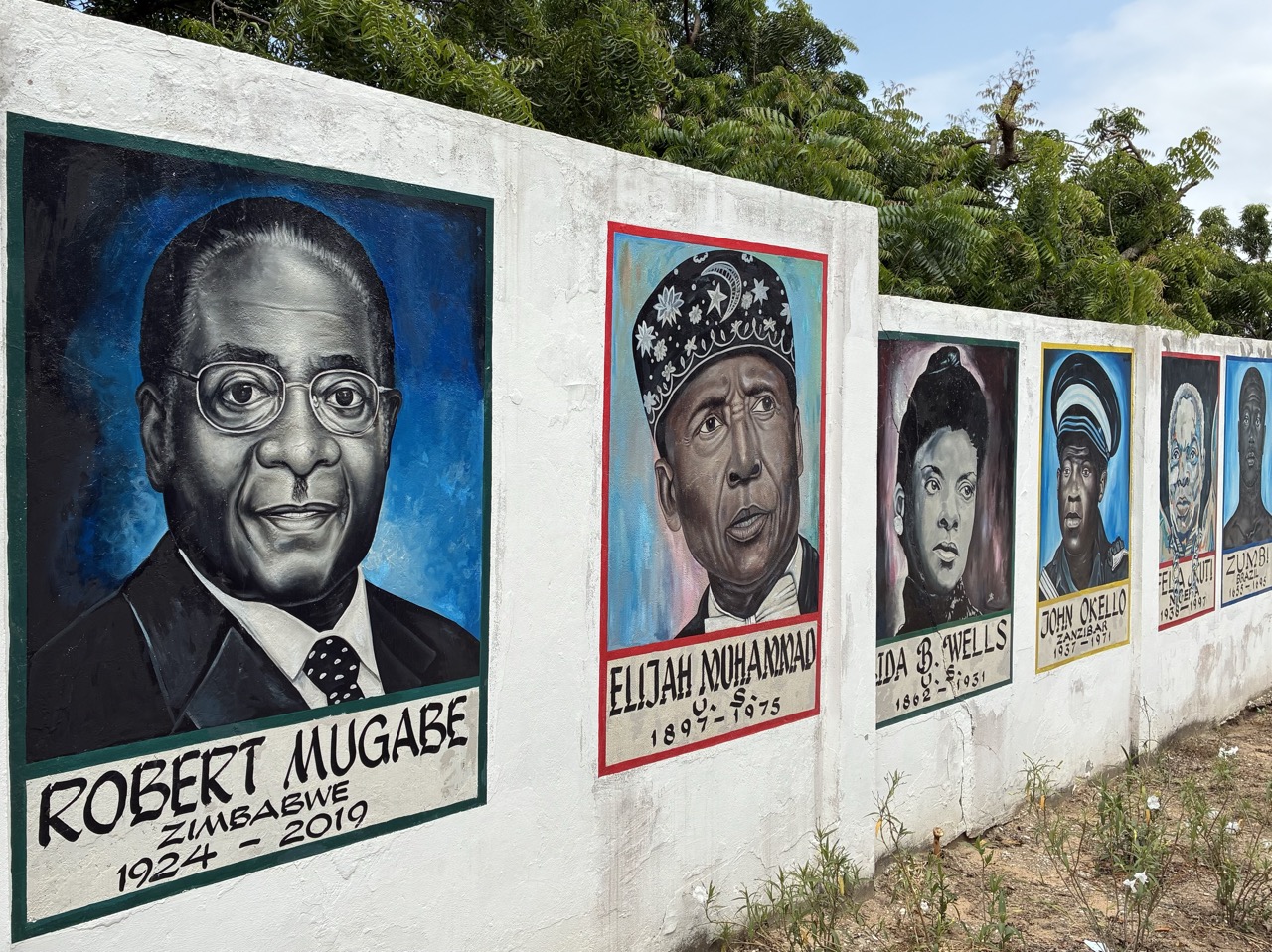
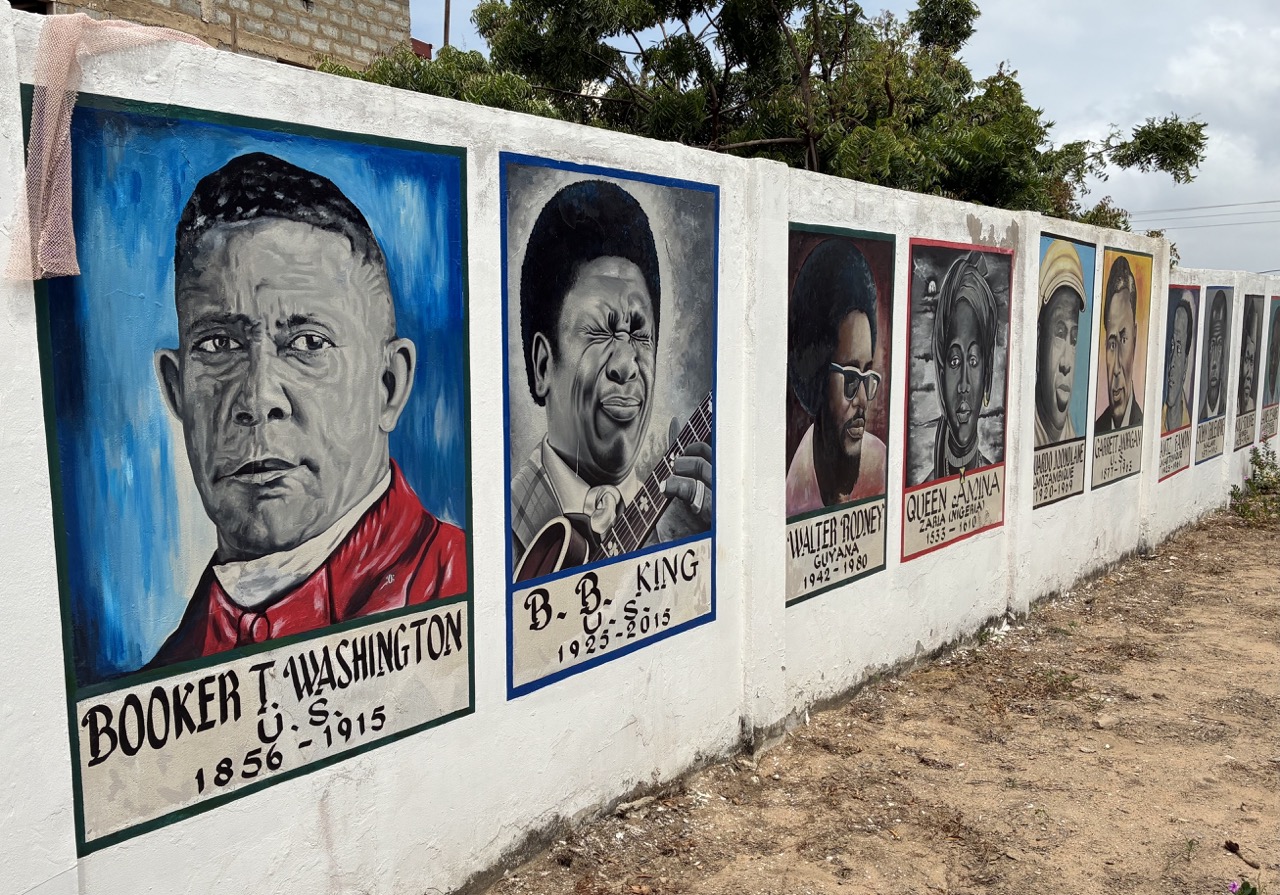
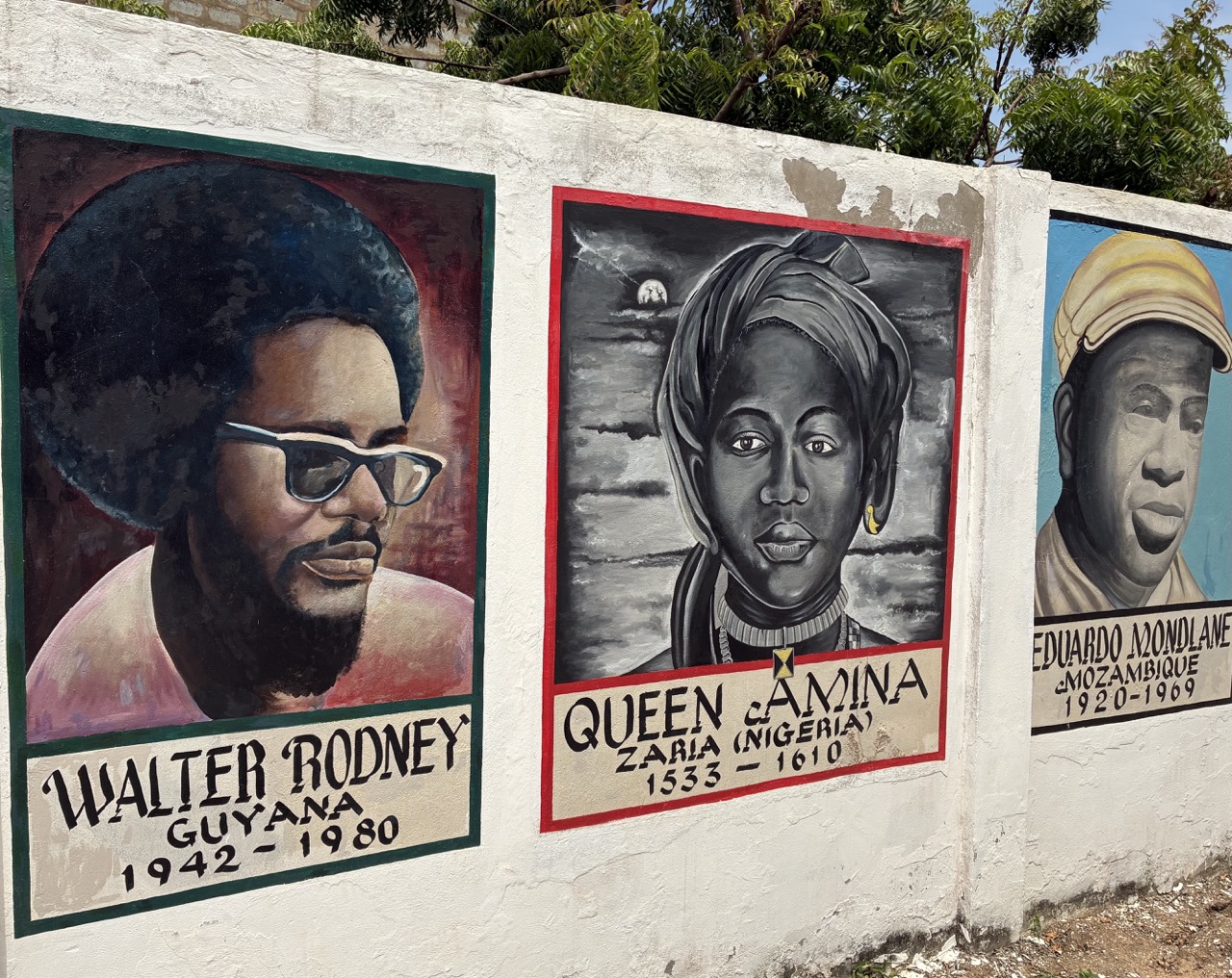
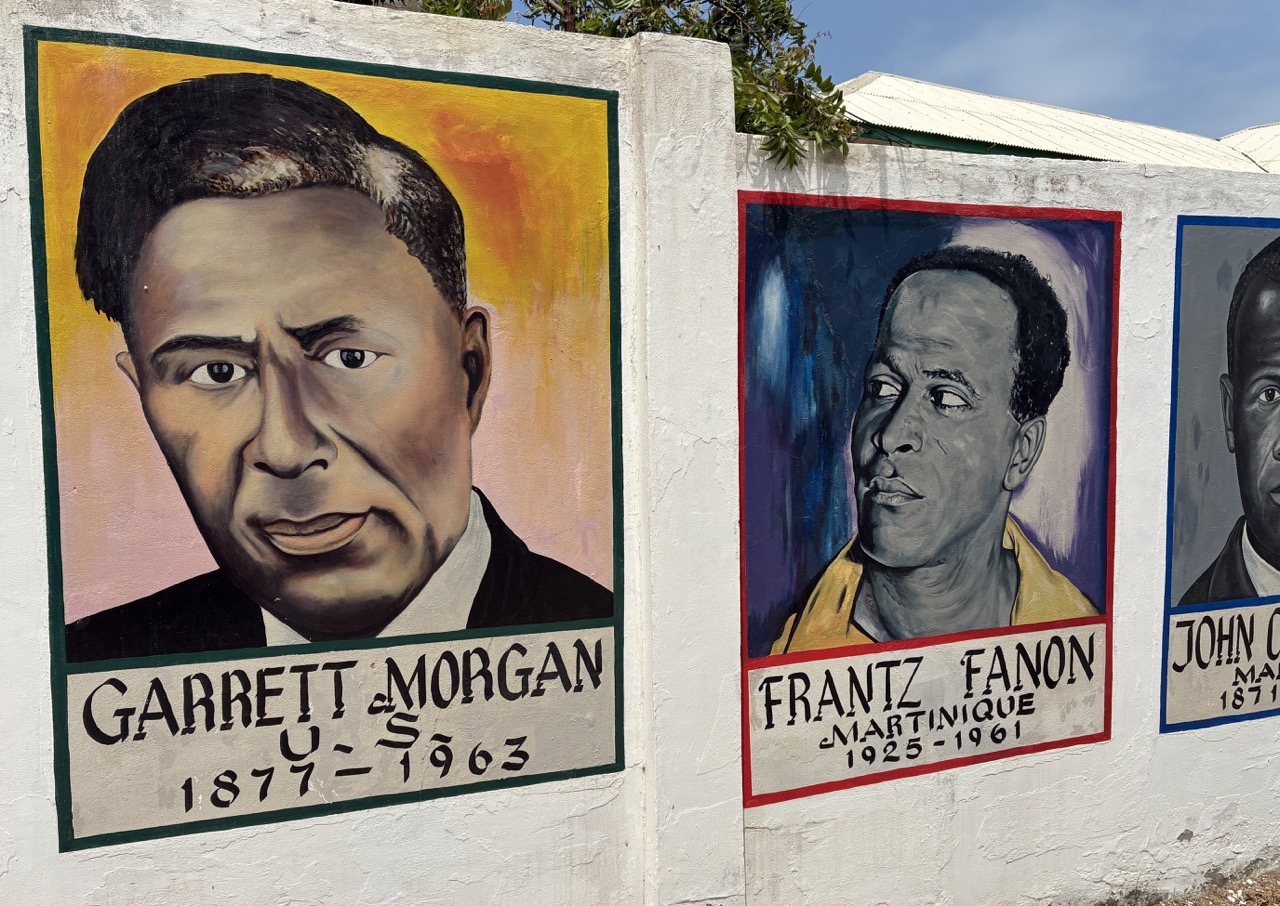
Visiting the Ancestral Wall did the trick as far as motivating me to learn more about ancient history and the resistance against the colonization machine. From the first pharaoh, Menes, the first doctor, Imhotep, to more modern figures such as MLK, Ali, and Winnie Mandela. American expat Jerry Johnson and his wife, Abomah, had started this educational art exhibit.
(I failed to write down her name during my visit. I had a challenging time finding her name during my research. An article that mentioned her, only stated that she was “Jerry Johnson’s Ghanaian wife.” Fortunately, I was still in contact with our resourceful tour guide who provided her name.)
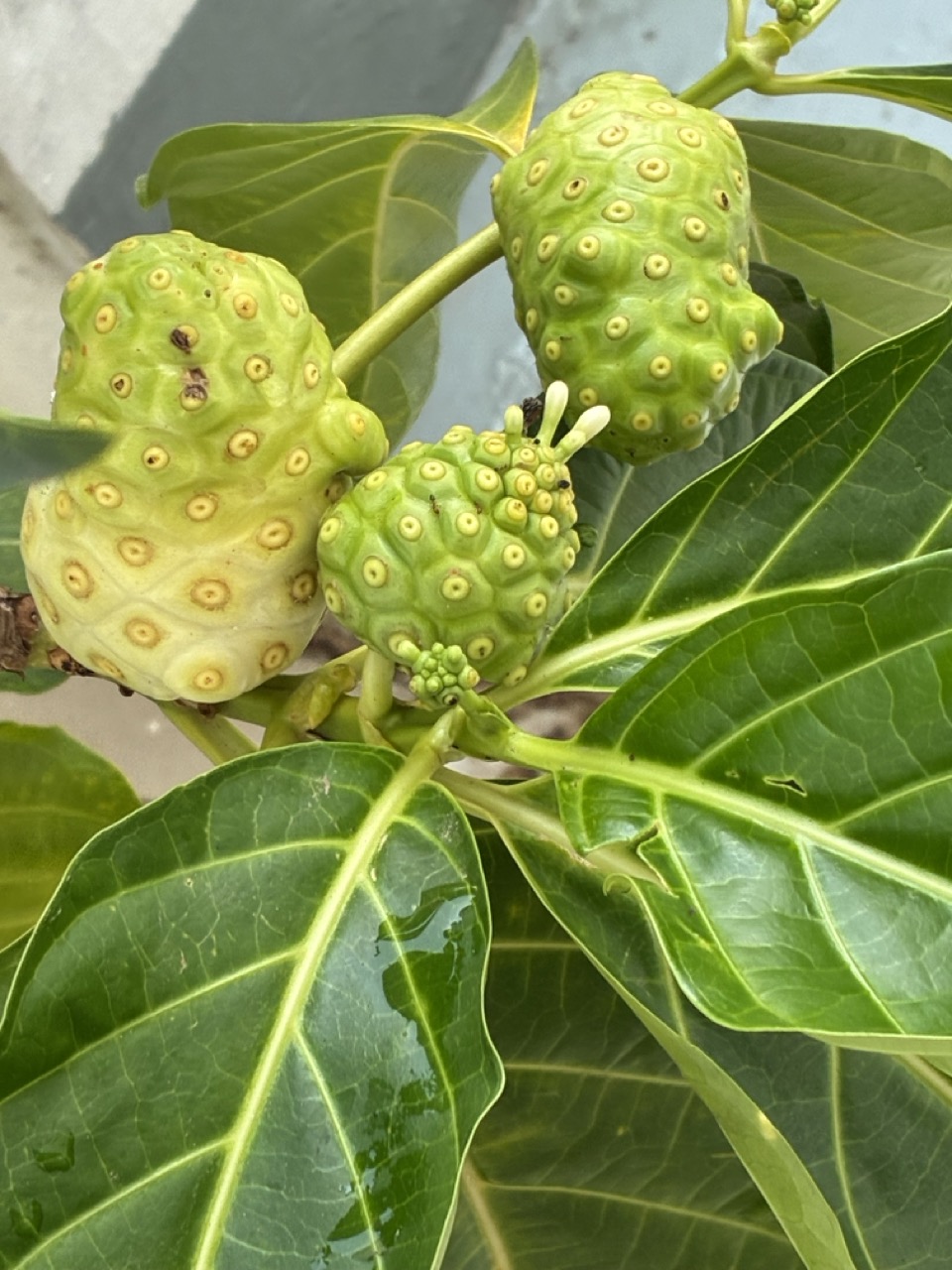
While waiting in line for the bathroom, I originally thought the nori fruit, shown below, was a frog.
Ghanaians and Black expats, who kept referring to the States as “the plantation,” maintained the The Ancestral Wall. The expats from the States boasted about being deprogrammed from the plantation to being treated like a person. The plantation’s negative narrative led people to believe that African countries had no positive aspects. The plantation used people like cogs in a machine to keep it running.
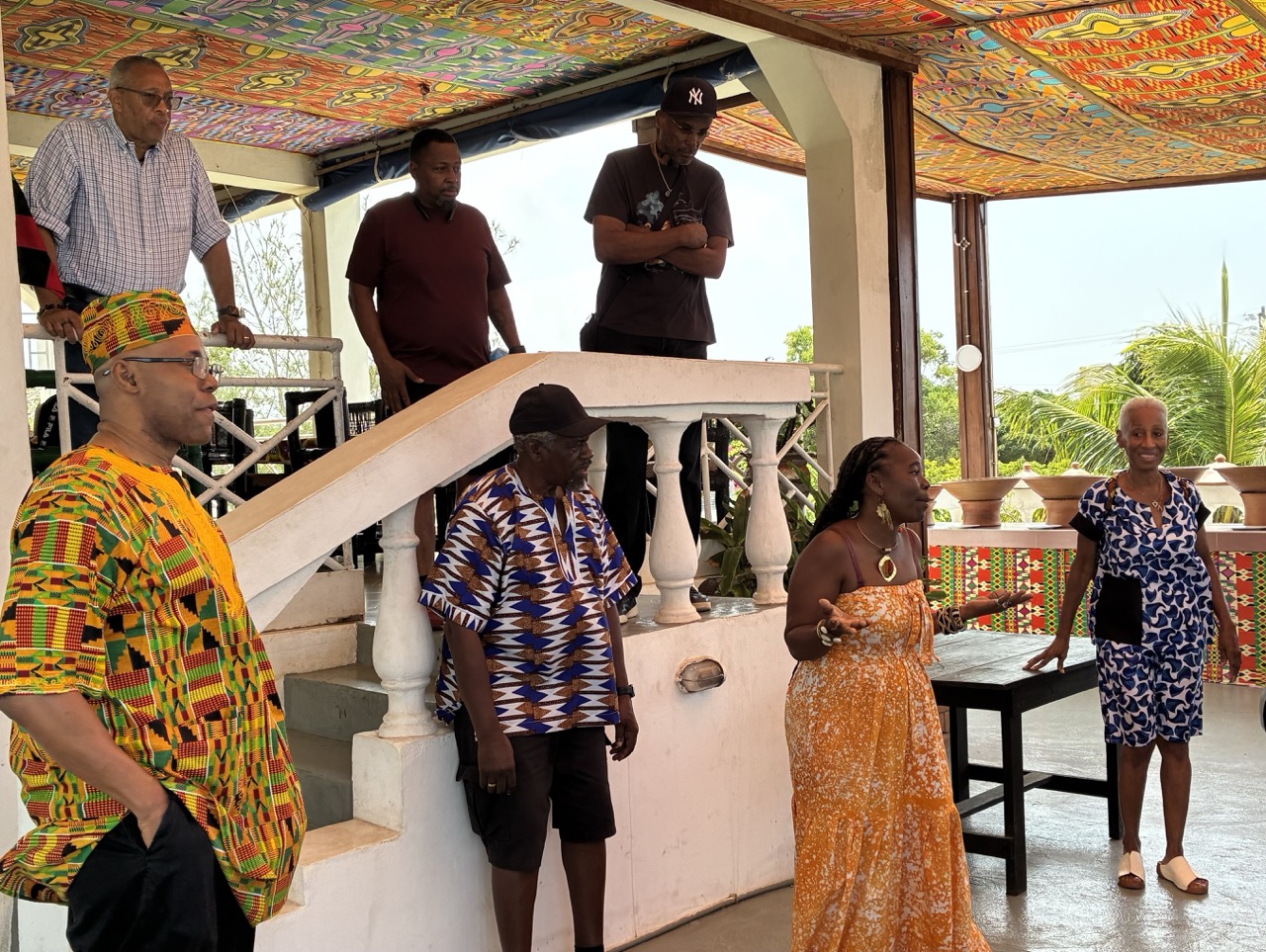
At the time of our visit, Jerry had returned to the States for a visit. In his place, Abomah and another guy gave us the tour of the exhibit. She, of course, knew a lot about the establishment and the on-going progress of the exhibit, but the man, who had only relocated from the States three weeks prior, took the lead.
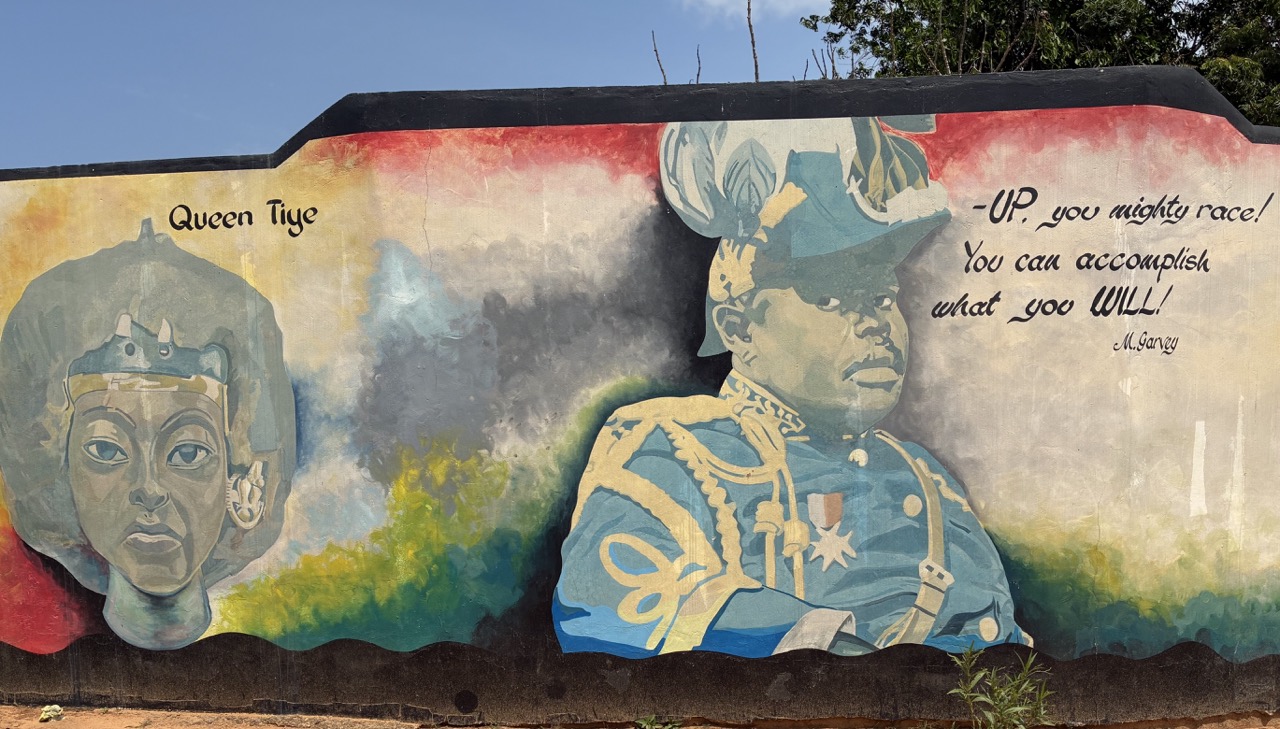
He explained only a few paintings, which were done by seven different artists, since it would have been be virtually impossible to give the highlights of all the works. Besides, his strong suit was Ancient Egypt and Biblical figures. Yet, he still annoyed me when he either skipped over or glossed over some of the women depicted on the wall.
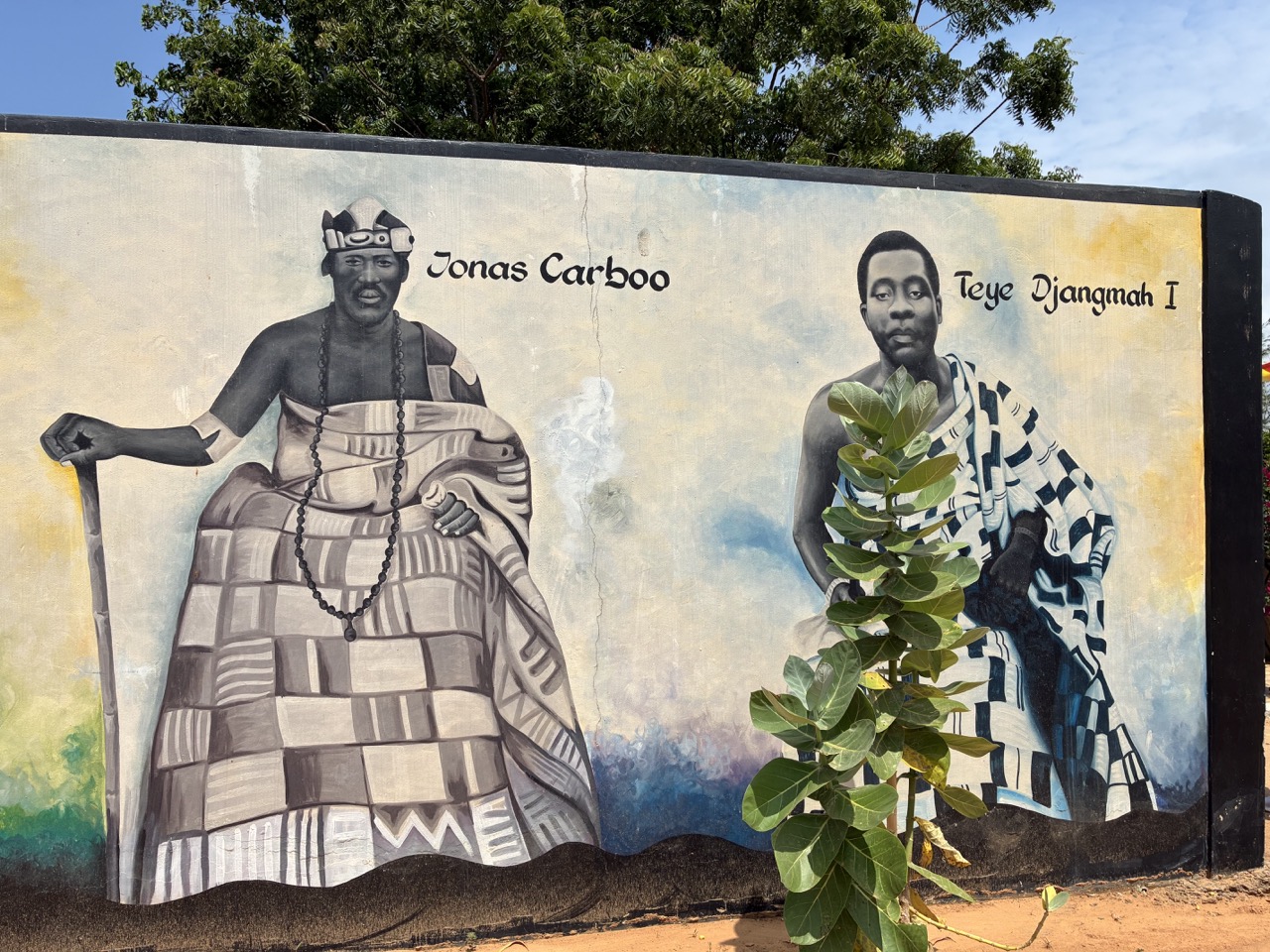
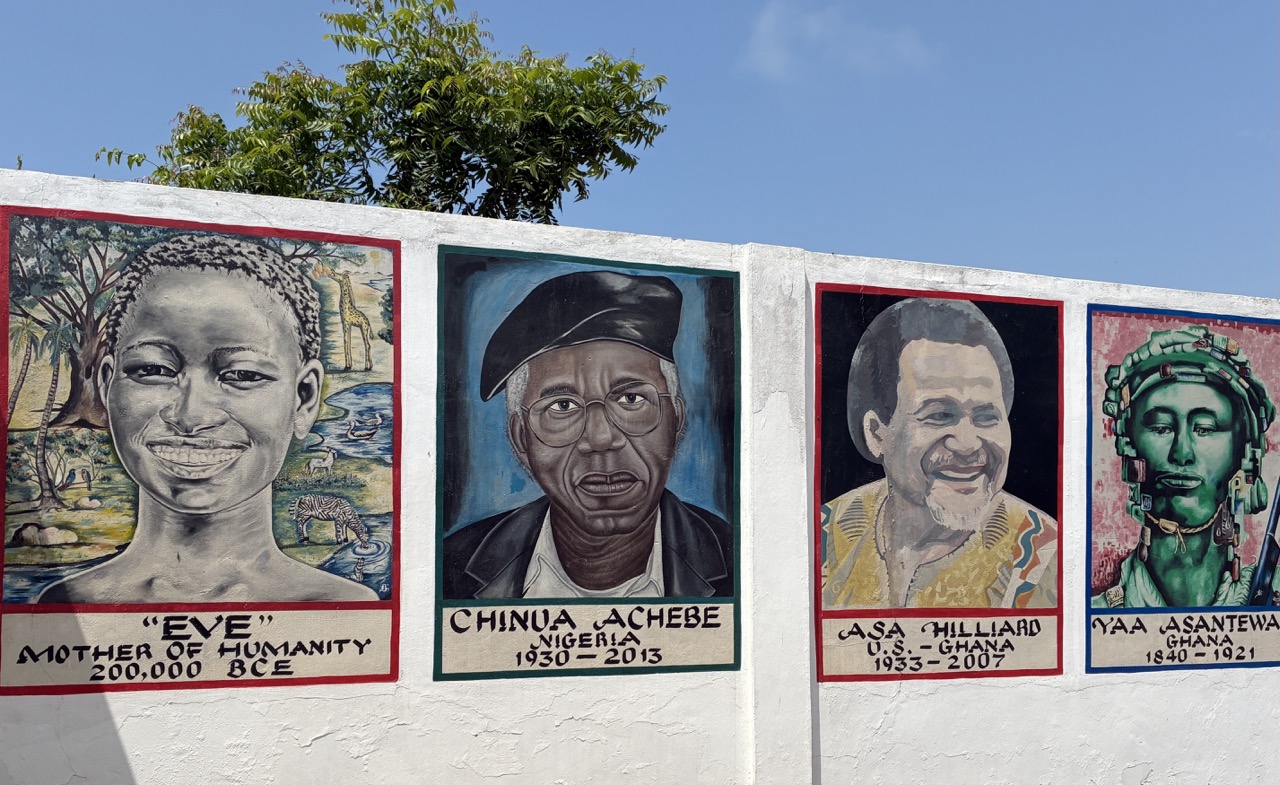
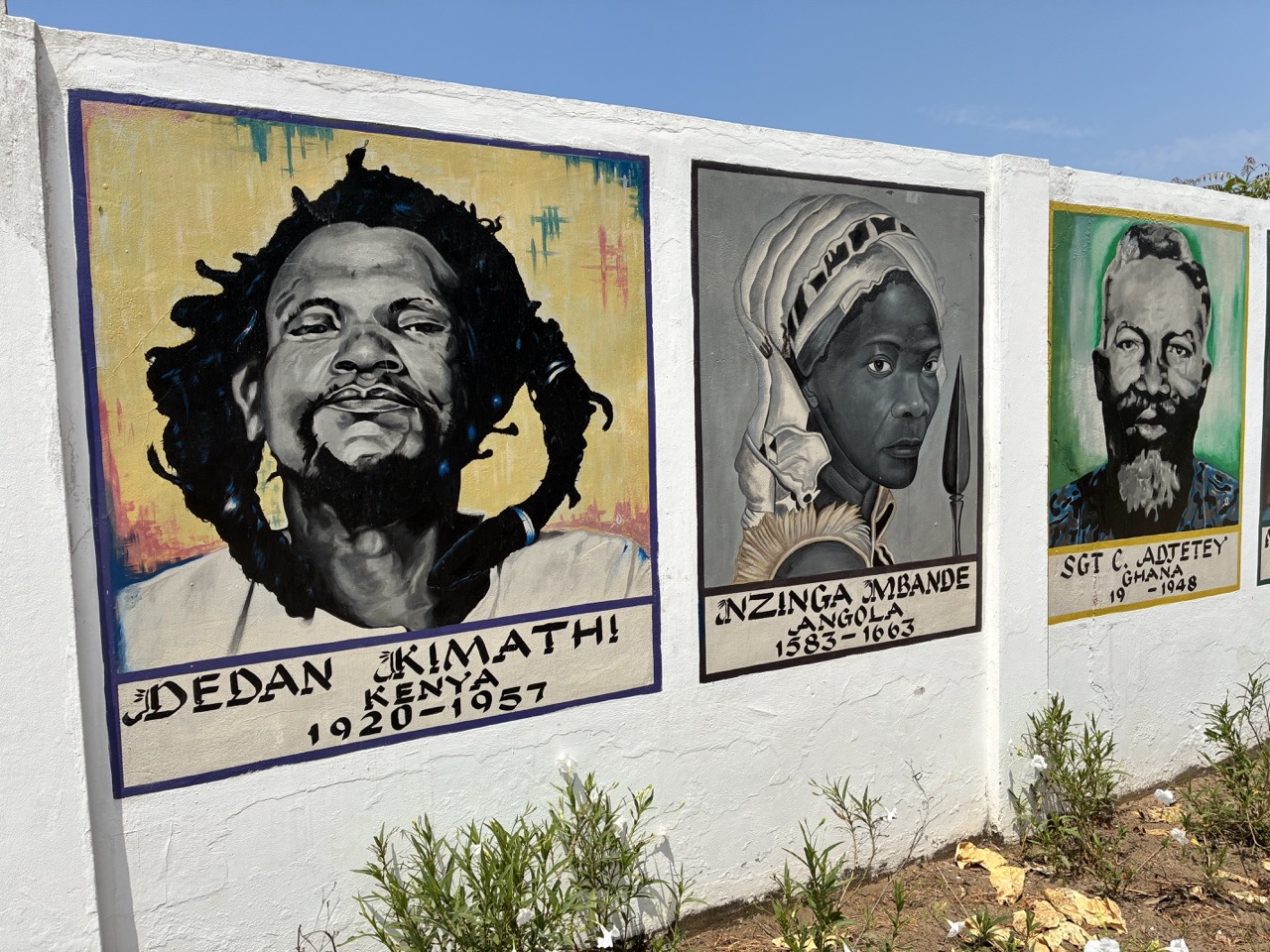
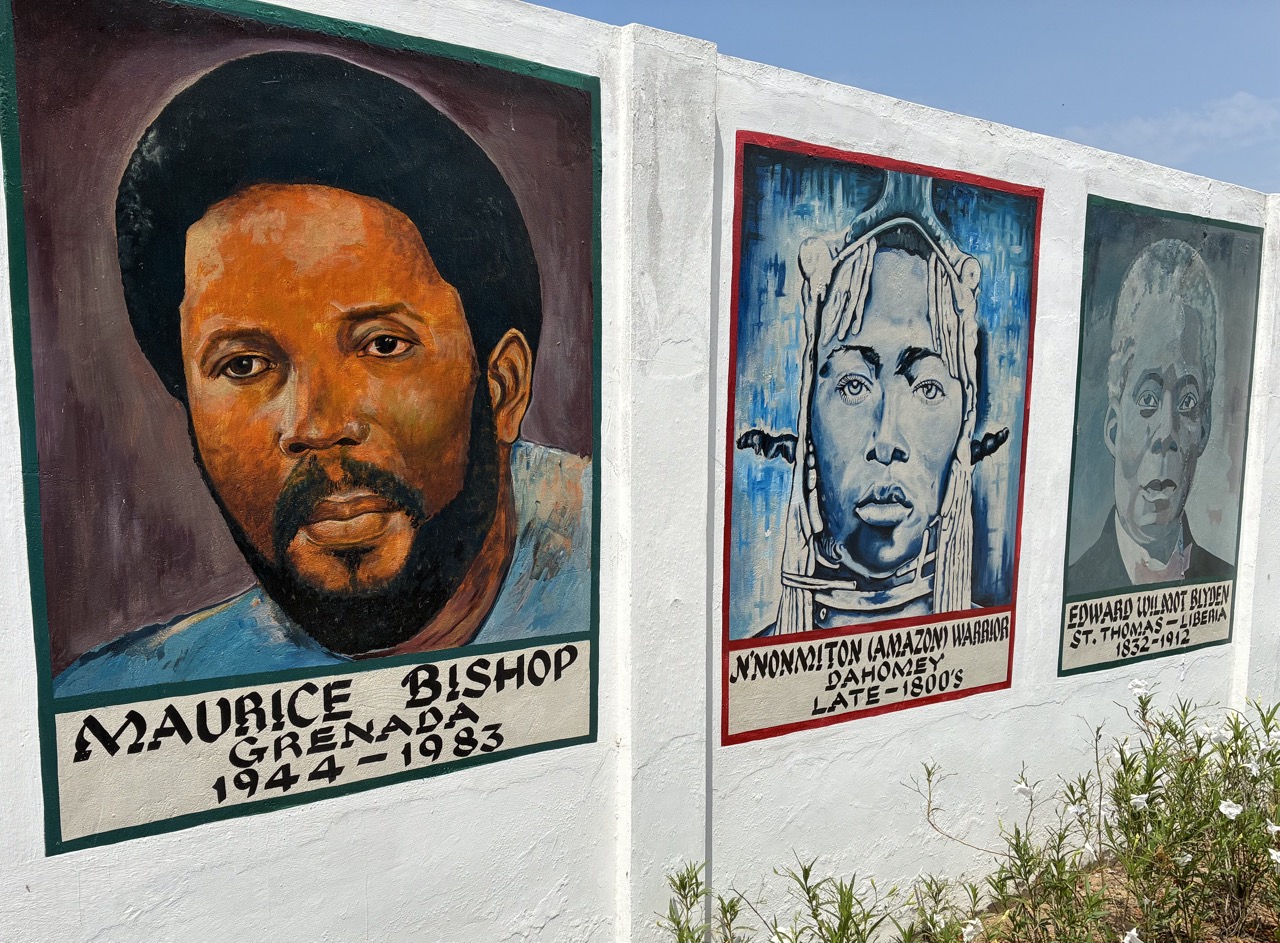
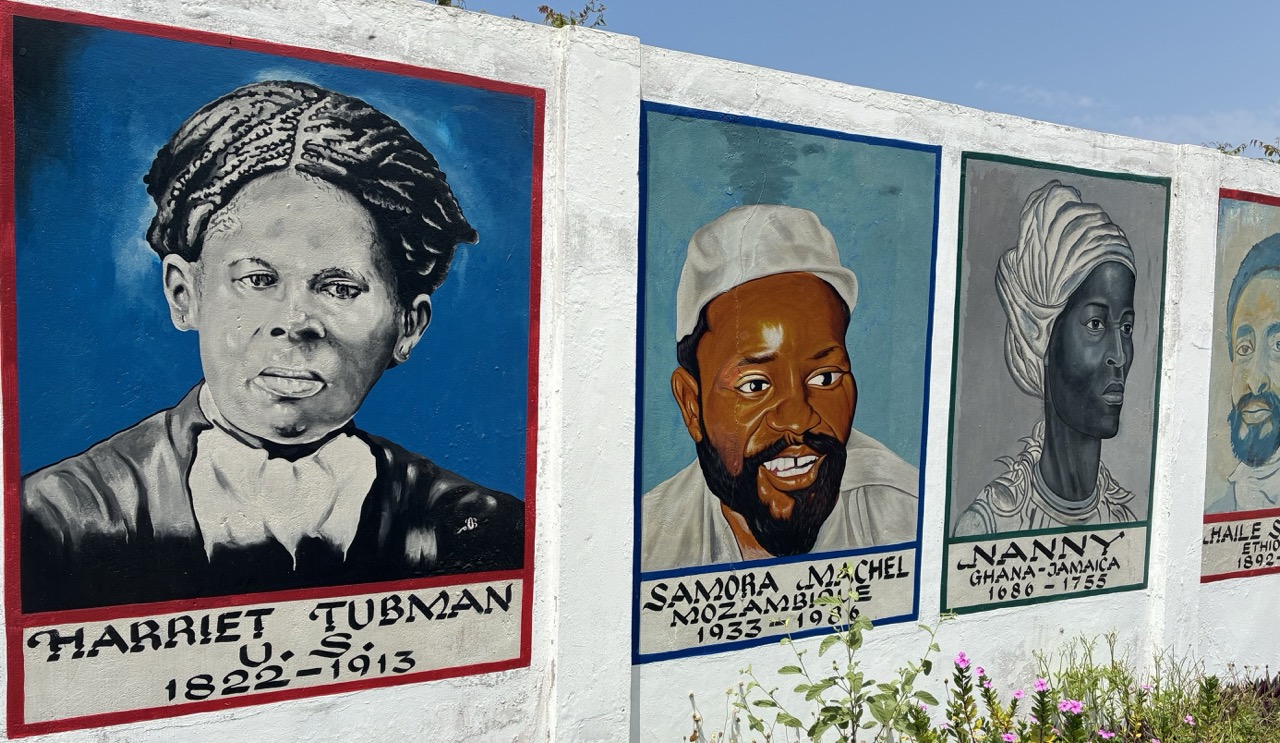
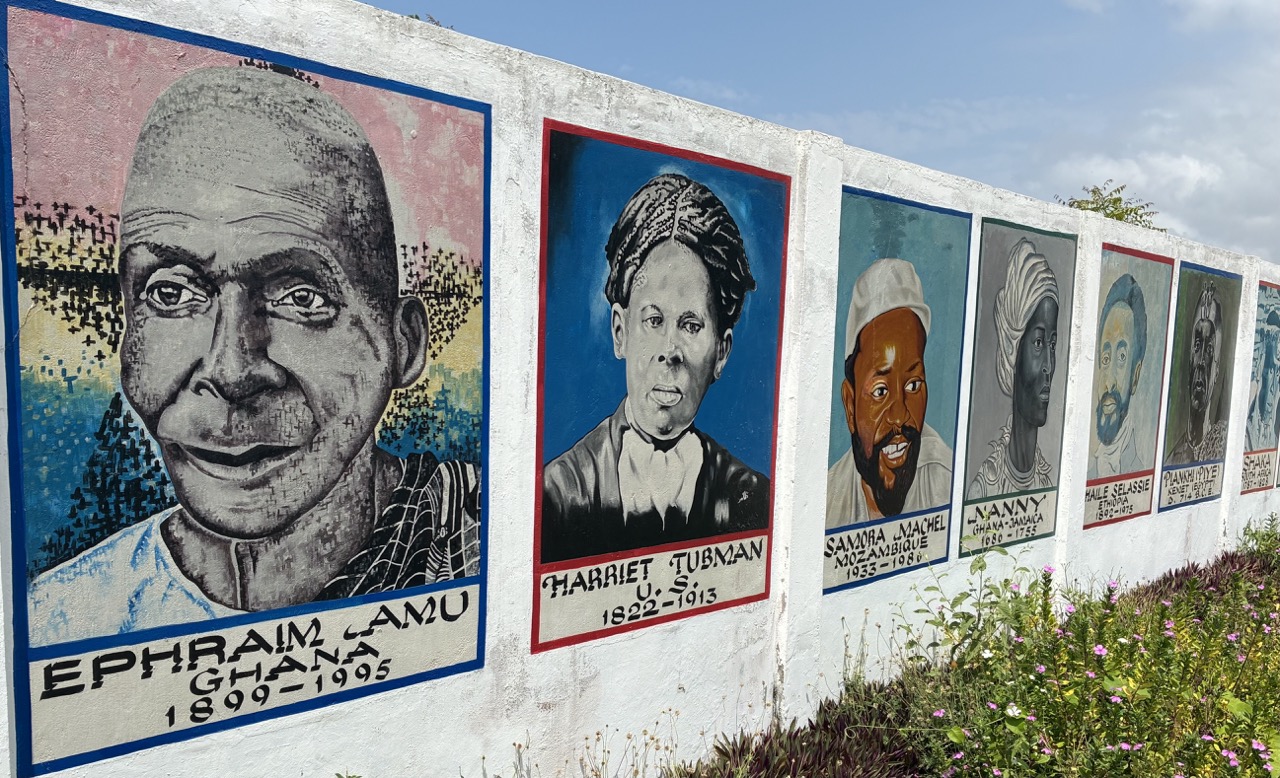
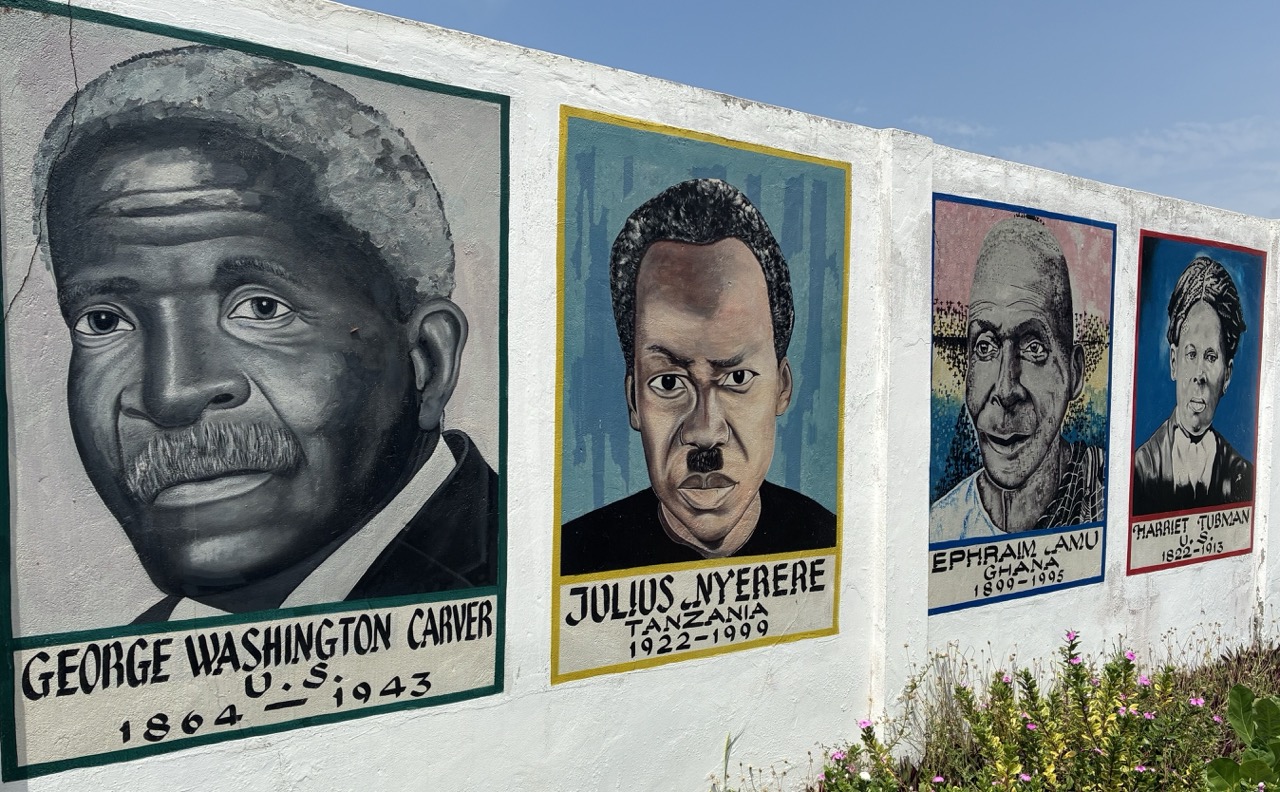
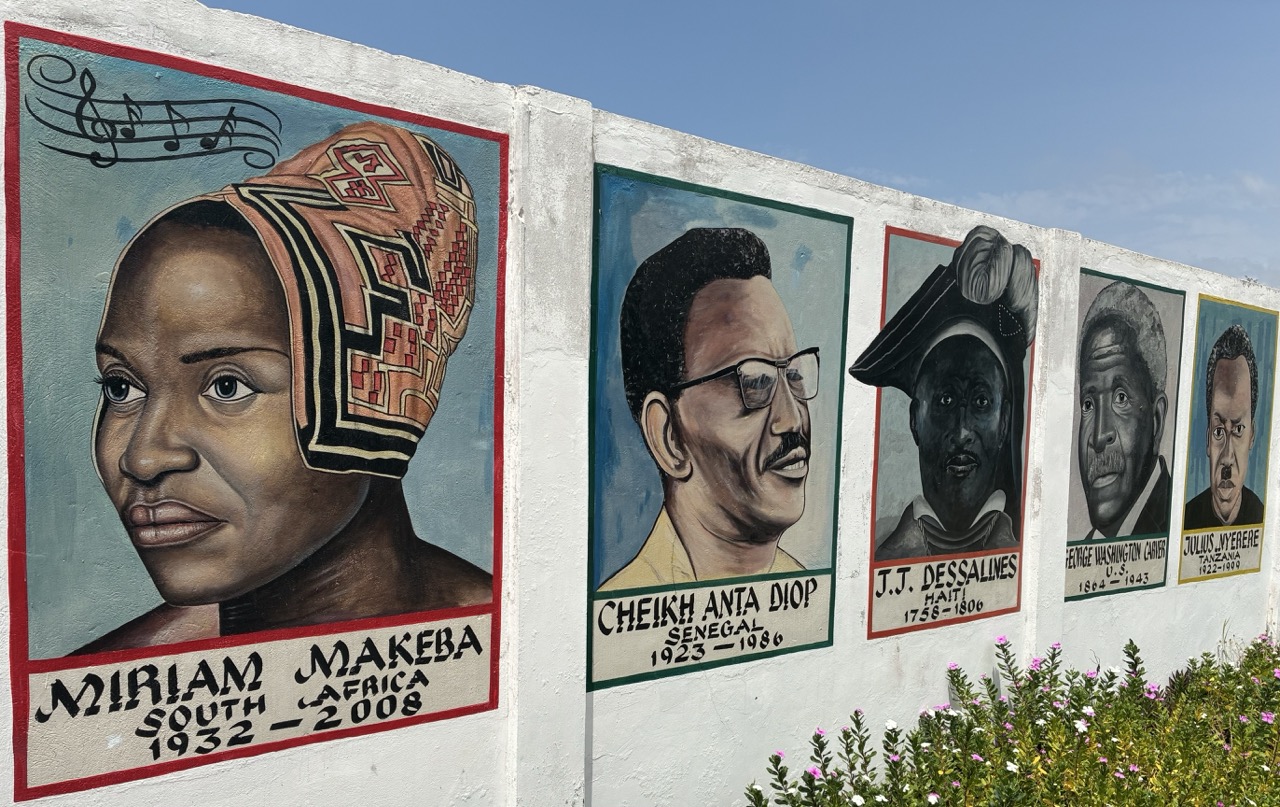
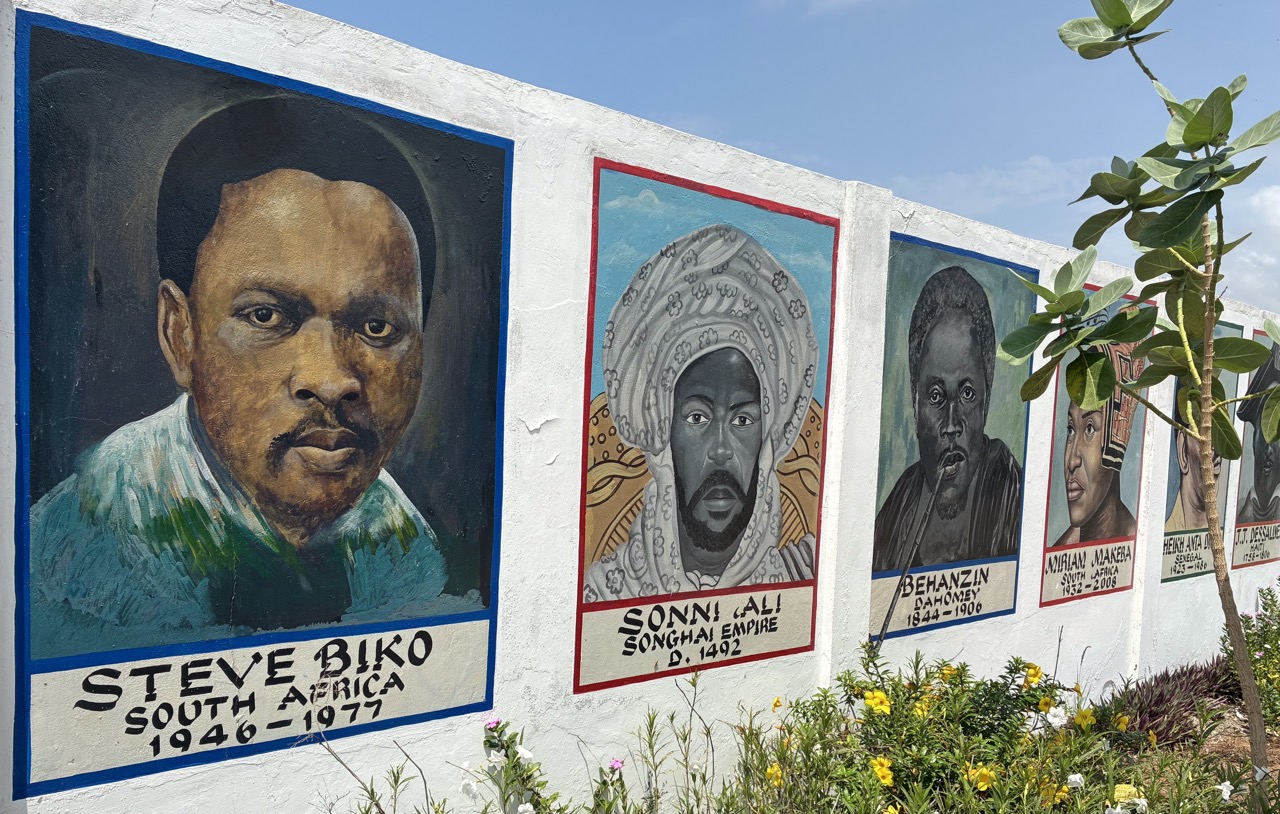
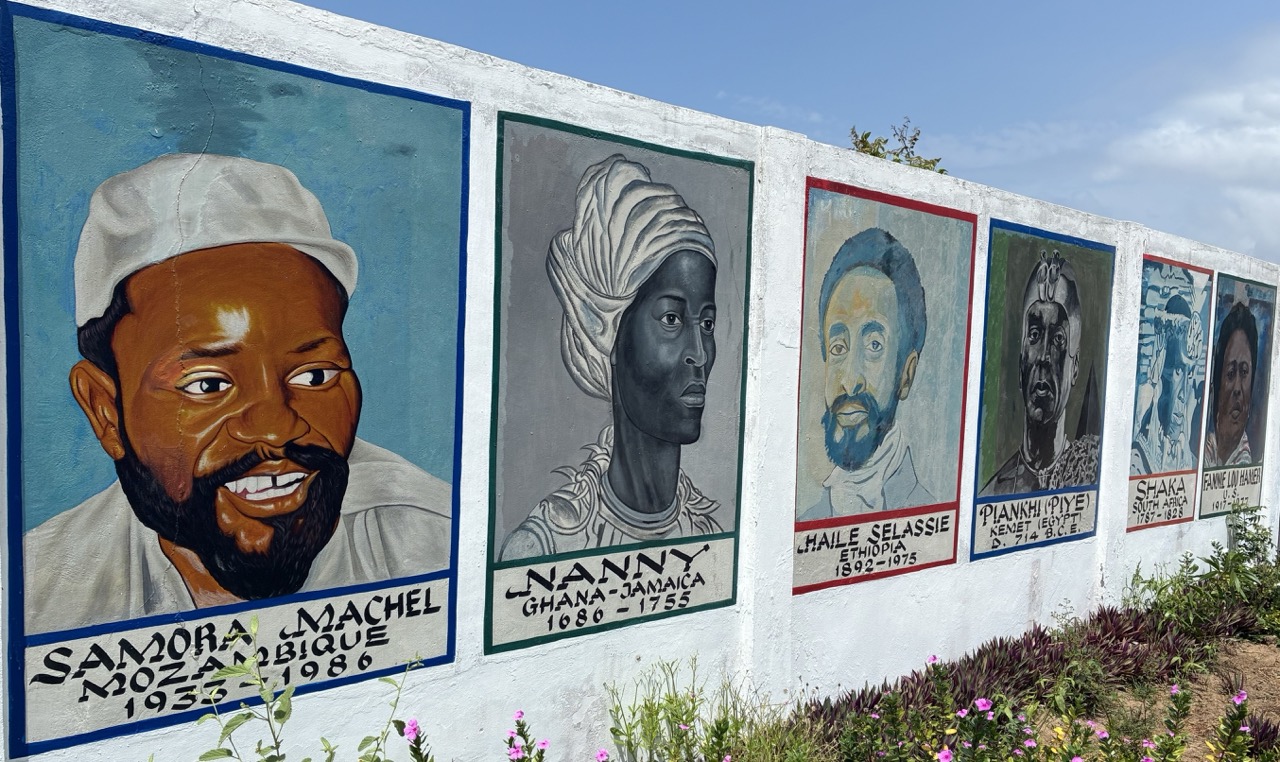
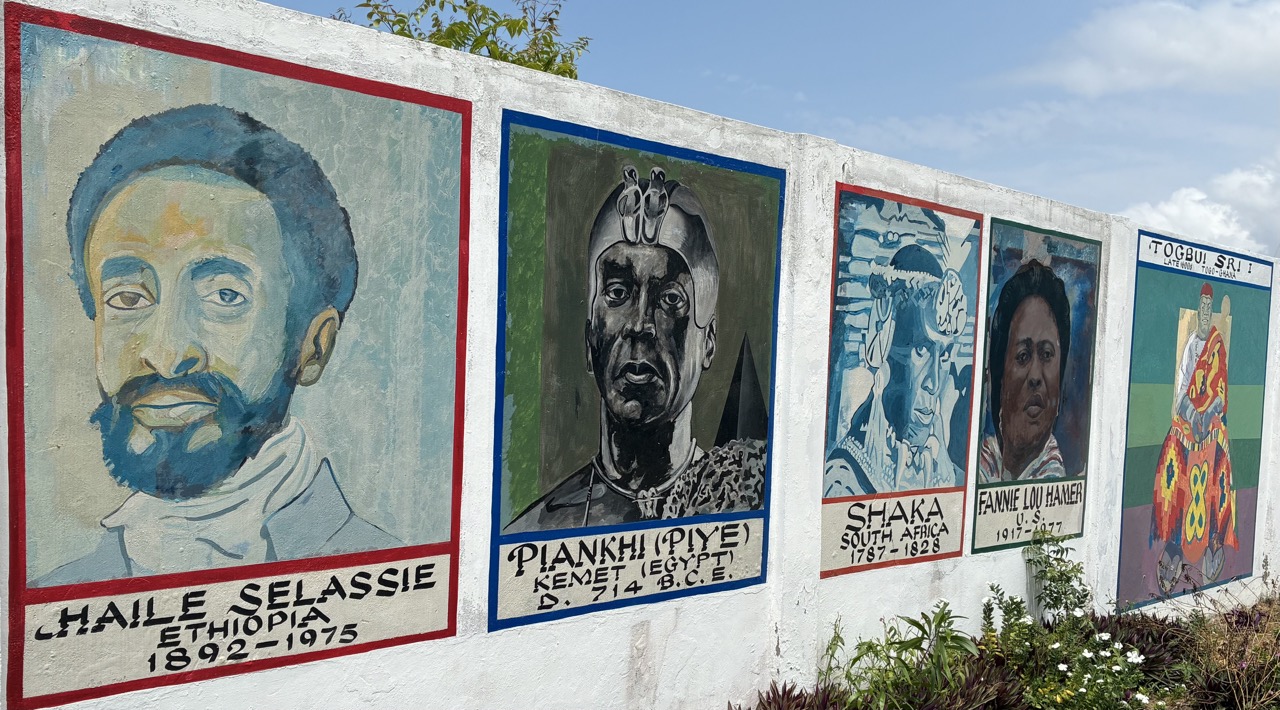
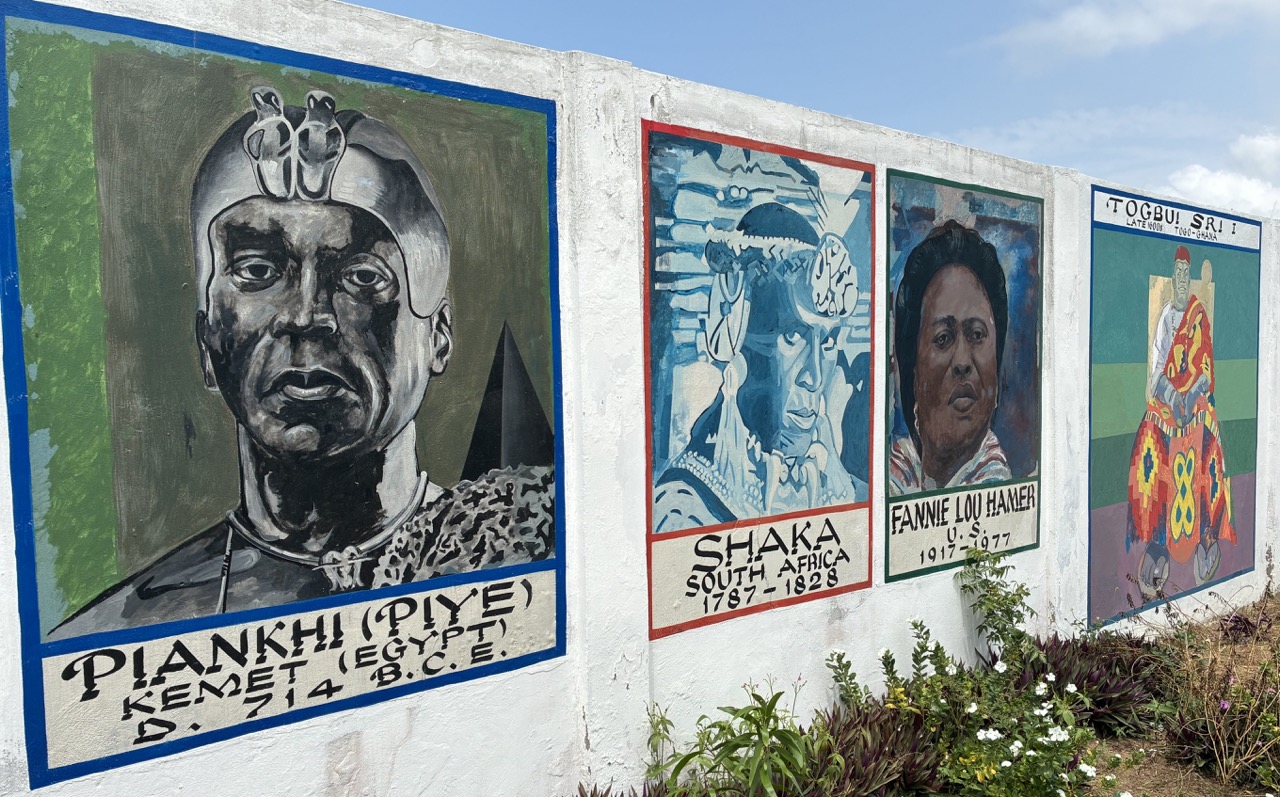
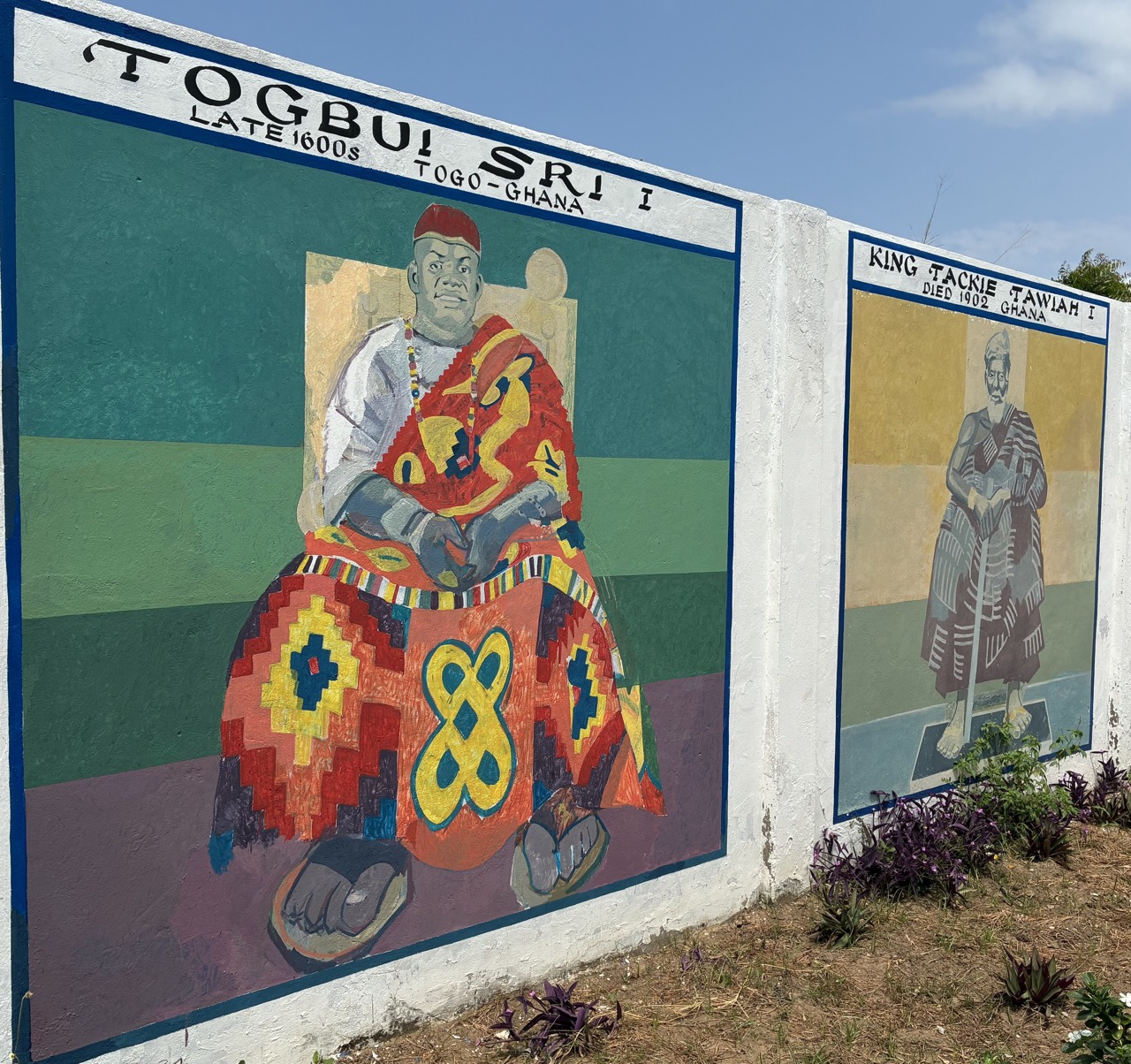
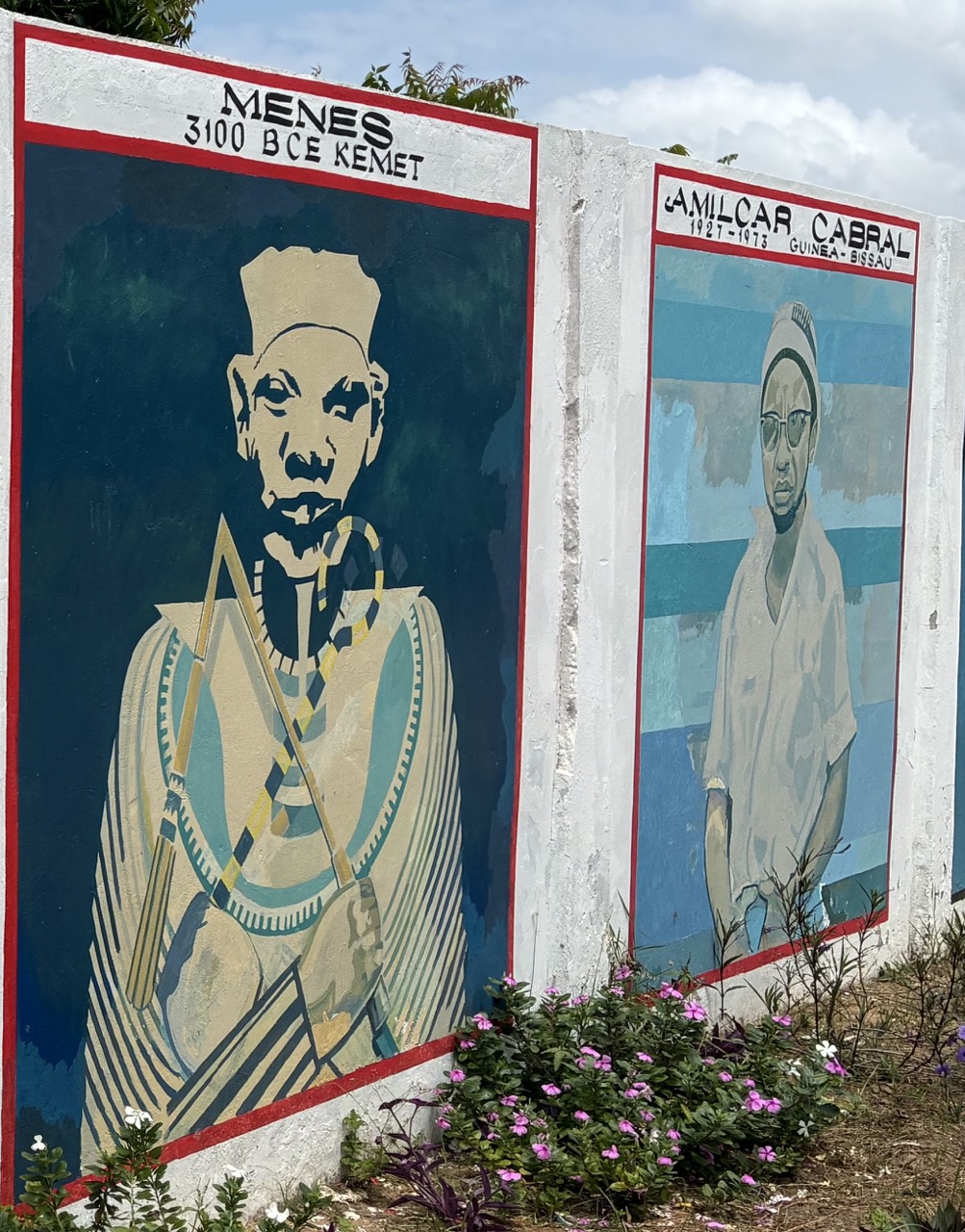
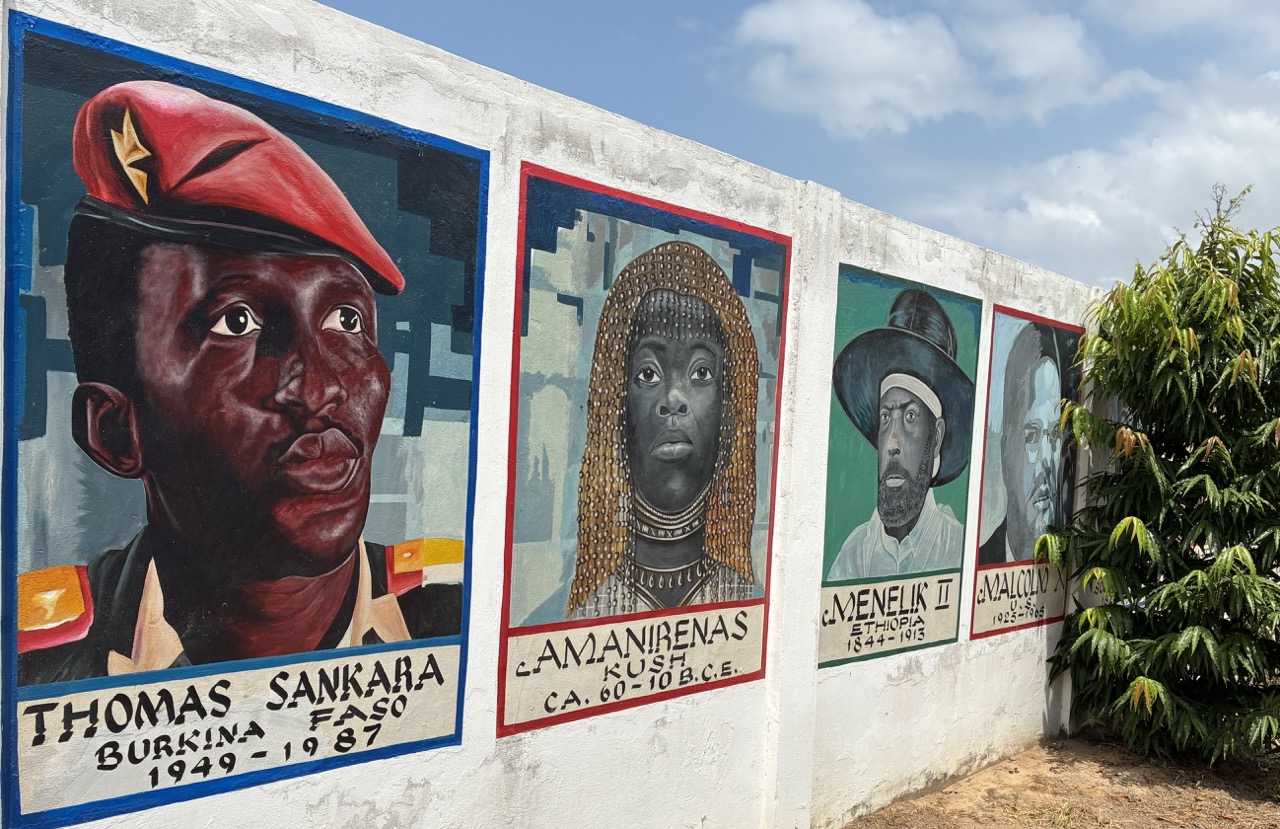
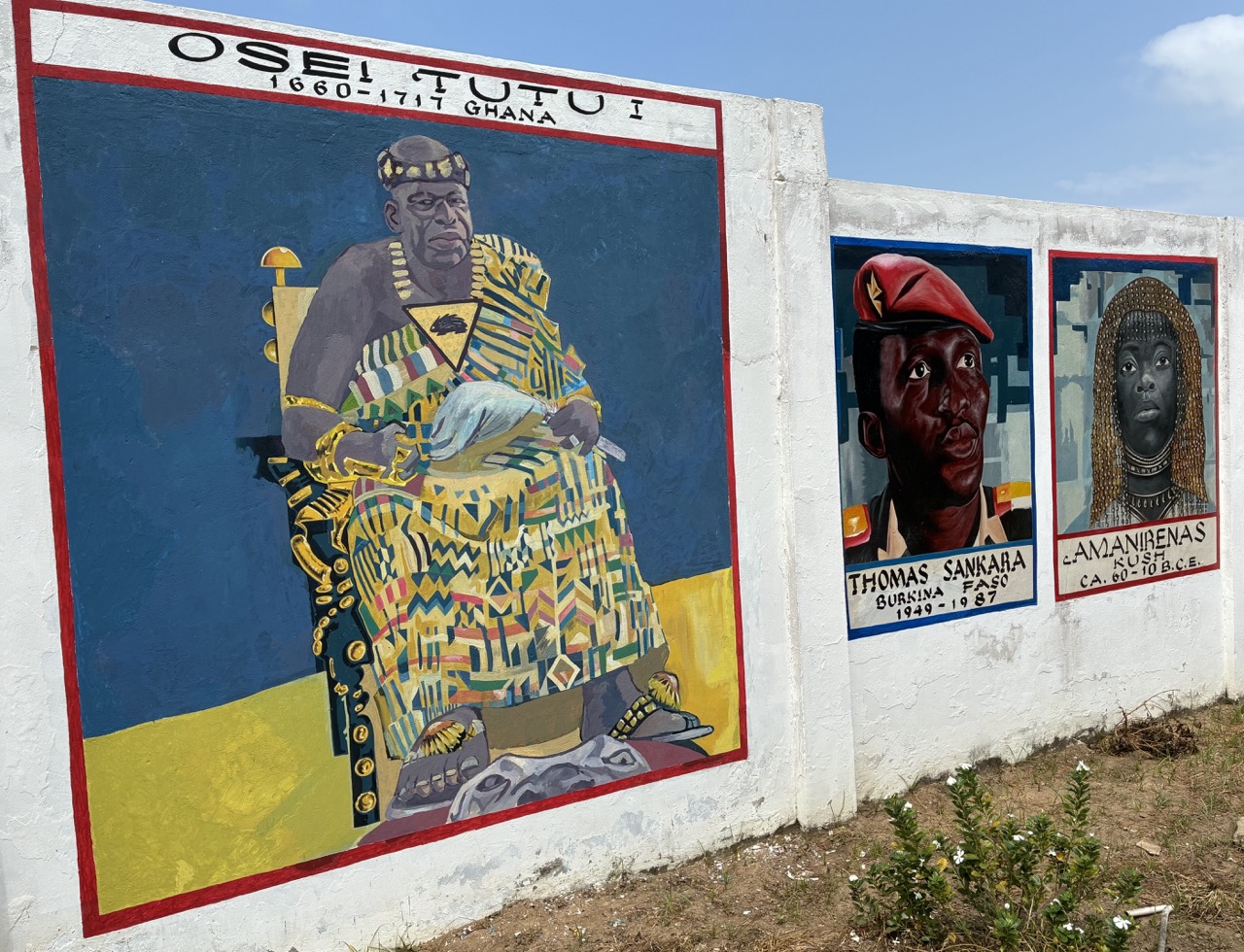
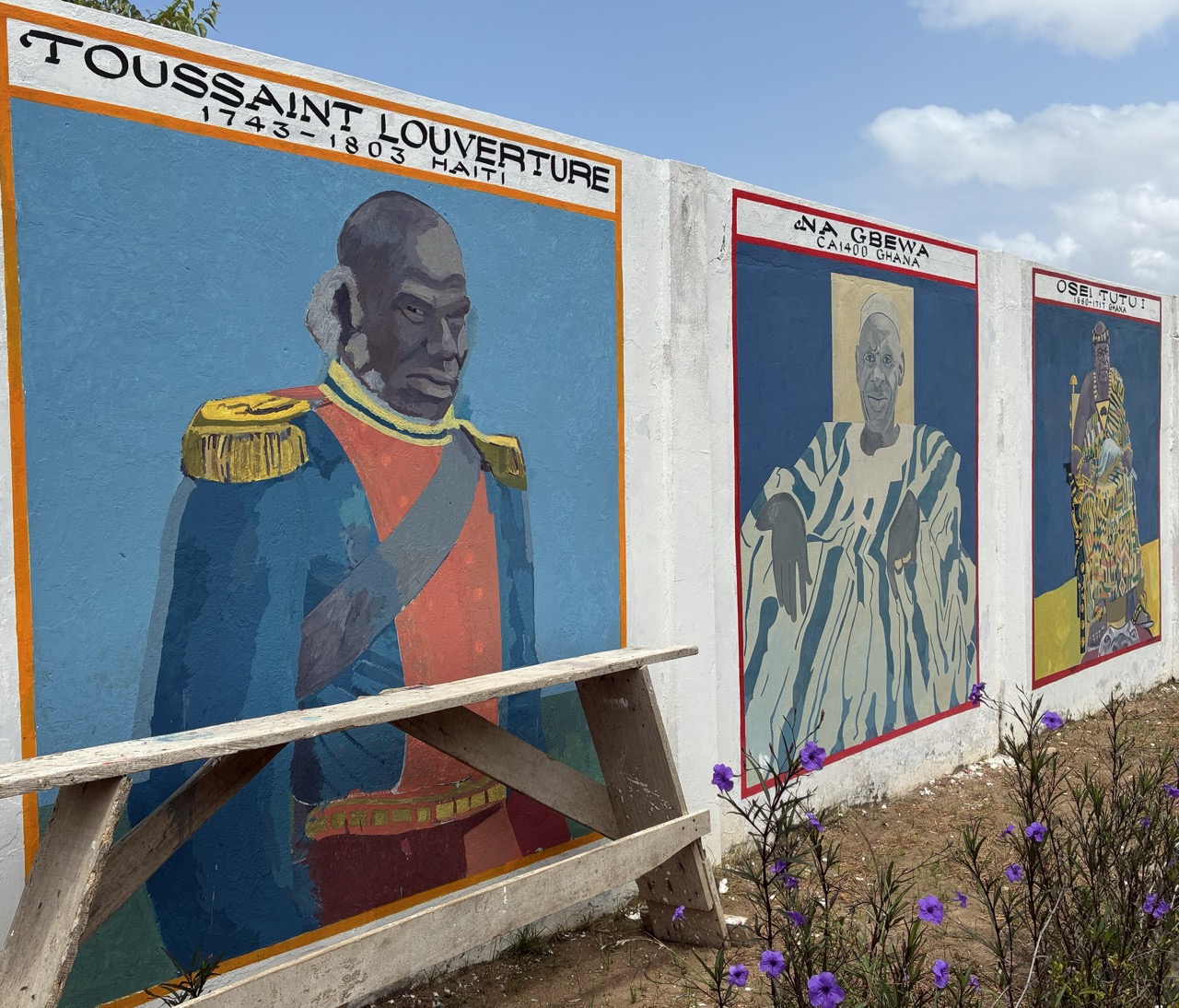
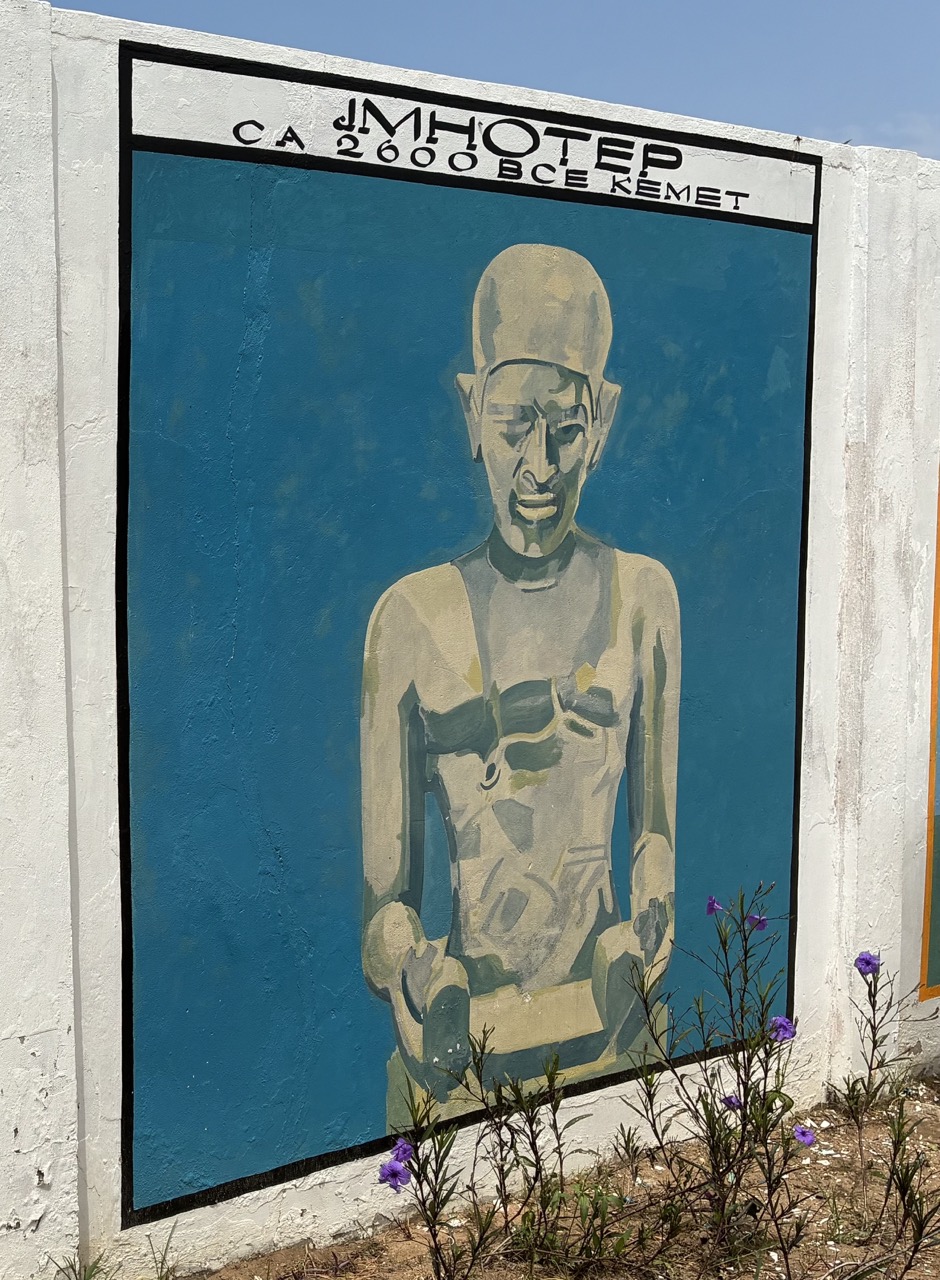
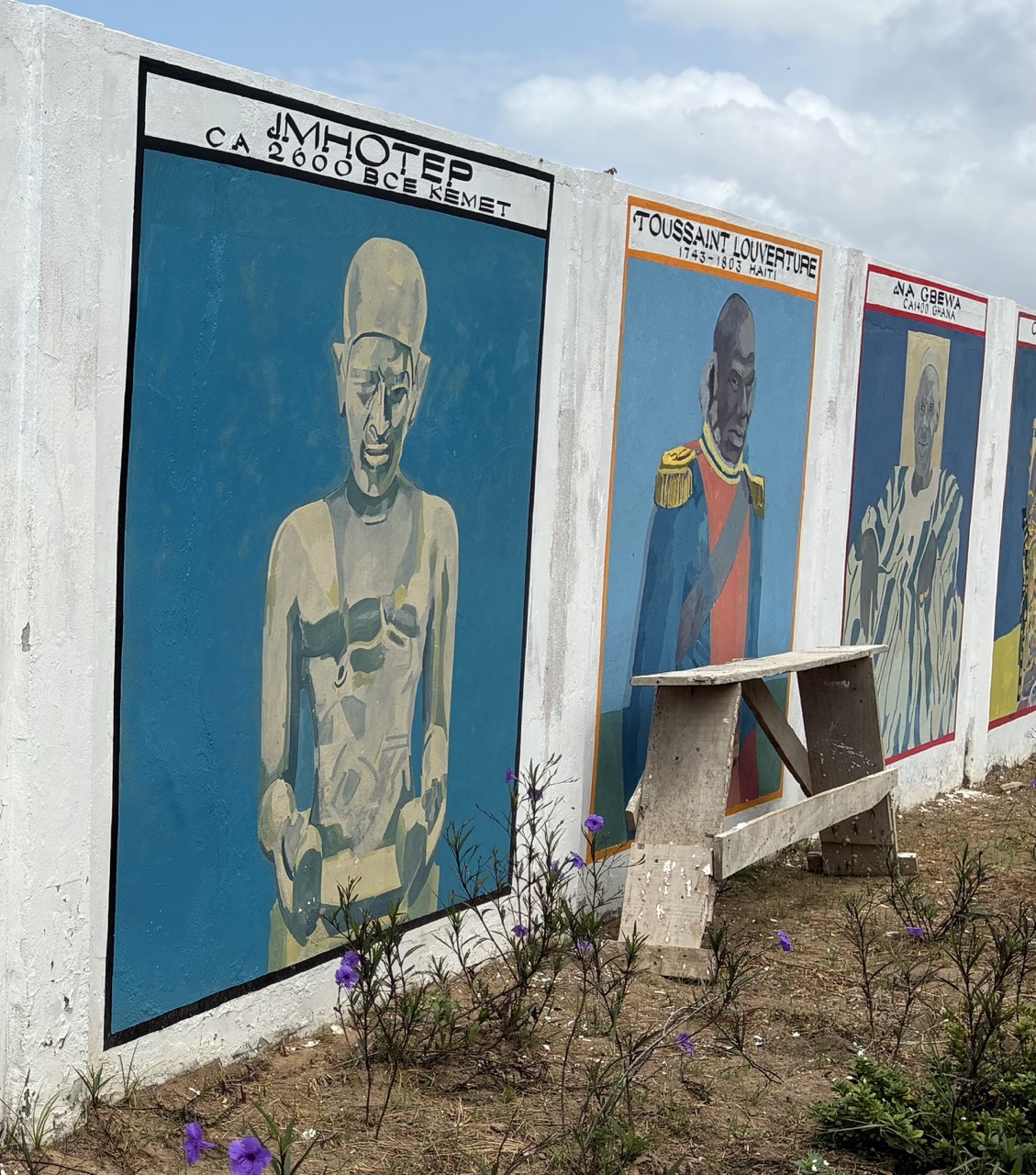
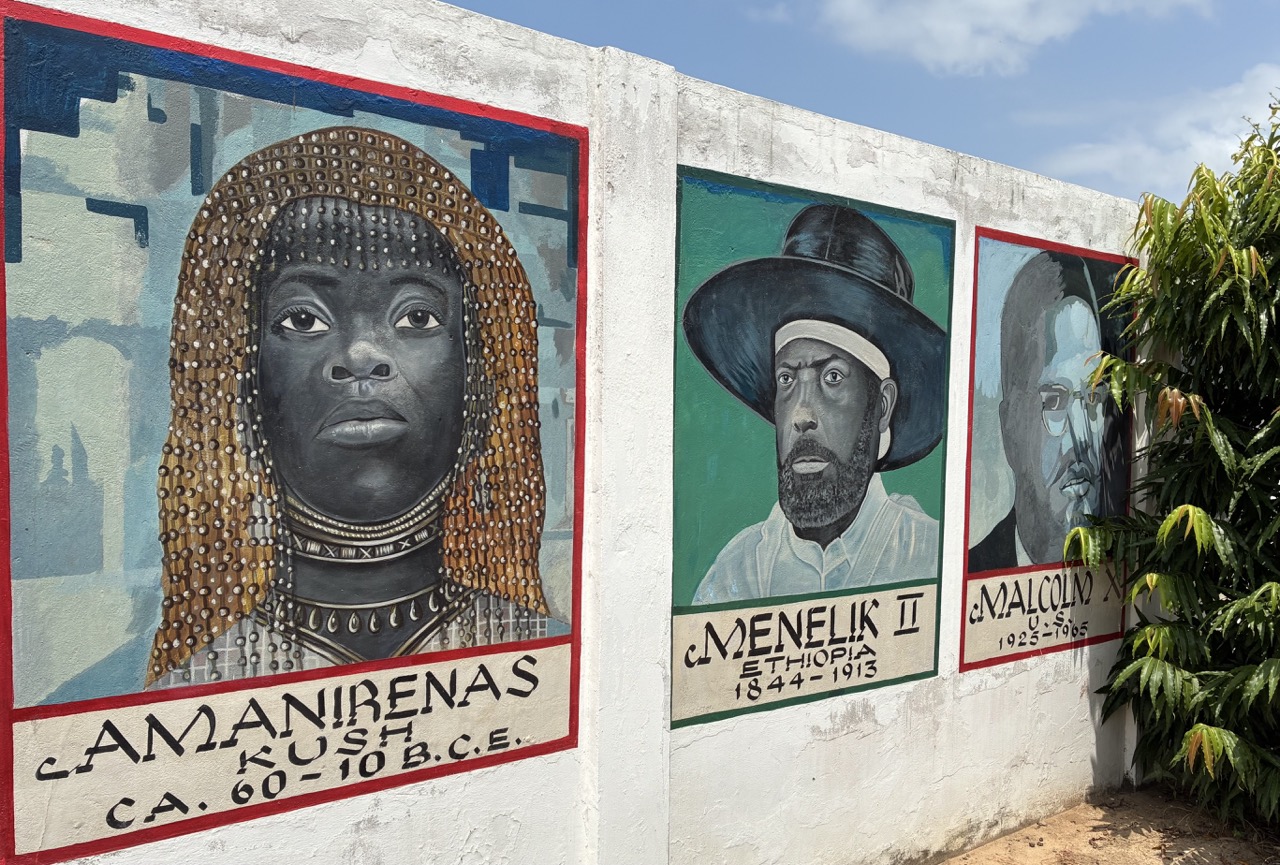
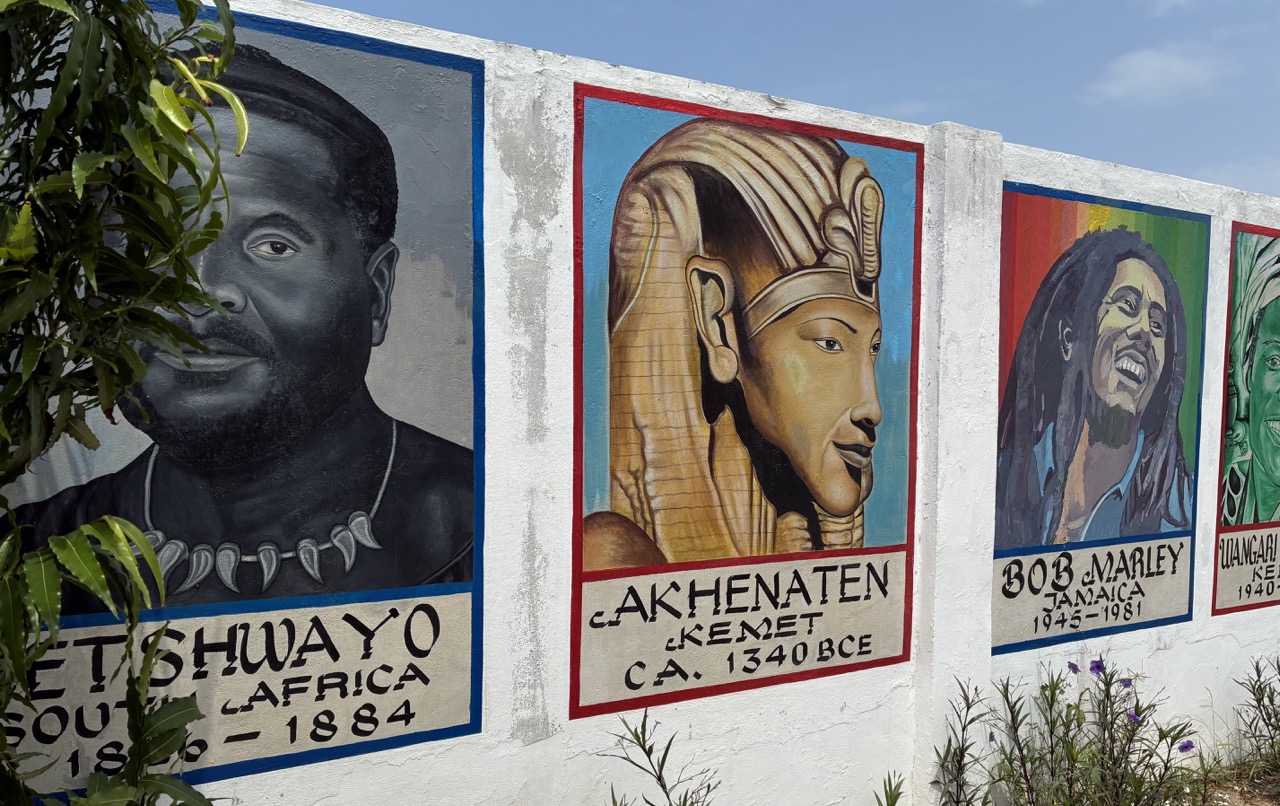
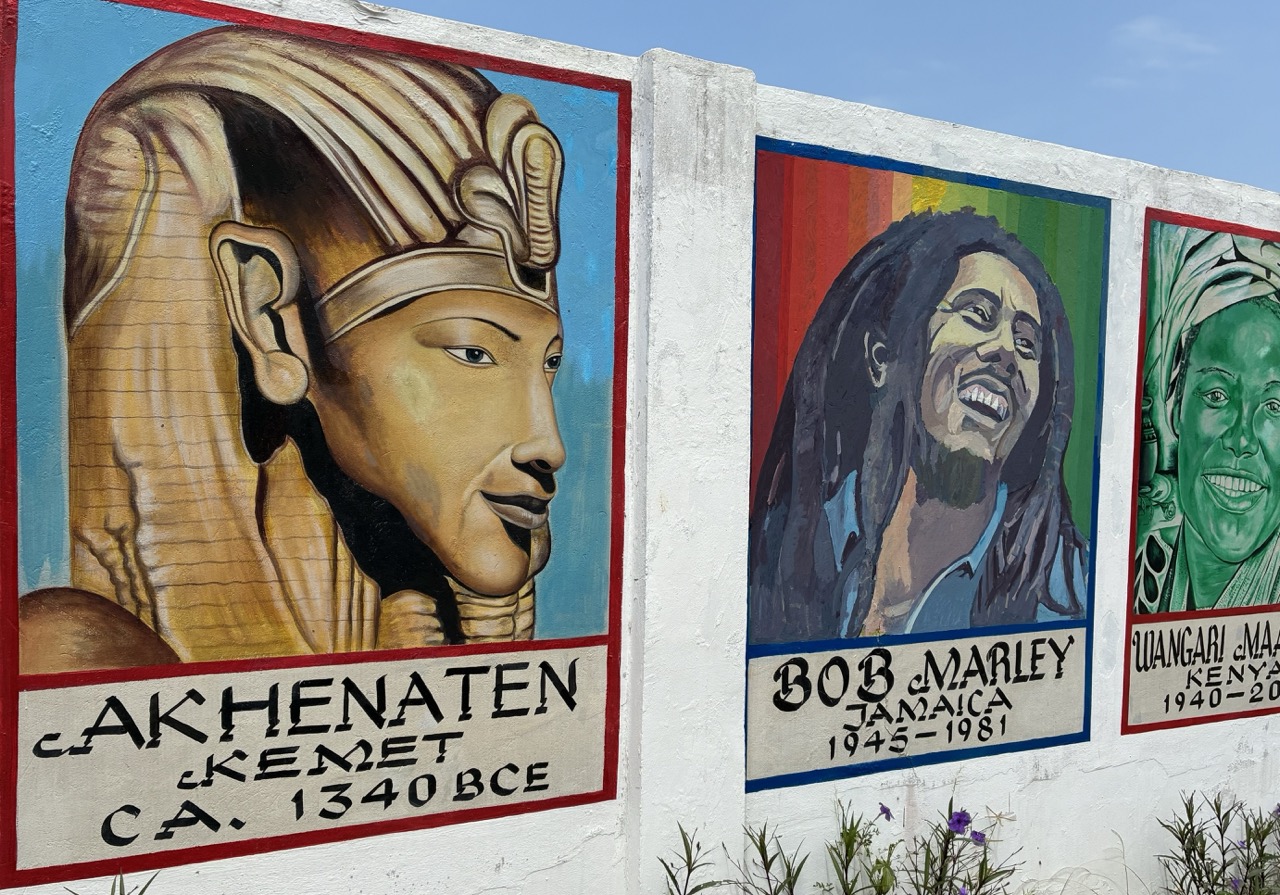
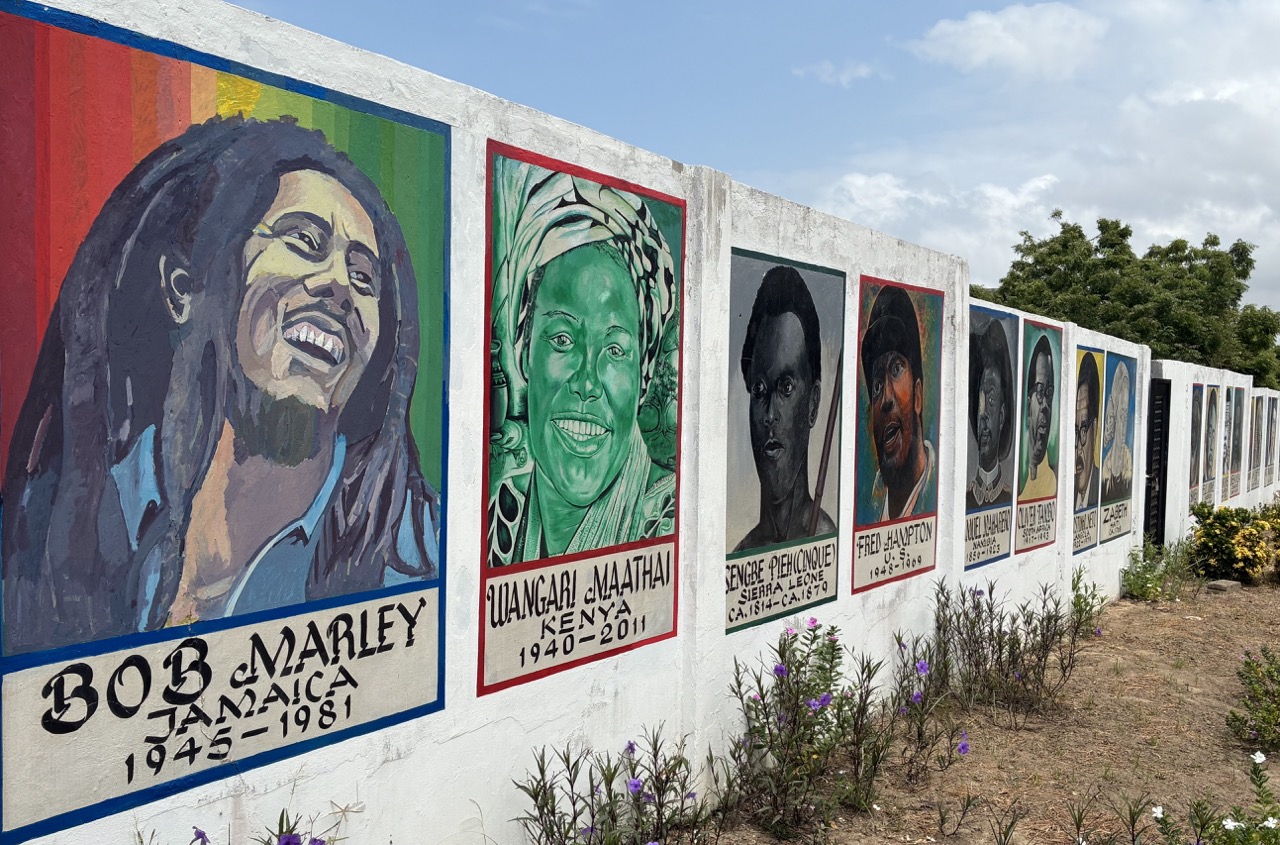
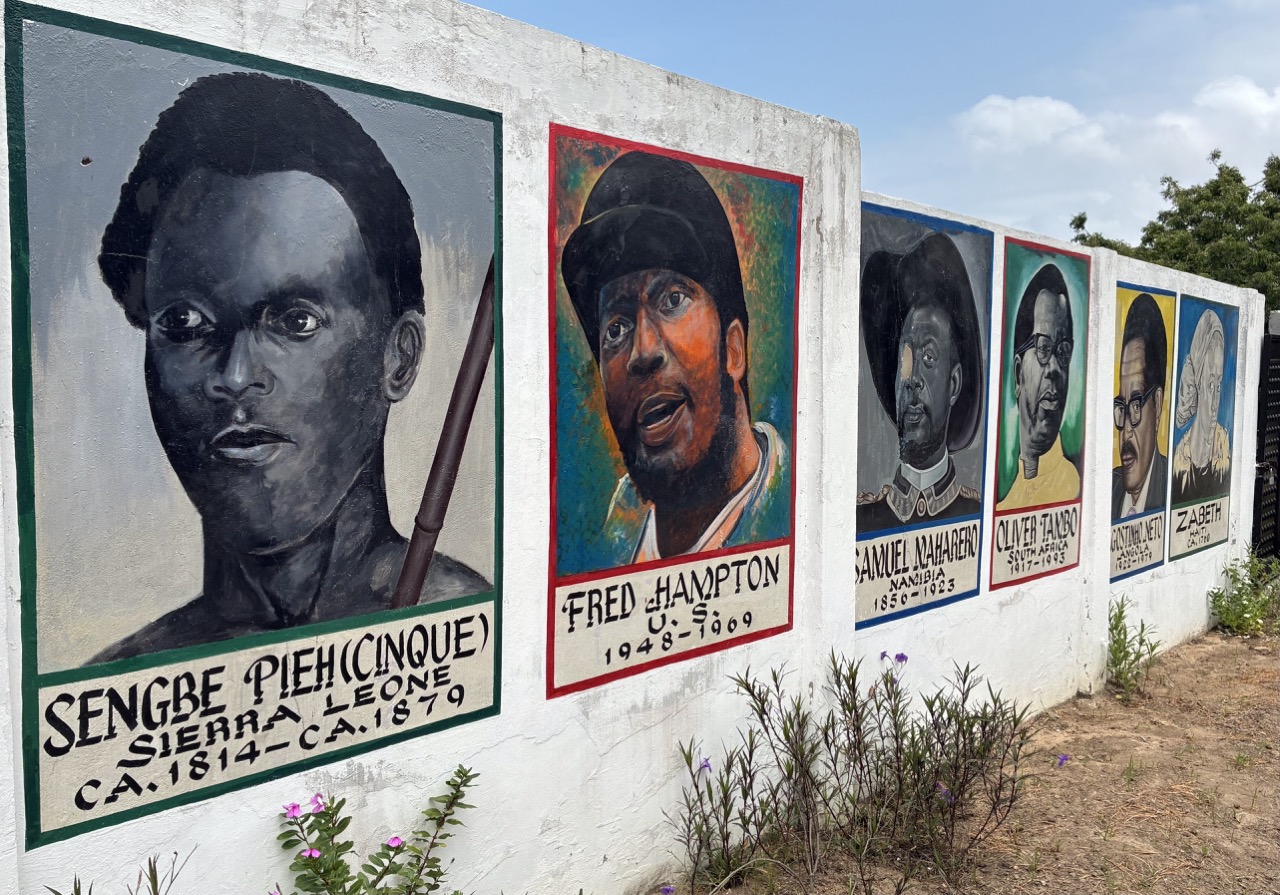
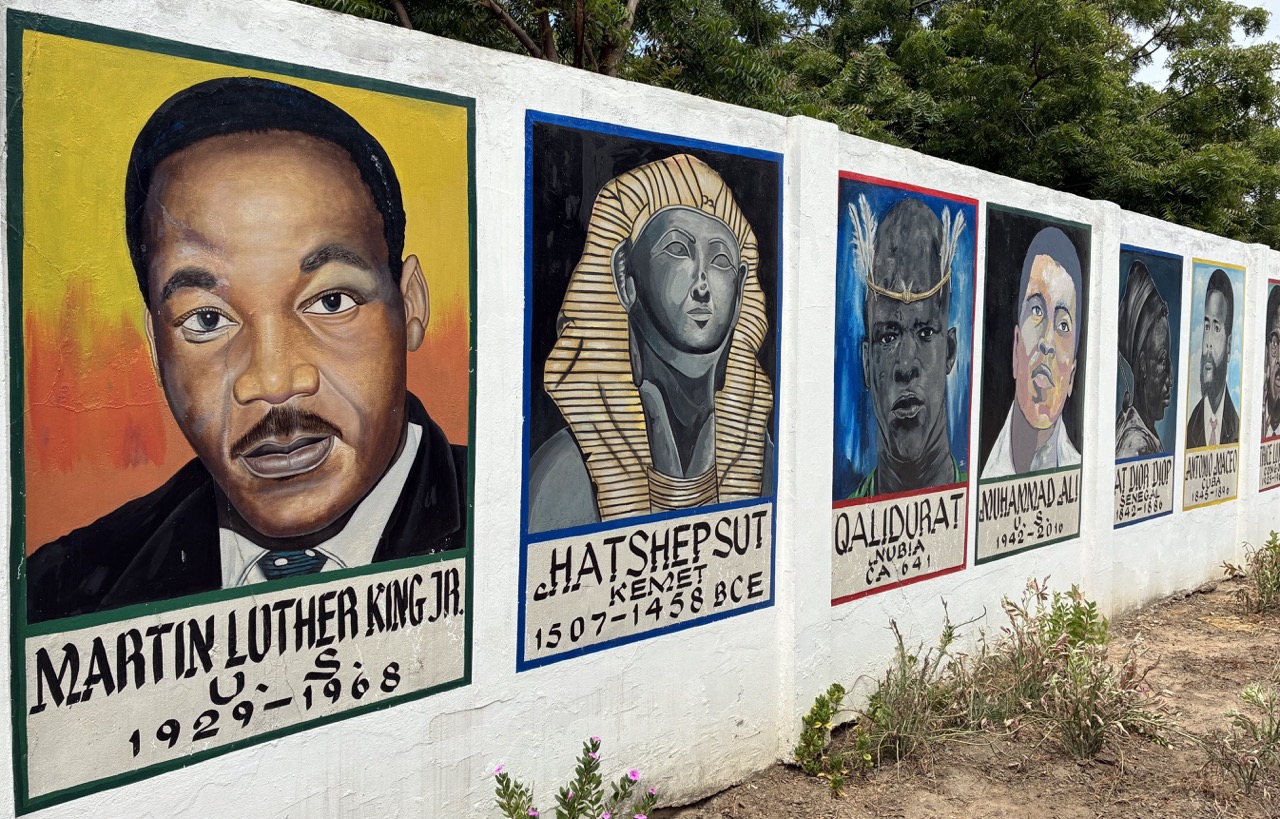
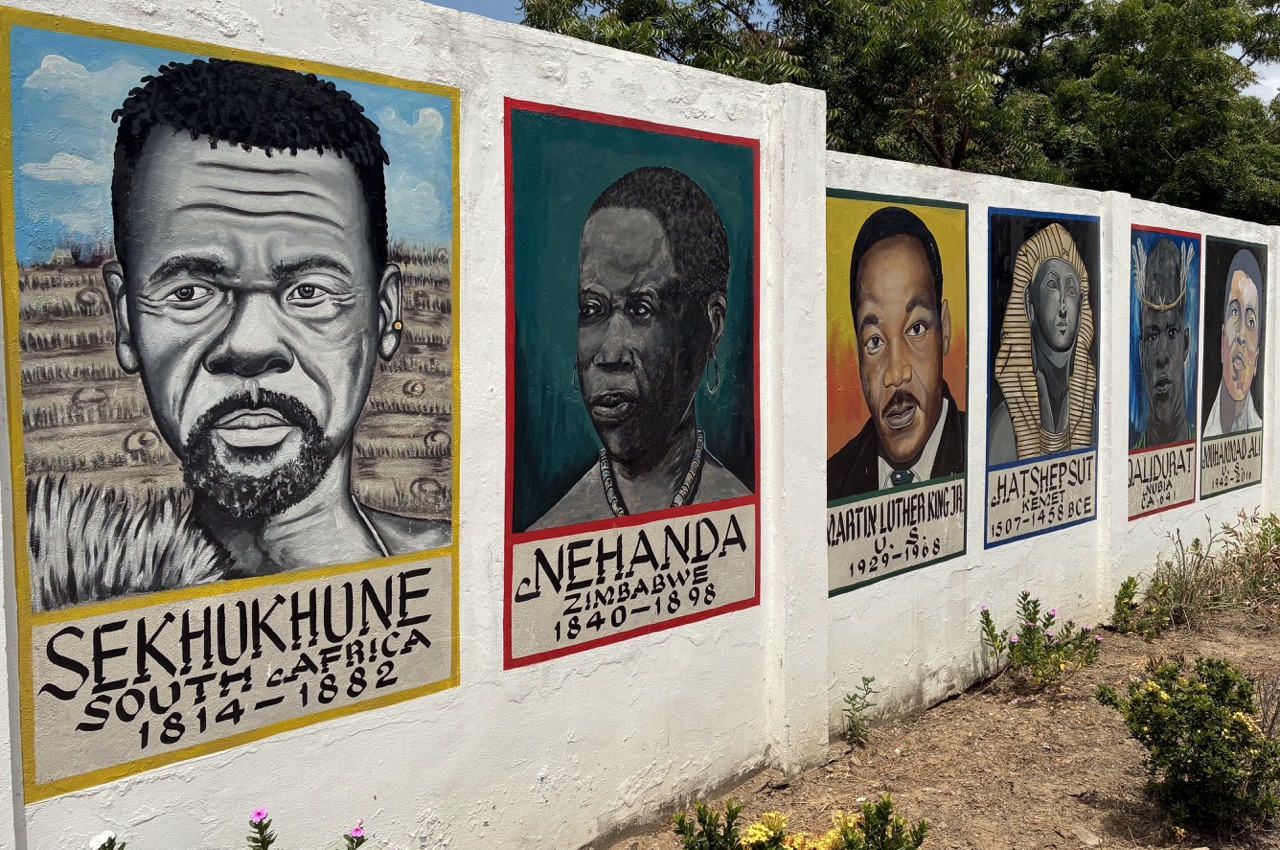
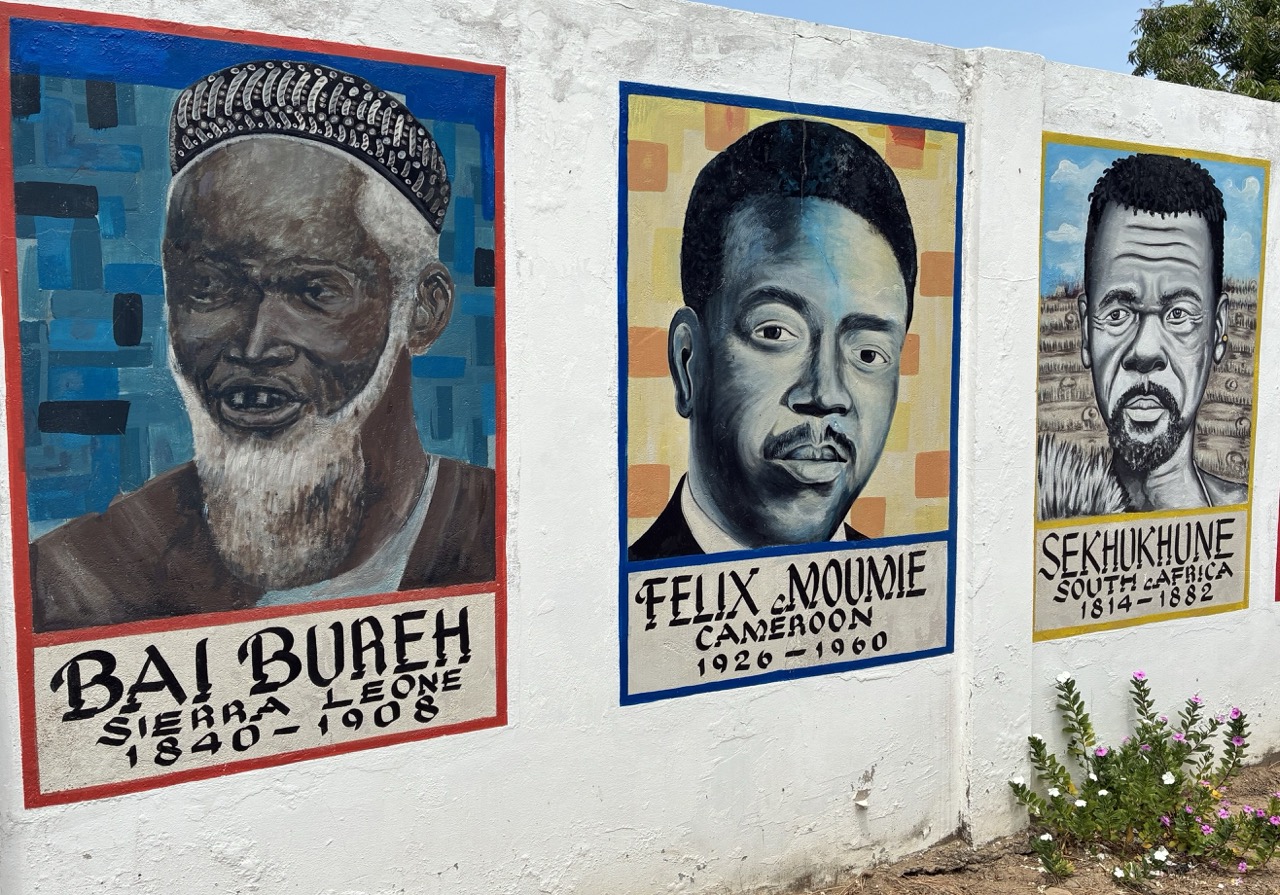
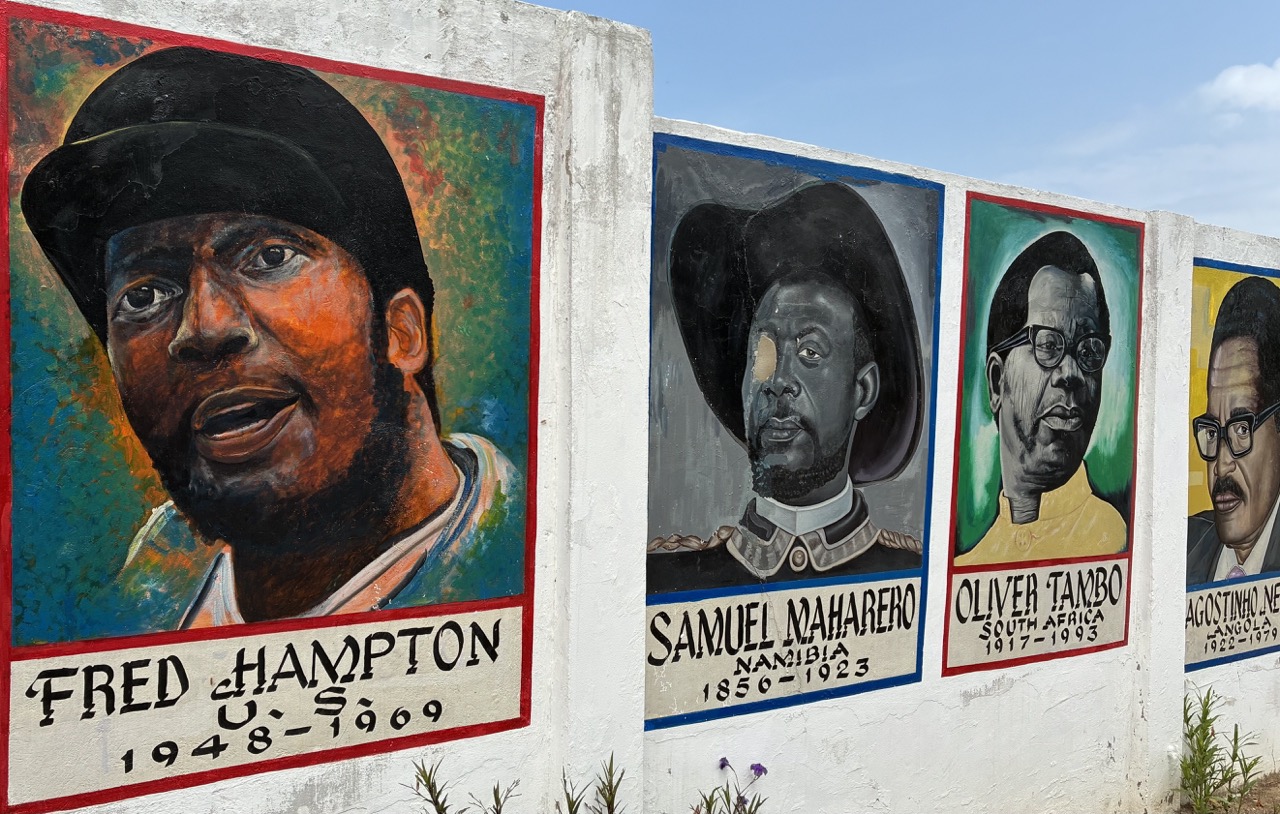
I spoke up for Hatshepsut, the only woman to crown herself pharaoh, for having a hieroglyphic of herself pregnant.
I also told people about the Carver museum in Austin when he got to George Washington Carver.
I kept reminding myself throughout the tour that he’d been put on the spot to guide us. So, I took deep breaths when he skipped over voting/women’s rights activist Fannie Lou Hamer and investigative journalist Ida B. Wells. I figured he’d probably received a similar sparse public school education as I had when it came to Black American contributions to history. More erasure so we wouldn’t take pride in ourselves.
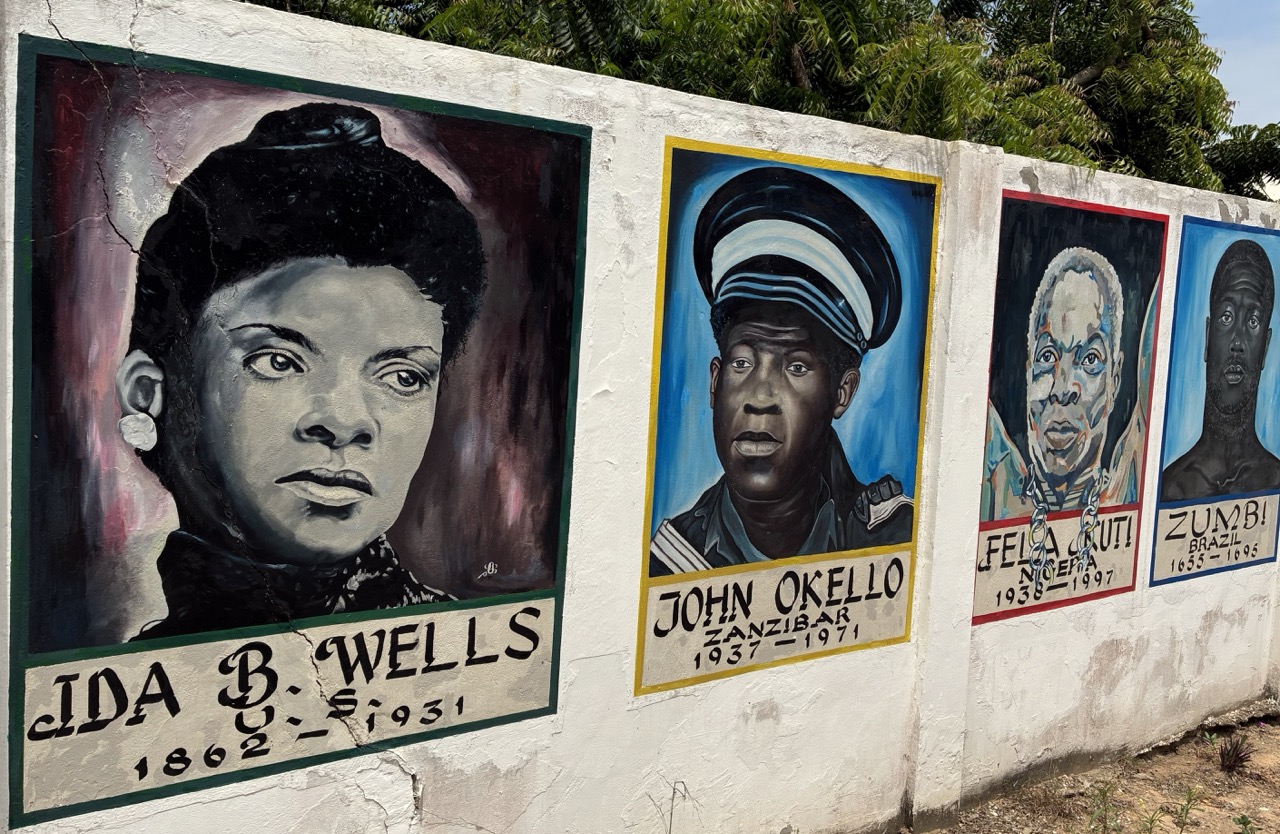
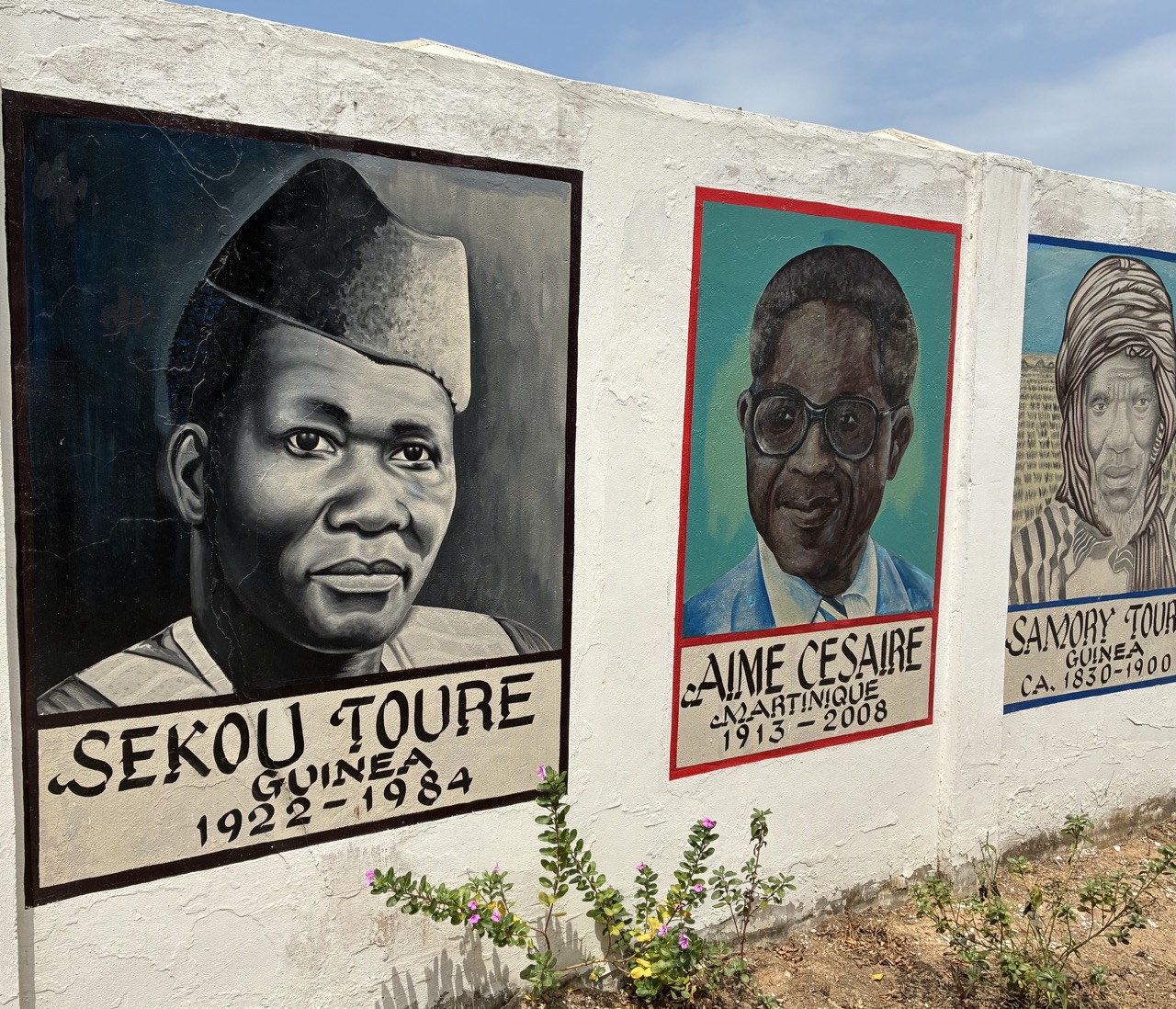
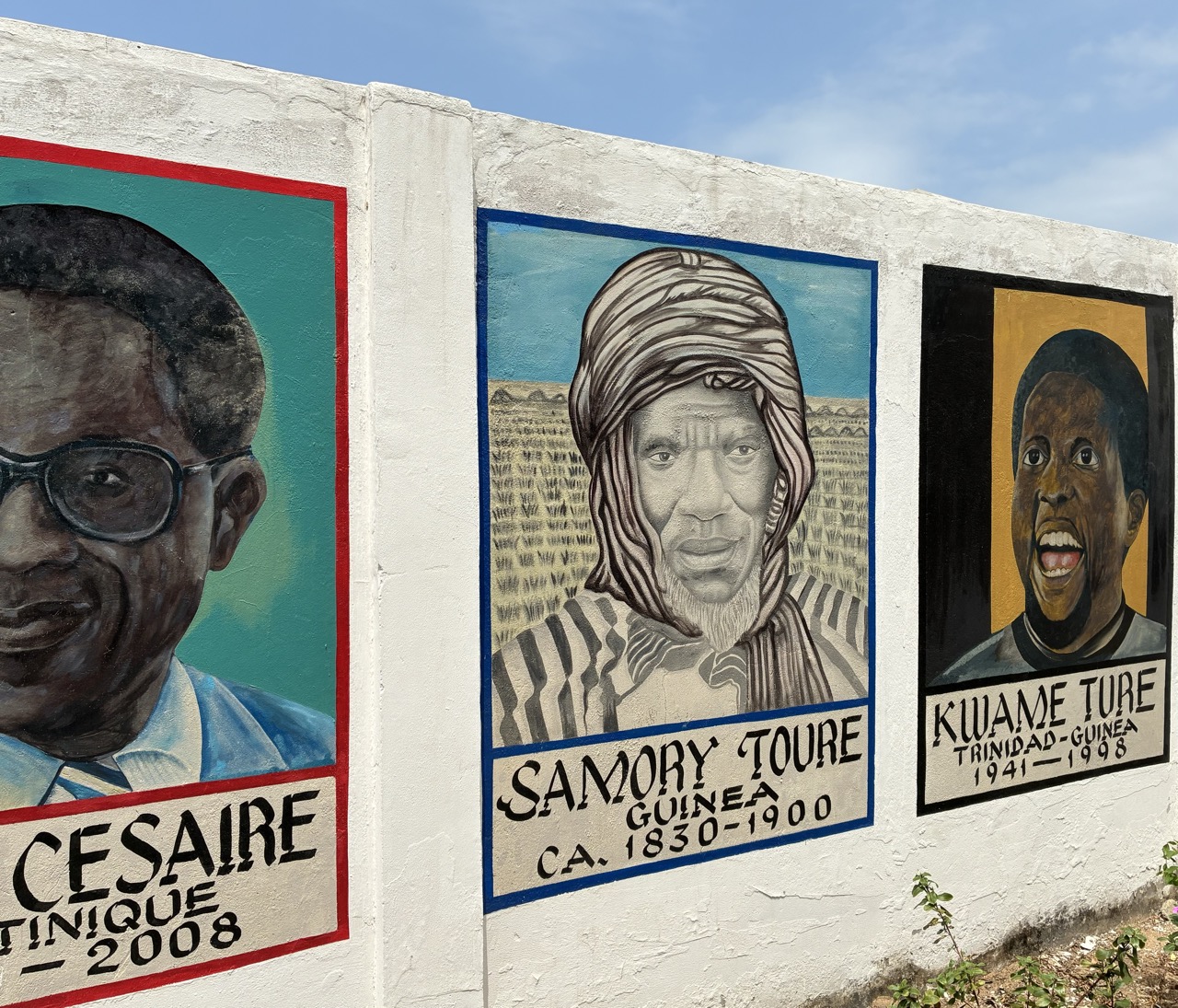
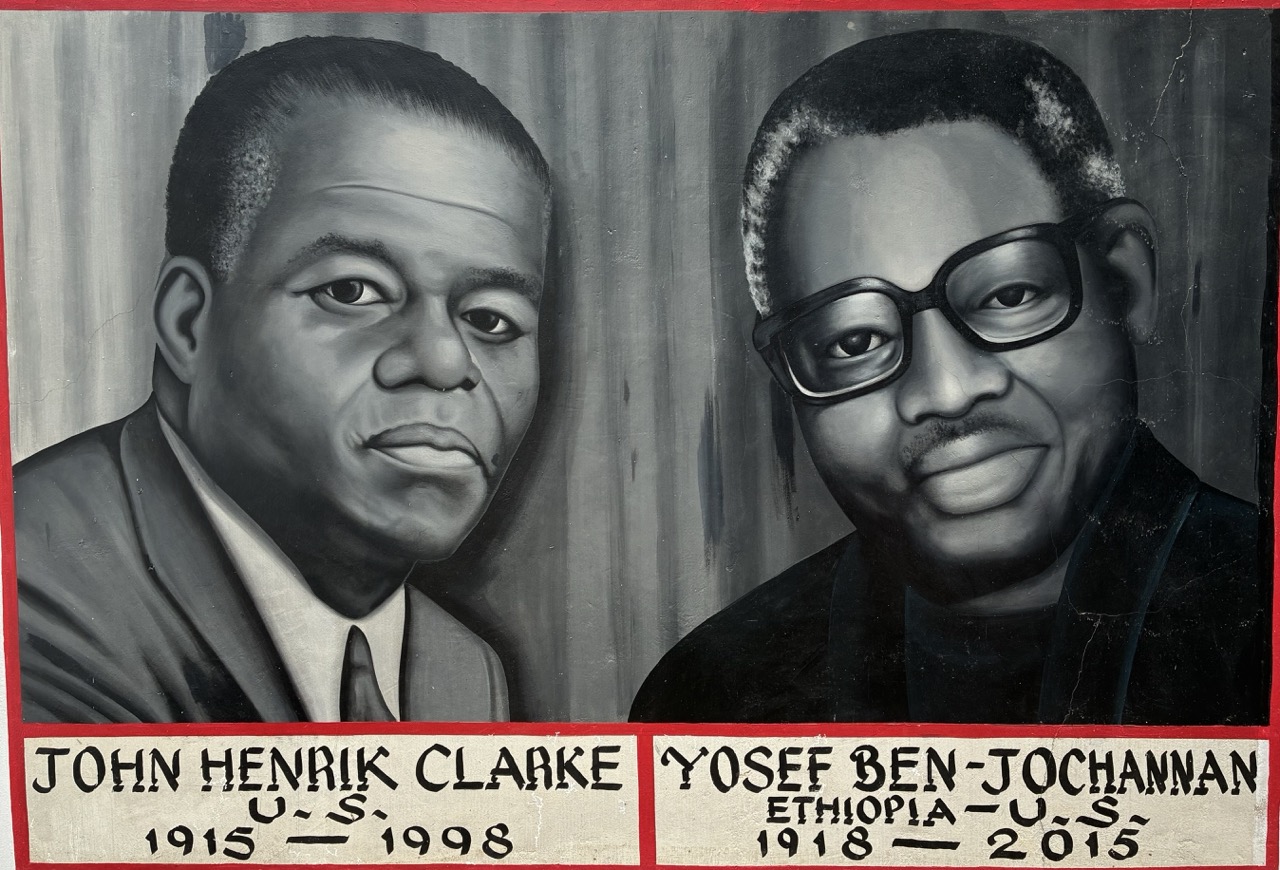
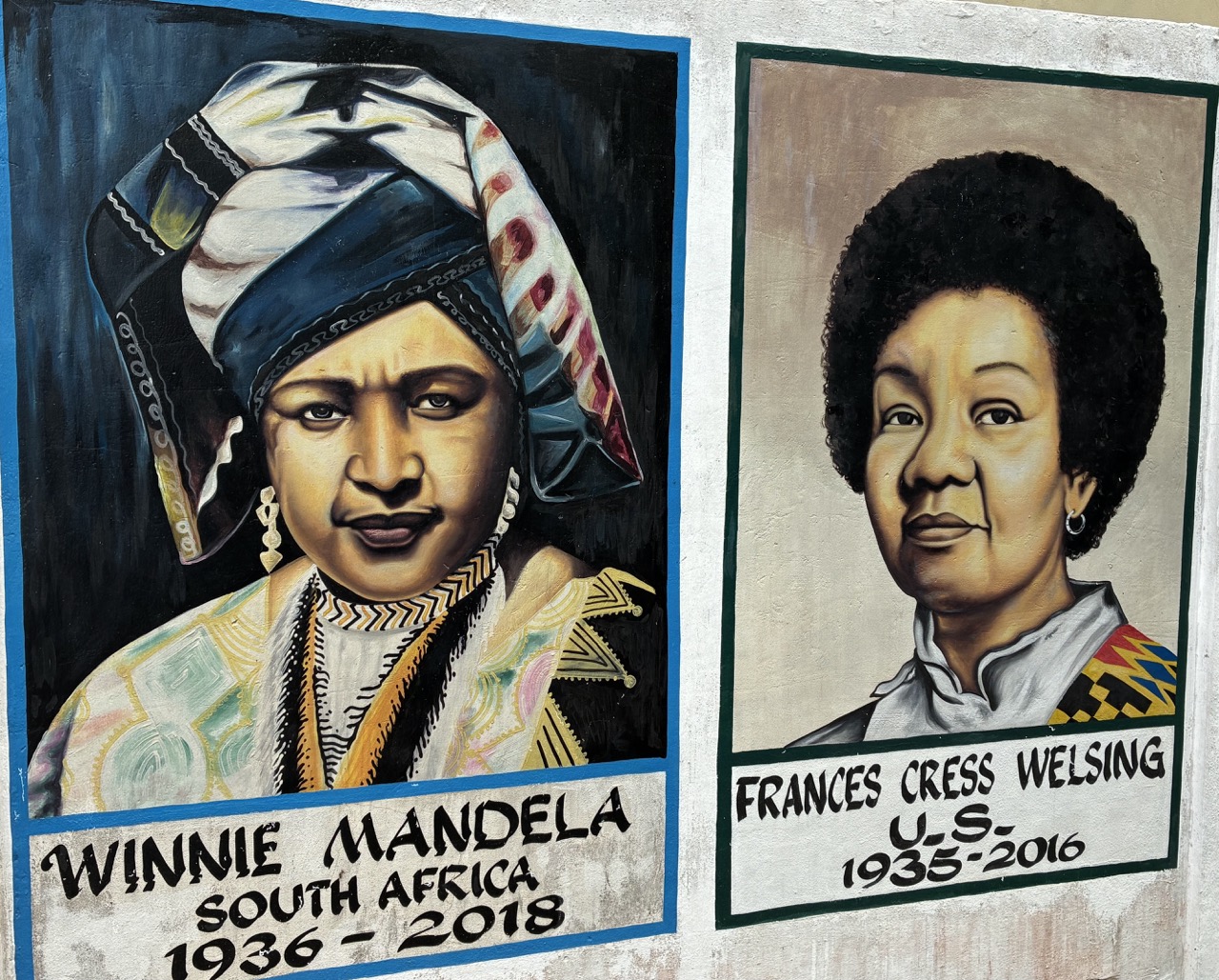
When we questioned why Nelson Mandela wasn’t represented, Abomah explained that while Nelson was imprisoned, Winnie had done a tremendous amount of work, but hadn’t received the credit she deserves. Yet another overlooked woman.
The library/reception area was still under construction. Two sisters had donated most of the furniture and African art that decorated the space.
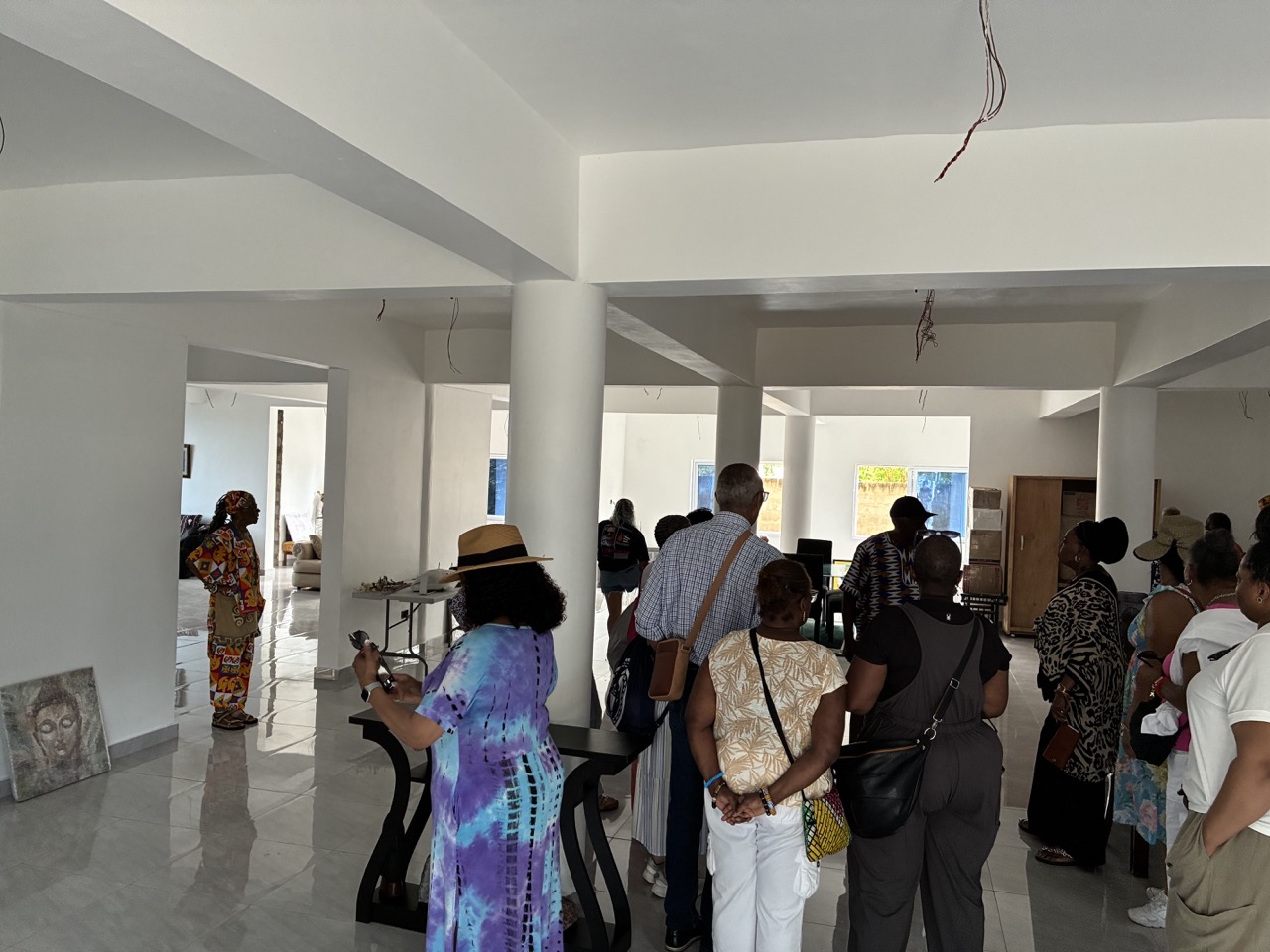
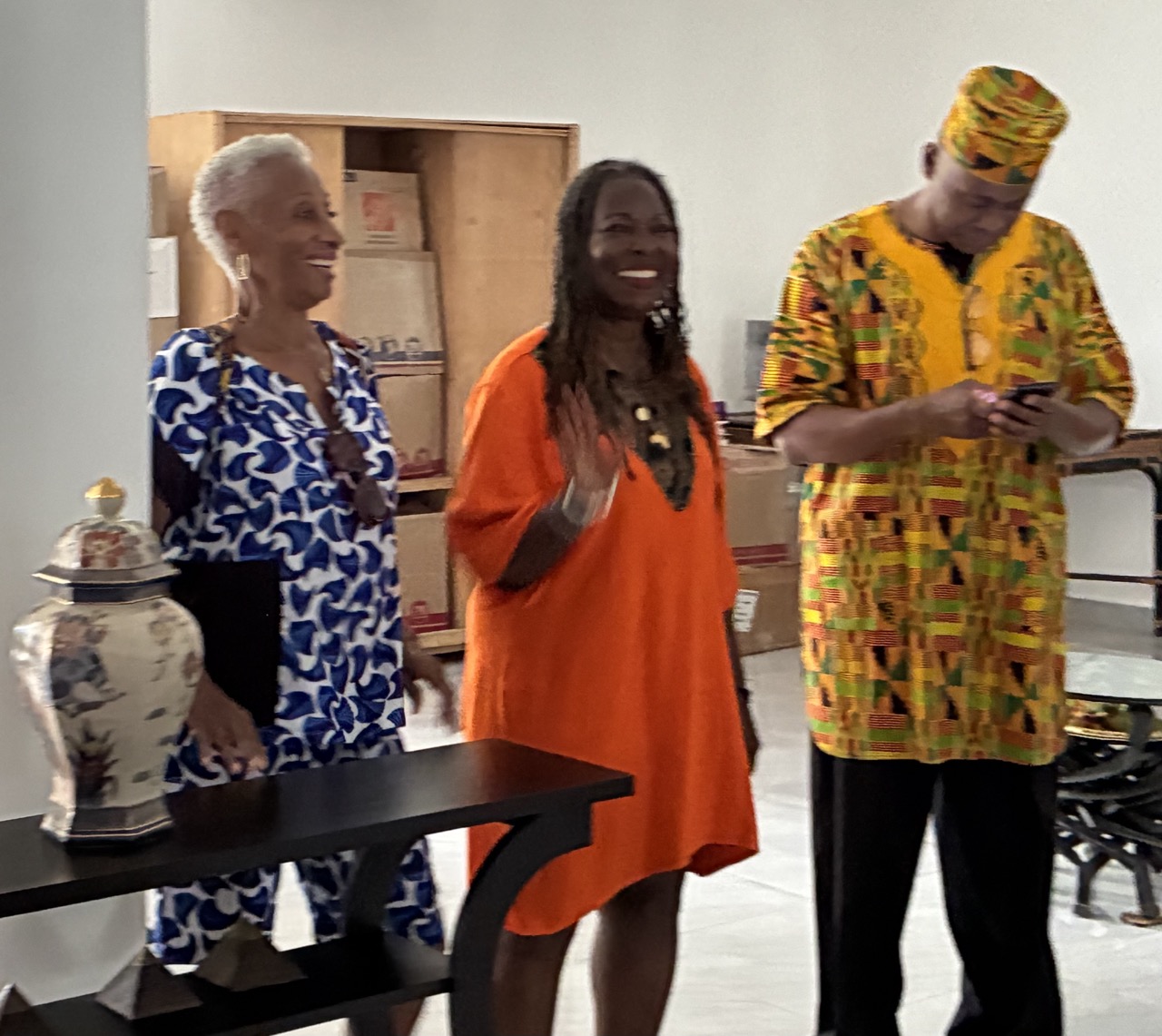
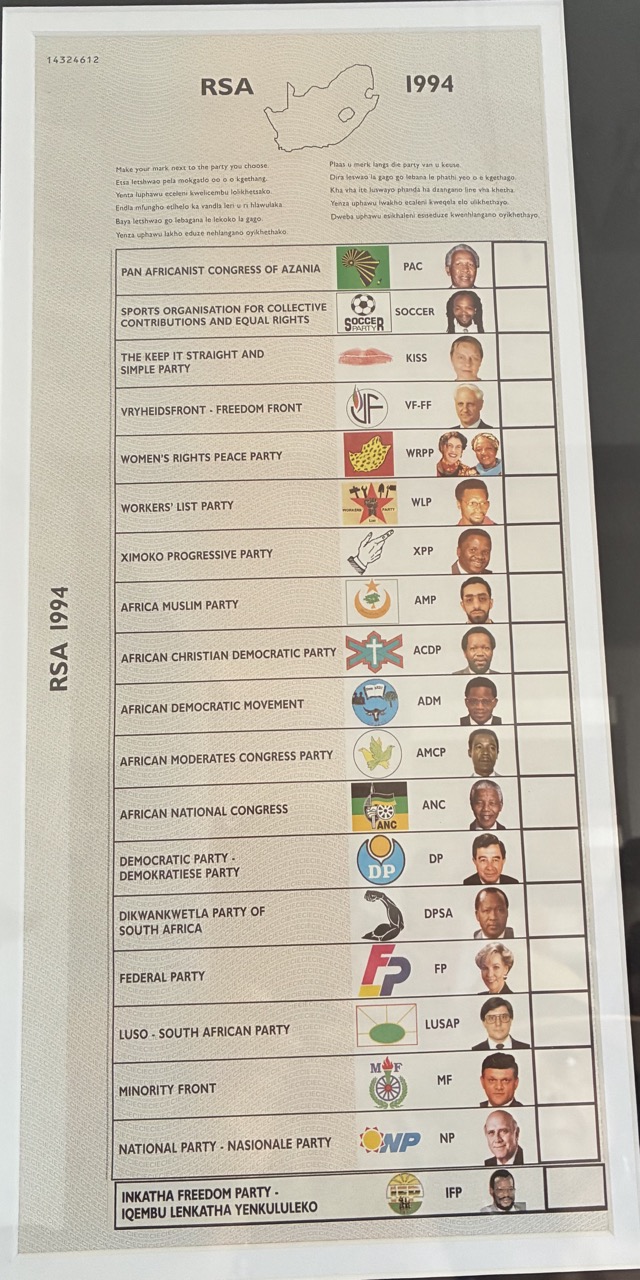
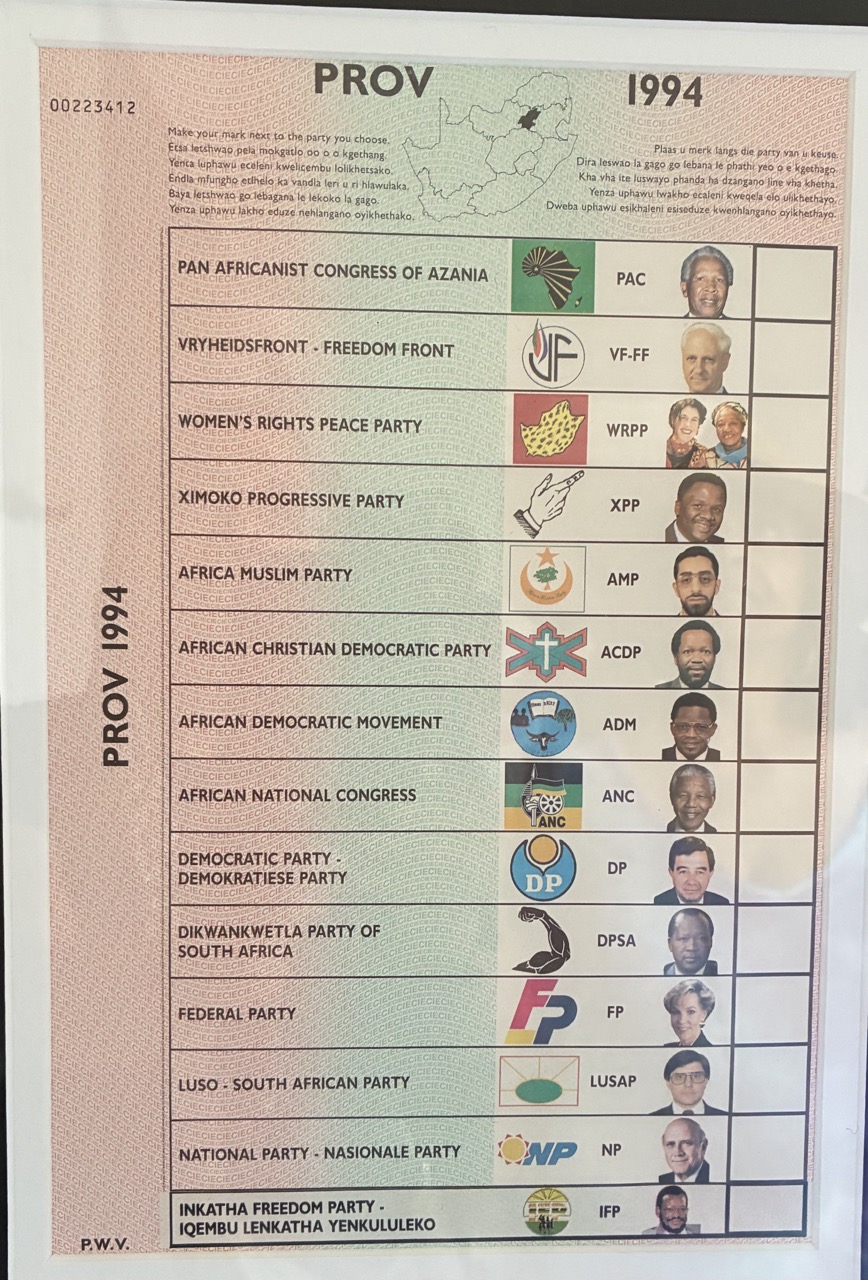
After our tour of the wall and library, we enjoyed the most delicious buffet, including potato salad and guacamole along with traditional food and sobolo with powerful ginger.
During our lunch, the expat shared with us how much more affordable life was in Ghana. As a matter of fact, their quality of life was also higher and they felt much safer without the proliferation of guns, commonly associated with life in the States. About the only thing that one person admitted that they missed was the smoothness of the average road back in the States.
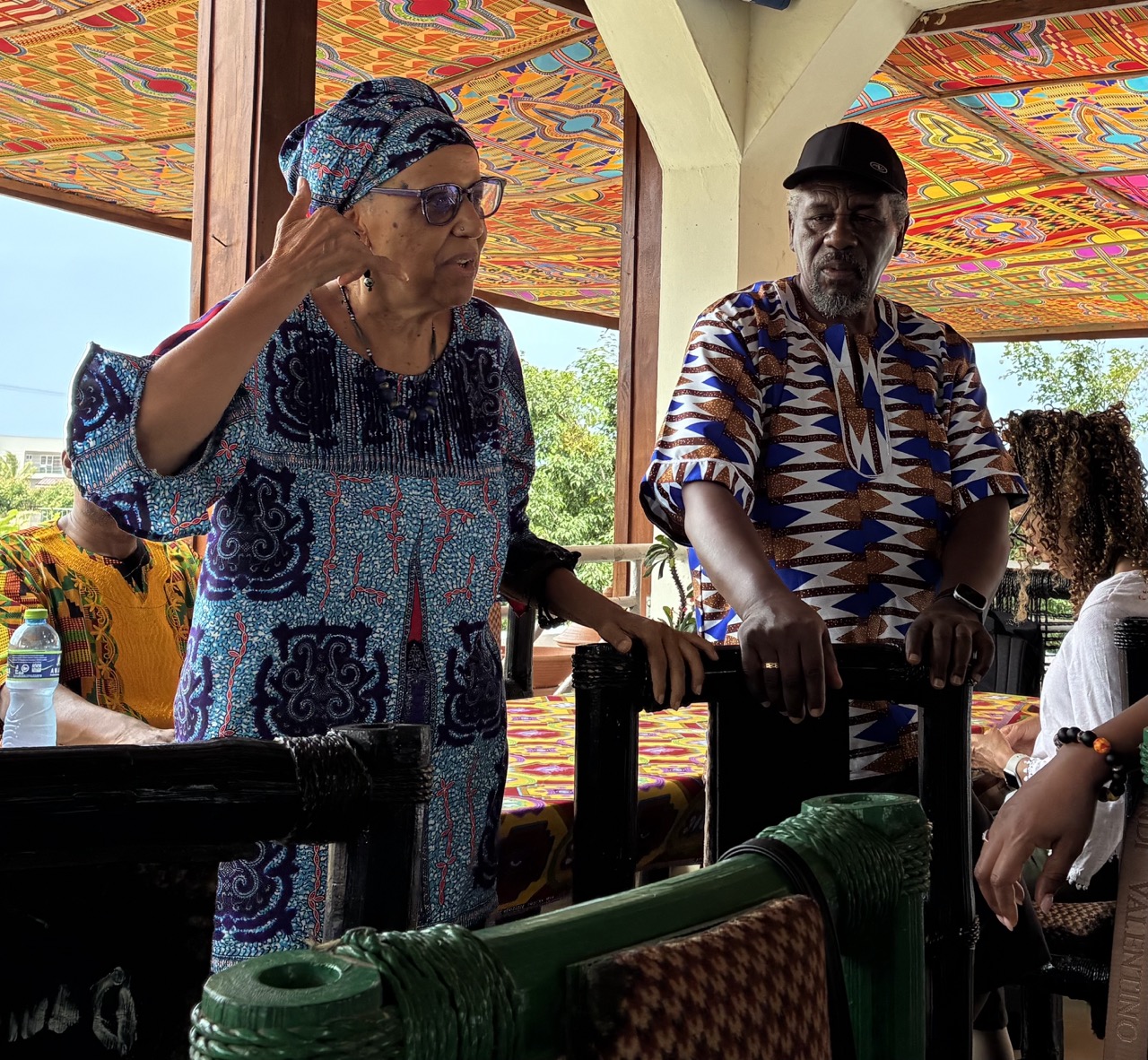
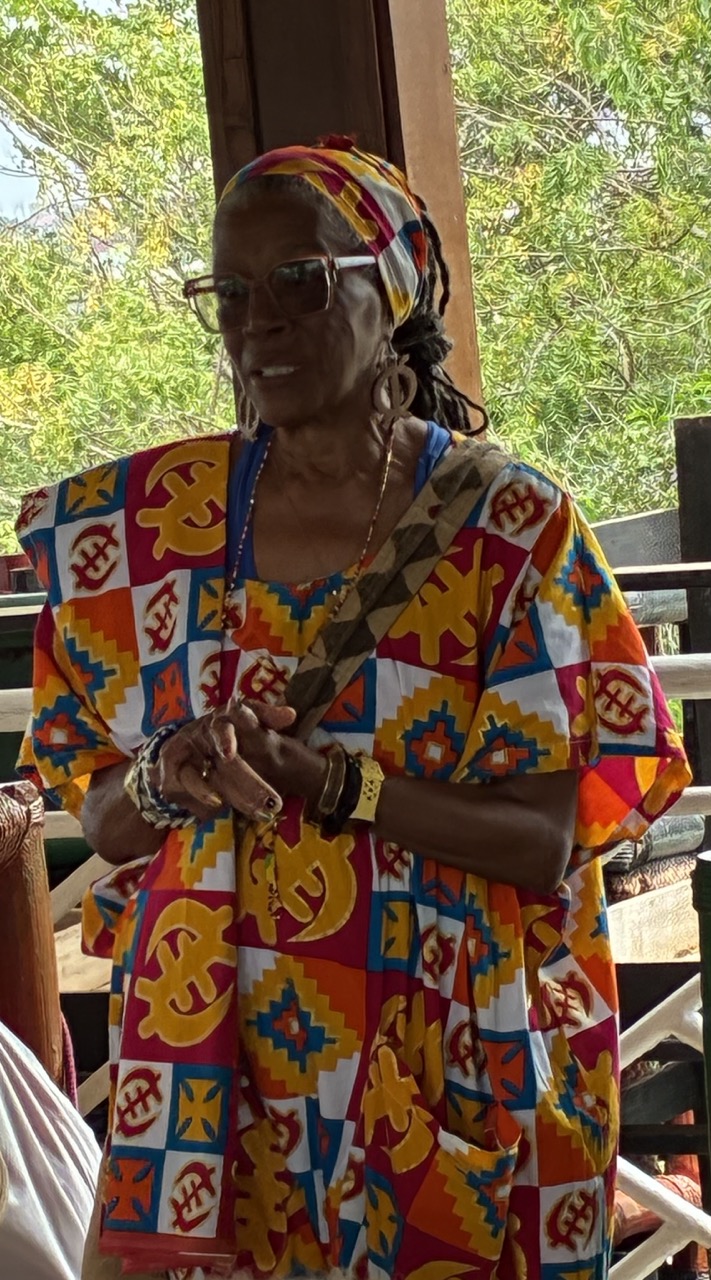
Speaking of driving, after traveling around Ghana for days, I had not yet seen a car accident. The driving may have looked chaotic, but apparently was very efficient. Everyone knew the rules, especially how to communicate through honking. The varying qualities of road meant that drivers had no choice but to slow down. Also, there was a cultural attitude of right of way with no one behaving overly aggressive as if any one individual owned the road.
In the souvenir shop, I finally bought a pair of quality earrings in shape of my favorite adinkra symbol, which means “God is Supreme.”
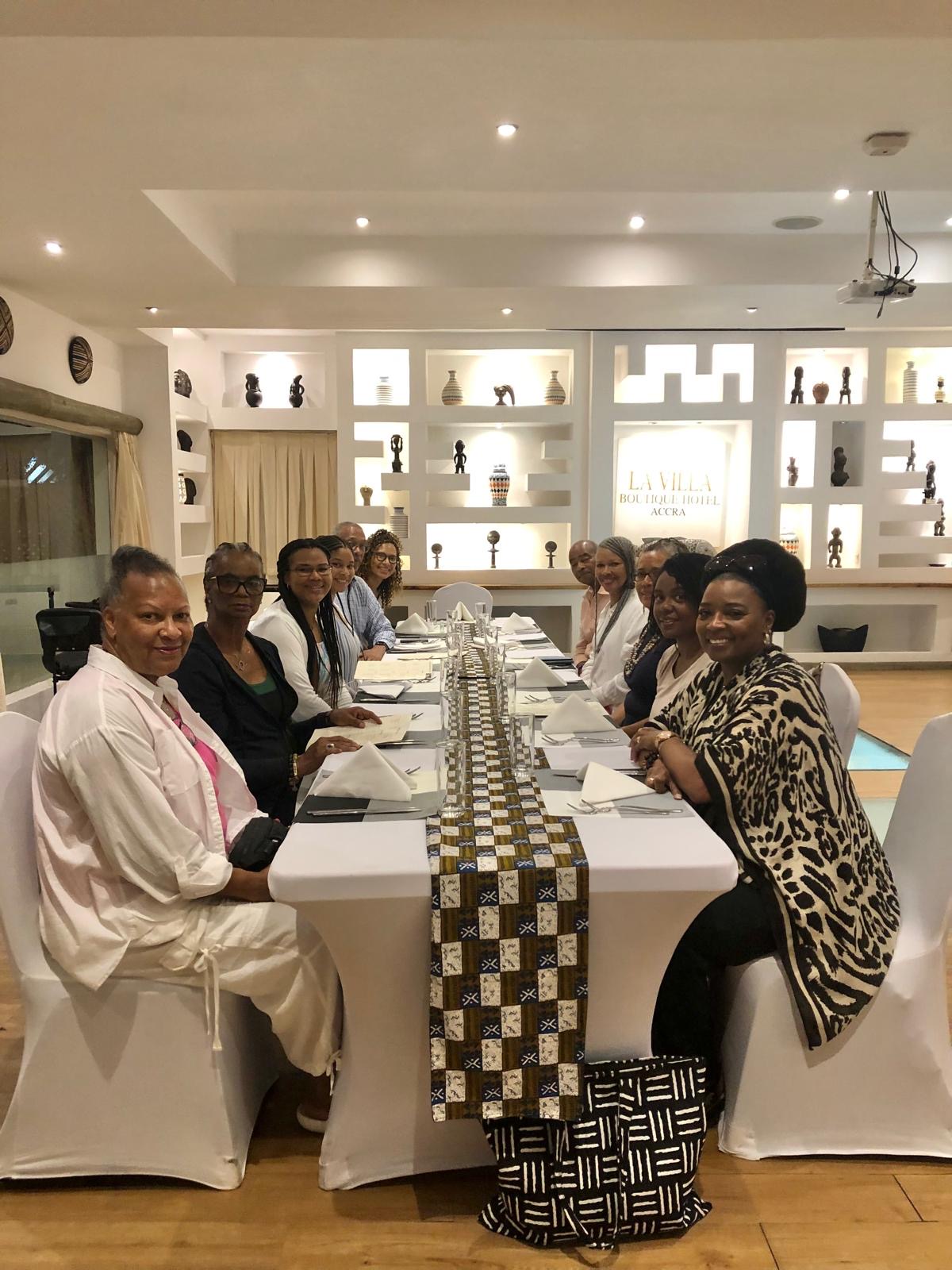
For the second time, we ate dinner at La Villa, but instead of being poolside, we dined inside a beautiful conference room, decorated with African carvings, masks and other decorative 3D art.
I had fun with the server since I had to order homemade ginger ale three times because he kept forgetting to bring it. Yet, when it came time to pay, I saw the drink on the bill.
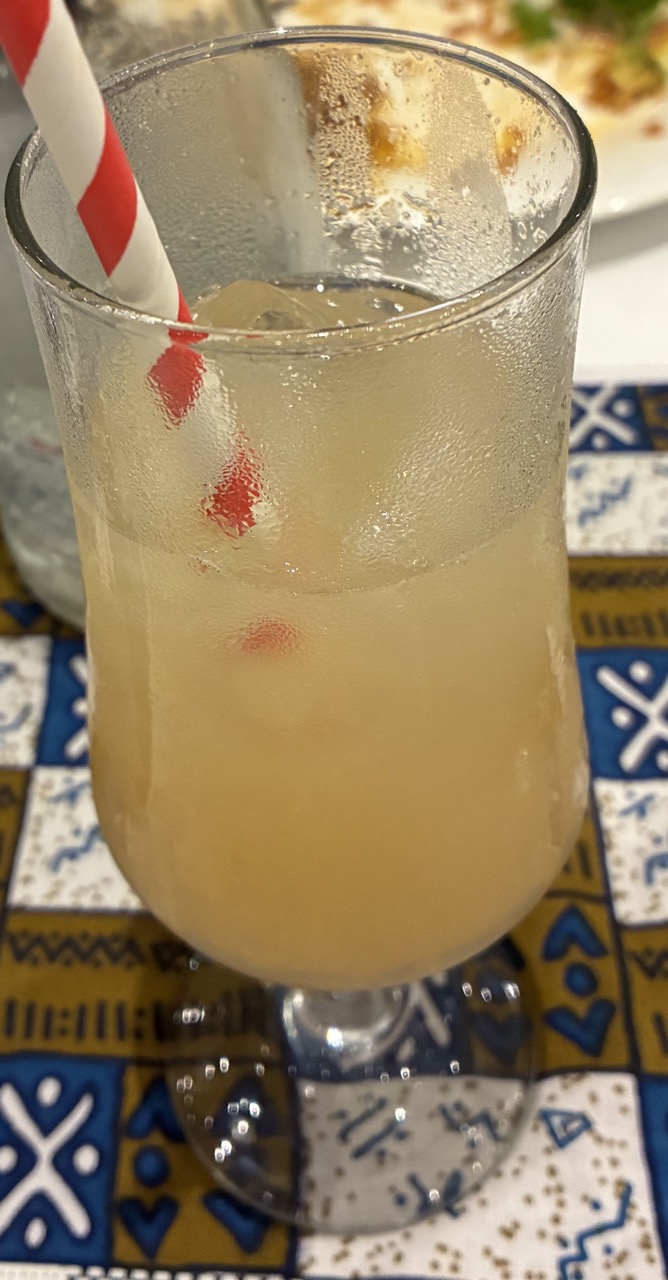
“NOW, you remember that I ordered ginger ale?” The server just smiled and I paid up.
Dr. Kofi held a debriefing about the overall trip. For the most part, reviews were positive. Although I was the lone person who enjoyed taking a bucket bath, most expressed that there should have been more warning about the range of hotel conditions. Dr. Kofi spoke of how hotels/restaurants had inconsistent quality, if they were still open the following year.
Again, I was the lone voice about all the shopping and no chocolate tour.
Most agreed that a big dinner wasn’t needed, given the huge, late lunches.
Many praised how the driver’s assistant had done a fabulous job cleaning the bus on the inside and out. My cousin’s husband especially praised how the assistant always helped with my cousin who mostly used a scooter to get around.
Tour members volunteered to collect tip money for all six support staff.
As conscious as I was about always having bottled water, I made a point to marry the bottles. I hadn’t noticed until that night that RC had kept a collection of partially-filled water bottles.

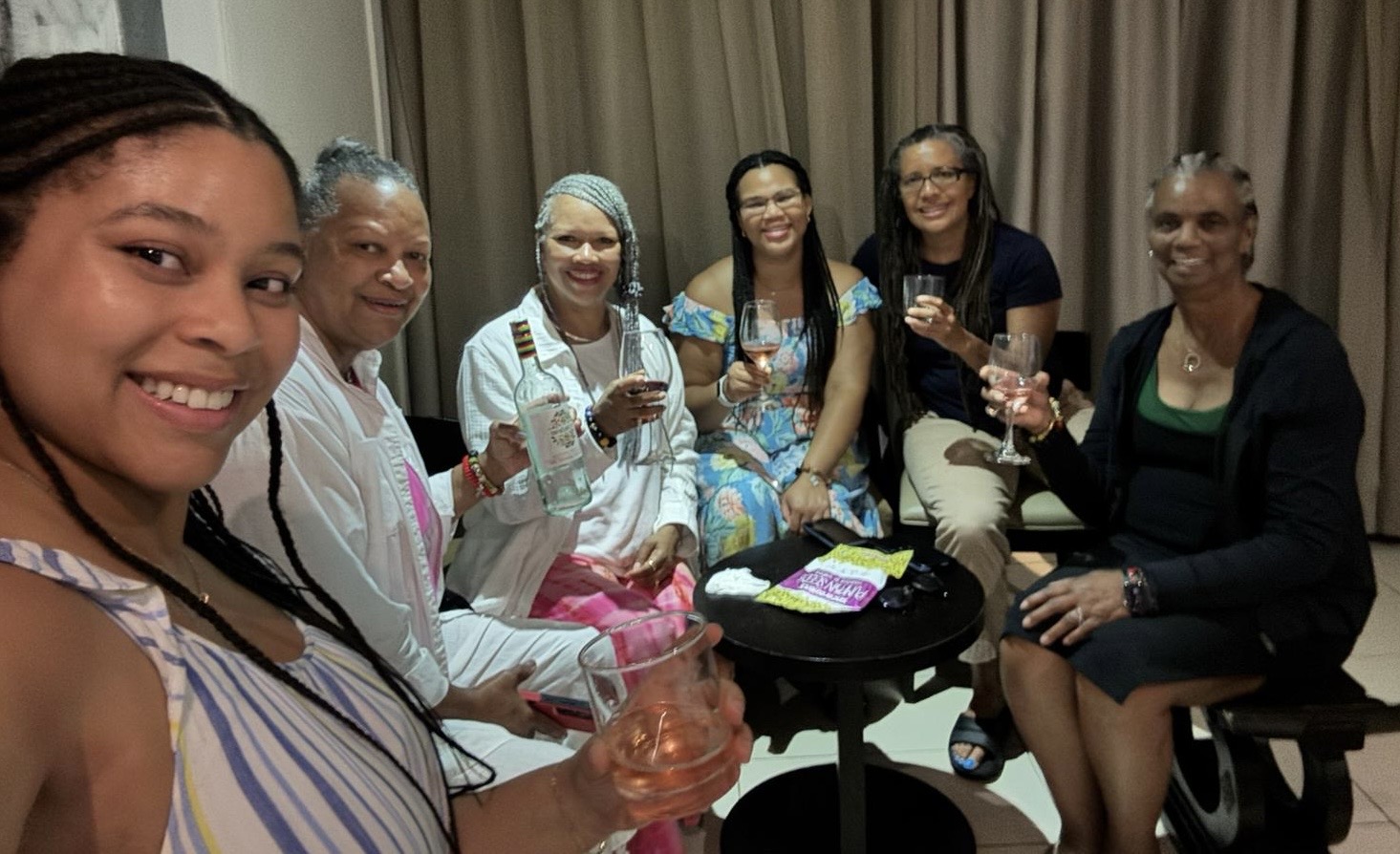
After returning to the resort, RC and I hosted another Strange happy hour. This time both nieces attended. We finished the two wine bottles we’d started the previous night. Again, many shared laughs.
Here’s an alphabetized list of the people who I photographed on the Ancestral Wall (superficially researched online; *thanks to Jerry Johnson for his help to identify some of the hard-to-find people.):
- Chinua Achebe: prominent Nigerian writer and a key figure in modern African literature, best known for his groundbreaking novel, Things Fall Apart, published in 1958.
- Sergeant Cornelius Francis Adjetey: Ghanaians mark the anniversary of the 28 February 1948 shooting deaths of St. Adjetey and two other veterans who were unarmed while protesting peacefully against the British colonizers.
- Akhenaten (Kemet): a 14th century BCE pharaoh who introduced a monotheistic religion centered on the sun god, Aten.
- Queen Amina (Zaria/Nigeria): warrior and ruler of Zaria, a Hausa city-state in what is now Northern Nigeria, Queen Amina built walls around the territories she conquered, many of which still stand today. She ruled for 34 years from 1576 until she died in 1610.
- Muhammad Ali (US): professional boxer and activist, known by the nickname “the Greatest”, and often regarded as the greatest heavyweight boxer of all time.
- Sonni Alli (Songhai Empire): monarch who initiated the imperial expansion of the western Sudanese kingdom of Songhai, leading Sudanese trading cities established the basis for future prosperity and expansion.
- Amanirenas (Kush): queen regnant of the Kingdom of Kush from mid to late 1st century BCE, known for invading Roman occupied Egypt and successfully negotiating the end of Roman retaliation, retaining Kushite independence.
- Ephraim Amu (Ghana): composer, musicologist and teacher.
- Yaa Asantewa: Queen Mother of Ejisu in the Ashanti Empire, now part of modern-day Ghana, who commanded the Ashanti Kings in the War of the Golden Stool, against British colonial rule, to defend and protect the sovereign independence of the Golden Stool.
- Behanzin (Dahomey): the eleventh King of Dahomey, modern-day Republic of Benin, who led the resistance to French colonization of his kingdom, during the Dahomey Wars.
- Yosef Ben-Jochannan (Ethiopia – US): author of 49 books, primarily on ancient Nile Valley civilizations and their influence on Western cultures.
- Steve Biko (South Africa): prominent South African civil rights activist, known for his leadership in the Black Consciousness Movement (BCM) during the apartheid era in the 1960s and 1970s.
- Maurice Bishop (Grenada): revolutionary politician and the leader of the New JEWEL Movement – a party that sought to prioritize socio-economic development, education and true black liberation.
- Edward Wilmot Blyden (St. Thomas-Liberia): educator, writer, diplomat, and politician who was primarily active in West Africa and known for pan-Africanism.
- Bai Bureh (Sierra Leone): ruler, military strategist, and Muslim cleric, who led the Temne and Loko uprising against British rule in 1898 in Northern Sierra Leone.
- Amilcar Cabral (Guinea Bissau): agricultural engineer, political organizer, and diplomat, was one of Africa’s foremost anti-colonial leaders, pan-Africanist and intellectual nationalist revolutionary poet.
- *Jonas Carboo (Sierra Leone): one of the founders of the New Ningo districts, one of 29 in the Greater Accra region.
- George Washington Carver (US): agricultural scientist and inventor, particularly for developing hundreds of uses for peanuts, sweet potatoes, and soybeans.
- Aime Cesaire (Martinique): poet, playwright, and politician, who cofounded Negritude, an influential movement to restore the cultural identity of black Africans.
- Cetshwayo (South Africa): the king of the Zulu Kingdom from 1873 to 1884 and its Commander in Chief during the Anglo-Zulu War of 1879.
- John Chilembwe (Malawi): early figure in the resistance to colonialism in Nyasaland, opposing both the treatment of Africans working in agriculture on European-owned plantations and the colonial government’s failure to promote the social and political advancement of Africans.
- John Henrik Clarke (US): African-American historian, professor, prominent Afrocentrist, and pioneer of Pan-African and Africana studies and professional institutions in academia starting in the late 1960s.
- J. J. Dessalines (Haiti): the first Haitian Emperor, leader of the Haitian Revolution, and the first ruler of an independent Haiti under the 1805 constitution.
- Cheikh Anta Diop (Senegal): historian, anthropologist, physicist, and politician who studied the human race’s origins and pre-colonial African culture, whose work is considered foundational to the theory of Afrocentricity.
- Lat Dior Diop (Senegal): The Warrior King Who Defied France.
- *Teye Djangmah I (Ghana): one of the founders of the New Ningo districts, one of 29 in the Greater Accra region.
- Eve, Mother of Humanity: the biblical Eve, the first woman and mother of the human race in the Book of Genesis, and “Mitochondrial Eve,” the scientific term for the most recent common matrilineal ancestor of all living humans.
- Frantz Fanon (Martinique): French West Indian psychiatrist, and political philosopher, whose works have become influential in the fields of post-colonial studies, and critical theory.
- Marcus Garvey: political activist who founded the Universal Negro Improvement Association and African Communities League, through which he declared himself the Provisional President of Africa.
- Naa Gbewaa (Ghana): the founder of the Kingdoms of Mamprugu, Dagbon, and Nanug, in present-day northern Ghana, which established a stable and prosperous kingdom.
- Fannie Lou Hamer (US): voting and women’s rights activist, community organizer, and leader of the civil rights movement, she was the vice-chair of the Freedom Democratic Party, which she represented at the 1964 Democratic National Convention.
- Fred Hampton (US): activist and revolutionary socialist, he came to prominence in his late teens and early 20s in Chicago as deputy chairman of the national Black Panther Party and chair of the Illinois chapter.
- Hatshepsut (Kemet): her successful reign as one of Egypt’s few female pharaohs, a period marked by a focus on trade, monumental building projects, and economic prosperity, best known for sponsoring a major trading expedition to the land of Punt, which brought back valuable goods like gold, ebony, and incense.
- Asa Hilliard (US-Ghana): also known as Nana Baffour Amankwatia II, was an African-American professor of educational psychology who worked on indigenous ancient African history, culture, education and society.
- Imhotep (Kemet): polymath who served as a vizier and high priest for Pharaoh Djoser, who designed the Step Pyramid at Saqqara, worked as a physician, where he is credited with pioneering medical texts like the Ebers Papyrus and was later deified as a god of medicine.
- Apoka Karenyane (Ghana): Warrior Queen who fought and rebelled against European enslavers.
- Dedan Kimathi (Kenya): leader of the Kenya Land and Freedom Army during the Mau Mau Uprising against the British colonial rule in Kenya in the 1950s.
- B. B. King (US): blues singer, guitarist, songwriter, and record producer who influenced many electric guitar blues players, who’s often called the “King of the Blues” and credited with inventing the modern blues/rock guitar style that uses whole tone string bends.
- Martin Luther King, Jr. (US): Baptist minister, civil rights activist and political philosopher who was a leader of the civil rights movement from 1955 until his assassination in 1968.
- Fela Kuti (Nigeria): musician and political activist, who is regarded as the principal innovator of Afrobeat, a Nigerian music genre that combines West African music with American funk and jazz.
- Toussaint Louverture (Haiti): general and the most prominent leader of the Haitian Revolution.
- Patrice Lumumba (Congo): politician and independence leader who served as the first prime minister of the Democratic Republic of the Congo from June until September 1960, following the May 1960 election.
- Wangari Maathai (Kenya): social, environmental, and political activist who founded the Green Belt Movement, an environmental non-governmental organization focused on planting trees, environmental conservation, and women’s rights, who became the first African woman to win the Nobel Peace Prize in 2004.
- Antonio Maceo (Cuba): second-in-command of the Cuban army of independence and commonly known as “the Titan of Bronze,” he was one of the outstanding guerrilla leaders in nineteenth century Latin America.
- Samora Machel (Mozambique): socialist politician and revolutionary who served as the first President of Mozambique from the country’s independence in 1975 until his death in 1986.
- Samuel Maharero (Namibia): paramount chief of the Herero people in German South West Africa (today Namibia) during their revolts and in connection with the events surrounding the Herero and Nama genocide.
- Miriam Makeba (South Africa): nicknamed Mama Africa, she was a South African singer, songwriter, actress, and civil rights activist, associated with musical genres including Afropop, jazz, and world music, and she was an advocate against apartheid and white-minority government in South Africa.
- Winnie Mandela (South Africa): prominent anti-apartheid activist and a political figure who became a symbol of resistance, often called the “Mother of the Nation.”
- Bob Marley (US): reggae pioneer, who blended elements of ska, rocksteady, and reggae into a rock-influenced style whose music gave voice to the struggles of Jamaica’s poor and oppressed.
- Nzinga Mbande (Angola): paramount ruler who ruled as a warrior queen of the Ambundu Kingdoms of Ndongo and Matamba, located in present-day northern Angola, who led her people in a 30-year resistance against Portuguese colonization and the slave trade.
- Mkwavinyika (Tanzania): renown for his remarkable victory over German colonial forces at the Battle of Lugalo on August 17, 1891and for seven years following this triumph, he continued to lead a steadfast resistance against the Germans until his death by suicide in June 1898 to avoid capture.
- Eduardo Mondlane (Mozambique): revolutionary and anthropologist who was the founder of the Mozambican Liberation Front and served as the FRELIMO’s first leader.
- Garrett Morgan (US): inventor, businessman, and community leader whose most notable inventions were the three-position traffic signal and the gas mask (also called the safety hood).
- Felix Moumie (Cameroon): anti-colonialist Cameroon’s People Union leader
- Robert Mugabe (Zimbabwe): revolutionary and politician who served as the leader of Zimbabwe from 1980 until he was deposed in a coup in 2017.
- Elijah Muhammad (US): religious leader, black separatist, and self-proclaimed Messenger of Allah who led the Nation of Islam from 1933 until his death in 1975, who mentored Malcolm X, Louis Farrakhan, Muhammad Ali, and his son, Warith Deen Mohammed.
- Nanny of the Maroons (Ghana-Jamaica 1686-1755): also known as Queen Nanny, was a leader of the Jamaican Maroons, who escaped slavery and led resistance against the British in the 18th century, freeing over 800 enslaved people.
- Menelik II (Ethiopia): king of Shewa from 1866 to 1889 and Emperor of Ethiopia from 1889 to his death in 1913, who expanded the Ethiopian Empire to its greatest historical extent and defeated Italian colonial forces at the Battle of Adwa in 1896.
- Menes (Kemet): first pharaoh of ancient Egypt, credited with unifying Upper and Lower Egypt around 3100 B.C.
- Nehanda (Zimbabwe): spiritual leader, along with Kaguvi, were who inspired the Zimbabwean revolution against the British colonial rule where under their guidance and leadership, united local ethnic groups to fight in the first Chimurenga (War of Liberation) during 1896-1897.
- Agostinho Neto (Angola): politician and poet who served as the first president of Angola from 1975 to 1979, having led the Popular Movement for the Liberation of Angola in the war for independence.
- Kwame Nkrumah (Ghana): politician, political theorist, and revolutionary who served as Prime Minister of the Gold Coast from 1952 until 1957, when it gained independence from Britain, then served as the first prime minister and then the president of Ghana, from 1957 until 1966.
- N’nonmiton Amazon Warriors (Dahomey): elite all-female military unit was a powerful fighting force in West Africa from the 17th to the late 19th century, known for their discipline, bravery, and ferocity in battle where their name means “our mothers” in the Fon language.
- Julius Nyerere (Tanzania): politician, anti-colonial activist, and political theorist who governed Tanganyika as prime minister from 1961 to 1962 and then as president from 1962 to 1964, after which he led its successor state, Tanzania, as president from 1964 to 1985.
- John Okello (Zanzibar): leader of the Zanzibar Revolution in 1964 where this revolution overthrew Sultan Jamshid bin Abdullah and led to the proclamation of Zanzibar as a republic.
- Piankhi [Piye] (Kemet): Kushite king and founder of the Twenty-fifth Dynasty of Egypt, who ruled Egypt from 744–714 BC after leading a successful military campaign against the fragmented Egyptian city-states, asserting control over Upper and Lower Egypt.
- Sengbe Pieh [Cinqué] (Sierra Leone): led a revolt of many enslaved Africans on the Spanish slave ship La Amistad in July 1839.
- Qalidurat (Nubia): king of the Makuria, a 7th century Nubian kingdom, who is known for successfully leading his forces against the Rashidun Caliphate in the First and Second Battles of Dongola, which led to a treaty rather than a surrender.
- Walter Rodney (Guyana): historian, political activist and academic whose notable works include How Europe Underdeveloped Africa, first published in 1972.
- Thomas Sankara (Burkina Faso): military officer, Marxist and Pan-Africanist revolutionary who served as the President of Burkina Faso from 1983 until his assassination in 1987.
- Sekhukhune (South Africa): paramount king of the Bapedi people in the 19th century known for his resistance against Boer and British expansion.
- Haile Selassie (Ethiopia): Emperor of Ethiopia from 1930 to 1974 famous for his role in African unification, modernizing Ethiopia, resisting the Italian invasion, establishing the Organization of African Unity (OAU) and his deification by Rastafarians.
- Shaka (South Africa): king of the Zulu Kingdom from 1816 to 1828 who was one of the most influential monarchs that ordered wide-reaching reforms that reorganized the military into a formidable force.
- Togbui Sri I (Togo – Ghana): first king of the Anlo state credited with uniting the people.
- Oliver Tambo (South Africa): anti-apartheid politician and activist who served as President of the African National Congress from 1967 to 1991.
- King Tackie Tawiah I (Ghana): reigned during the “Golden Years” of Accra (1862-1902) and praised for being progressive and enterprising.
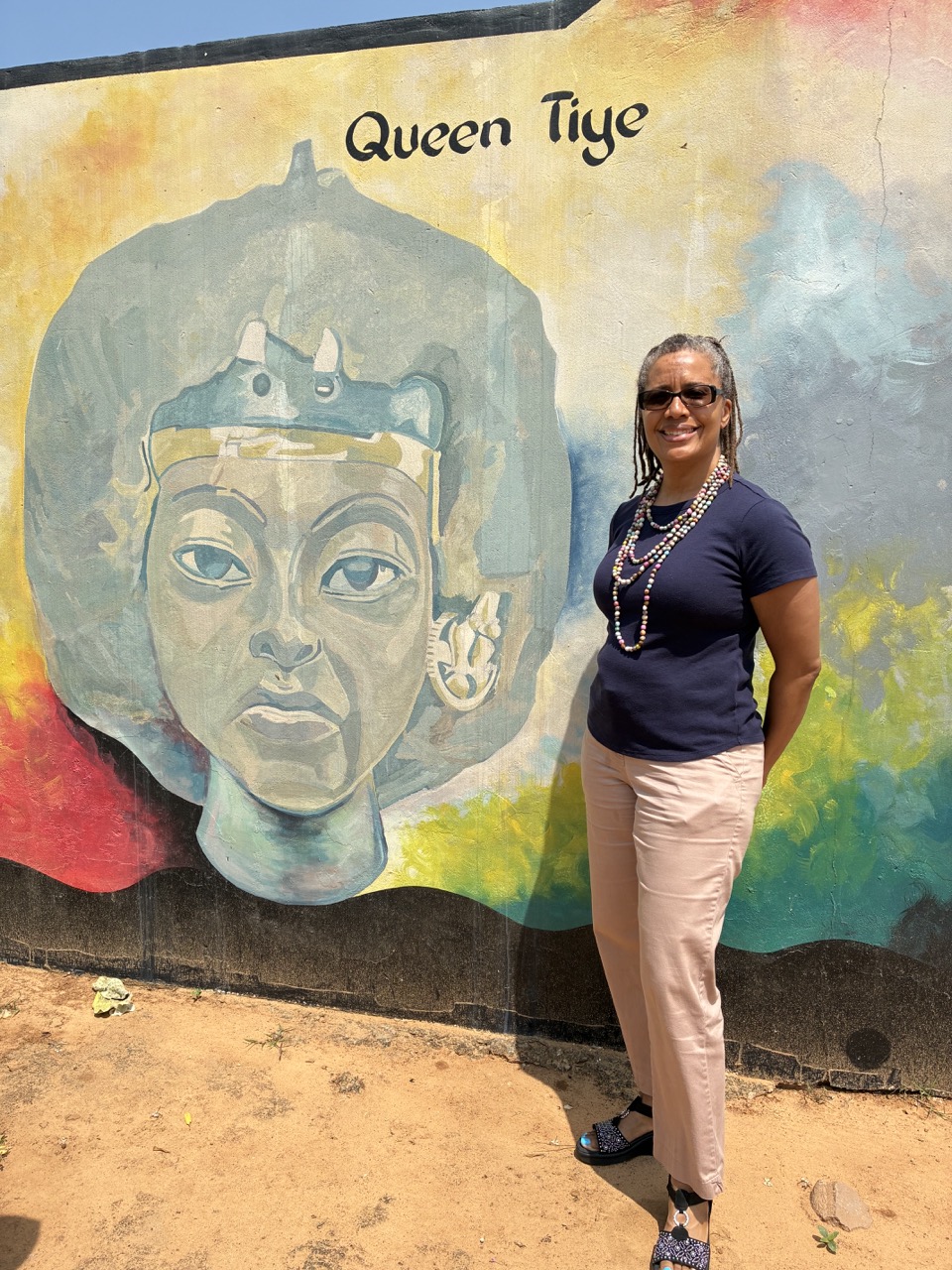
- Queen Tiye (Kemet): a powerful and influential Egyptian queen who was the Great Royal Wife of Pharaoh Amenhotep III, the mother of Pharaoh Akhenaten, and the grandmother of Tutankhamun who was known for her intelligence and political acumen, she wielded significant influence in court and in foreign affairs, even being addressed directly by foreign rulers.
- Samory Toure (Guinea): established a Muslim empire in western Africa, from Sierra Leone to the Ivory Coast region who conquered and enslaved African enemies to finance his military resistance to French colonial expansion and defend the territory he acquired.
- Sekou Toure (Guinea): political leader and African statesman who was among the primary nationalists involved in gaining independence and was the first president of Guinea from 1958 until his death in 1984.
- Harriet Tubman (US): abolitionist and social activist who escaped slavery, who made around 13 missions to rescue approximately 70 enslaved people, using the network of antislavery activists and safe houses known collectively as the Underground Railroad.
- Kwame Ture (Trinidad – Guinea): activist who played a major role in the civil rights movement in the United States and the global pan-African movement.
- Osei Tutu I (Ghana): one of the founders of the Ashanti Empire, who led an alliance of Asante states against Denkyira, defeating them at the 1701 Battle of Feyiase.
- Booker T. Washington (US): leading African American voice, author, orator, and founder of the Tuskegee Institute, which emphasized vocational education for African Americans, who believed economic self-sufficiency and industrial skills were key to racial advancement, though his “accommodationist” approach.
- Ida B. Wells (US): investigative journalist, sociologist, educator, and early leader in the civil rights movement, who was one of the founders of the National Association for the Advancement of Colored People.
- Frances Cress Welsing (US): psychiatrist well-known for her 1970 essay, “The Cress Theory of Color-Confrontation and Racism,” which theorized the origins of white supremacy culture.
- Malcolm X (US): charismatic leader and human rights activist who founded Muslim Mosque, Inc. and the Organization of Afro-American Unity who advocated for Black empowerment “by any means necessary.”
- *Zabeth (Haiti): courageous enslaved woman who inspired others for daring to escape numerous times despite the physically painful consequences.
- Zumbi (Brazil): quilombola leader and one of the pioneers of resistance to enslavement of Africans by the Portuguese in colonial Brazil.