You are using an insecure version of your web browser. Please update your browser!
Using an outdated browser makes your computer unsafe. For a safer, faster, more enjoyable user experience, please update your browser today or try a newer browser.
On the summer solstice 2014, four other Texas women, or cotravellers, and I started our journey to Peru. When I arrived at the Austin airport, I ate at an organic, locally-sourced bar, served by a spoken word poet.
Two flights later, I took a “sleeping selfie” at the airport in Lima. Although my overnight layover was long enough for a nap, PA announcements and airline workers banging on the glass wall to have the door opened by a coworker prevented that.
In another chapter of my life, I’d lived in Denver, but the Mile High City did not prepare me for how mountainous or altitudinous Cuzco was at 11,200ft.
I could’ve kissed the ground when I arrived at the hotel in Cuzco, especially since I was on time for the continental breakfast. However, the receptionist politely told me that complimentary service began the next morning.
Since we couldn’t check in for a few hours, our trip CEO, Chief Experience Officer, took us on a walk in search of breakfast. She explained the ubiquitous rainbow-like flags did not symbolize gay pride, but the indigenous Quechua culture.
Apparently, our weeklong visit coincided with several celebrations: the summer solstice, St. John’s Day on June 24th, and another celebration, which I can’t recall. For most of our vacation, we saw people in a variety of parade costumes.
After returning from breakfast, we discovered one cotraveller’s luggage had been burned by an outlet short-circuit.
Perhaps that was the risk the nearby electrical sign had warned about.
I was thrilled to check in, but the novelty of my new surroundings distracted me. Such as the negative first floor button, which inspired many creative musings every time I was on the elevator. I never pushed it since I didn’t want reality to disappoint me.
Even my room number amused me since it was the educational accommodations code for students with disabilities, which I certainly needed to help with the combined effects of sleep deprivation and high attitude.
Later in the day, our CEO walked us to the Plaza de Armas where the Iglesia Compania de Jesus lined one side of the plaza.
La Catedral lined another side.
In the center stood the Inca, Pachacutec.
Down an alley branching off the Plaza de Armas, we came upon a series of parade floats. I especially liked this one for incorporating a soccer theme since the World Cup invaded everybody’s mind.
Since Cuzco was a major tourist destination, I gave a few soles to take a picture of a grandmother with her grandkids and a goat. Throughout the rest of my vacation, I could truthfully tell all others who tried to solicit money from me for that shot, that I’d already taken one!
Nearly every public space had a thick gathering of people, whether they were watching a parade, listening to a speaker or just being together with extended family.
For our first dinner, I ordered alpaca brichra mediterranea, which was served with a berry sauce, sliced figs and cream pasta. Tasted like deer, but with less cholesterol than beef.
Afterwards, I was initially delighted to see the bathroom at that restaurant was stylishly covered in straw. Then my mind drifted to how could they possibly keep that sanitary? I chose not to over-think it.
Months before this trip, I’d attended a slideshow presentation, where I first saw the famous 12-sided rock of Cuzco. It‘s a prime example of Incan ingenuity since the wall was a sturdy construction despite its irregular-shaped rocks that fit together perfectly.
Travelers unused to high altitudes are cautioned not to drink alcohol for the first two days. Well, mama needed her medicine. We split a delicious bottle of Intipalka, a Peruvian Malbec! Most of the world only knows Argentine and Chilean malbecs. While sipping wine and eating a piece of chocolate cake, we watched the US play Portugal.
For the second time in just two hours, I took another picture of a bathroom. These so-called bathroom rules start off as legit since, in Peru, one tossed used toilet paper in the trashcan rather than flush it.
By the time we took our city tour on Monday, I thought we were already on Tuesday. The details of tour were fuzzy, but I remember that this was a baby alpaca. I’d just eaten one of its cousins last night.
Speaking of eating mammal cousins, we got a preview of how guinea pigs were prepared as part of our city tour.
On a rooftop of one of the houses were bulls, which symbolized Catholicism.
On another rooftop was the southern cross, which symbolized Andean religion.
As we took in the ambience of rooftop religious symbols and guinea pig preparation, a parade marched by.
At the next stop, we visited a burial site where Incan VIPs had been mummified and buried with libations for the afterlife. There weren’t any displayed mummies, but I got to experience the coolness of the limestone altar where mummies had been prepared.
From the mountaintop perspective, I appreciated the neat layout of Cuzco where all streets radiated out from the Plaza de Armas.
No Cuzco city tour would be complete without visiting Saqsaywaman (pronounced similar to “Sexy Woman”). With retaining walls to prevent mudslides during the rainy season, Saqsaywaman was the site where the Inca would celebrate mother earth by drinking chicha, fermented maize. On August first, a young girl, who had not yet menstruated, was given chicha and coca leaves and buried alive to appease mother earth to prevent natural disasters. The temporary bleachers shown here had been brought in for people who could afford to celebrate St. John’s Day in style.
I didn’t know that Cuzco had a Cristo Blanco nor that the largest one resided in Bolivia instead of Brazil.
Our last city tour stop was the Convento de Santo Domingo, which was a Dominican convent built on top of an Incan temple. The Incan foundation had the usual trapezoidal construction that made it earthquake proof.
Of all the exotic or questionable things I ate, it was the carrot and pumpkin soup for dinner that did me in. The first two middle-of-the-night trips to the bathroom were just due to diarrhea, but that third time, I leapt out of bed, tied back my dreads and heaved a sulfur and pisco sour flavored vomit. Next time I travel to a developing country, I will buy a small bottle of tequila or whiskey for such medicinal purposes.
I slept like a charm after that. In the morning, I boasted at breakfast about how my body could eject pathogens without further intervention, which was fortunate since I felt well enough to witness the re-enactment of the Inca celebrating the summer solstice.
We continued to the San Isidro market, where the fresh fruits, vegetables, juices, spices and slaughtered animals were sold.
One pleasant surprise was the lack of flies, thanks to the high altitude.
Another surprise was the availability of “potion” ingredients. My upbringing calls it “voodoo”. My mother would call it “working roots”. Whatever you name it, it was available for purchase.
Our CEO purchased a bag of coca leaves for us to try. We’d all drank coca tea, which was supposed to help with altitude sickness. I found the leaves slightly bitter and it had no noticeable effect.
For lunch, traditionally the biggest meal of the day, I ordered lamb stew that came with a huge chunk of lamb that I’d normally eat in a week.
Our CEO recommended we split a fried guinea pig since most tourists don’t like it. It had very little meat, a membranous texture, and a gamey taste most similar to duck. On my first bite, I’d forked what I thought was white meat, but the texture was very soft. The CEO told me that I’d just eaten part of the brain!
At this point, my camera needed recharging. I plugged in my surge protector and heard a loud popping sound. The receptionist reset the circuit breaker. Turns out the camera’s AC adapter worked like a charm without it. Yeah, technology!
Later, we visited a silver jewelry store that had its own on-site jewelry-making room. After seeing how the silver was smelted and the raw stones cut, we were released to shop.
I bought two pairs of earrings to remind me of Peru. One pair was in shape of a kantu flower and the other symbolized the solar calendar.
After walking around Cuzco a couple of days, I finally found my namesake. Of course, I had to take a picture with the little plaza sign.
I was delighted to discover Cuzco had a chocolate museum, where an employee passed out samples of dark, milk and white chocolate without vanilla and other added stuff normally found in chocolate bought in the States. I sampled tea made from cacao leaves and bought two dark chocolate bars, one with cardamom, the other with aji chili. I liked the cardamom best.
I split a Peruvian malbec and merlot blend at an upscale restaurant to have with the chocolate. Since I wanted a light dinner, I ordered a salad and discovered Peru has the creamiest avocados on earth!
Not only that, but I loved the food philosophy of this restaurant.
On the way back to the hotel, I stopped into this liquor store for a 2.5L bottle of water. I could not resist taking a picture of the Peruvian fertility god sitting among the alcohol.
One afternoon, I had a little downtime to sit in the Plaza de Armas. Some local women told me that the propped up tree, named Queuna, couldn’t be cut down because it had been there since the time of the Incas.
Later, we took a private bus to the House of the People of the Sun to volunteer with some kids. Due to large potholes in the dirt road, we had to walk uphill with our donations.
The director greeted us and explained the different programs offered: jewelry-making, leather crafts, homework help, especially math, music, and psychological counseling.
In the past, there had been programs to raise awareness about recycling, composting, and promoting the use of native languages such as Quechua, native cultures, and educating rural people about labor and sexual exploitation.
I was alarmed to see that the house, dedicated to helping children at risk economically and/or intellectually, was across the street from a women’s penitentiary.
All the kids had assigned duties.
I was eager to them with their math homework, but the one student who had finished his, packed up his notebook and wouldn’t let me check over it.
Most of us chose to paint the mural, which had been sketched out in pencil. The theme appeared to be an ecological message about how everyone was responsible for maintaining the well-being of the environment.
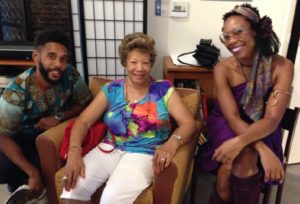
After painting, I visited the music room. My presence caused the kids to be giddy. Finally, the teacher got them to play a traditional song.
As soon as the bus dropped us off from volunteering a half-day, we went to a nearby little bar to take a medicinal tequila shot, Followed by two helpings of a local mint Bailey’s imitation on the rocks. This became our place for a couple of nights.
On the way up the stairs to breakfast, I came across a little boy, chasing after a lemon-sized yellow ball. Unfortunately, he and two other boys were playing soccer in the dining area. I have an on-going irritation with parents who allow their kids to play in undesignated areas, especially restaurants. I joined two cotravellers at their table, but was preoccupied by the boys. Finally, one cotraveller got the ball. I pocketed it since I was comfortable with being the bad guy. I explained to one boy in my broken Spanish that we were in a restaurant and I wanted to eat in peace. I told him I’d give the ball back when I finished eating. Of course, the parents and grandmother were all there, thought the situation was funny, but apparently agreed with me keeping the ball. One cotraveller returned the ball when she saw they were leaving.
For our second day of volunteering with the kids, we stayed the whole day. Some cotravellers helped with preparing lunch.
I managed to help a few kids with their math, algebra problems and one geometry-based algebra problem. One girl made posters out of the problems. I was so happy to understand and explain the problems in Spanish.
The jewelry-making teacher showed me the basics of making silver earrings.
That was a steep learning curve, but I eeked out a pair of earrings after a while. I have a newfound respect for jewelry designers.
Then I went into the leather craft room to make a bookmark. The design was already engraved on the bookmark. So I painted it. As usual it took longer than I thought it would.
As soon as I finished, I went outside to thaw out. Next thing I know, I had a paintbrush in my hand and I started to paint the grass part of the wall mural. The painter in me just had to make the grass have more depth.
We ate lunch with the kids, which consisted of sopa de viernes or chupe, a carrot and tomato salad, a veggie fritter and half a boiled potato.
After lunch, I found a quiet spot and whipped out my ever-present journal. I wasn’t alone for long. The boys were fascinated by both my cursive handwriting and how quickly I wrote. They couldn’t read my writing until I printed—just like my students in the States.
The next morning, I sprang from bed at five thirty-three—thirty-three minutes AFTER my wake up call was supposed to ring. Eleven minutes later, I joined my tour group on the bus to Ollantaytambo. Despite the breakneck speed around curvaceous roads, I saw snow-capped and cloud-covered mountains.
We arrived at the train station with just enough time to use bathroom…
and to hear our daily dose of Simon and Garfunkel’s “Sound of Silence” on pan flute.
We took a comfortable, clean train with sunroof windows and complimentary snack and beverage service to Aguas Caliente, the city just outside of Machu Picchu.
The CEO had told me earlier in the week that the puma represented the present world; the condor represented the future; and the snake represented the past.
For the first time on my trip, I saw a Peruvian hairless dog. Apparently this one was a Batman fan.
We hiked along the Urubamba river up to the base of Machu Picchu. I stood on the pedestrian bridge where hardcore hikers ascended. The next day, I’d take the bridge to my right for the brave who traveled up by bus.
This is one thing that happens when six women travel together: time to break out with the hand sanitizer before eating!
Half of us made a short trek to the hot springs after lunch. It was a bust since they wouldn’t allow us to soak our feet in the pools because we didn’t have bathing suits. Yet, I made use of the toilet since our hotel temporarily had no running water. We chilled the bar area, overlooking the pools and rushing river water while listening to Bob Marley and Pink Floyd. A Chinese film crew showed up to document the hot springs.
On our way back from changing money, we went to a restaurant to watch Italy vs Uruguay because as one cotraveller said, “I’ve never seen an ugly soccer player.” I watched more sports on TV in the past few days than I’d watched all last year.
For the second early morning in a row, we stood in line for a Machu Picchu shuttle. Some tourists speculated about the safety of the infamous shuttles. I shared the same sentiments as one cotraveller: “I’ve walked too much this week to roll off a bus!”
Once we arrived safely at the entrance, most of us got off the bus in a civilized manner, but this impatient European shoved me in the back twice saying, “Go, go! Go, go!” when I paused to allow people across the aisle to get off the bus first. I turned around, put my finger in his face and threatened, “Push me one more time!” He repeated “Go, go!” softer, but didn’t touch me again.
And just look at the line that he’d rushed to wait in. Our CEO told us that many tourists have the delusion that they’ll be the first at the gate.
My visit to Machu Picchu was amazing even though it was the only time while in Peru I was immersed among other tourists, some of whom were absolutely rude when it came to taking their pictures at prime spots then moving on.
A tour guide explained that Machu Picchu had three parts: Agriculture, Urban (homes), and spiritual. East-facing doorways signified residences. All other facing doorways were either storage spaces or temples.
We came upon a bright green coca bush. Our guide explained that cocoa leaves needed chemical processing with sulfuric acid to make cocaine, which eats away at one’s flesh. He stated that all countries should legalize marijuana like Uruguay did since it’s a safer drug. Our CEO concluded, “If you can’t beat them, joint them!”
The Incan canal system below ground still collected more than enough drinking water through rainwater harvest to supply the estimated ancient population. During the wet season grounds became saturated. This temple was falling apart because of water damage.
In one part of Machu Picchu condor wings and the body of a condor were etched in stone.
For some inexplicable reason, I thought it would be a good idea to take a 45-min hike to the Sun Gate. I’d already walked too much on my recovering broken ankle. The best part about the steepness of the trail going down was my knees hurt so much, I didn’t even feel any ankle pain!
Three cotravellers and I made the Sun Gate trek.
Before leaving Machu Picchu, I put a decorative stamp in my passport.
I was so exhausted when I hopped on the shuttle bus, I didn’t care that it barreled down the narrow winding trail.
Once again, my hotel room number in Cuzco was prophetic. I certainly needed to clean up after hiking Machu Picchu, then spending hours traveling.
Since this was my last day, I took a picture of the Cuzco street dogs. They were so sophisticated in that they knew how to cross the street and otherwise interact with humans. I’d heard that none of them were strays although they freely roamed the streets.
After the city tour a few days ago, many shoeshine guys had approached me. I purposely waited until my last day to have them shined up. He gave my shoes the best shine since they were bought. Charged only two and half dollars, but I ended up giving more than that.
A cotraveller and I returned to the chocolate museum. After a few sips of Mayan hot chocolate mixed with red pepper (aji), honey and hot milk, I proclaimed, “All black people should smell like chocolate.” The cotraveller said, “All white people should smell like vanilla, then there’d be no racism.”
At the Cuzco airport, security and a group of passengers huddled around a flatscreen TV. I didn’t have to remove my newly shined shoes nor throw away my opened bottle of water because of a tight game between Costa Rica and Greece. The crowd roared when Costa Rica won. Then magically, the airport announcements resumed.
My last supper in Peru was the most expensive, courtesy of the Lima airport. I bit the bullet and ordered Malbec with fettuccine and shrimp. I bought a $3 bottle of water afterwards to counterbalance the saltiness of the sauce.
Before we boarded, about six airline workers donned disposable rubber gloves and hand searched all carry-ons. As soon as I saw them confiscating all beverages, I chugged my expensive bottled water, which had resided in the front pocket of my backpack.
The DFW airport has a new thing: cue up for an electronic kiosk that scans your passport, takes an unattractive picture, and asks for the same information as the paper immigration form, which I’d already filled out, but no one ever asked for.
Yet throughout my travel, I was a big fan of the old school technology: pen and paper for my notes, edits and long-division money exchange calculations! Make no mistake, I’m happy to return to the land of time-saving devices, even though I’m not sure where all the saved time goes.
I’ll admit it: I struggle with arrogance. After all, I’m only a perfect nine. I know I have flaws. Yet I make the most of what I have.
When revising my bucket list, I was initially stumped. Consider this: I’ve traveled around the world, driven cross-country, been published, happy, in love, thinner, younger, in good health and as far as rich is concerned, money’s what I make of it and as long as I’m making enough to pursue happiness, I’m rich.
So what drives me to write, paint, read and wake up in the morning with a sense of purpose? Since I’ve resigned from teaching, my quest is to make all of my social interactions and art teachable moments.
Given the sorry state of the world, I have a myriad of things from which to choose. The aspect I love the most about teaching is research. Whichever objectives I want to know more about, I research and transform that information into an engaging lesson. That elevates the act of teaching to the art of teaching. Unfortunately art was one of the first things sacrificed to the high-stakes testing moneymaking monster.
Yet now I’m free to teach whatever I please. To follow my passions and shed light on the darkness of misinformation and misogyny, so I’ll NEVER run out of material or motivation. Just watching twenty minutes of the news can send me into an intellectual frenzy. I do some of my best improvisational spoken word, addressing the latest stupid utterance by a republican politician, or so-called Texan educational reformist, or restrictions to women’s healthcare, or latest mass killings where apparently it was the person doing the killing, not the weapon.
Regardless of the rant, I feel obligated to come across as an educated, empowered voice. Y’know the saying about how we should know history so we won’t be doomed to repeat the past? Well, history pisses me off! History tells me that minority women have been and continue to be beasts of burden, suffering in silence. Whichever misogynistic acts are unleashed against women, at least double it for minority women.
The only way I can think to help balance out the universe is to produce a different narrative, a counter narrative, my own narrative. Through fictional characters in my novels or first person spoken word. The situation’s only going to improve if I help it along.
This isn’t some Miss America beauty pageant contestant’s fondest wish of ending world hunger. Nor is it the airing of a litany of gripes about how someone should do something about my complaints. My irritation is an accurate indicator that I need to do something with integrity about the situation.
When I resigned from teaching on Friday, March 29th, 2014, I’d already finished teaching the entire Physics curriculum, I’d paid off all debt and I’d saved up some money. The icing on the cake was that I’d resigned on the eve of the administration of the most egregious standardized test to date: a 5-hour combined reading and writing test where students would receive a cold sack lunch delivered to their testing classroom to wolf down for 20 minutes then resume taking the test. No longer would I be obligated to assist the state of Texas in its institutionalized educational version of child abuse.
The following Monday and Tuesday, two different TV reporters interviewed me over my resignation in what they called my protest against standardized testing. I hadn’t thought of it as a protest, but I certainly do not disagree.
I told the reporters how creative teachers like me wanted to do more than use the scripted lessons and limited teaching techniques to educate students. Yet teachers who dare to be innovative get heavily biased negative evaluations, put on growth plans and then threatened to lose their jobs unless they slavishly follow the teaching-to-the test strategies.
Although many people don’t watch the 5 or 6 o’clock news or listen to news radio in the morning, my fellow teachers had heard about my actions. My former colleagues and my friends who taught at different schools all reported about the buzz I’d caused at their school. Many thought perhaps now something would change.
A month later, a third TV reporter contacted me. Again, the request was to interview me about the negative consequences of high-stakes testing. I told her that my resignation was old news. She agreed, but quickly added that I was the only teacher who would go on camera to talk about it. I declined that interview since I had nothing new to add, but I gave her a tip about another education protest scheduled for that day.
I don’t blame any of the inspired teachers who will not come forward. After all, teaching is challenging enough without the added retaliation they’d surely receive from school administrators if they spoke up. At the same time, imagine what would happen if the general public knew teachers’ narratives. Would parents allow their students to participate in those high-stakes tests? How many parents know that those high-stakes tests are NOT part of No Child Left Behind? How many parents know that this is a Texas initiative?
On April 14th, 2014 I sat in on the Texas senate committee meeting on education. I witnessed our Texas senators grilling the test makers over the length of the infamous 5-hour reading/writing test. One senator pointed out that giving high school students a 5-hour exam was the equivalent of an academic and physical test. Another senator questioned why the test was five hours just to graduate from high school when students who wanted to go to college only took a 3-hour test.
The last expert on this panel was an education professor from Dallas who had monitored three high schools. She testified that the teachers who administered the test witnessed students losing stamina after three hours and bubbling in answers in the fifth hour without reading anything.
The results of this flawed test will reflect on the student, his/her teacher and the school. And for what? The generation of data? To close the poverty gap? To close the minority achievement gap? That data will be used against students, teachers and schools. Any school that has major academic needs will be punished for it. Can you imagine going to a hospital emergency room and not receiving medical help because you’re not already healthy?
So now that I’m no longer in the trenches, no longer financially dependent upon remaining silent out of fear of retaliation, I plan to write a fictionalized account about teaching within the toxic consequences of high-stakes testing or “the machine” as I like to call it. I’ve already started doing a little research and have conducted some interviews. Yet, I need to finish my current novel before I can give this one the time and energy it deserves.
In the meantime, class is in session. There’s a life-altering lesson waiting to be learned.
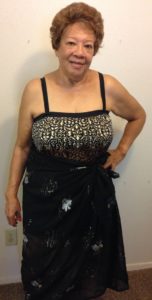
For this year’s rendition of Mattie Gilmore, I went to a costume shop in north Austin and tried on a stylish maid’s outfit. Much finer than the clothes that I had strolled in with! The cherry on top was the maid’s hat. The woman at the costume shop originally suggested that I bobby-pin the hat onto my hair. I tossed my dreaded head back as I laughed, assuring her that no bobby-pins were going through my hair. Ingeniously, I threaded a dreadlock through each loop, which secured the hat well.
One of the best things about playing Mattie Gilmore again was being already familiar with the 8-line narrative. A few people asked me follow up questions, but I politely told them I did not know more about her. I referred some to the four Juneteenth summary panels, conveniently located in the same room where I was stationed.
A few visitors laughed at the part of my narrative, which stated that “[negroes] ain’t never done no managin'”. Many thought too many blacks were still in that situation.
A few of the older visitors wished more young people learned this history and had been in attendance. One woman, who had picked cotton as a child, sent her grandkids with some food one day to do the same. They and their food didn’t last but a few hours. She teased them about how both were supposed to last from sunup to sundown. She wished all kids these days, especially those who don’t like to study, could get a taste of the same.
Another group of visitors were an older couple who were visiting their adult son from Algeria. They did not understand enough English to follow my narrative, but I looked them in the eyes as I emoted my lines singularly, allowing their son time to translate into French. His mother really enjoyed what few lines I uttered and broke into an interesting conversation about how similar slavery in the States was to slavery in Algeria. I gave the son a break by letting him know I could understand the gist of what she said since I’d studied French for 6 years. This allowed him a bit of a break on two-way translation. Once again, I wished more of my French remained in my brain. As much as I struggle with foreign languages, I know this is just a fantasy. I was pleased to hear that the word for slave, “esclavo,” was the same in both French and Spanish.
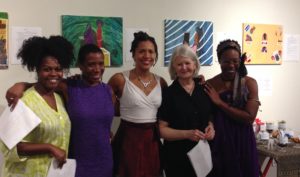
At the end of our interpretation time, we took a group picture, and dashed away. The other woman and I were more than happy to change into our regular, cooler clothes, then eat a delicious barbecue lunch provided for volunteers. While eating, I caught up with one of the movers and shakers in Austin, who actively works to keep the historical black areas renovated and well-known. And, for the second time this week, I got an offer to teach a creative-writing course, this time with an emphasis on genealogy narrative.
All in all, I had a fantastic time reenacting a newly freed slave, thanking God I didn’t have to live through the real thing.
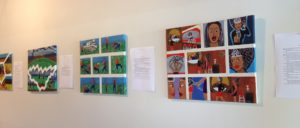
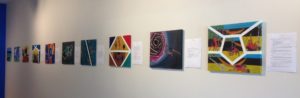
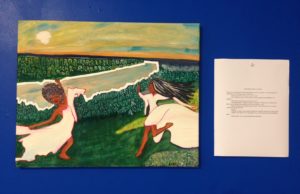
A few days later, on the actual day of Juneteenth, I finally had the satisfaction of seeing “Infinity & Negativa Rejoice” on the wall for the “100% ” fundraiser at the Carver Museum. This fundraiser is so named because 100% of the silent auction proceeds goes to the Carver’s education program. The 12 x 12 canvases were donated by a local art store and all the artist participants worked on and submitted their completed canvases. The silent auction will last for a month.
After getting a thrill of seeing the twins on the wall, I went into the theatre for a screening of the documentary, “Freedom Summer” about how a thousand white northerners came down to Mississippi to help educate and encourage blacks to register to vote. This year is the 50th anniversary of that event. Although it was a hard thing to watch, I felt a renewed sense of purpose for the mission of writing bits of my narrative through spoken word and novels. I’ve got a theory that I’m going to explore further. People will read/listen to my works if it’s entertaining enough.
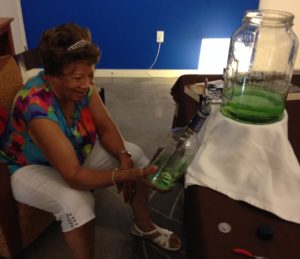
Growing up in the Bible belt, I learned very little about the contributions of blacks and even less about strong black women. Yet from the little I was taught, one of my sheroes was Sojourner Truth.
Named Isabella at birth in 1797 in New York, she grew up speaking Dutch, the language of her original slave masters. She was first sold at age nine and learned English the hard way, bearing the lash whenever miscommunications occurred. She labored hard in the fields, agonized as nearly all of her children were sold into slavery and fought for equality before and after she became a free woman. At 29, Isabella changed her name to Sojourner Truth, walked to freedom and preached about the abolition of slavery, women’s rights, the right to vote, temperance, prison reform and ending capital punishment. She helped Abraham Lincoln formulate The Emancipation Proclamation, pioneering the civil rights path when everyone else was still preoccupied with talk of the civil war.
In her most famous speech, Truth asked the fundamental question: Ain’t I a woman? In Truth’s day, white women were put upon pedestals that were planted firmly on the backs of black people. Black women served as beasts of burden in a variety of ways: cook, caregiver, maid, field hand, breeder.
Truth knew in her heart that black women were only different than the women on the pedestal due to their slave status, racism and lack of equal access to resources. Given the prevailing pseudo-science about the mental capacity of blacks and the pseudo-religious belief about blacks not having souls, those untruths justified their continued enslavement and the denial of a proper education.
One of the ways Truth made money was by selling pictures of herself. The caption on each portrait read, “I sell the Shadow to support the Substance.”
I understand Truth’s drive to succeed. Her motivation to hustle. Her trust in God to open windows where others had closed doors. Using the power of her persuasive voice despite her illiteracy. Fighting for more than the stereotypical roles others desperately coerced black women to remain.
I can be the temptress, the tease, the naughty girl next door you salivate to defile. Afterwards, will I be the trollop, the strumpet, the slattern, the meretricious woman and all the other 200+ negative names you call sexually expressive women because you feel guilty or inadequate about your own sexuality? No matter which way your sexual pendulum swings, (sensually) ain’t I a woman?
Oh, I got your joke. Find my feminism funny? As a matter of fact, you’re my favorite punchline. That’s right. While you’re laughing at how little I earn despite my education and experience, which is equal or superior to yours, just remember, for my last joke, I’ll get the last laugh. (laughs) Ain’t I a woman?
All these conflicting messages on womanhood. I’m to be strong for childbirth, but weak for birth control. Creative in the kitchen, but unimaginative in politics. Loud when singing praises for others, but silent when standing up for myself. BUT AIN’T I A WOMAN?
And if ever you succeed in quieting me down, don’t think you’ve won. You should be afraid. ‘Cause I’m plotting something subversive. (whispering creepily) Ain’t I a woman?
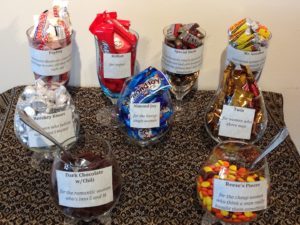
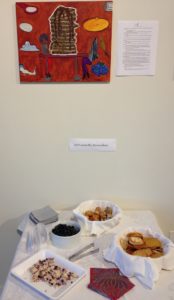
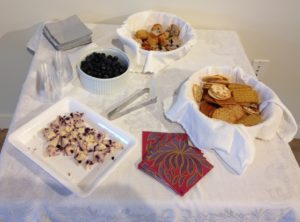
On Thursday, I attended a volunteer celebration, hosted by an art organization. Now that I’m a freelance writer/editor, I use every social opportunity as a chance to network. I’d schmoozed with several people before getting a drink. I talked even more before working my way to the food table.
For one such encounter, a woman who organized an art meetup group and worked professionally in marketing, asked me, “What is your sweet spot?” Admittedly, her question threw me off since my mind-in-the-gutter brain first thought of something sexual. Even after coming to my senses, I could not articulate a brand for my passion to write, and to a lesser degree edit and paint.
I’ve been enjoying my career transformation out of a high school science classroom into this new one. My primary concerns have been working on everything that needs my attention on a daily basis until the project is completed, being paid for some projects in order to finance personal projects and living below my means so I can continue telecommuting as long as possible.
Branding has not made it to the top three priorities yet. The best I’ve done so far is my elevator pitch for The Austin Writers Roulette, a monthly theme-based spoken word and poetry show. I whip out a business card-sized flyer and point out the venue information on one side and the calendar of themes on the other side.
As a matter of fact, since the show is in its third season, I’ve been invited to a happy hour next week with other organizers of spoken word/poetry/narratives. One friend congratulated me for being invited to sit at the adult table. I love that the time and attention I’ve put into the show is paying off–well, not in terms of money, but definitely in happiness. Compared to the first season, where I was essentially paying people to show up, this season I’m walking away with some change in my pocket.
By the end of the night and our second happy hour location, I told my marketing friend that a common denominator in all of my personal writing projects, concerned strong-willed women. They have flaws, challenges, limitations, but they seek to use what they have to better themselves. I added that I wanted my writing to be the cure to all the misogynist depictions found in the media. Tall order, but I’ll never lack for things to write about.
The more I think about it, the more I feel that I’m on the correct branding path. One of the excuses hip-hop artists make for their misogynist lyrics is that’s what makes money. I’d like to demonstrate a different path to financial security. After all, why should we minority women, who often fare worse in the misogynist media messages, continue to waste our time and energy in an attempt to persuade men to portray us in a more realistic manner? Our time and energy are better served producing such media ourselves.
Gandhi’s advice is still as fresh and applicable: Be the change you want to see in the world. I will write it, speak it, paint it, teach it and dance it.
Back in April, The George Washington Carver Museum sent an email, calling all local artists to pick up some supplies to participate in its annual fundraiser to support their educational program. The supplies included a 12″ x 12″ canvas, a packet of 3 paintbrushes and 4 giant tubes of acrylic paint. The only given supply I used was the canvas since oil is my preferred medium.
I sketched out a headshot of the title characters from The Adventures of Infinity & Negativa. I wanted extra practice painting those twins. Plus, given the smaller canvas size and the fact I’d not paint any limbs, hands, fingers, or toes, I’d finish in a week.
I underestimated their smiles. I selected two models with different smiles of Google images. I discovered my bias to paint smiles the way I thought they should be rather than how they were in reality. For example, I struggled the most with Negativa’s smile, the woman with the red lipstick. Originally, her lips formed the same shape as Infinity’s. Then I painted all her teeth straight across rather than in an arc. The only way I could correct her row of upper teeth was by painting the trapezoidal black space between her teeth.
Once I had the lips and space correct, the big challenge was to paint the underside of her molars. I could have saved myself a lot of grief by not having their heads tilted up, but I loved the idea that the twins weren’t merely smiling at a camera or for the painter. With their heads tilted and eyes looking up, they are clearly enjoying something: fireworks, aerial dancers, a concert, the bats leaving from under the S. Congress bridge….
I spent a full week reworking their smiles. To a lesser extent, I redid their skin. I had the haughty ambition to put an orgasmic glow on their face. I settled for an attractive, even complexion. After all, there was only so much battle I cared to wage with a painting I intended to donate.
This experience has inspired me to do more Infinity and Negativa headshots. I like the idea of just focusing on facial features. Of course, that will be after I complete the 16 storyboards. I’ve got three more to go, but in order to finish, I’ll have to complete the manuscript. That, however, is a different battle.
In this adventure, the twins are stretching “rubberband time.” I love how an abstract idea becomes tangible in their mathematical world. Compensates the fact that the action poses seem a bit off due to the length of their limbs. Nonetheless, I’m pleased with how it turned out along with the fact that it took me only 10 days to complete it.
After finishing the twelfth painting, I finally came to the conclusion that instead of having 24 paintings, 16 would do. At least until I finish transforming the story. I’m devouring craft books to improve my writing as quickly as possible. So far, I’ve deleted around twenty thousand words and I’ve barely added anything. I spend my time deleting what doesn’t belong and working out the kinks.
I’ve never bought into the idea of “writer’s block” and the latest craft book suggests that the main two sources of block is either stubbornness/fear or not writing in the correct POV/verb tense. As far as my stubbornness is concerned, I’m willing to edit the story any way it needs to be edit with the glaring exception of the story boards.
Once I complete a painting, it’s in the story. I feel my obligation is to write around the paintings to make the story match since I’m not going to cut a painting, the order of the paintings or dramatically change the text from the essence of the painting. Besides, for someone who doesn’t set out to plot out much, I use these paintings as the backbone of the story. As such, I hope they’re strong enough to guide and ground me.
As the youngest child of three girls, I played the theatrical role of being the youngest and loudest. Whenever I didn’t get my way, I’d pout. My mother, a Virginian country girl at heart, knew how to nip that in the bud with one question: “Do you want me to give you something to cry about?”
Thus, I learned at an early age the gracelessness of whining.
And since I have a strong A-type personality, I used to approach every conflict with the double barrels of logic and reason while disrespecting people for wearing their emotions on their sleeve. As you can imagine, that particular attitude did not go over very well with supervisors.
Instead of being thrilled that an employee pointed out the illogical and inefficient aspects of whatever they were asking us to do, they seized the moment to flex their muscle. At the height of stress, my emotions get the best of me and I whined.
Some supervisors pounced on my announced vulnerability like feeding time at the Serengeti. At one point, I was so stressed with work, the supervisor-induced power struggle and life in a new country that I suffered from insomnia and my hair thinned. During vacation, I returned to the US and bought a book about negotiating office politics, Working with You Is Killing Me. Not only did I feel more empowered and slept better, but I learned a new twist on the lesson Mom had taught me: supervisors will give me something to cry about when I don’t tactfully voice my opinion.
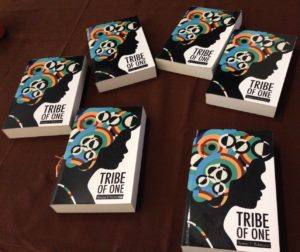
Then, I self-published my first novel, Tribe of One. I truly believed hoards of people would buy it now that it existed. What a humbling experience. The most formidable obstacles were my own expectations and attitude.
Of all the books I’d read about marketing, PR, branding, and the publishing industry, another book about negotiation, Getting More, taught me the most valuable business skill: listening. Knowing what the other person is thinking is the main premise behind getting more out of any negotiation. You must listen to what the other person is saying, regardless of whether they are illogical, mistaken or just plain batshit crazy.
Secondly, you must control your own emotions. Even if the other side resorts to name-calling, yelling and temper tantrum antics, they will remember if you do the same. Magically, if you control your emotions to the point of maintaining a positive persona, the universe rewards you for exerting good energy.
The ground shifted beneath my feet when I received notice how much my rent was going up. Fortunately, I was due for a capoeira class when I found out. I released a lot of angst while training that Brazilian martial art.
Then, I did what I do best: I wrote out my situation in a letter addressed to the property manager. I even included two pictures: one showed the 12 canvases I’d completed and the other showed me in costume for the roulette.
In my letter, I explained how my only New Year’s resolution for 2014 was to finish my second novel, The Adventures of Infinity & Negativa, which included at least 16 paintings. I’d saved up money and transitioned from high school Physics teacher to freelance editor and writer in order to have a more flexible painting and writing schedule.
This was only possible if I had affordable, safe housing, conveniently located near cultural events and included free Internet. By raising the rent beyond my budget, he would effectively evict his unofficial artist-in-residence.
After reading this, the property manager said my letter was the nicest, most well written of its kind that he’d ever received, which he’d put in his scrapbook. The best part: he only raised my rent by $20.
I learned another facet of Mom’s lesson: when people hear a persuasive, heartfelt appeal rather than whining, they are more willing to negotiate.
In life, there are a few things you pledge loyalty to and adhere to your sense of integrity. For the rest, it’s negotiable. You can whine your way through a conflict or you can successfully resolve it.